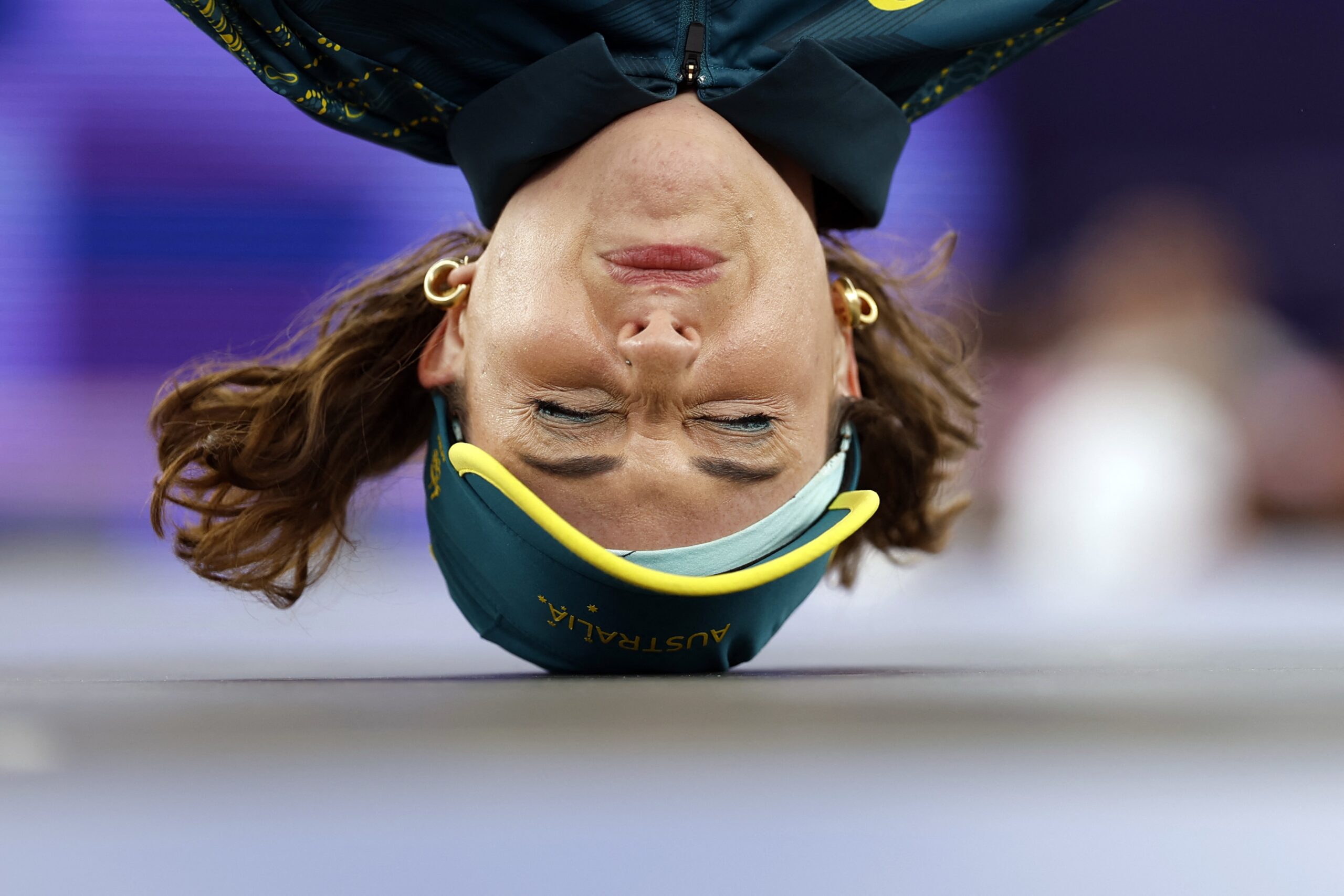
She infamously stole the show at the Paris Games. Fellow breakers say her fame has lasted long enough.
Read more Jury in Lindsay Clancy trial is deadlocked, will continue deliberations
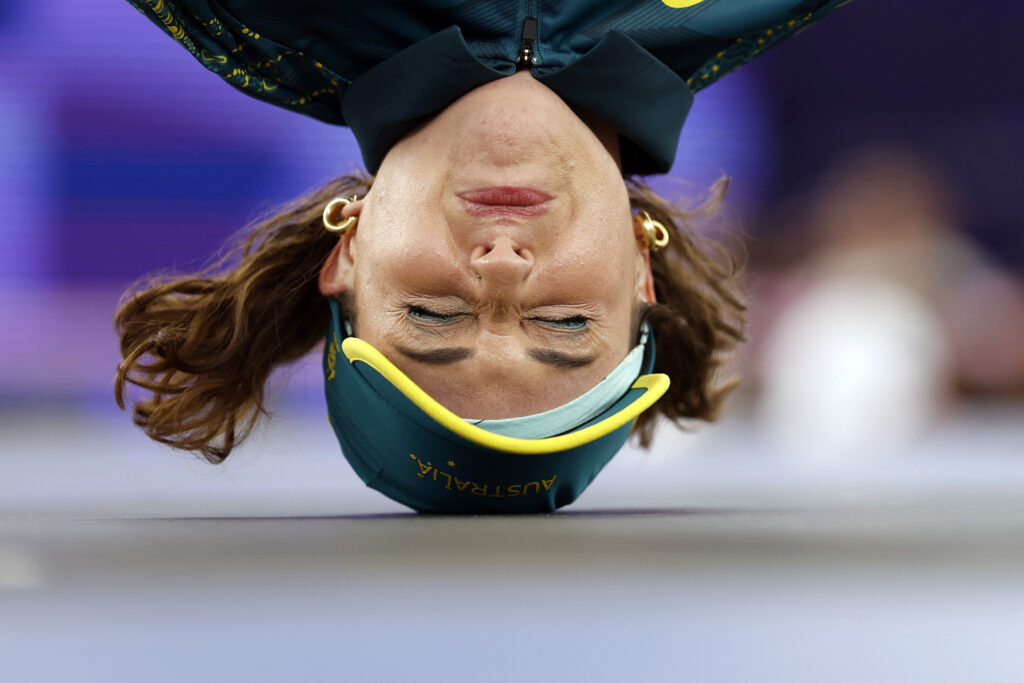
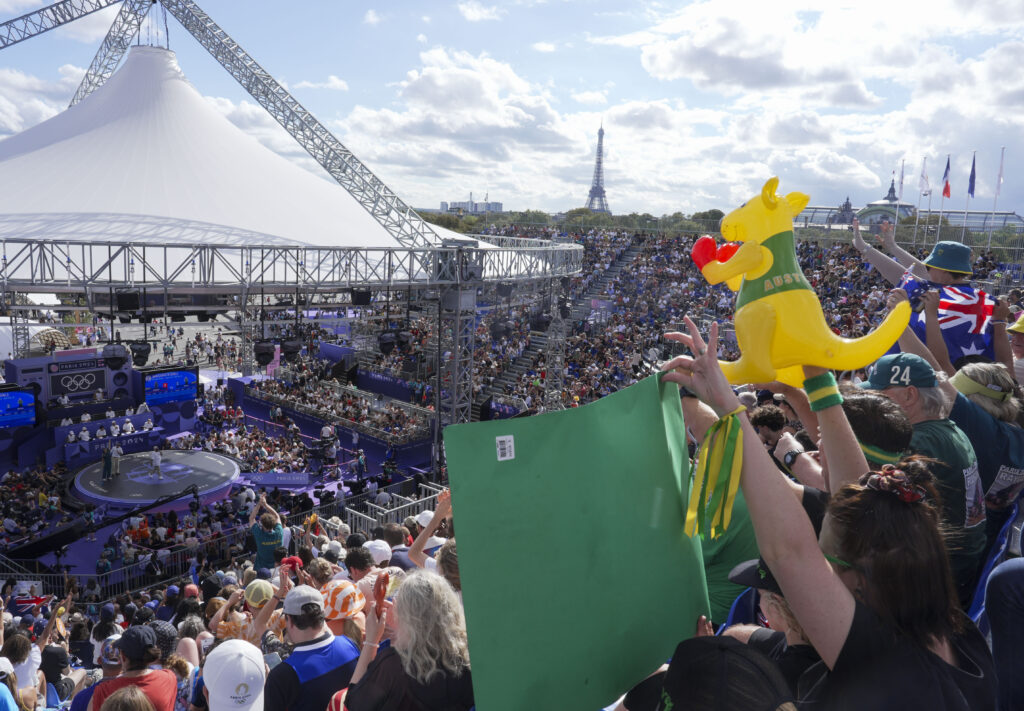
It’s been two years since Australian breakdancer Raygun turned her discipline’s lone Olympic appearance into a global farce. Yet she’s never gone away. She lives on in memes and GIFs, forever dressed in her Team Australia ball cap and warm-ups, hopping like a kangaroo into your social media feeds even as the other Olympic breakdancers try to bounce her from their memories.
They’d come to the 2024 Paris Olympics wary of being included in a mainstream sports event but hoping the Games would bring respect to “breaking,” as the competitive form of breakdancing is called. Maybe, they figured, the attention could bring endorsement money to a profession that pays little.
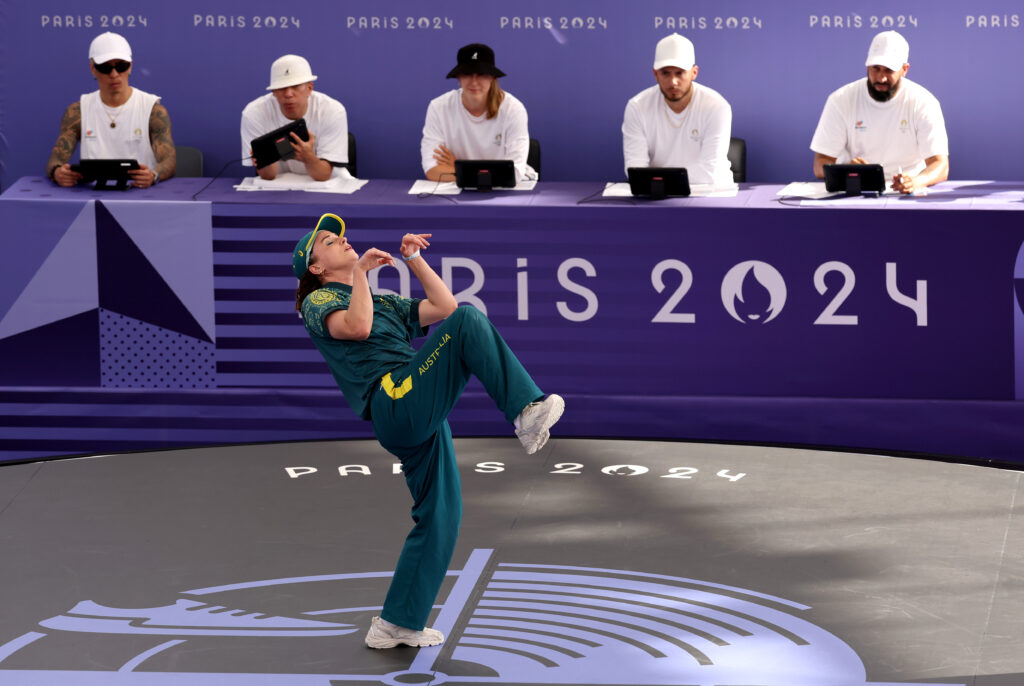
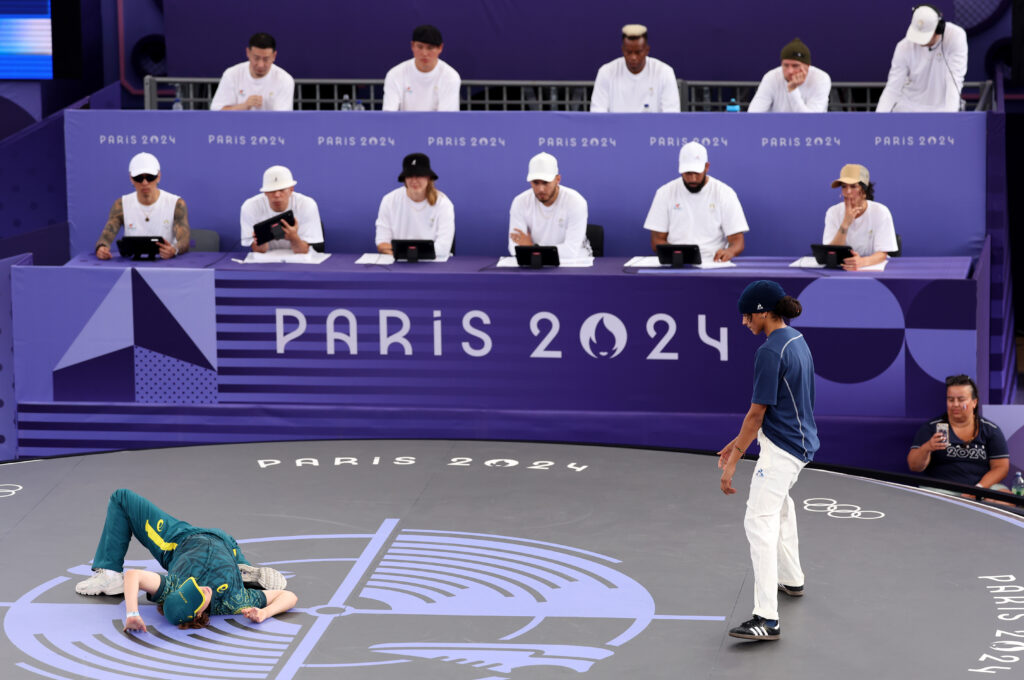
Then, in the first minutes of the first day of the competition, B-Girl Raygun (whose real name is Rachael Gunn) writhed across the cypher in positions both fetal and prone — moves that were certainly not breakdancing. The internet laughed. And instead of garnering respect and attention and money, breaking was seen as a joke.
“In what other sport is the worst performance the one everyone remembers?” asks Kateryna Pavlenko, a Ukrainian breaker who goes by B-Girl Kate and advanced to the quarterfinals in Paris.
“There was real damage,” professional breaker David Shreibman (B-Boy Kid David), who was one of NBC’s commentators, says about Raygun that day. “I get traumatized, bro.”
Now Raygun is back with her own Netflix documentary, “Raygun: Breaking Badly,” which premiered Tuesday as part of the streaming service’s Untold series of sports stories.
Her episode is oddly tucked between the tale of failed NFL first-round draft pick Vince Young and “Mr. T: I Pity The Fool.” In the documentary, she describes the horror of realizing she was a viral joke — “It was this growing monster” — as well as the online anger that followed the laughing and false allegations that she cheated to get to the Olympics.
“I felt my whole life was crumbling in a way I never anticipated,” she says.
The breaking world, still trying to recover from Paris, doesn’t know what to do with a Raygun documentary. Many are tired of talking about her, of cringing at the snickers while trying to explain that, no, they aren’t like the woman pretending to be a kangaroo.
“It gets to the point where I say: ‘I went to the Olympics’ and people say ‘What sport?’ and I say ‘Breaking’ and they go ‘Breaking? Ohhhhhh, the Australia girl,’” Pavlenko says.
“The most famous breaker in the world,” scoffs Shreibman.
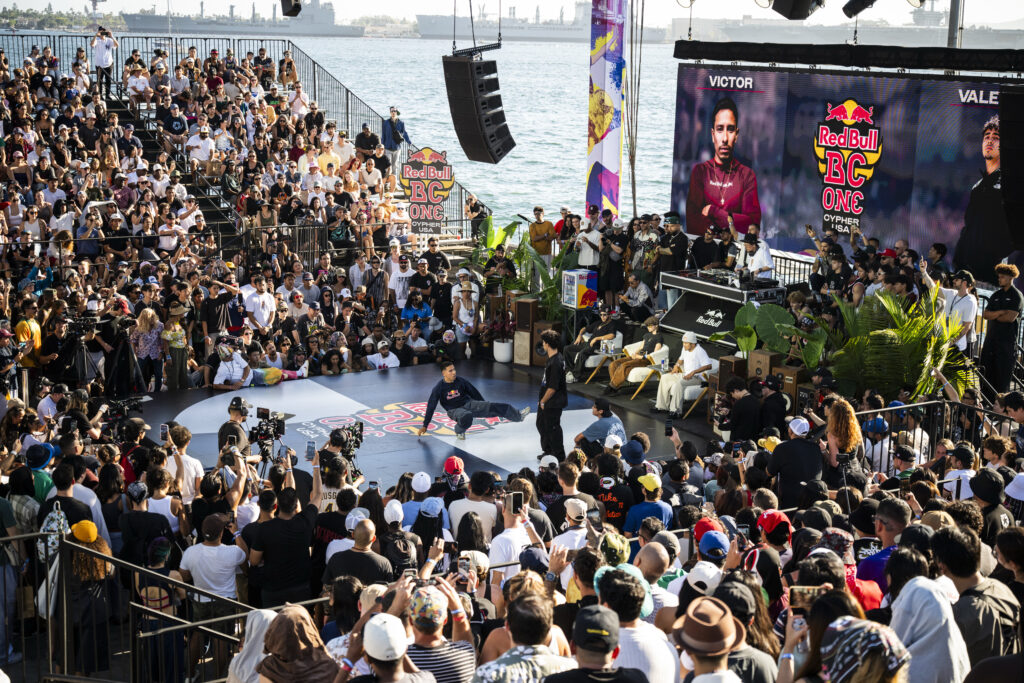
The sport, breakers acknowledge, continues to grow. The recent Red Bull BC One USA National Final packed a small outdoor arena in San Diego, and longtime breakers have noticed a surge of young dancers since breaking was officially added to the Paris Games in late 2020.
But Raygun remains a scar that won’t heal. Breaking already was a strange fit for the Games, dragged there by the World DanceSport Federation, which wanted to be a part of the Paris Olympics but couldn’t persuade the International Olympic Committee to green-light ballroom or salsa dancing. Traditional breakdancers, who perform in street shows or theaters, look down on competitive breaking and hated the idea of it being in the Olympics.
But the competitive breakers thought a great competition might mesmerize viewers the way dressage or three-on-three basketball had in previous Games.
Read more House to vote on Rep. Chuck Edwards censure over ‘unprofessional conduct’ toward female staffers
Instead, Raygun.
She dominated coverage of the competition, especially on social media; the women’s final rounds and the men’s competition the next day were lost in an avalanche of a hopping Raygun. The respect the breakers hoped for evaporated. Pavlenko says that several clothing companies that had been asking her to promote their brands stopped contacting her. Any dreams of big endorsements vanished.
When Shreibman heard there was going to be a Raygun documentary (co-produced and promoted by her marketing representatives, who did not return a request for comment), he was furious.
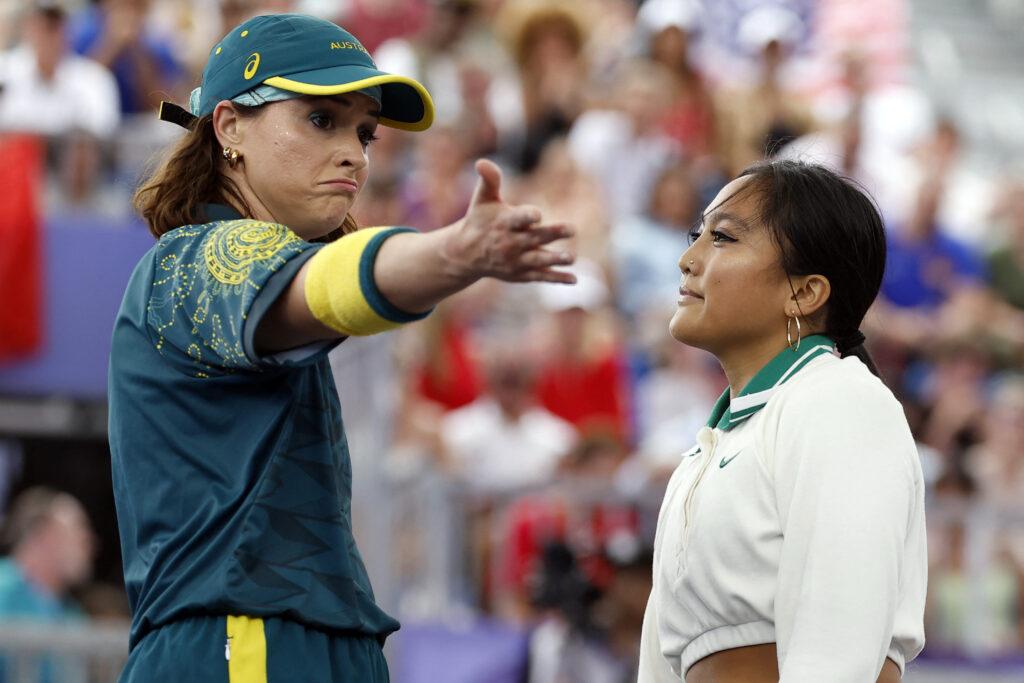
“It opens up a can of worms all over again,” Shreibman says.
He adds that Raygun should “apologize” to the other Olympic breakers.
Despite the disdain breakers theatrically show during battles, it’s largely a supportive culture. Breakers see themselves as artists more than athletes, and they tend to celebrate each other’s performances and consider rivals to be friends. Living on the fringes of the sports and artistic worlds, they promote breaking as much as themselves.
Pavlenko knows Raygun from pre-Olympic qualifiers and calls her “a sweetheart.” The community rushed to Gunn’s defense when she was first mocked and attacked online, Pavlenko points out. But as the months went by, it felt to many of the Olympic breakers that Raygun was leaning too much into her celebrity, as everyone else lamented lost money and scrambled to win back respect.
American breaker Victor Montalvo (B-Boy Victor), who won bronze at the Olympics, says he was asked to appear in the documentary but declined, fearing it would ignore other dancers at the Olympics. Others made the same decision.
“They didn’t want to add on” to the conversation about Raygun, he says.
“But it has come back,” he adds. “Why?”
While Raygun was not an Olympic-level breaker, she was a real breaker. Pavlenko thought Raygun had shown decent footwork in the qualifiers. Omar Delgado Macias (B-Boy RoxRite), who trained the Swiss team at the Olympics and had judged contests Raygun was in before the Olympics, said he was not surprised Raygun had come out of qualifying from Oceana, an area not known for breaking.
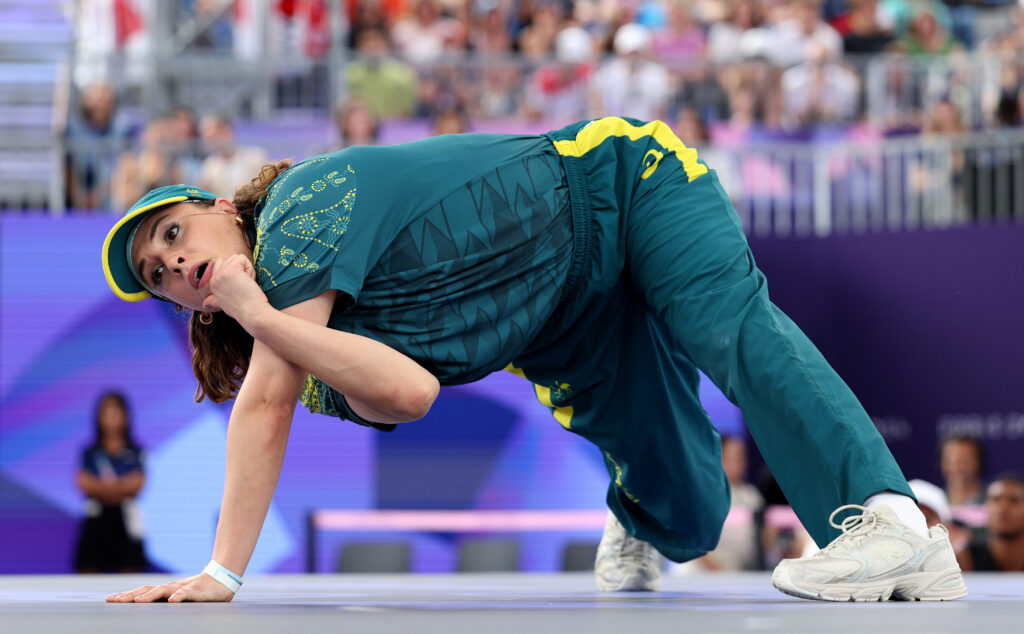
But when he saw her Olympic battles, rolling on the ground and bouncing like a kangaroo, he was startled. The moves, which weren’t breaking moves, were things he had never seen her do before.
“I was thrown off,” he says. “I have seen her break better than that.”
He kept asking himself: “Why would she do that?”
In the documentary, Raygun and her husband, Sammy Lee, who is also a breaker and her coach, say that in the weeks before Paris they realized Raygun wasn’t as good as the other Olympians and decided to incorporate non-breaking dance moves involving Australian culture, hoping to stand out. This is how she came to hop like a kangaroo, wave her arms like a swimmer and pretend to be a lawn sprinkler.
“It was the essence of creativity,” Lee tells the camera.
She used them all in her third and last battle at the Olympics, the only one anybody remembers. Had she chosen to use traditional breaking moves, she’d have probably lost anyway and quickly disappeared.
Instead, the rest of breaking is left to pick up the pieces.
Does Raygun need to apologize to her sport? Most breakers dodge the question or simply disagree. Much like with her performance in Paris, they seem confused about where she sees herself in the sport now. Does she understand why they’re upset?
“She doesn’t owe anyone anything,” Pavlenko says.
But, Pavlenko adds, it “would be nice” if Raygun acknowledged the other Olympians and that there was more in the Paris breaking competition than a few funny clips on the internet. Pavlenko and others hope that someone will make a documentary about breaking at the Paris Games that focuses on the biggest battles, the medal fights and moments like the one when Japan’s Hiroto Ono (B-Boy Hiro10) spun on his head for what seemed like an eternity, only to lose his battle and break into tears.
“Maybe I’m delusional,” she says, “to think people will look back” and see something other than the breaker from Australia doing the sprinkler while dressed like a cricket player.
Read more Thanks to Lake Ontario, MapQuest is popular all over again