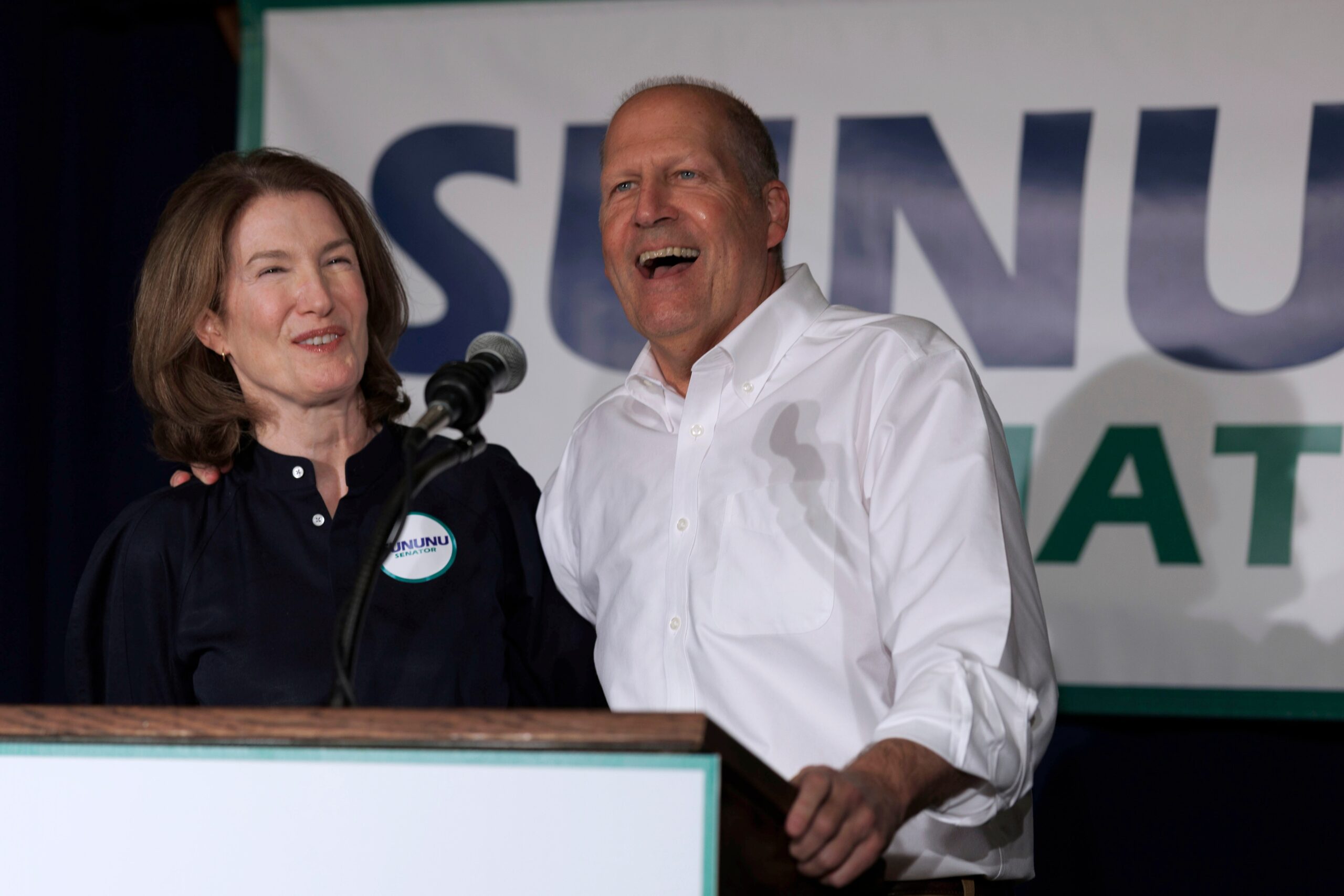
Former Republican senator John E. Sununu and Democratic Rep. Chris Pappas easily won their primaries for an open U.S. Senate seat.
Read more How much does Trump care about the GOP?
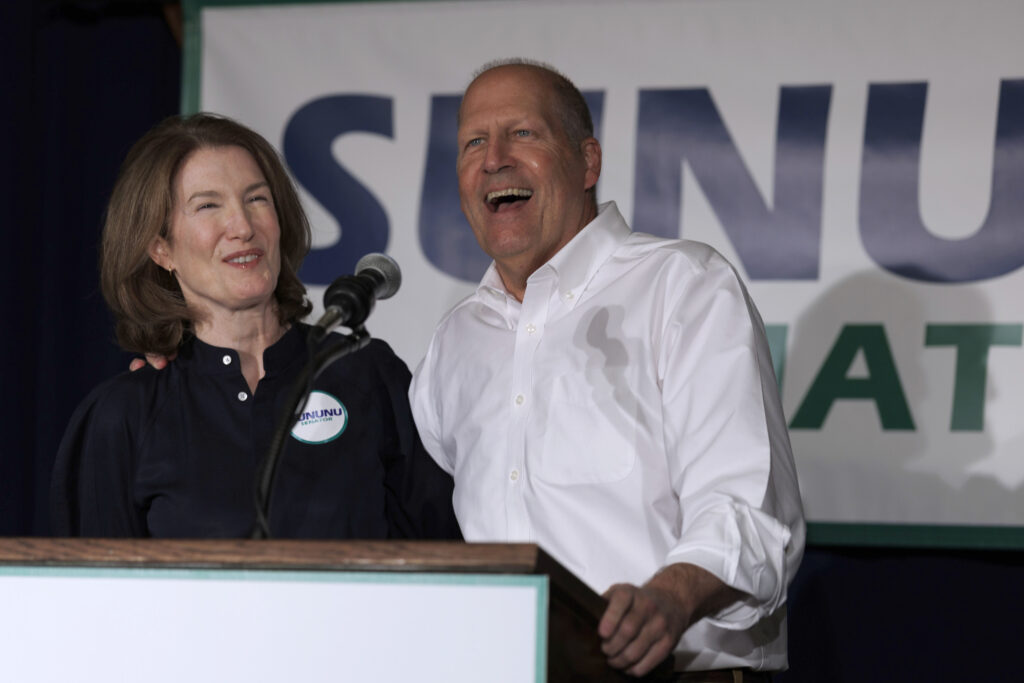
Former Republican senator John E. Sununu and Democratic Rep. Chris Pappas easily won their primaries Tuesday in New Hampshire’s Senate race, setting up a competitive race in November.
New Hampshire has not drawn as much attention as some of the other eight races expected to decide control of the Senate. Neither primary was especially fierce compared with the expensive battles that Republicans waged in the Texas Senate race or that Democrats fought in Michigan.
But Democrats are not a lock to hold the seat that Sen. Jeanne Shaheen (D-New Hampshire) is relinquishing after three terms. A University of New Hampshire poll conducted last month found Sununu leading Pappas 45 percent to 43 percent. The nonpartisan Cook Political Report rates the race “Lean Democrat.”
While no Republican has won a Senate race in New Hampshire since 2010, Democrats have prevailed in some recent races by narrow margins. Sen. Maggie Hassan (D-New Hampshire), for instance, won her seat in 2016 by barely 1,000 votes.
Here are four takeaways from the New Hampshire primary:
The Senate race will test the enduring power of the Sununu name in New Hampshire. Voters elected Sununu’s father, John H. Sununu, as governor 44 years ago, launching a political dynasty.
The elder Sununu went on to serve as President George H.W. Bush’s White House chief of staff. One of his sons, John E. Sununu, served three terms in the House and one in the Senate. Another son, Chris Sununu, served eight years as governor before leaving office last year and rejecting entreaties to run for Senate.
Still, Sununus are not unbeatable. Shaheen won her seat by unseating John E. Sununu in 2008.
The Shaheens may soon have a dynasty of their own.
Stefany Shaheen, a former Portsmouth city council member and the daughter of Sen. Jeanne Shaheen, won the Democratic primary for the House that Pappas is giving up to run for Senate. One of her opponents, Maura Sullivan, who lost to Shaheen early Wednesday, and her allies criticized Shaheen for trying to capitalize on her last name.
“Political dynasties think they’re entitled to your vote,” the narrator says in an ad run by VoteVets, an outside group that backed Sullivan. “Not this year.”
Stefany Shaheen pushed back on those attacks.
“My opponent’s message is about my last name,” she told The Washington Post. “I just think that’s not what matters most to people here.”
Read more How Canada, with elbows up, could hurt Trump in the midterms
President Donald Trump and Senate Majority Leader John Thune (R-South Dakota) have not always been aligned on Senate races this year. Trump ignored Thune’s repeated pleas for him to endorse Sen. John Cornyn (R-Texas) in the GOP primary, instead backing challenger Ken Paxton, who some Republicans warned could cost his party the seat.
But Trump and Thune came together to back Sununu even though Sununu has criticized Trump in the past. Sununu trounced Scott Brown, the former Republican senator from Massachusetts whom Trump named as U.S. ambassador to New Zealand in his first term.
Sununu’s victory means every Republican whom Trump endorsed for Senate this year won his or her primary, even as several Trump-backed candidates in House and governor’s primaries fell short.
Another New Hampshire candidate endorsed by Trump, Anthony DiLorenzo, won the Republican nomination for Pappas’s House seat, which Pappas is giving up to run for Senate.

The University of New Hampshire poll conducted last month found Pappas leading Karishma Manzur, a scientist who recently joined the Democratic Socialists of America, 47 percent to 34 percent — a surprisingly close margin given Manzur’s low profile.
Pappas ended up winning by much more, but Manzur still received a substantial share of the vote even though she raised little money. Her relatively strong showing comes after Angie Nixon, another democratic socialist, defeated Lt. Col. Alexander Vindman in the Democratic Senate primary in Florida despite his massive financial edge. Several democratic socialists have also defeated Democratic incumbents in House primaries this year.
On the other hand, Sen. Bernie Sanders (I-Vermont) — perhaps the country’s most famous democratic socialist — won New Hampshire’s Democratic presidential primary twice, so maybe it’s not so surprising that Manzur would do relatively well in the primary.
New Hampshire Gov. Kelly Ayotte easily dispatched two challengers on Tuesday in the Republican primary. She will face Democrat Cinde Warmington, a former member of New Hampshire’s Executive Council, in November.
Ayotte is relatively popular, and the Cook Political Report rates the race “Likely Republican.” A University of New Hampshire poll conducted last month found Ayotte leading Warmington 49 percent to 39 percent.
Republicans hope an Ayotte victory at the top of the ticket could help Sununu in the Senate race — but it’s not uncommon for New Hampshire voters to split their tickets. Hassan won Senate races in 2016 and 2022, and Sen. Jeanne Shaheen won reelection in 2020 even as voters also chose Republican Chris Sununu as governor.
Read more As Trump remakes White House, the group founded to protect it stays quiet