In today’s edition … Trump takes an “L” at the Fed … We ask you about Ed Sheeran … but first …
Read more RFK Jr. to give keynote speech at conference for anti-vaccine group he founded
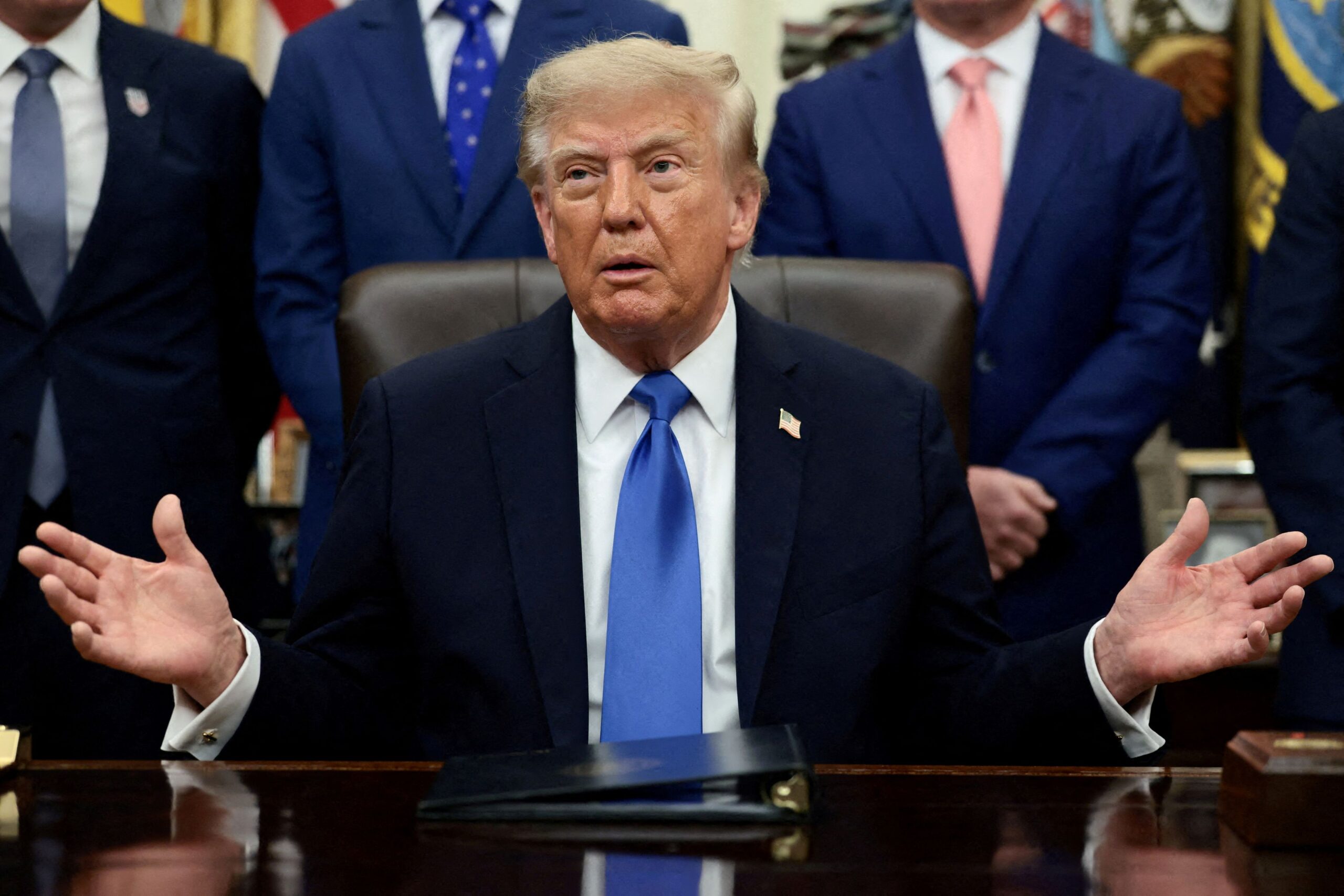
Donald Trump’s political career could be defined by his ability to tie himself to the popular side of any given issue.
He did this in 2016, tapping into the nation’s disdain for dynastic politics and distaste for elites to defeat Hillary Clinton. He did it again in 2024 by tapping into growing fears about illegal immigration at the southern border and voters’ deep sense that their economic standing was precarious.
That is why it has been stunning to see this president, someone known for his sharp political instincts, so firmly position himself on the unpopular side of the debate around artificial intelligence and data centers.
“There’s no issue in American politics where, all of a sudden, there is this deafening roar for more regulation, more guardrails around data centers and around AI,” said Alyssa Cass, a Democratic operative. “And he’s nowhere to be found.”
The past two weeks, which saw AI leaders uniting to warn the technology is advancing too fast, have underscored this dynamic.
Trump has called fears around AI a “hoax,” lamented a “SICK conspiracy” against AI and data centers and blamed “negative forces” for turning Americans’ focus to AI safety. And Trump has said it is a “mistake” for communities to reject data centers and said the communities who refuse them will end up being “backwards and poor.”
This puts Trump firmly at odds with popular opinion — even as pro-AI, pro-data center groups are spending millions on campaigns pushing their own research on “voter optimism” about AI.
There is overwhelming polling that shows voters are opposed to data center construction — a YouGov survey released this month found “half (51 percent) of Americans say that the construction of new data centers is a bad thing for the country,” while a Gallup survey released earlier in the year found that 7 in 10 voters opposed local data center construction. That is driven, in large part, by rising electricity costs caused by the centers, as well as fears around the impact artificial intelligence could have on everything from the environment to jobs to the end of human civilization.
And a poll from NBC earlier this year found: “A majority of registered voters, 57%, said they believe the risks of AI outweigh its benefits, compared with 34% who said the opposite. … Just 26% of voters say they have positive feelings about AI, compared with 46% who hold negative views.”
Trump’s support for the AI industry is not inexplicable. Trump has been cozy with America’s top tech leaders from the outset of his 2024 campaign. They were some of his top donors. They showered him with praise and adoration when he was elected. Some became formal and informal advisers in the White House — like David Sacks, co-chair of the President’s Council of Advisors on Science and Technology and a strident data center defender.
But Trump’s position has put Republicans, particularly those in competitive campaigns, in a bind, forcing them to choose between siding with popular opinion or risking both Trump’s ire and that of a powerful industry that has been pouring money into the midterm elections.
“Since day one, Trump has sided with AI executives and their investors — clearing the way for data centers and AI tools that profit at consumers’ expense,” said Rishi Bharwani, the U.S. director at Reset Tech, a tech accountability group. “AI is fast becoming a top-tier issue, and Republicans are on the wrong side of it.”
Take Ohio’s key Senate race between incumbent Republican Sen. Jon Husted and former Democratic senator Sherrod Brown.
Husted has been relentlessly attacked over data centers in several ads.
“He’s been called the face of data centers in Ohio. Why? Because Jon Husted spent years aggressively recruiting data centers to the state, cutting sweetheart tax deals and fast-tracking approvals, while ordinary residents watched their electricity bills explode,” a narrator in one Brown ad says.
Husted has tried to push back against these attacks by sponsoring the Ratepayer Protection Act, a bill that tries to help states lower electricity costs. It’s unclear whether the bill will get a vote in the Senate.
Republicans are worried the issue could hurt Husted. A memo on Ohio from the National Republican Senatorial Committee said Brown is focusing on data centers “because it works.” They urge Husted and others to focus on the bill and promise to only locate data centers in communities that want them.
“More than any other thing in this race, data centers are the anchor hanging around Husted’s neck. If he loses and data centers get the blame, politicians across the country will take notice — and they will not go near the next one,” reads the memo.
Compare that with the way Democrats are now making it clear they are not only running against data centers; they are running against the technology companies and leaders behind the unpopular infrastructure.
“Democrats are rightfully realizing that running on tech accountability, especially in battleground states and battleground districts, is going to be a winning issue,” said Sacha Haworth, the head of the Tech Oversight Project, a group that looks to hold big tech companies accountable.
Read more Democrats demand records from Trump’s ‘methodical’ D.C. golf takeover
To Haworth and others, the memo from Senate Republicans’ campaign arm is basically a plea to big technology donors to save Husted or risk further igniting the anti-data center fire, which Democrats performing well in November would likely stoke.
Beyond that, said Cass, voters still need to be convinced that Democrats have the right message on data centers.
“Americans are looking around, seeing the world, changing around them. Pretty freaked out about those changes and are unsure of which party is going to help navigate this moment,” she said. “This issue is very much up for grabs. … Democrats have a massive opportunity to rebuild the national coalition if they own the AI issue.”
Trump didn’t get what he wanted from the Federal Reserve.
Yesterday, the monetary policy body raised interest rates by a quarter point, its first increase in more than three years.
The decision was unanimous, including a vote from newly appointed Fed chair Kevin Warsh, and will directly affect everything from borrowing among banks to what households pay to borrow through credit cards and other loans.
“I’ve got nothing for you on a discussion with the president,” Warsh told reporters when asked about his message to Trump.
Trump fumed at the decision.
“Interest Rates in the United States should be 1%, or less, because we are the Best Credit in the World — BY FAR. … We are ‘carrying’ almost every country in the World, and that cannot go on any longer,” he wrote on Truth Social. “LOWER THE INTEREST RATES FOR THE UNITED STATES OF AMERICA, AND FAST!”
Trump has been blunt about his desire for the Fed to lower rates. He selected Warsh, in part, because he was angry that his predecessor, Jerome H. Powell, refused to cut rates. In August, Trump threatened to stop trading with certain countries unless the Federal Reserve lowers rates.
The timing is not ideal for the president, whose party will face an electorate later this year that is deeply unhappy with the nation’s economic standing and the president’s handling of the issue.
Maine Morning Star: Sen. Susan Collins (R) will not like this headline. According to a left-leaning economic policy think tank, Maine households “paid an average of $4,300 more for goods and services since President Donald Trump began his second term,” a damning statistic for a Republican senator seeking reelection in a bluer state.
Shaw Local (Illinois): More drunk drivers are apparently being found out because, while allegedly driving drunk, they are also using their cellphones, giving officers a reason to stop them in the first place.
Kentucky Lantern: Trump swept into office in both 2016 and 2024 promising to revitalize American energy, including coal. But a forecast from Trump’s own administration finds “coal generation is expected to decline 8% in 2026 and another 6% in 2027,” undercutting Trump’s message to coal country.
I stand corrected!
Yesterday, I asked what you thought about presidents naming friends and donors to ambassadorships, after Kimberly Greenwood, the wife of singer and Trump friend Lee Greenwood, was nominated to be the next ambassador to Barbados.
Steven Alan Honley, a reader in Washington, D.C., who was a Foreign Service officer from 1985 to 1997 and the editor of the Foreign Service Journal from 2001 to 2014, informed me that, in fact, the Foreign Service Act of 1980 specifies “that ambassadors should (but are not required to) possess such basic qualifications as knowledge of the country to which they would be sent.”
“There is also a presumption in the legislation that career Foreign Service officers are generally the best qualified for these positions, by virtue of their experience and training,” he wrote. “Sadly, presidents of both parties regularly disregard those guidelines, particularly for “plum” postings, sending cronies and fat cat donors.”
Overall, you all expressed distaste for presidents naming their friends and donors to ambassadorships.
“I don’t feel Trump should be able to place just anybody into an important position. That’s how we ended up with cabinet members who are totally unqualified for their position,” wrote Linda Yde.
And John Bowen added, “I understand that diplomatic posts make for convenient political patronage. But there should be some standard by which such patronage is dispensed.”
I have been struck by how quickly the blowback to Ed Sheeran’s decision to boot Macklemore from his tour for pro-Palestine comments has ballooned beyond the music world. What do you think about Sheeran’s decision? The artist said Tuesday that he didn’t want to use his “professional platform for politics.” Let me and your fellow Early Brief readers know at [email protected].
Read more Nationals secure another losing season with dormant loss to Phillies
Thanks for reading. You can follow me on X at @merica.