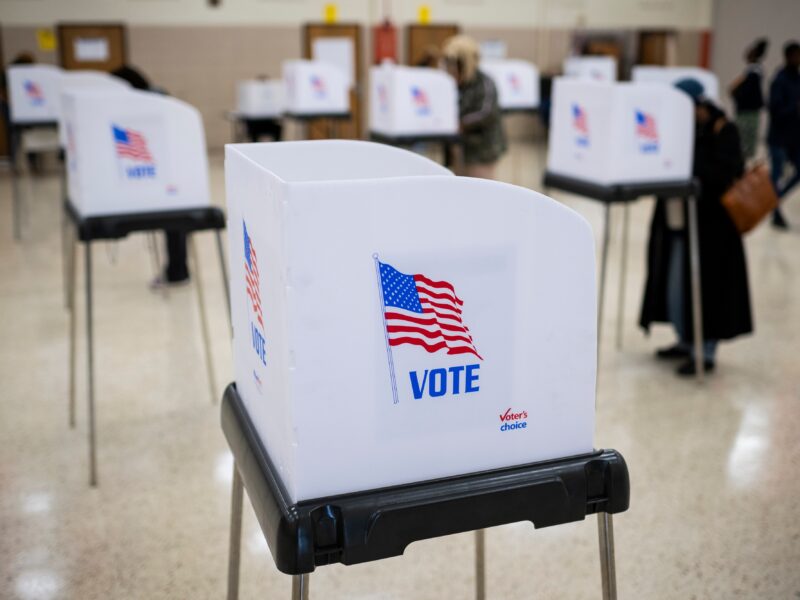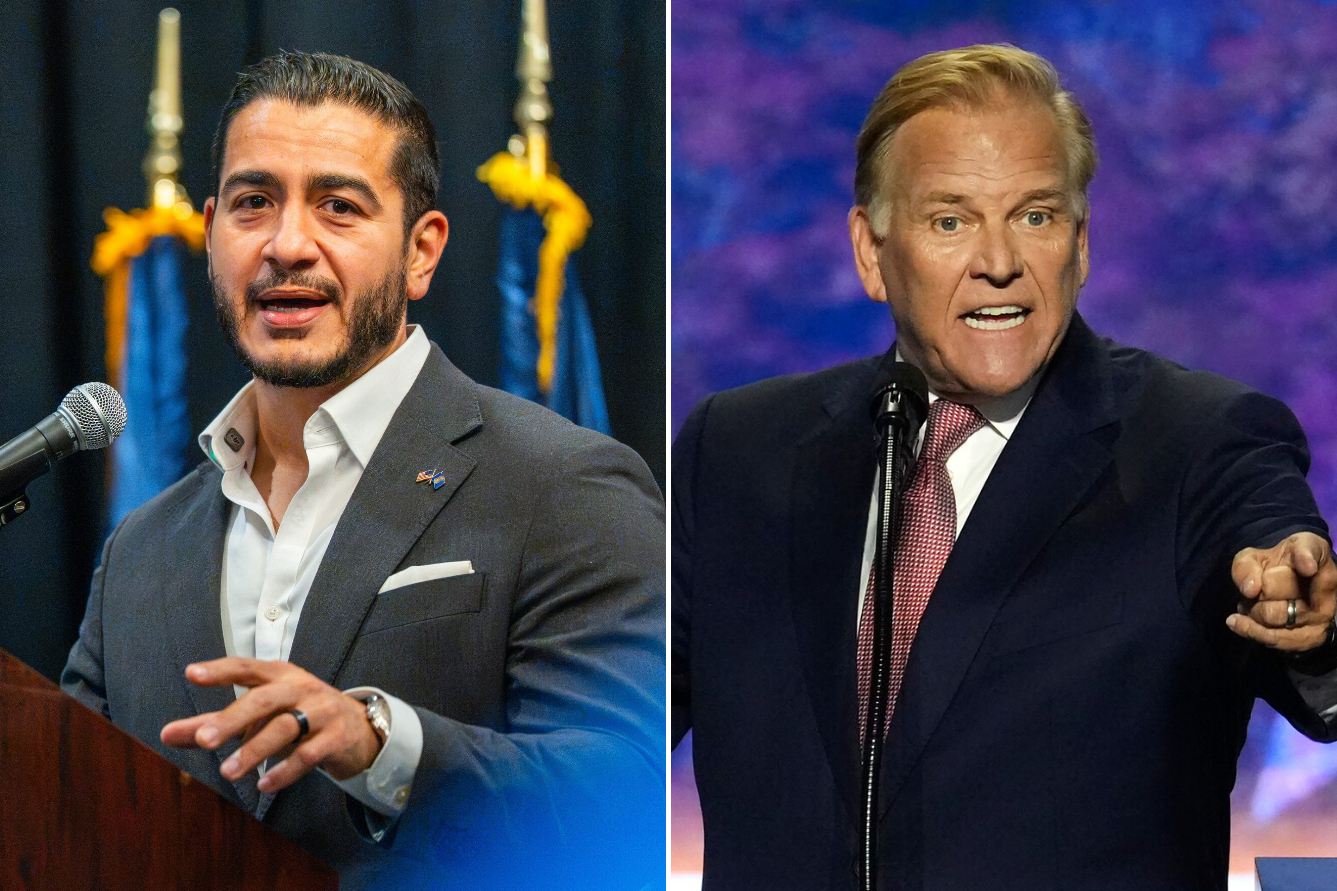
A Post-Schar School finds 53 percent of Michigan’s likely voters say they want Democrats to control the Senate, but 48 percent support Democrat Abdul El-Sayed in the Senate race.
Read more As warnings mount, Democrats eyeing the presidency wake up to AI fears
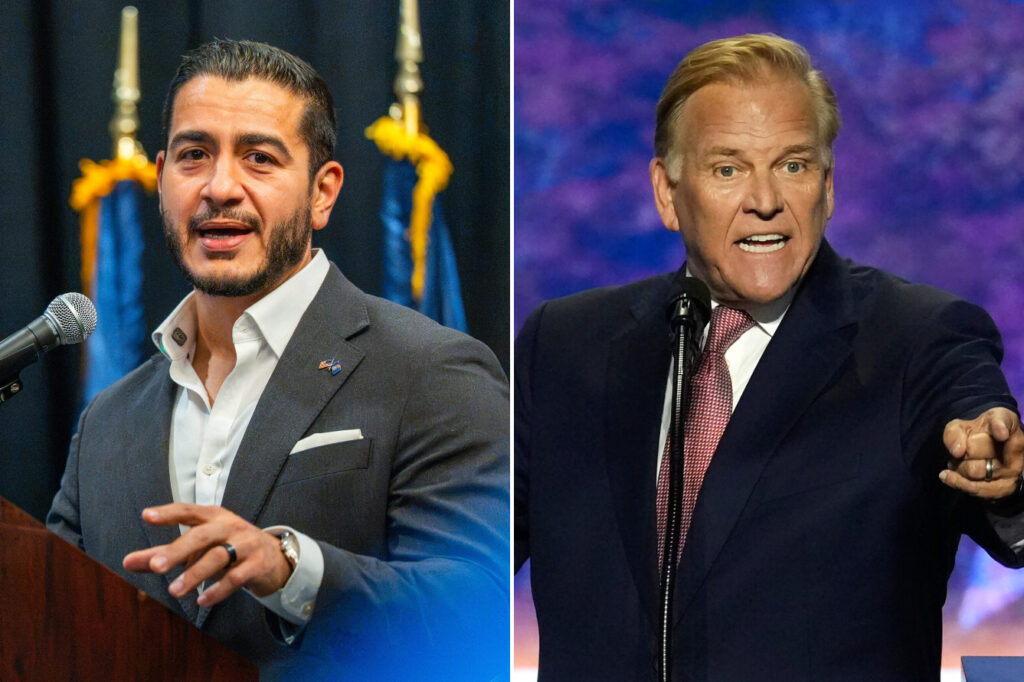
Democrat Abdul El-Sayed holds a narrow edge over Republican Mike Rogers in Michigan’s nationally watched Senate race despite a political environment that heavily favors Democrats, a Washington Post-Schar School poll finds.
El-Sayed’s three percentage-point lead over Rogers — 48 percent to 45 percent among likely voters — puts the contest within the poll’s 3.9-point margin of error. That’s a small gap at a time when economic worries and frustrations with President Donald Trump has voters viewing Republicans unfavorably.
The tight Senate race stands in contrast to another Democrat’s wide lead in the governor’s race and voters’ clear preference for Democrats to control the Senate.
While 53 percent of Michigan’s likely voters say they want the Democrats to control the Senate next year, El-Sayed has support from a smaller share of voters.
But in the more lopsided governor’s race, Democrat Jocelyn Benson holds a 12 percentage-point lead over Republican Rep. John James. Compared with El-Sayed, Benson gets slightly more support from Black voters, independents and voters who say they are unwilling to support a Muslim for president.
The depressed support among those constituencies suggest an electoral opportunity, both for Rogers, a former congressman who narrowly lost the 2024 Senate race, and El-Sayed, a former public health official who has run as a populist. It also illustrates the headwinds each face as the increasingly caustic Senate race enters its final stage.
Republicans see the race to succeed retiring Sen. Gary Peters (D) as their best opportunity to flip a swing-state seat held by Democrats. They view El-Sayed, who would be the country’s first Muslim senator and has drawn support from his party’s left flank, as a vulnerable general election candidate. Their ads highlight his liberal policy ideas and attack him in ways that evoke anti-Muslim stereotypes.
Meanwhile, Democrats’ ambition to wrest control of the Senate relies on holding Michigan and other Democratic seats, as well as flipping four seats held by Republicans. El-Sayed has cast Rogers as a yes-man to Trump, whom the poll finds is deeply unpopular in Michigan, and highlighted Rogers’s ties to corporations.
Both Rogers and El-Sayed have lobbed personal retorts at each other, battling on social media over physique, their high school sports careers, their donor networks and relationships to polarizing supporters. Neither man has left a net-favorable impression on Michigan voters, the poll found.
A larger share of Michigan voters view El-Sayed favorably than Rogers, with 44 percent holding a positive view of the Democrat and 39 percent holding a favorable impression of the Republican.
Attitudes toward Muslim politicians are correlated with lower support for El-Sayed.
More than 4 in 10 likely voters in Michigan say they’re unwilling to support a Muslim candidate for president. El-Sayed’s support among that group is six percentage points lower than Benson’s.
Read more Trump won by latching on to popular issues. He’s doing the opposite on AI.
Among likely Black voters, 83 percent say they want Democrats to control the Senate but 67 percent back El-Sayed. Black voters have long been crucial to Democrats’ coalition, and El-Sayed’s primary opponent, Rep. Haley Stevens (D-Michigan), shored up disproportionate support in that community. Former vice president Kamala Harris plans to campaign with El-Sayed next week during an event on Black maternal health.
El-Sayed, who has campaigned on Medicare-for-all and abolishing Immigration and Customs Enforcement, is one of the furthest left Democratic nominees in a competitive Senate race. He does not identify as a democratic socialist, but he is backed by progressive leaders including several democratic socialists such as Sen. Bernie Sanders (I-Vermont) and Rep. Alexandria Ocasio-Cortez (D-New York).
Nearly half of likely Michigan voters, 48 percent, say El-Sayed is “too liberal” for them, higher than the 43 percent who view Rogers as “too conservative.”
“It is tempting to attribute El-Sayed’s lackluster polling exclusively to Islamophobia, but his socialist endorsements and policy positions are certainly not helping him either,” said Justin Gest, professor of policy and government at George Mason University’s Schar School of Policy and Government.
At the same time, likely Michigan voters support some policy ideas embraced by El-Sayed and other progressives. Forty-seven percent support a national Medicaid-for-all health plan, compared with 37 percent who oppose it. El-Sayed has been a fierce critic of the Israeli government and opposes funding a military he says committed genocide; 54 percent support reducing or ending military support for Israel.
Asked to give a one-word description of each candidate, Michigan voters described El-Sayed with a mix of well-defined attributes but used generic terms to describe Rogers.
While some of the top words to describe El-Sayed included “radical” and “communist” — terms that mirror attack ads — voters also described him as “honest,” “progressive” and “smart.”
Top descriptors for Rogers included “Trump-associated,” “corrupt,” “dishonest,” “Republican,” “American,” and “great.”
The poll found several attitudes among voters that bode well for Democrats.
Nearly 6 in 10 likely Michigan voters disapprove of Trump, who has endorsed Rogers and whose affiliated political action committee reserved more than $18 million in television ads in the Senate contest. Cost-of-living is the top issue for 48 percent of voters. About twice as many voters say their finances are “not as well off” since Trump returned to office than those who say they’re better off.
While both parties have a negative image with Michigan’s likely voters, Republicans are viewed worse: 47 percent view Democrats unfavorably compared with 51 percent who view Republicans that way.
Laura Beveridge and Alauna Safarpour contributed to this report.
***
This poll was conducted by The Post and George Mason University’s Schar School of Policy and Government from Sept. 10-14 among a random sample of 803 likely voters in Michigan drawn from a statewide voter database. Live-caller interviewers reached respondents on cellphones (65 percent) and landlines (10 percent); 25 percent of respondents were reached via text message and invited to take the survey online. The overall margin of error is plus or minus 3.9 percentage points for both registered and likely voters; all registered voters were assigned a probability of voting to produce likely voter results.
Read more RFK Jr. to give keynote speech at conference for anti-vaccine group he founded