A fractious GOP presidential contest could force the vice president to reckon with President Donald Trump’s unpopular policies.
Read more Trump’s plan to militarize proposed arch raises new legal, safety concerns
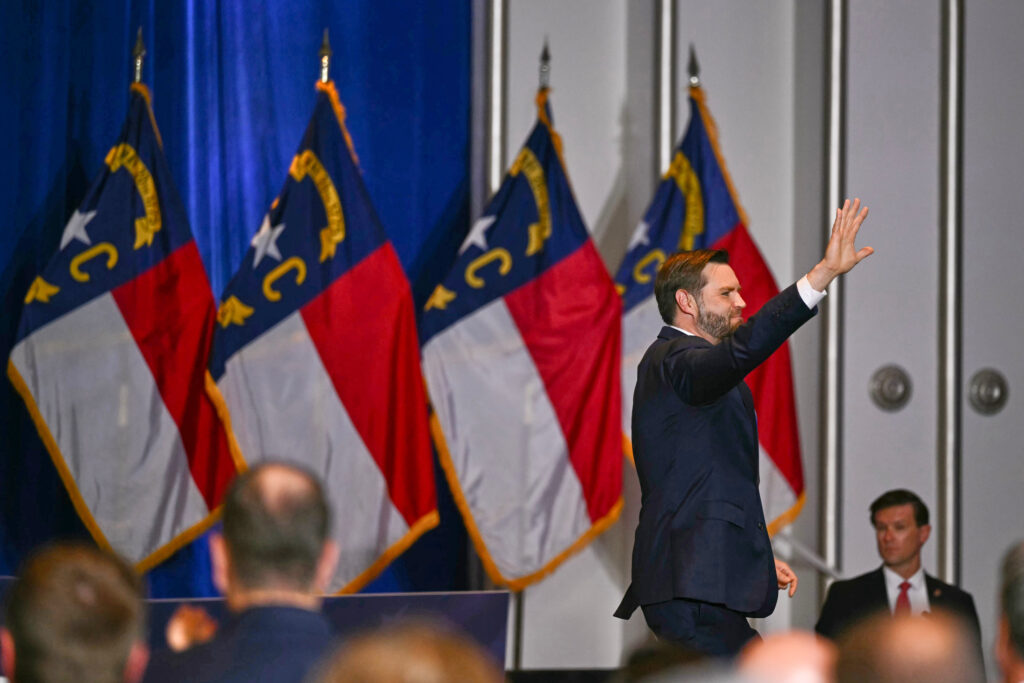
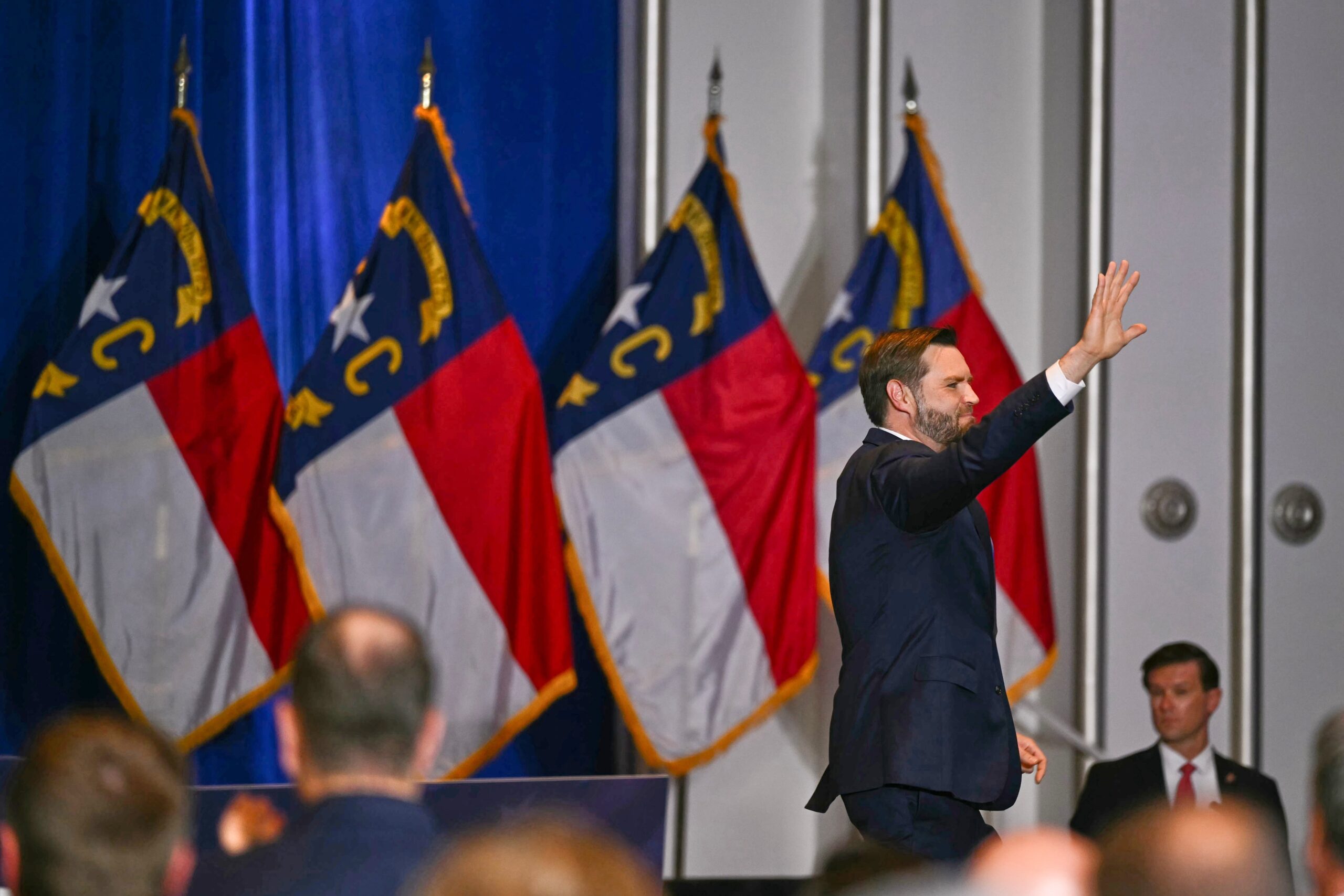
CONCORD, N.H. — Vice President JD Vance is leading polls of the nascent 2028 GOP presidential primary field — but that has not deterred other Republicans from taking steps toward running months before the race kicks off.
Other Republicans — including several sitting lawmakers — are weighing 2028 campaigns, even as the party fights to hold on to its House and Senate majorities in November’s midterm elections.
Sen. Rick Scott (Florida) insisted to reporters before headlining a GOP dinner in New Hampshire — the second state on the Republican nominating calendar — that he is not running for president. But he allowed in his remarks that he views the White House as a much more enticing job than the Senate.
“The best job is to be the president,” Scott told the crowd in a hotel ballroom blocks from the state capitol on Friday. “If that’s not available, be the governor. If that’s not available and you still have to do something, maybe be a U.S. senator.”
Scott isn’t alone in making moves that White House hopefuls often make before formally declaring.
Sens. Ted Cruz (Texas) and John Kennedy (Louisiana) have gone to Iowa, the first GOP nominating state, in recent weeks. Sen. Rand Paul (Kentucky) said he is considering running. And another Kentucky libertarian — Rep. Thomas Massie — has not ruled out running as a Trump administration critic after losing his House primary in May to a challenger backed by President Donald Trump.
A fractious contest for the nomination could force Vance to reckon with Trump’s less popular policies while laying out his own vision for the party’s future. No sitting vice president has run for president in a competitive primary since Al Gore — and Trump’s approval rating is lower than that of President Bill Clinton, the Democrat that Gore sought to succeed, two years before the 2000 election.
Vance received roaring applause from the crowd of Trump supporters at the party’s recent midterm convention in Dallas, and he remains the front-runner in a race that will not start in earnest until after the midterms. But some potential Republican candidates are already criticizing Vance and the Trump administration’s policies.
Massie said he thinks Vance and other members of the administration have disqualified themselves from running because of repeated missteps. Cruz has criticized Vance’s record on Iran. And Paul said in an interview that he would oppose tariffs, foreign wars and the federal government taking stakes in corporations if he ran — all policies undertaken by the administration.
“There’s a struggle within the party between populism and free market,” Paul said. “The hope is that there will be a free-market candidate.”
Paul said he is 50-50 on running and will not make a decision before the midterms. But he argued that voters are sympathetic to his views.
“I think the Republican primary electorate’s probably more with me than with the rest of them,” Paul said.
Cruz and Paul both ran for president in 2016 before Trump remade their party. Cruz won the Iowa caucuses and 10 other contests before he dropped out and endorsed Trump. Paul suspended his campaign after coming in fifth in Iowa.
Kennedy, a regular Fox News guest whose profile has risen since he published a best-selling book last year, “How to Test Negative for Stupid: And Why Washington Never Will,” spoke at a large Republican event in Iowa on Saturday. He also visited another early primary state, South Carolina, last month to raise money for a Republican House candidate there. He said his decision would depend in part on which other Republicans run.
“I’m planning on running for reelection,” Kennedy said in an interview. “But if I get tired of this place and/or if a bunch of goobers run for president, then I reserve the right to run.”
Kennedy declined to say what he meant by “goobers” but said he thought they might run in either party’s primaries. He had $18.6 million in his Senate campaign account on June 30, according to campaign finance filings, giving him a potential financial advantage if he decides to run.
“What was that song that the Judds sang — ‘Why Not Me?’” Kennedy said, referring to a 1984 country hit.
Read more Jayden Daniels remains out indefinitely as Commanders tap Marcus Mariota to face Seahawks
Scott has also popped up to the early presidential nominating states. He traveled to Iowa this month to campaign for Rep. Mariannette Miller-Meeks before headlining the New Hampshire Republican Party’s annual Amos Tuck dinner on Friday. The dinner has drawn potential presidential candidates in the past: Florida Gov. Ron DeSantis headlined it in 2023 weeks before announcing a White House run.
Scott is an outspoken critic of the enormous deficits that the federal government has run during the Trump administration. He debuted a new economic plan last week, titled “Rescuing America.”
Scott is also one of the wealthiest senators and could largely self-fund a campaign. He considered running for president in 2024 but ultimately decided against it, instead mounting unsuccessful runs for Republican Senate leader in 2022 and 2024.
Any Republican who runs against Vance might face an uphill battle. Just two sitting vice presidents have sought their parties’ presidential nomination in a competitive primary since the modern primary era started in the 1970s: George H.W. Bush in 1988 and Gore in 2000. Both won the nominations.
A recent Bowling Green State University/YouGov poll found 44 percent of Republican likely voters in the midterm elections said they would support Vance for the nomination. Secretary of State Marco Rubio, who has signaled he has no plans to run in 2028 and would support Vance’s campaign, trailed with 21 percent of likely voters. Three percent said they would back Cruz, and 1 percent selected Paul. The poll did not ask about Kennedy, Scott or Massie.
Cruz has declined to say whether he will run for president, but no Republican has been more vocal about potentially taking on Vance. He has criticized Vance’s relationship with former Fox News host and Israel skeptic Tucker Carlson and has said he believes the party will have a fulsome “discussion” about who should succeed Trump — which he intends to be “part of.”
Asked about Vance last week on the “Pod Force One” podcast, Cruz said Republicans are in the middle of a debate about what kind of party they should be.
“Are we a small-government, free-market conservative party, or are we a big-government nanny-state party?” Cruz said. “That’s a really big, fundamental divide about what we believe. … On foreign policy, are we an isolationist party? Do we want to just withdraw from the world? Or do we believe in American leadership?”
The GOP nominating contest could also spotlight a generation divide.
Vance will be 44 on Election Day in 2028, which would make him the youngest presidential nominee since Democrat John F. Kennedy in 1960. Sen. Kennedy will be 76, and Scott will be 75; either would be the oldest president elected to a first term except for Joe Biden in 2020.
Vance on Friday traveled to Iowa, his second time in the state since May. Both times, the vice president held events to drum up Republican enthusiasm ahead of the midterm elections — the outcome of which is likely to influence his standing with Republicans.
Advisers to the vice president have privately said they expect he will face challengers if he runs for president, and Vance is already taking steps to build bridges with a key faction of the GOP that has been less enthusiastic about the prospect of a Vance presidency.
He made a trip at the end of August to Las Vegas to speak at the Republican Jewish Coalition summit, a crowd made up of hawkish Republicans who have been critical of Vance’s close relationship with Carlson, the former Fox News host who has faced allegations of antisemitism.
Last week, Vance invited Sid Rosenberg, a New York City-based Jewish conservative radio host, to meet with him at the White House after Rosenberg didn’t get an opportunity to talk with Vance during the RJC meeting. And on Friday, Vance hosted a shabbat dinner at the Naval Observatory ahead of the start of Yom Kippur.
Sen. Jim Banks (Indiana) last week became the first Republican senator to endorse Vance. He said in a brief interview that he expects Vance to run, describing him as “the clear choice to carry on the America First agenda and the Trump mantle.”
Massie said it didn’t make sense to analyze the potential presidential field until after the midterms. DeSantis rose in the polls after the 2022 midterms, he said, after Republicans backed by Trump lost Senate races in Pennsylvania, Arizona and Georgia.
“Maybe we lose the majority, everybody’s down on Trump, then he gets impeached three times and everybody likes him again,” Massie said. “Who knows?”
Read more Mamdani hosts Trump at Gracie Mansion as unlikely rapport continues