The administration ignored passage of a similar resolution in June, arguing that it lacks the force of law.
Read more Texas voter-registration backlog could affect midterms
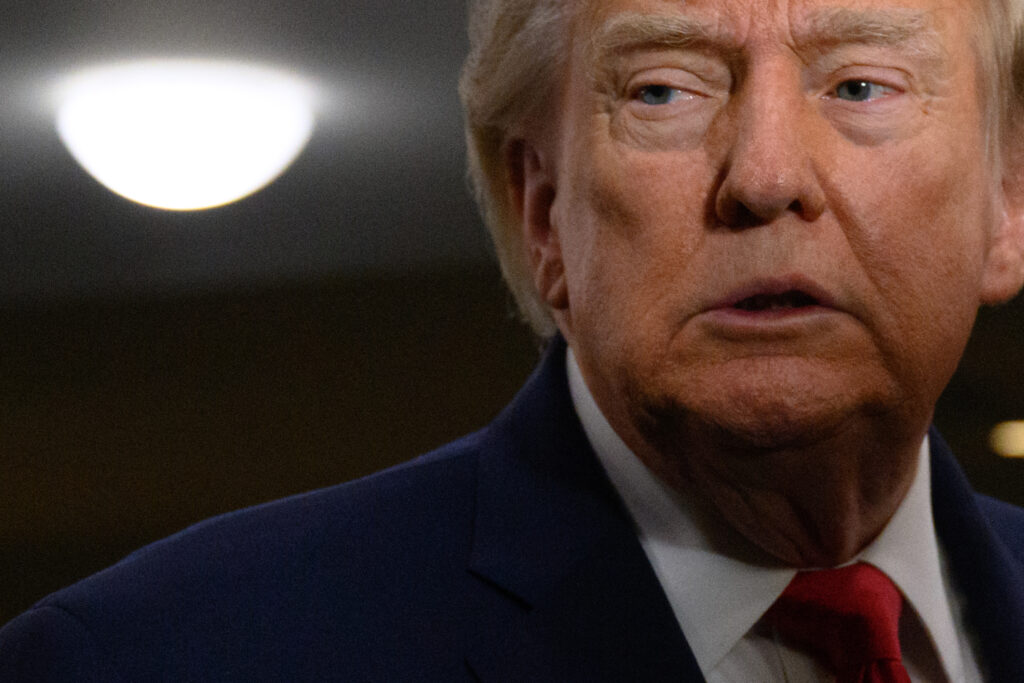
The Senate rejected a resolution Thursday to block President Donald Trump from ordering further strikes on Iran, even as Republicans voice growing concern about the war ahead of the midterm elections.
The measure failed on a 49-50 vote in the Senate after passing the House in July. Four Republicans — Sens. Rand Paul (Kentucky), Susan Collins (Maine), Lisa Murkowski (Alaska) and Thom Tillis (North Carolina) — defied Trump and joined Democrats in voting for it. One Democrat, Sen. John Fetterman (Pennsylvania), voted against it.
Tillis, who has opposed similar resolutions in the past, said he would vote for it in part because the administration had failed to articulate its strategy to lawmakers or the public.
“The war right now is very unpopular because nobody’s sensing any real progress,” Tillis told reporters.
Other Republicans have recently become increasingly critical of the war. Seven House Republicans voted last week for a similar resolution, which passed the House. And Sen. Jon Husted (R-Ohio) and two Republican Senate candidates in competitive races — Rep. Ashley Hinson of Iowa and former congressman Mike Rogers of Michigan — called this week for the war to end.
Collins, who is in a tough reelection fight, supported the resolution after backing similar ones in recent months. But Husted and other Republicans facing competitive races voted against it.
“A war powers vote is about removing American forces from a region,” Sen. Dan Sullivan (R-Alaska), who is facing a competitive race, told reporters after the vote. “And when there are troops in contact, I don’t believe in doing that.”
The War Powers Resolution of 1973 — the law that Democrats used to force the vote — states that the president must remove U.S. forces engaged in hostilities abroad without congressional authorization if Congress passes such a resolution.
The Trump administration has argued that the law is unconstitutional and that a provision allowing Congress to pass a war powers resolutions that cannot be vetoed is on even shakier legal ground.
Read more California Supreme Court rules sheriff must return seized ballots
The Supreme Court ruled in 1983 in Immigration and Naturalization Service v. Chadha that Congress could not restrain the president’s veto power in such a way, though Democrats argue that courts have never weighed in on whether the precedent applies to war powers resolutions.
Republicans have countered that the Supreme Court’s ruling applies.
“The concurrent resolution process … has been held unconstitutional by the United States Supreme Court,” Sen. James E. Risch (R-Idaho), the chairman of the Senate Foreign Relations Committee, said on the Senate floor in June. “So whatever happens with this, it’s going to have no effect. The president isn’t going to pay any attention to it.”
Senate Democrats have forced a dozen similar votes since the start of the war in February. Senate Minority Leader Chuck Schumer (D-New York) warned Thursday before the vote that voters would take note of which Republicans opposed the resolutions.
“Americans will remember who votes to end Trump’s war today, just as they will remember who voted for the war to continue time and time and time again,” Schumer said on the Senate floor.
Sen. John Kennedy (R-Louisiana), who opposed the resolution, encouraged Trump to explain more clearly what the war has accomplished and how he plans to bring it to an end.
“I’d love to see the president give a nationwide address and stay on script. And if he doesn’t want to do it — and I assume he doesn’t, because he’d have done it already — let Rubio do it or let General Caine,” Kennedy told reporters, referring to Secretary of State Marco Rubio and Dan Caine, the chairman of the Joint Chiefs of Staff. “Just say: ‘I’m going to tell you why we went in. Let me tell you what we’ve done to them. Let me tell you why we did it. Let me tell you why the world’s safer. And let me explain how we’re going to get out, or at least what our options are.’ Because the American people are confused.”
Sen. Tim Kaine (D-Virginia), the architect of his party’s efforts to force such votes, said he hoped that Trump would take notice as more Republicans vote to end the war. Voters in November’s midterm elections are paying attention, too, he said.
“This is a dominant issue as Americans are thinking about who they want running this government,” Kaine said.
Read more Court dismisses Trump lawsuit against Iowa pollster, Des Moines Register