BRASÍLIA — For millions of voters, Brazil’s presidential election on Sunday is less about who inspires them most than who scares them least.
Read more Why this Democrat is struggling in a state that rejects Trump
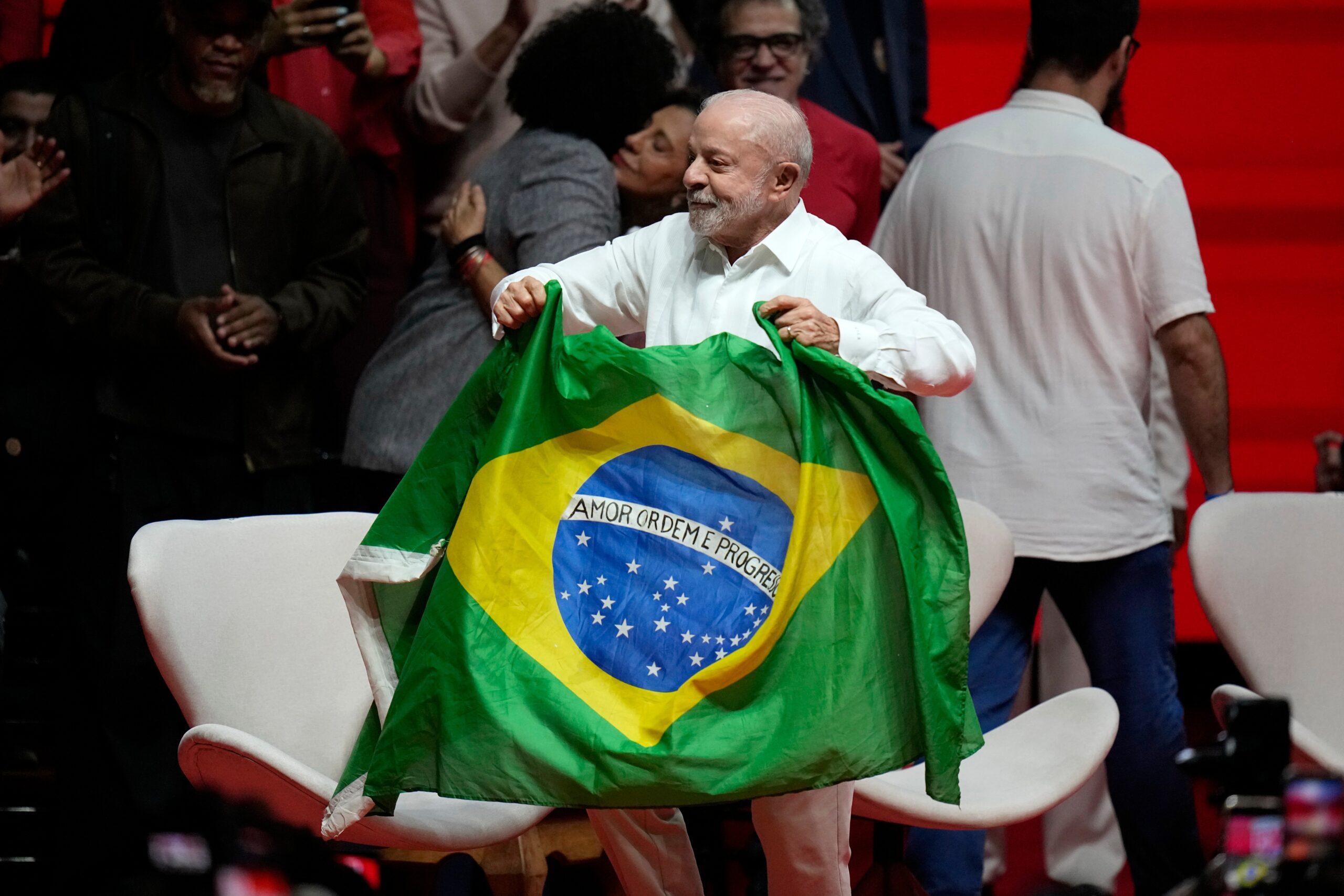
The front-runners are, for many, wearyingly familiar. President Luiz Inácio Lula da Silva, 80, is running for an unprecedented fourth four-year term; the left-wing leader has already served the most terms, albeit nonconsecutively, of any president in Brazil’s young democracy.
His principal challenger is Sen. Flávio Bolsonaro, 45, the oldest son of former president Jair Bolsonaro. The younger Bolsonaro, a right-wing populist, is running in part to get his father out of prison. The elder Bolsonaro, convicted of plotting a coup to stay in power after losing to Lula in 2022, is serving a 27-year sentence for attempting the violent overthrow of the democratic rule of law.
Flávio Bolsonaro and Lula, political opposites in this deeply divided nation, are expected to finish first and second in a crowded first-round field on Sunday. If, as expected, neither wins a majority, they will advance to a head-to-head second round in three weeks, with polls showing them in a statistical tie.
Brazilians, who have been voting directly for president since 1989, are accustomed to the unexpected. In 2014, candidate Eduardo Campos, a rising political star close to Lula, was killed in a plane crash weeks before the October vote. In 2018, Jair Bolsonaro was stabbed at a campaign event. In 2022, Bolsonaro, following ally Donald Trump’s playbook, refused to concede his loss as his supporters stormed Brazil’s presidential palace, Congress and Supreme Court in an assault reminiscent of the Jan. 6, 2021, attack on the U.S. Capitol by Trump backers.
As Brazilians prepare to vote again, the mood is less anticipation than numbness. There has been little debate over ideas; much of the focus has been on a corruption scandal that has ensnared the business and political elite, including Flávio Bolsonaro, and now the Supreme Court. Concerns about U.S. interference have added another layer of uncertainty.
Lula ended the last of his first two terms, which stretched from 2003 to 2010, with approval ratings in the high 80s. Aided by the early 2000s commodities boom, he had presided over strong economic growth and used it to power Brazil off the United Nations’ hunger map. But this time around, many voters say he has not delivered the improvement in living standards and purchasing power that he promised.
Lula has acknowledged the challenge. When a democracy fails to meet people’s basic needs, he told The Washington Post in May, it creates space for anti-system rhetoric. “Then any idiot who speaks against the system gets applause,” he said. “That’s happening all over the world.”
Bolsonaro is selling himself as a change for voters frustrated with Lula. But he carries the burden of his father’s presidency, which was marked by a chaotic response to one of the world’s deadliest coronavirus outbreaks as well as rhetoric and policies that alienated women, Afro-Brazilians and Indigenous peoples.
Bolsonaro started his campaign describing himself as a more measured version of his father. “I’m grounded — more inclined toward dialogue and to build bridges,” he told The Post in April. “I’m the Bolsonaro you always wanted.”
The approach didn’t last. Voters who wanted to move beyond Jair Bolsonaro now face the possibility that his family will return to power.
“Neither candidate is particularly exciting, and that is what years of polarization have produced,” said Thomas Traumann, a political analyst based in Rio de Janeiro. “This is an election of rejection. Each candidate is trying to define himself by saying he is not the other.”
The numbers reflect that dynamic. Forty-four percent of voters fear another Lula term, according to a Quaest poll released last month. Forty-two percent fear the return of the Bolsonaros.
Here are the fears and frustrations shaping their votes.
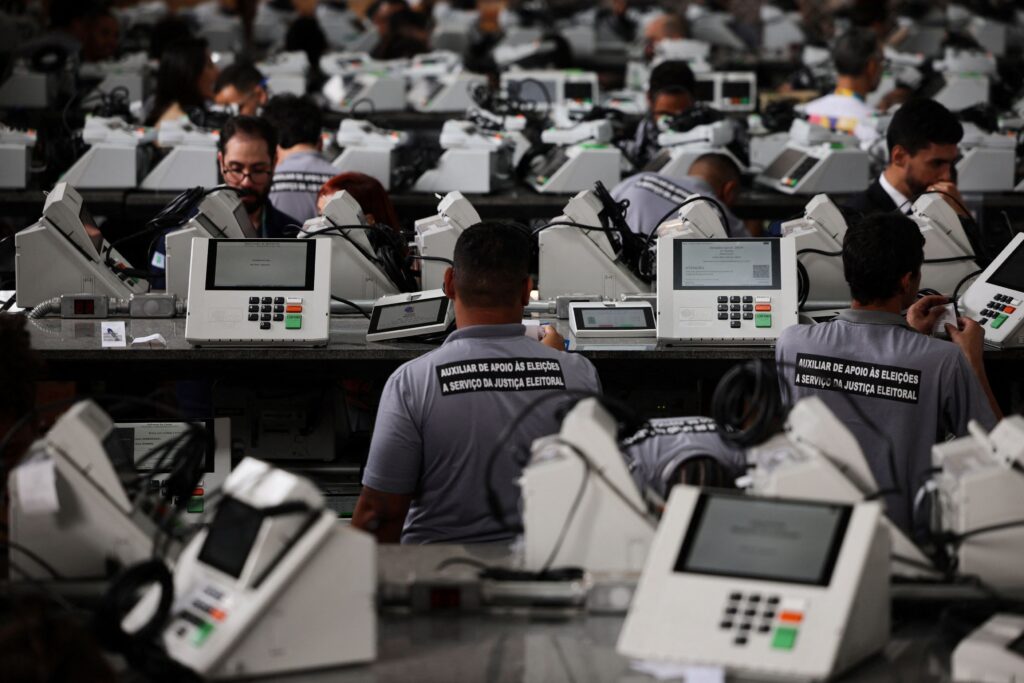
The election in Latin America’s largest country is the biggest test of Trump’s drive to reassert U.S. dominance in the region. A Bolsonaro victory would strengthen the pro-Trump bloc taking shape in Argentina, Chile and Colombia. A Lula victory would confirm Brazil’s status as the largest counterweight to that shift.
Trump, who endorsed Jair Bolsonaro in 2022, has not named a favorite in the race this year. But in recent weeks, diplomats and officials here have grown concerned that he might attempt to intervene in the vote.
Last year, Trump imposed tariffs on Brazilian products and sanctions on key officials to pressure them to drop the prosecution of Jair Bolsonaro. Another Bolsonaro son, Flávio’s younger brother Eduardo, moved to the United States last year to lobby the administration on this front.
In July, The Post reported, the State Department planned to send senior officials to cast doubt on the integrity of Brazil’s electoral system. On Friday, the U.S. Embassy here suspended consular services, citing unspecified security concerns.
The State Department last month denied trying to influence the election, calling any such suggestion “a baseless lie.” Nonetheless, Brazilian intelligence has classified the risk of U.S. interference as “critical.”
Addressing the U.N. General Assembly last month, Lula delivered a clear message to Trump: Stay out of Brazil’s election.
“On Oct. 4, millions of Brazilians will go to the polls to decide their own destiny,” he said. Brazil “will not allow the enemies of democracy, internal or external, to interfere with the will of the people.”
He didn’t name Trump. But a person involved in preparing the speech, who spoke on the condition of anonymity because they weren’t authorized to discuss the subject publicly, said it was intended for the U.S. president.
The specter of U.S. interference motivates voters here, so Lula is hitting it hard. Brazil, he told the General Assembly, “is nobody’s backyard.”
His campaign has accused Trump of trying to sway the electorate toward Bolsonaro. “Flávio Bolsonaro is Trump’s candidate,” the narrator of one campaign ad says, “and what Trump wants is to colonize Brazil, take our riches, steal our future and leave us in the dust.”
Flávio Bolsonaro has said his family’s ties to Trump benefit Brazil but insists he doesn’t need and isn’t getting the U.S. president’s help.
Bolsonaro climbed onto a stage in Recife recently wearing jeans and a green-and-yellow T-shirt and waving a fake machete.
“Attention, you rapist, abuser of women and children,” he shouted. “You’re going to get chemical castration, so you learn never to touch a woman without her consent.”
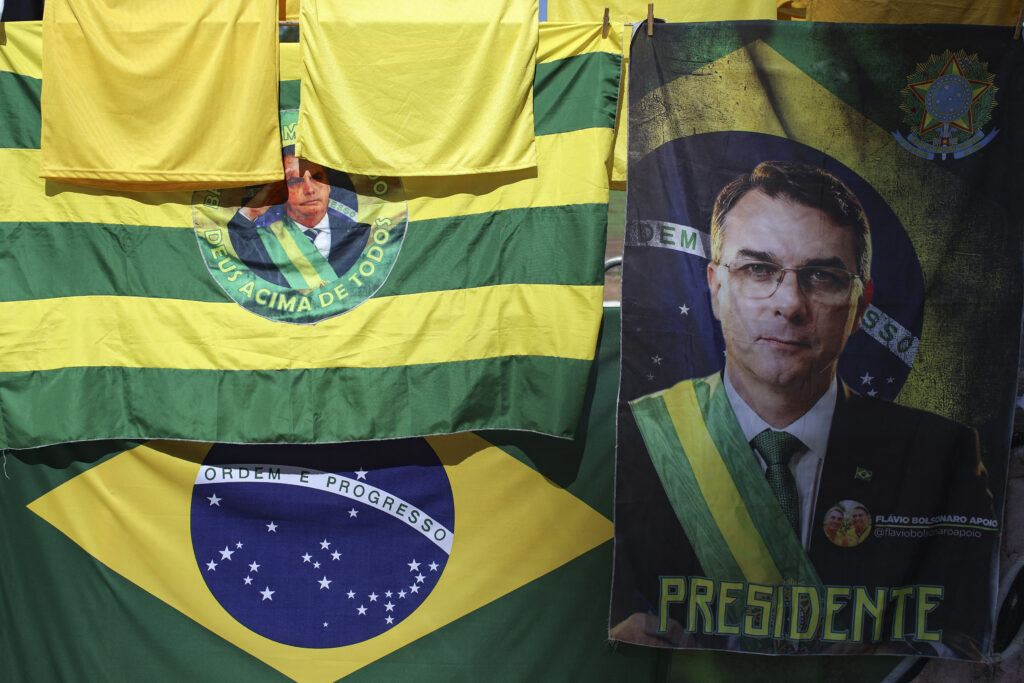
As the race has tightened, Bolsonaro has largely abandoned the moderation he once pledged for rhetoric that often matches his father’s.
For undecided voters, however, the concern is less his rhetoric than who he is — and whether they can trust him.
Read more A record number of Native Americans are running in the 2026 midterms
Camila Rocha, a researcher at the Brazilian Center for Analysis and Planning who has studied the Brazilian right for a decade, has been interviewing undecided voters since May. She said many have doubts about Bolsonaro’s independence and experience.
“Many see Flávio as immature, a playboy, a puppet of his father,” Rocha said. “But their main fear is his [alleged] association with militias and organized crime.”
Bolsonaro spent 16 years as a Rio state lawmaker before becoming a senator in 2019. He awarded a state medal to Adriano da Nóbrega, a former police captain accused of leading a militia, and employed members of Nóbrega’s family in his office. (Nóbrega was killed in a confrontation with police while a fugitive from justice in 2020.)
Separately, Bolsonaro was charged in 2020 with embezzlement, money laundering and other crimes in an alleged scheme to skim staff salaries. He denied the allegations, and prosecutors dropped the case after courts invalidated key evidence. Bolsonaro also denies involvement with militias.
Now he’s under investigation over allegations that he sought millions of dollars last year from jailed banker Daniel Vorcaro, accused in an alleged multibillion-dollar financial fraud scheme, to finance a film about his father. Bolsonaro denies wrongdoing. Vorcaro’s legal team has said it will not comment.
The candidate’s advisers acknowledge the burden of the Bolsonaro name: To win the election, they say, he must persuade voters who rejected his father because they saw him as a threat to democracy.
They’re attempting to turn fear into hope by presenting their candidate as a new generation of Bolsonaro. They believe that could help him particularly in the northeast, Brazil’s poorest region and the heart of Lula’s political base.
Just before the 2022 election, Lula appeared on Jornal Nacional, the country’s most-watched newscast, and made a promise.
“I want to come back and be better than I was,” he said. He promised lower prices on meat so Brazilians could once again eat steak with beer.
Four years later, prices remain stubbornly high, and public frustration has grown.
“There is disappointment with the present and a lack of perspective for the future,” Rocha said. “People acknowledge that Lula did a lot in his past terms, but now they complain about the cost of living, food and fuel.”
That frustration is compounded by scandals within his orbit. Federal police are investigating an alleged influence-peddling scheme involving his son, popularly known as Lulinha. Lulinha denies wrongdoing.
Lula himself was convicted in the late 2010s of accepting kickbacks from two Brazilian conglomerates and sentenced to 12 years in prison. He was released after 580 days, and the Supreme Court eventually annulled his conviction, finding that the court that tried him lacked jurisdiction and that prosecutor Sergio Moro was biased against him.
At the time of his conviction, Lula was leading polls for the 2018 presidential election. His removal from the race enabled Jair Bolsonaro, a previously obscure congressman, to win. Moro is now a senator with Bolsonaro’s right-wing Liberal Party.
Lula has grown irritated by the low approval ratings for his government, according to aides, and has demanded changes to his campaign strategy.
“There is a disconnect between what he thinks his government has been and what many people think it has been,” Traumann said.
Last month, Lula announced a 15 percent increase in Bolsa Família, Brazil’s main cash-transfer program. He has banned online gambling, which has affected his supporters disproportionately.
Campaign chief Edinho Silva, president of Lula’s Workers’ Party, said the campaign needs to focus on voters’ everyday concerns. “We have to talk about the economy,” he said. “We have to distance ourselves from battles over scandals with our rivals and talk about people’s lives.”
As polarization has deepened, conservatives have targeted the Supreme Court, whose actions, they say, are proof that the political system is stacked against them. Now, a corruption scandal has engulfed the court.
In the spotlight is Justice Alexandre de Moraes, who presided over Jair Bolsonaro’s conviction. Private messages appear to show a close relationship between Moraes and Vorcaro, owner of Banco Master. In text messages just before the banker’s arrest, he appears to ask Moraes when he should flee the country.
The messages, released by Moraes’s fellow justice André Mendonça, a Bolsonaro appointee overseeing the Banco Master investigation, do not include responses from Moraes.
Moraes, in a court filing last month, said he never received the messages. He called the investigation against him “illegal and unconstitutional” and “revenge” for Bolsonaro’s conviction.
Mendonça did not respond to a request for a comment.
The revelations have energized the right, which portrays Lula as close to Moraes. (Moraes, a former justice minister, was appointed to the court in 2017 by President Michel Temer, a center-right politician.)
But capitalizing on those revelations is complicated for Flávio Bolsonaro, given that his own dealings with Vorcaro are being investigated.
Lula has said the investigation should reach everyone, regardless of political affiliation. But neither side’s message appears to be resonating strongly with undecided voters, who tend to see corruption as pervasive across the political spectrum.
Neither Lula nor Bolsonaro participated in televised debates for the first round. They’ve discussed policy, but the campaign has been less about what Brazil can be than which candidate voters are more willing to live with.
“Politics has ceased to be an opinion, or even a cause, and has become an identity,” social scientist Rodrigo Tavares wrote in Folha de S.Paulo. “For a large share of Brazilians, politics is not about choosing between government programs.”
Read more How Roy Cooper became Democrats’ best chance to flip a Senate seat