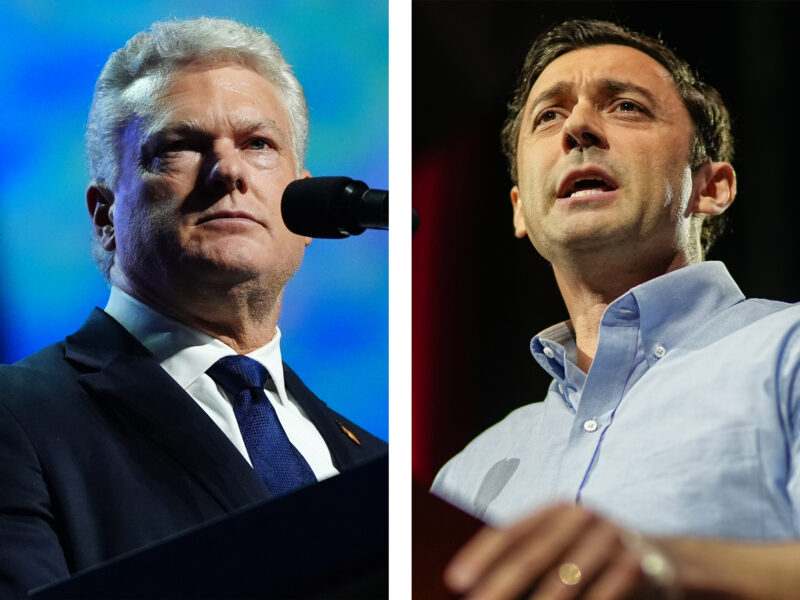
Even mothers were not exempt in a fierce debate in the race for a critical U.S. Senate seat.
Read more Hegseth wants Fort Hood shooter’s execution by firing squad to be public
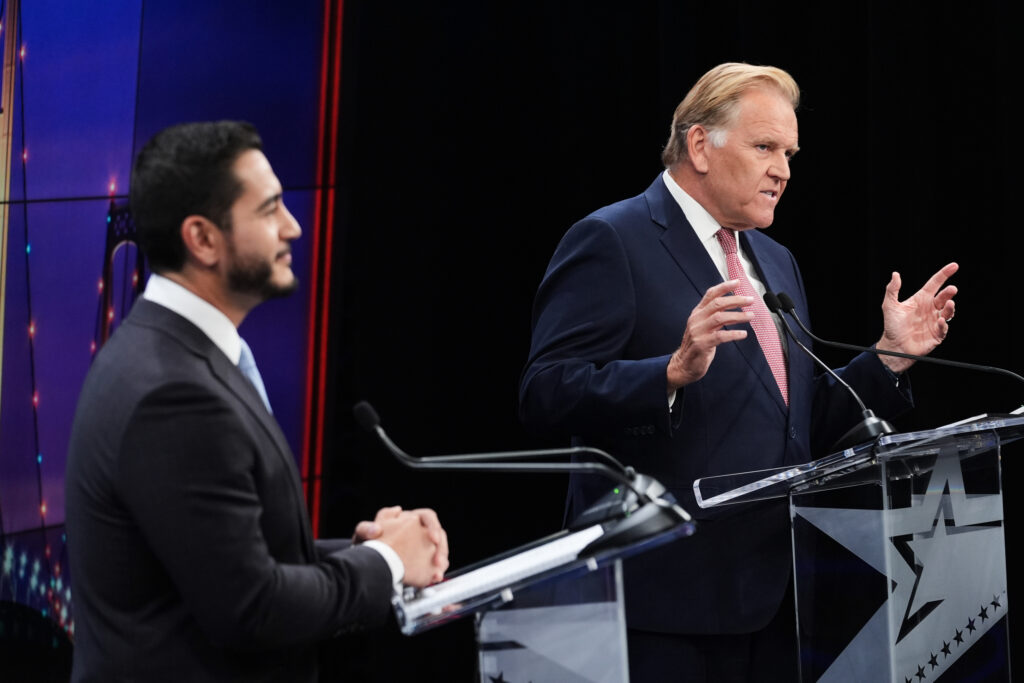
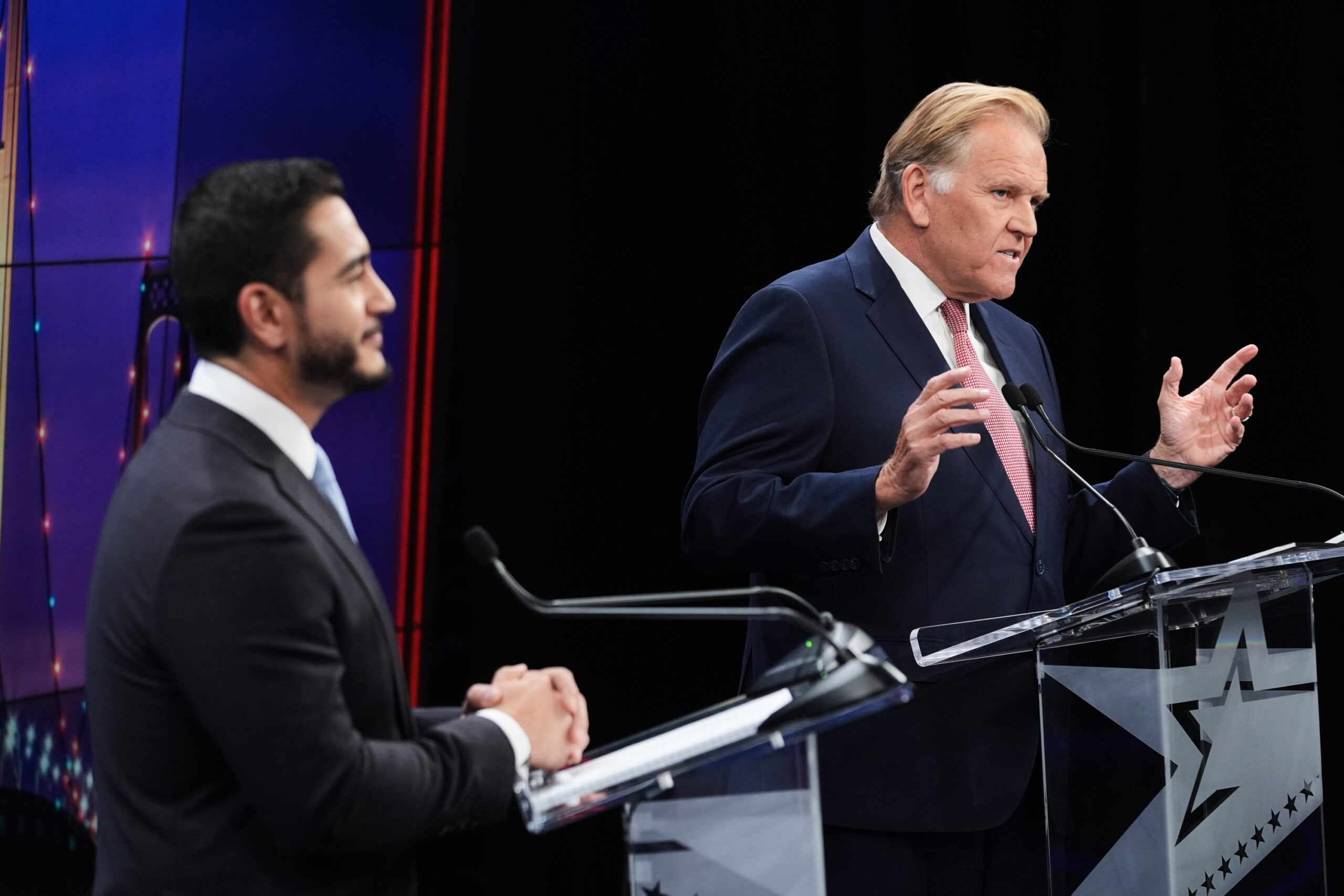
Democrat Abdul El-Sayed and Republican Mike Rogers swung hard and fast at each other during the first debate of Michigan’s tight U.S. Senate race, a contest crucial to determining which party controls the chamber.
The two attacked each other on foreign policy, health care, career choices and their personal real estate holdings — even exchanging words about each other’s mothers.
The combative tenor of the race has built for months on social media and paid television ads, and the sniping intensified Thursday. Each of the candidates aimed to cut into the other party’s traditional bases.
President Donald Trump has served as a main character throughout the campaign and did so again in the debate as a foil for El-Sayed and a subject of a careful balancing act by Rogers.
The president won Michigan twice, but he has seen his approval ratings slide as the war in Iran and his tariff policy have helped drive up the cost of living.
The debate, hosted by NewsNation, showcased sometimes bitter taunting between Rogers, a former congressman and FBI agent, and El-Sayed, a Rhodes scholar with a medical degree.
El-Sayed, a public health official, would be the country’s first Muslim senator if elected. His identity has been a central line of attack for Republicans, in ways that have drawn accusations from Democrats of Islamophobia.
Here are five takeaways from one of the midterms’ most closely watched debates:
The debate’s jabs transcended policy and veered quickly into the personal, as they critiqued boat ownership, truthfulness, donors and foreign real estate.
The two interrupted each other so frequently and at such length that debate moderator Rick Albin at one point interjected: “I’d like to be part of the debate, too.”
By then, El-Sayed had already brought up Rogers’s “two yachts” and said “the only thing he cares about is his own power,” while Rogers had called El-Sayed “a con man” and “a glitchy AI chatbot” and accused him of owning luxury property in the Middle East.
At one point, Rogers responded to El-Sayed’s rapid-fire questioning of him by saying to the moderator, “I’m getting interviewed by him, not by you.”
At various points in the debate, Rogers said El-Sayed was not a real doctor, lied about his citizenship, took money from supporters of terrorist organizations and had a mother who worked for them. (All are claims El-Sayed denies.)
“Let’s do this. Let’s open up this can of worms,” Rogers said as he began to talk about El-Sayed’s mother.
“You’re going after my mom,” El-Sayed said.
“I’ll put my mom up any day,” Rogers said, adding that his mother worked at a local chamber of commerce.
When Rogers tried to direct viewers to a website he said featured El-Sayed’s deleted social media posts, El-Sayed deadpanned, “You made a website. That’s awesome. Good for you.”
The bickering continued even through a commercial break, when the cameras were off.
“They were still continuing the argument about who owned what house where and how much it was worth,” the moderator said afterward.
Since Labor Day, polls consistently have shown the race close to a dead heat, with El-Sayed leading either within or just outside the margin of error.
The debate showcased a major reason: Very different candidates offered a divided state sharply different theories about what would move voters’ lives forward.
El-Sayed emphasized “cradle-to-grave” public health care, taxing billionaires to reduce the federal debt, ending aid to foreign militaries, limiting investment firms from buying up single-family homes and reforming campaign finance so that corporations and private donors cannot dominate political discourse.
“I don’t think it’s important for a billionaire to make a second billion. I think it’s more important for the average person to be able to make their first $100,000,” El-Sayed said.
Rogers cast El-Sayed’s vision as too costly and unrealistic.
“We can not afford Abdul,” Rogers said, suggesting, instead, price caps for gas, an “agrarian” credit to help farmers with diesel prices, and cutting red tape to make it easier to build more housing.
El-Sayed advocated federal guardrails to limit artificial intelligence and controversial Flock surveillance cameras. Rogers suggested local control of the cameras, then took another jab at El-Sayed’s family.
Read more Layoffs at ‘extremely low levels’ despite Americans’ gloom about the economy
Surveillance cameras are important to combat terrorism, he said. “Why would that bother you? Well, if you have somebody in your family that might be on the watch list …”
El-Sayed’s position that Israel’s war in Gaza is a genocide and that the United States should stop unconditional aid to foreign militaries dominated his primary fight against Rep. Haley Stevens and continues to be a key reason some Democrats refuse to support him.
Rogers pressed that to his advantage, accusing El-Sayed of refusing to acknowledge the third anniversary of Hamas’ Oct. 7 attack on Israel. He accused El-Sayed of accepting money from people with ties to the terrorist organization and to Hezbollah.
El-Sayed denied that. Of Oct. 7, he said, “I’ve condemned that. I didn’t turn into political theater like you just did.”
Despite tens of millions of dollars in attack ads, El-Sayed has not retreated from his position on Gaza, arguing the U.S. needs to rethink a foreign policy that sends tax dollars to military operations overseas rather than to bolstering domestic policy goals.
Israel, he said, had pushed the U.S. into war against Iran.
“Ask yourself: Are we safer because of that war? He wants unconditional support for a foreign government. I want unconditional support for kids in our schools,” El-Sayed said.
Rogers has been a Trump supporter, campaigned alongside him before the Aug. 4 primary and is relying on the president’s deep war chest to help win the race.
With Trump increasingly unpopular, tying Rogers to the White House has been a major theme for El-Sayed, who during the debate accused the Republican of being a “sock puppet” for the president.
The key issue for voters, he said was “Do you elect a U.S. senator from Michigan who wants to fight the Trump agenda?”
This week, Rogers flip-flopped on a key Trump policy that’s caused economic harm to Michigan voters: tariffs against neighboring Canada.
“We know that Canada is not our enemy. We need to end the tariff war — now,” Rogers said in a campaign ad released this week, a sharp reversal from his comments last month when Rogers said in a statement that Trump “is right to put America First — and tariffs are necessary, but are not a one-size-fits-all solution.”
Asked about the reversal during the debate, Rogers said he called the White House this week to suggest Trump get “the deal done” to end tariffs on Canada.
Rogers put more distance between himself and the president by describing ICE enforcement in Minneapolis, where two protesters were killed by federal agents, as “probably not appropriate.”
El-Sayed shot back, “He said it was probably not right. I mean, it’s definitely not right. They killed two people.”
After the debate, Rogers said he’d welcome Trump if he chose to campaign for him in Michigan, saying that a lot of people want to hear from the president.
Each candidate is courting constituencies that would normally align with the other’s base.
Rogers made an overt appeal to Democrats and people concerned about the U.S.-Israel relationship, as well as Black voters in Detroit who in typical years would be a cornerstone of a winning Democratic coalition.
“Our fastest selling sign is ‘Democrats for Mike Rogers,’” the Republican said after the debate. “He still has the problem. He’s been insulting.”
El-Sayed has been campaigning in rural and Trump-friendly parts of the state with a “it shouldn’t be this hard” theme that blames economic uncertainty and higher prices on Republicans.
He’s repeatedly appeared on Fox News, and during the debate, repeatedly pivoted to economic populism, bringing up high gas and grocery prices.
Afterward, El-Sayed dismissed the idea that he couldn’t consolidate Democratic votes, noting that former president Barack Obama was coming to campaign for him later this month, that he had been campaigning with Gov. Gretchen Whitmer, a former rival, and with Sen. Elissa Slotkin, a more centrist Democrat, who beat Rogers two years ago.
“We’ve got a unified party,” he said. “Now, look, of course, you’ve always got to keep talking to different groups of people, and I’m going to keep doing that.”
Read more Arizona House candidate says she was raped while out fixing campaign signs