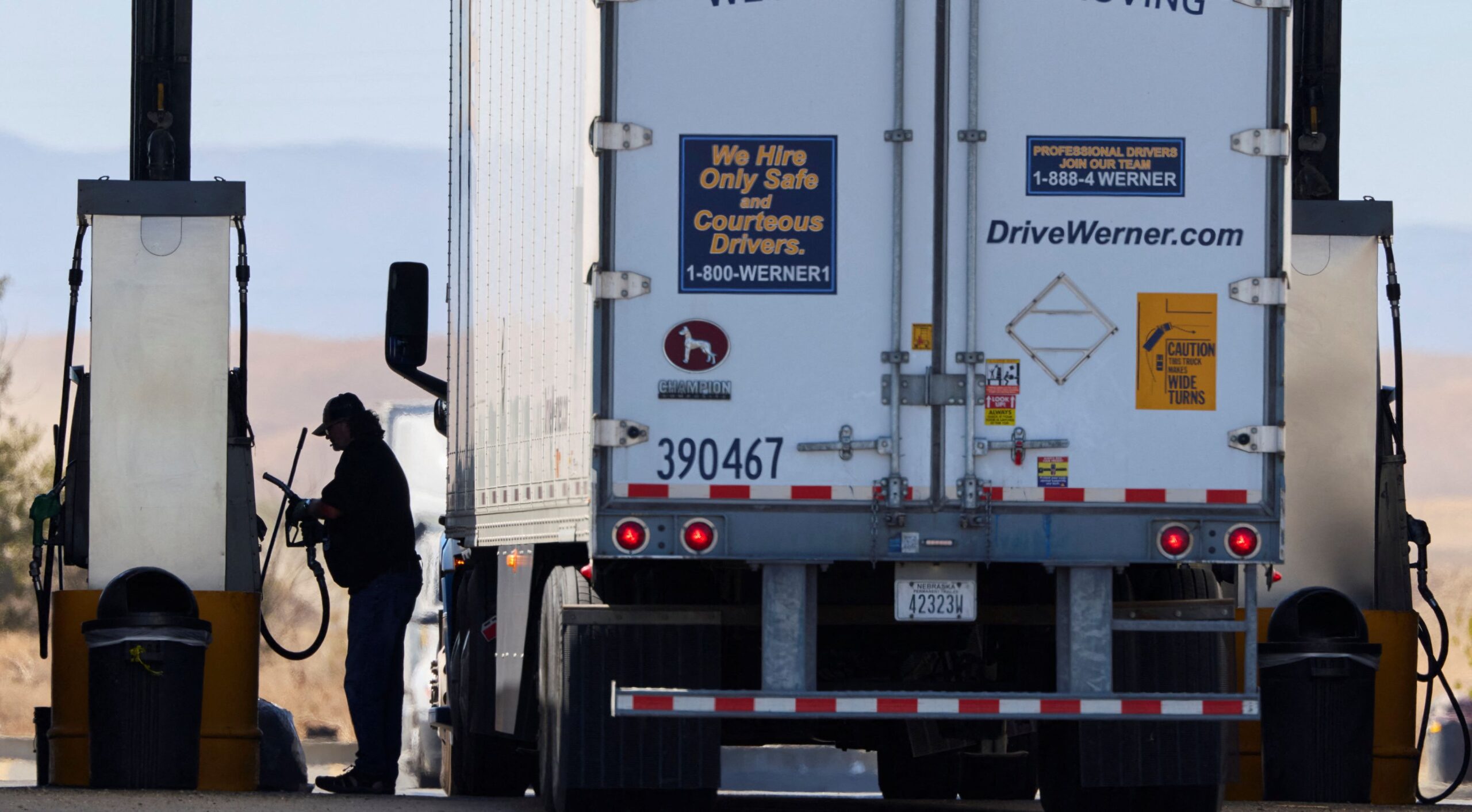
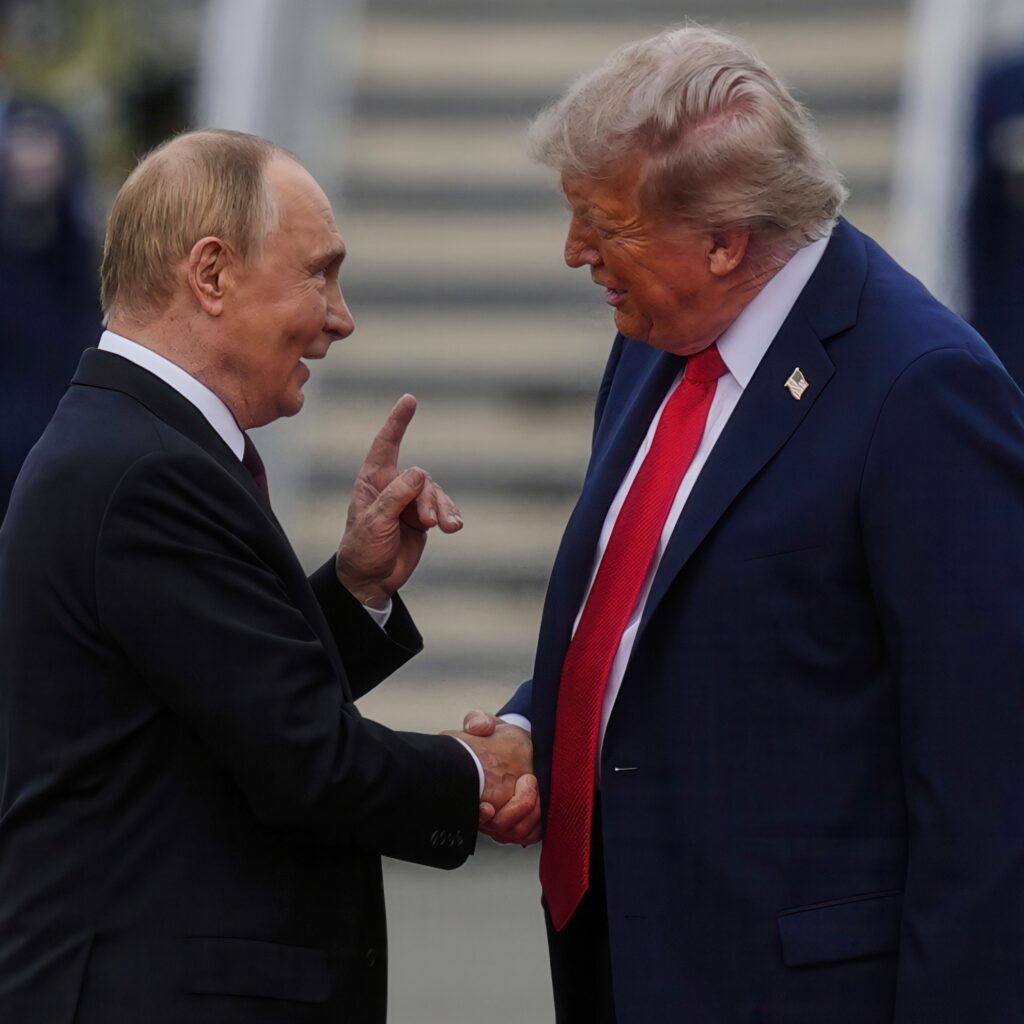
Russian President Vladimir Putin has agreed to supply diesel fuel to the global marketplace, President Donald Trump said, a move that could ease prices somewhat but effectively aligns Washington with Moscow and against Ukraine and its bombing of Russian energy infrastructure.
Read more Trump taps conservative commentator as next White House press secretary
Touting a “highly successful discussion” with Putin, who has been escalating daytime attacks on civilians in Ukrainian cities in recent weeks, Trump wrote on social media that “Russia will immediately supply over 300,000 Tons of Diesel Fuel to the American and Global Marketplace, another 500,000 Tons during the month of November, and 1,000,000 Tons immediately thereafter.”
The announcement of the deal was a measure of Trump’s struggle to address energy prices less than a month ahead of the midterm elections, in which energy prices have become a major problem for his party.
The figures involved are a small slice of daily U.S. diesel production and consumption, and the immediate price impact was likely to be muted, analysts said. Russia hasn’t been exporting any diesel in a bid to conserve it for its war effort, as lines at fuel stations stretch for blocks in many Russian cities.
Trump’s announcement was accompanied by a lifting of U.S. sanctions on Russian diesel by the Treasury Department, which said that sales of the fuel to the United States would be allowed until April.
“Trump is now willing to undermine his own sanctions for what amounts to a rounding error in global energy markets. That speaks volumes about his desperation,” said Brett Erickson, an independent risk advisory consultant who closely tracks oil markets and tanker movements.
The impact on the Ukraine-Russia war could be more significant. Ukrainian drone attacks on Russian refineries have been increasingly successful at disrupting the country’s fuel supplies in recent months and have emerged as among its most effective pressure tactics against the Kremlin.
The deal drew immediate condemnation from Ukrainian President Volodymyr Zelensky.
“Gifts to Putin will not bring peace or any benefit to the civilized world. Russia will ‘repay’ the diesel with further terror and perfidy,” Zelensky wrote on X. “Allowing Russia to sell petroleum products is an investment in a war that must be ended, not prolonged.”
Last month, Trump announced that he had facilitated an agreement between Russia and Ukraine to halt attacks on each other’s energy infrastructure — a deal that neither side signed onto.
Trump also contemplated a ban on U.S. exports of diesel before his advisers shot down the idea as likely to do more harm than good. A diesel export ban would almost certainly raise the cost of gasoline because of the way refineries produce the two fuels, officials said. Last week, Trump announced a move to stop enforcing some federal diesel tax laws for drivers, mostly in farm states, through the end of the year.
Trump is eager to bring drivers relief, as crushing prices at the pump have become a massive political liability. Frustrations with diesel prices that average $6.28 per gallon nationwide are a big factor in the polling gains Democrats are making in districts not long ago seen as out of reach for the party, especially in the Midwest. Diesel prices averaged $3.68 per gallon a year ago.
The White House, however, has few viable options for bringing down the price of diesel anytime soon. Diesel prices have skyrocketed beyond the overall oil price increases that followed Trump’s February attack on Iran and Tehran’s response, which was to squeeze crude oil shipments through the Strait of Hormuz.
Friday’s move is unlikely to bring diesel prices down substantially, as the amount of Russian fuel that would come to the U.S. is a small fraction of demand.
Read more Ocasio-Cortez will stump for Abdul El-Sayed in Michigan’s Senate race
The U.S. produces 3.6 million barrels per day domestically, about a third of it being exported to markets abroad. The Russia deal would make available to the U.S. market roughly an additional 74,000 barrels a day in the short term, according to Gregory Brew, an oil analyst at the Eurasia Group who posted about the deal on X. He also questioned the viability of the deal at a time when Russia faces an intense diesel shortage.
Russia’s diesel supply has dropped precipitously as a result of the Ukrainian attacks. For the deal to work, it would seem to require a pause in those efforts. Ukraine may have little choice but to go along, given its broader dependence on Trump’s goodwill to keep fighting.
Russian Deputy Prime Minister Alexander Novak told Russian state media late Friday that the country will begin lifting restrictions on diesel exports “immediately.”
Novak said that the country may increase diesel exports in November and December as oil refineries complete maintenance work. He added that, despite this, the Russian market would remain “fully” supplied with the fuel, without explaining where the supplies would come from, given the existing shortages.
Trump’s agreement with Putin comes less than a month after Congress passed and Trump signed a law that gave the president sweeping powers to impose new sanctions on Russia and its energy industry, the Lindsey O. Graham Sanctioning Russia and Iran Act of 2026.
After dropping the idea of a diesel export ban late last month, Trump pressured Europe to release some of its inventories of diesel, which has helped bring prices down marginally.
But the actions — including the deal with Russia — are largely performative and unlikely to do much to bring diesel prices back down to anything close to where they were before the U.S. and Israel attacked Iran, energy analysts said.
The fundamental problem underlying the diesel shortage is a global shortage of refining infrastructure. The damage done to refineries and other production infrastructure in the Middle East and in Russia has taken a major toll. These are multibillion-dollar facilities that cannot be quickly repaired and brought back online.
Trump’s military operation to protect ships in the Strait of Hormuz has helped boost the amounts of crude oil making it through the waterway to levels nearing those of before the war on many days. But that does not solve the diesel problem.
That crude needs to be refined into products businesses and consumers actually use. The capacity to refine it has been deeply diminished globally.
“It does give the appearance the U.S. now has a direct interested in the health of Russia’s refining system,” said Mark Finley, an energy markets expert at Rice University’s Baker Institute for Public Policy.
Riley Beggin in Washington, Mary Ilyushina in Berlin and Kostiantyn Khudov in Kyiv contributed to this report.
Read more A Republican attack ad misidentifies its Democratic target. Twice.