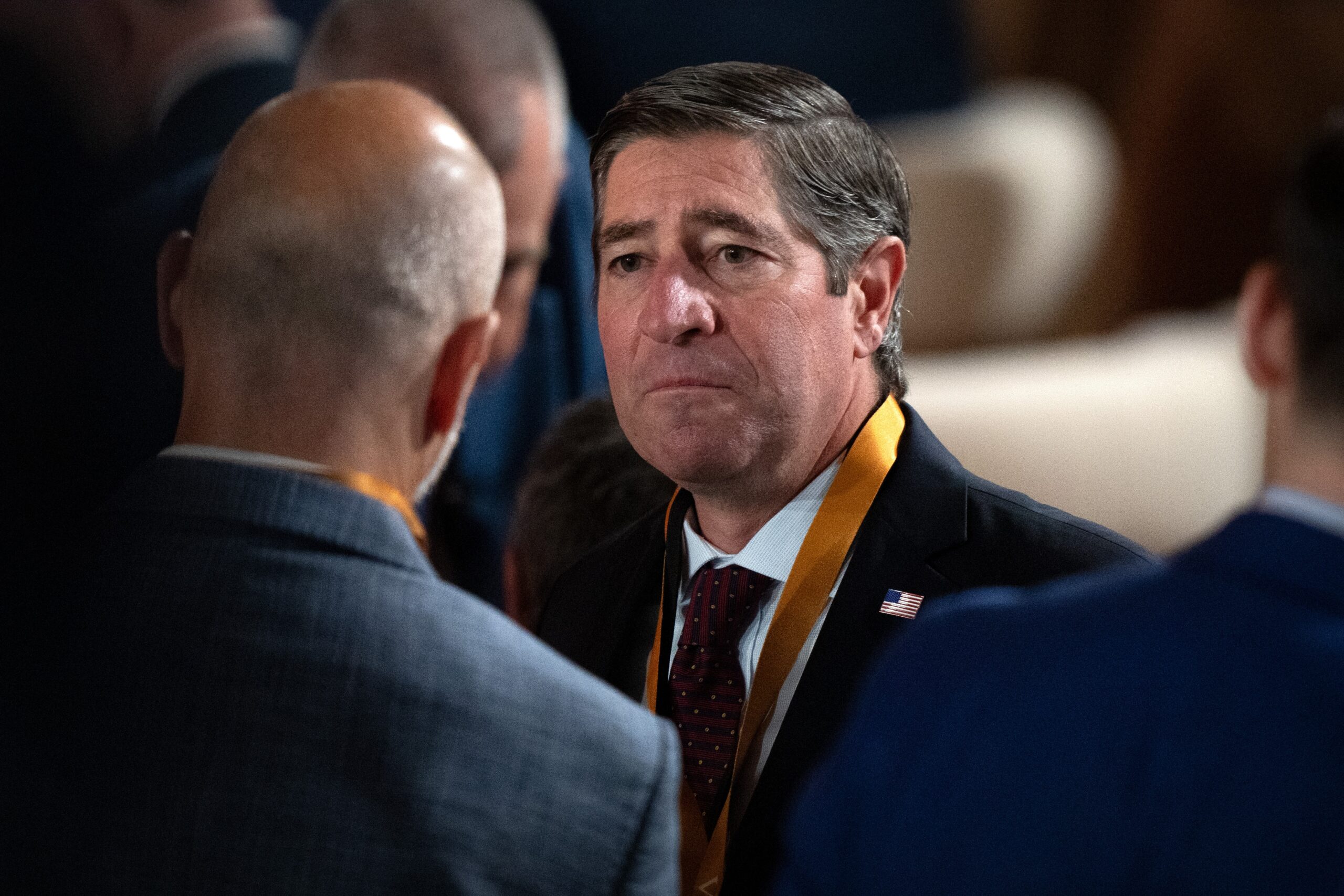
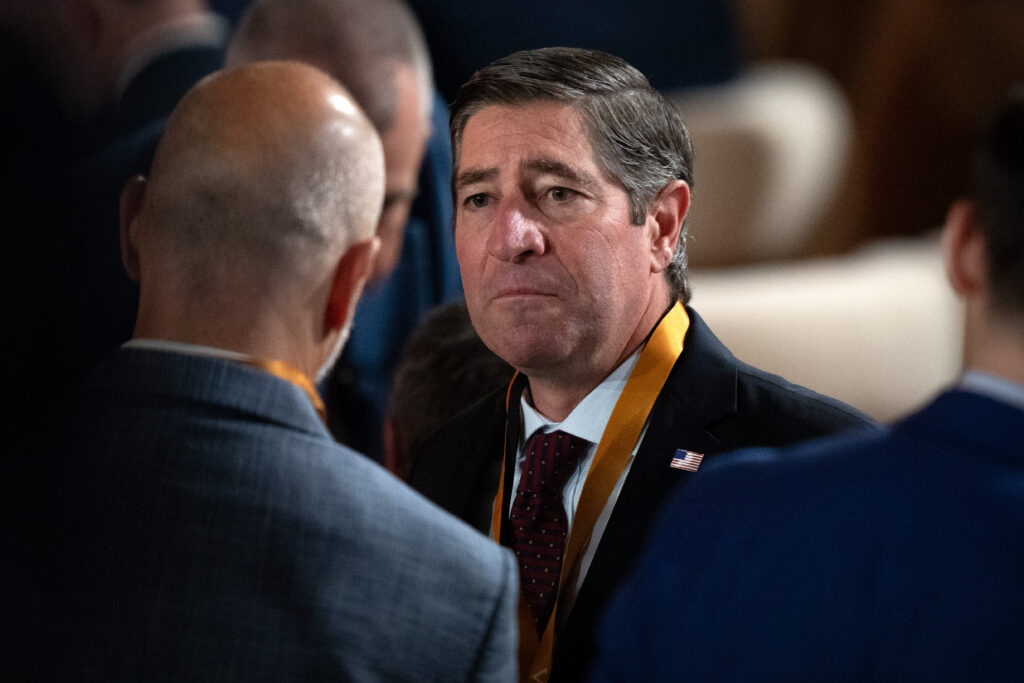
Scott Kupor, one of four officials heading the task force, has strong ties to industry leaders who have argued that the U.S. cannot restrain AI development in its race with China.
Read more Democrat has edge over Susan Collins in critical Maine Senate battle, poll finds
After spending much of his second term pushing to accelerate artificial intelligence, President Donald Trump is turning to a new “Super Intelligence Force” to confront a growing obstacle: Americans’ fears about the technology.
The goal of the new task force is to find ways to address concerns about the safety of AI technology without compromising the rapid innovation that has been central to Trump’s economic and national security agenda, said Scott Kupor, director of the Office of Personnel Management and one of the group’s four leaders.
“Can we do enough to make sure that the American people believe that we’re addressing their concerns appropriately without obviously compromising our ability to win?” Kupor said in an interview with The Washington Post.
That work began this week as the task force’s chairman, Jay Clayton, traveled to the Bay Area for meetings with leaders of the top AI labs and related companies, including Nvidia CEO Jensen Huang, Meta CEO Mark Zuckerberg and SpaceXAI founder Elon Musk, according to people familiar with the matter, who spoke on the condition of anonymity to describe private meetings.
Reversing public concern over AI is no easy task. The Trump administration hopes to reap what officials see as the economic opportunities of AI while fending off growing worries that the technology could unleash cyberattacks, eliminate jobs and raise energy prices to pay for power-hungry data centers. There are competing interests within the administration and different ideas about how to accomplish that objective.
The group is expected to prepare a report studying the risks of AI, focusing on potential threats to civil liberties and cybersecurity. The task force will also review mechanisms for companies to alert the government about new risks they are seeing in their labs.
That focus is a shift from the administration’s AI Action Plan, developed in 2025 to support rapid industry development of new systems.
“I would view this as an overlay on top of that,” Kupor said. The administration has had more than a year of new information, he said, and it’s time to ensure “security, safety and economic sovereignty” are also part of the playbook.
The leaders of the task force represent different camps within the administration following turf wars over how the government should craft its response to AI.
Clayton, the director of national intelligence, understands the interests of the government’s national security agencies, while Federal Trade Commission Chairman Andrew Ferguson represents the government’s de facto tech regulator. The FTC has launched a broad investigation into Anthropic and OpenAI, two of the leading AI firms. Kupor, previously a managing partner at the venture capital firm Andreessen Horowitz, and Emil Michael, a Pentagon official with Silicon Valley experience, have strong ties to industry leaders who have argued that the United States cannot restrain AI development if it wants to win the race with China.
Read more The politics of prediction markets
By having Clayton lead the task force, Trump has signaled that the administration is prioritizing the concerns of the national security and intelligence communities in its response. Kupor said the decision to name him, Michael and Ferguson also reflected the president’s interest in a well-rounded group.
Kupor acknowledged that different opinions exist within the administration about how to respond to AI, calling it “a really complex issue.”
“My hope is that people give us an opportunity to do as much information-gathering as we can, that they respect the fact that we are all open-minded, and we all ultimately want the same thing for the country — to make sure that the country is prosperous and safe, and that people feel secure in the technology work that’s happening,” he said. “But, look, it’s not easy. If it were easy, maybe we wouldn’t need this task force.”
Kupor said he viewed action from Congress as a potential threat to the work of the task force, as political opposition to AI grows.
“My general going-in concern about Congress regulating at this stage of development is that the industry is just changing so fast, and things are changing so fast,” he said. “I want to make sure that the preconditions for success for the U.S. that have long existed continue to prevail.”
He added, however, that he was not ruling out the possibility that lawmakers may need to step in.
His position reflects the general approach that the president has taken toward the AI industry, which Trump refers to as “SI,” for super intelligence: encouraging companies to police themselves. Last week, the administration unveiled an agreement in which top tech companies agreed to develop internal controls to address AI risks and audit their systems. Trump said the document was “morally binding,” but lawmakers from both parties said Congress needed to step in to mandate that the companies manage the risks of their products.
Kupor said leaders of the AI task force were meeting on Thursday, ahead of a broader meeting next week with other administration officials serving on the task force. He planned to propose that the group could accomplish its goals by defining the government’s expectations for the AI labs, and by facilitating more communication between the companies and the government, critical infrastructure firms and the host of financial institutions and other companies that are concerned about the cybersecurity threats posed by rapidly advancing AI systems. Earlier this week, South Korean President Lee Jae Myung said that AI models are believed to have been used in recent hacking incidents against commercial banks there.
“I don’t know exactly what the policy prescription will look like, but there certainly will be compromises that we will have to consider across all the domains here,” Kupor said. “And my hope is that we come up with something that ultimately, number one, is acceptable to the president, because certainly we owe him a readout on that, and then two, as we convey that to the American people, this shows that we took this seriously, deliberately, and that we were putting the best interests of the American people first and foremost.”
Read more The midterms are getting close. Why is Trump in Upstate New York?