In today’s edition … Voters are changing their minds … You tell me about your first time voting … but first …
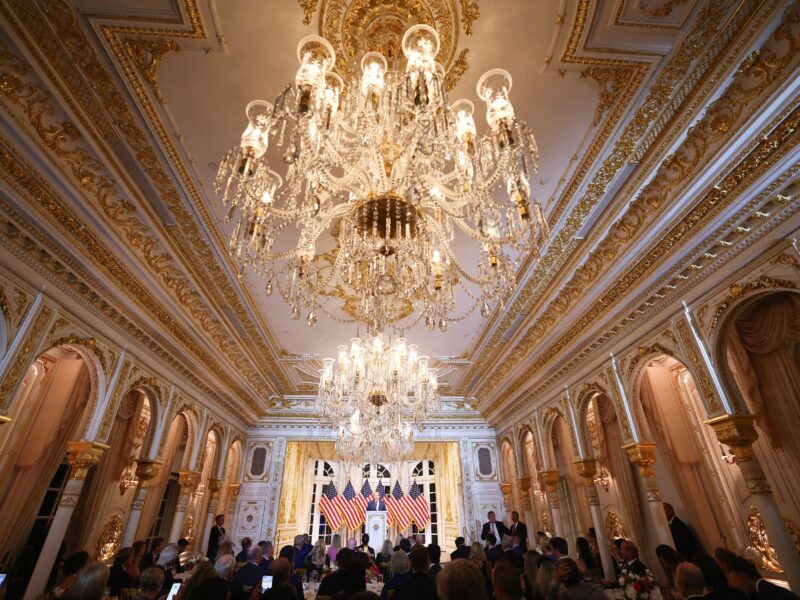
Read more Trump’s D.C. hotel is gone. Republicans still pay millions to his businesses.
Few living Americans know what it is like to be president. Five, in fact.
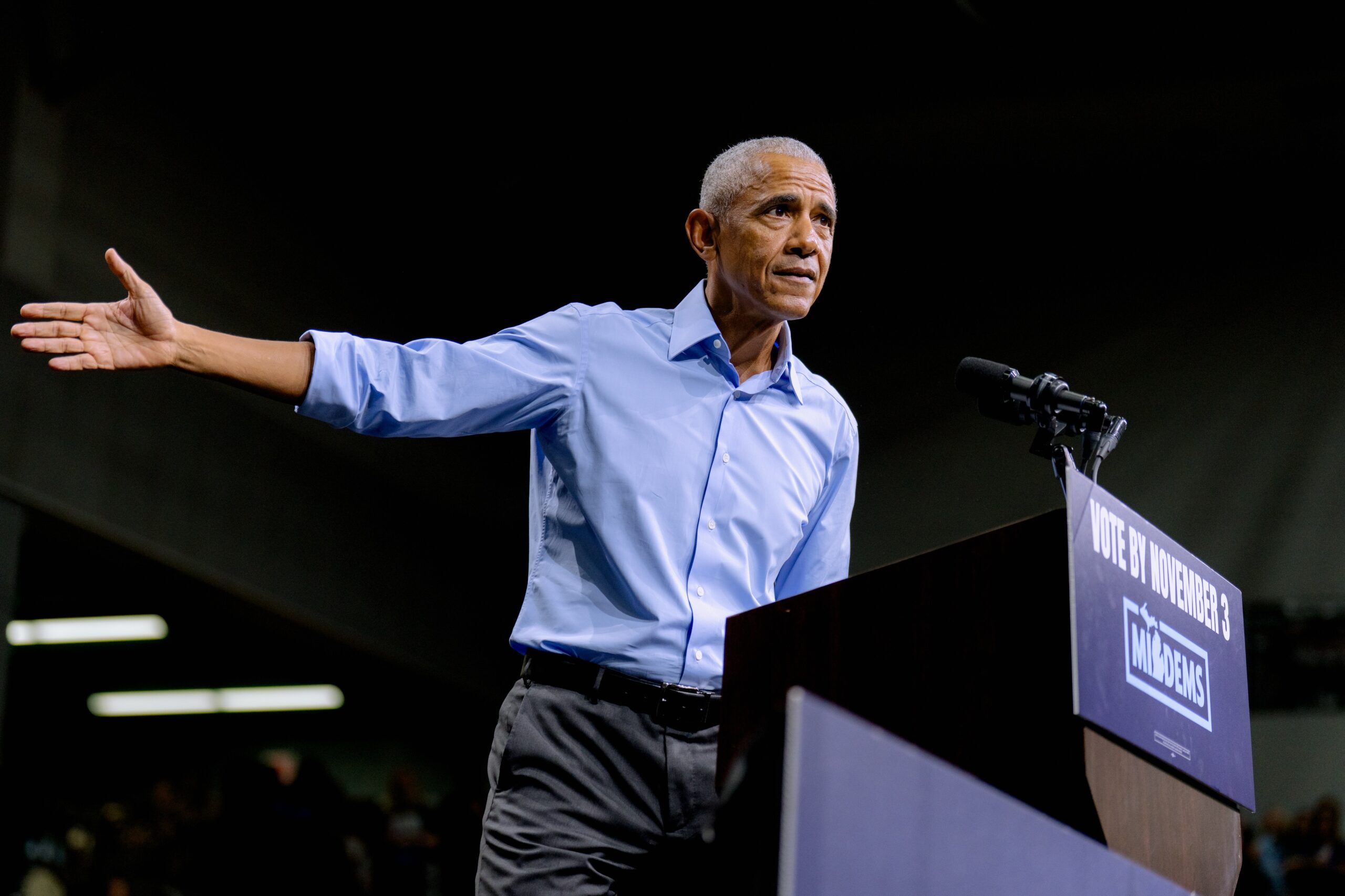
That is why biting criticism from two former presidents, Bill Clinton and Barack Obama, in the last week highlights that some of the Democratic Party’s best messengers on President Donald Trump are the people who have held the office before.
On campaign trips to two key battlegrounds, both former presidents focused on Trump’s priorities, questioning whether his constant push to develop the White House and the broader D.C. area suggests he cares less about policies that affect everyday Americans.
“Congress made a mistake not protesting turning the Rose Garden into what looks like the entrance to Liberace’s bathroom,” Clinton told a laughing audience in Florida as he campaigned for Democratic gubernatorial nominee David Jolly.
Obama, campaigning in Ohio for a slate of Democratic candidates, took it a step further.
“He seems very focused on home renovations. He should be on HGTV,” Obama said of Trump’s White House projects, from the ballroom to the helipad to all the gold accoutrements around the White House. “What’s with the gold?” Obama asked. “He’s got the White House looking like Saddam Hussein opened a Cheesecake Factory.”
He then went after Trump’s work around D.C.
“Remember that whole thing about drain the swamp?” he asked. “The only thing that got drained was the Reflecting Pool in the National Mall after some no-bid contract got it all messed up.”
Yes, these attacks have a tinge of personal bite. Trump has changed the tenor of presidential relationships with his unabashedly personal attacks on his predecessors, especially Clinton and Obama.
But the attacks also carried a policy argument: If the president is so focused on home decor, how can he care about how his policies affect you?
“It’s not about woke,” Clinton said of Trump’s focus on cultural politics. “It’s about broke.”
Obama echoed that. “Does anybody really think this guy in the White House right now is spending all his time thinking about these issues?” he asked about Trump’s decorative focus.
Both attacks hint at broader questions within the electorate about whether Trump really cares about American voters’ lives. Polls and conversations with voters have warned Republicans about Trump’s focus.
The president himself did his party no favors over the weekend while campaigning in Georgia.
“Our country is making hundreds of billions of dollars because of what’s happened in the Middle East,” Trump said, arguing the increased prices help the oil and gas business in Texas, Oklahoma and Louisiana before noting that his advisers have asked him not to mention that while “people are paying a little higher” at the gas pump.
“But I said, ‘I don’t give a damn, I’m gonna say it: We’re making a frickin’ fortune,’” he said.
It’s obvious, but multiple Republican operatives told me yesterday that Trump’s comments are far from helpful with mere days to the midterms.
What’s interesting about these attacks on Trump by his presidential predecessors is that none of his predecessors are backing him up.
Former president George W. Bush has largely stayed off the campaign trail since leaving office in 2008. And he, like Obama and Clinton, has been roundly attacked by Trump, despite them representing the same party.
Bush isn’t attacking Trump. But he has done nothing for Ken Paxton, Trump’s controversial handpicked Senate candidate in Texas, despite the former president raising money for other Republicans.
Read more Todd Blanche defends DOJ lawsuit over Senate election in Alaska
Freddy Ford, Bush’s spokesperson, said the former president and former first lady Laura Bush had both already voted, but declined to say whether they backed Paxton.
Our politics are so fractious and personal that it can be hard to imagine someone changing their mind on a vote they made just a few years earlier.
But this voter-driven piece by my colleagues Natalie Allison, Isaac Arnsdorf, Praveena Somasundaram and Katherine Doyle offers a fascinating look at a small but crucial part of the midterm electorate: Voters who have soured on Trump after voting for him and who may vote against his party next month.
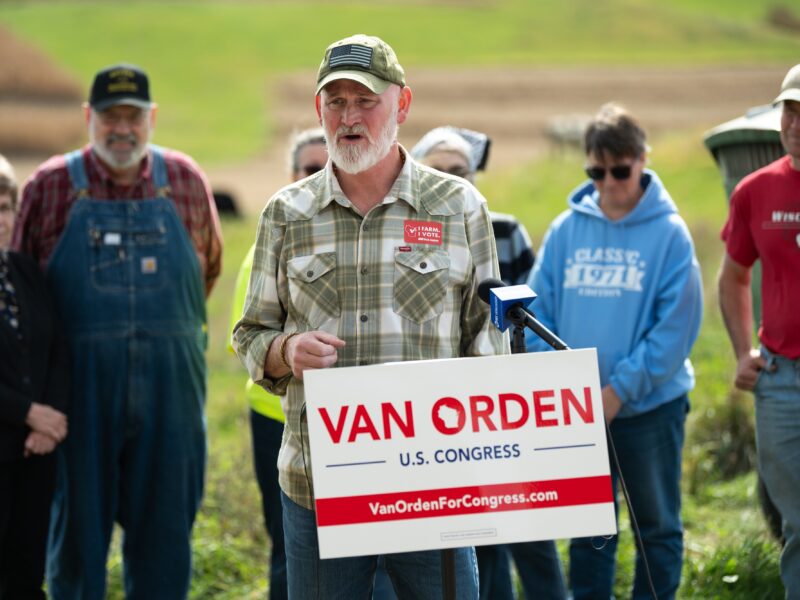
Rick Sebring, a resident of rural Black Creek, Georgia, voted for Trump all three times, but now jokes with his daughters that he needs a new hat that reads, “I fell for it three times.” He is particularly frustrated with the war against Iran.
“It’s kind of like if your wife is screwing the guy next door. You know, you’re kind of butt hurt about it,” Sebring said, in possibly the quote of the year.
About 1 in 5 registered voters who voted for Trump in 2024, 22 percent, now disapprove of his job, according to the latest Washington Post poll. They make up about 8 percent of the electorate.
Carrie Bacon, a 73-year-old retired nurse in Belfast, Maine, said she previously supported Trump because she did not like his Democratic opponents. But now she calls him “the bozo that’s currently in the White House,” saying he’s “after his own aggrandizement and making as much money on the side as he can.”
And Jill Vandermolen, a 56-year-old teacher in Menomonee Falls, Wisconsin, said she backed Trump three times, in part, because some in her family were excited about his reputation as a businessman. That support is now gone.
“Everything costs more money,” she said. As for Trump, she said that she does “not have faith in him at all.”
Trump is, of course, not on the ballot this year. But he is such a dominant figure in the Republican Party — a role he is happy to occupy — that these midterms are undoubtedly about him. That is why these voters matter.
You can read the full report here.
Arkansas Advocate: Several deep red states are on the verge of electing Democrats. But Arkansas, despite a Senate race, is not one of them. What will that mean for a state that once regularly elected statewide Democrats?
Rough Draft Atlanta: Georgia Gov. Brian Kemp is extending his suspension of the state’s gas tax through Thanksgiving as political leaders grapple with how to help people facing sky-high gas prices.
In a sign of how important voting is to many of our readers, many of you could recall the details of your first time voting.
“My first time voting was in 1971 and very unusual. It was the year I turned 21 because the voting age had just been changed to 18. Having been politically active as a teenager, I had the opportunity to run for justice of the peace, so my first time included voting for myself. I won and was sworn in before graduating from the University,” wrote Bill Hosp.
“I understood from an early age that voting is a privilege that many people in the world don’t have, and that it is also an obligation for citizens of a democratic state,” added Vic Fischer. “Along with jury duty, it is the bare minimum requirement to uphold your rights and responsibilities as a member of the body politic. I have never missed a vote and have already submitted my ballot for the midterms.”
Ian O’Connell recalled voting for the first time in 1974, but he had to vote absentee for the first 30 years of his life because he was in the Air Force. “I finally voted in person for the first time in 2008, after retiring from the military and starting my second career,” he wrote.
And Lori Michalec with our favorite email: “My grandmother used to say, ‘If you don’t vote, you can’t complain.’ She liked to complain. And she always voted.”
We wrote about voters who have changed their mind on Trump and the 2026 election. How have your political beliefs changed in the last few years or over your lifetime? How should the political parties welcome people whose politics have changed? How do you feel about people who opposed your political beliefs before but have changed their minds? Let me and your fellow Early Brief readers know at [email protected].
Read more Trump started a trade war with Canada. GOP candidates became casualties.
Thanks for reading. You can follow me on X at @merica.