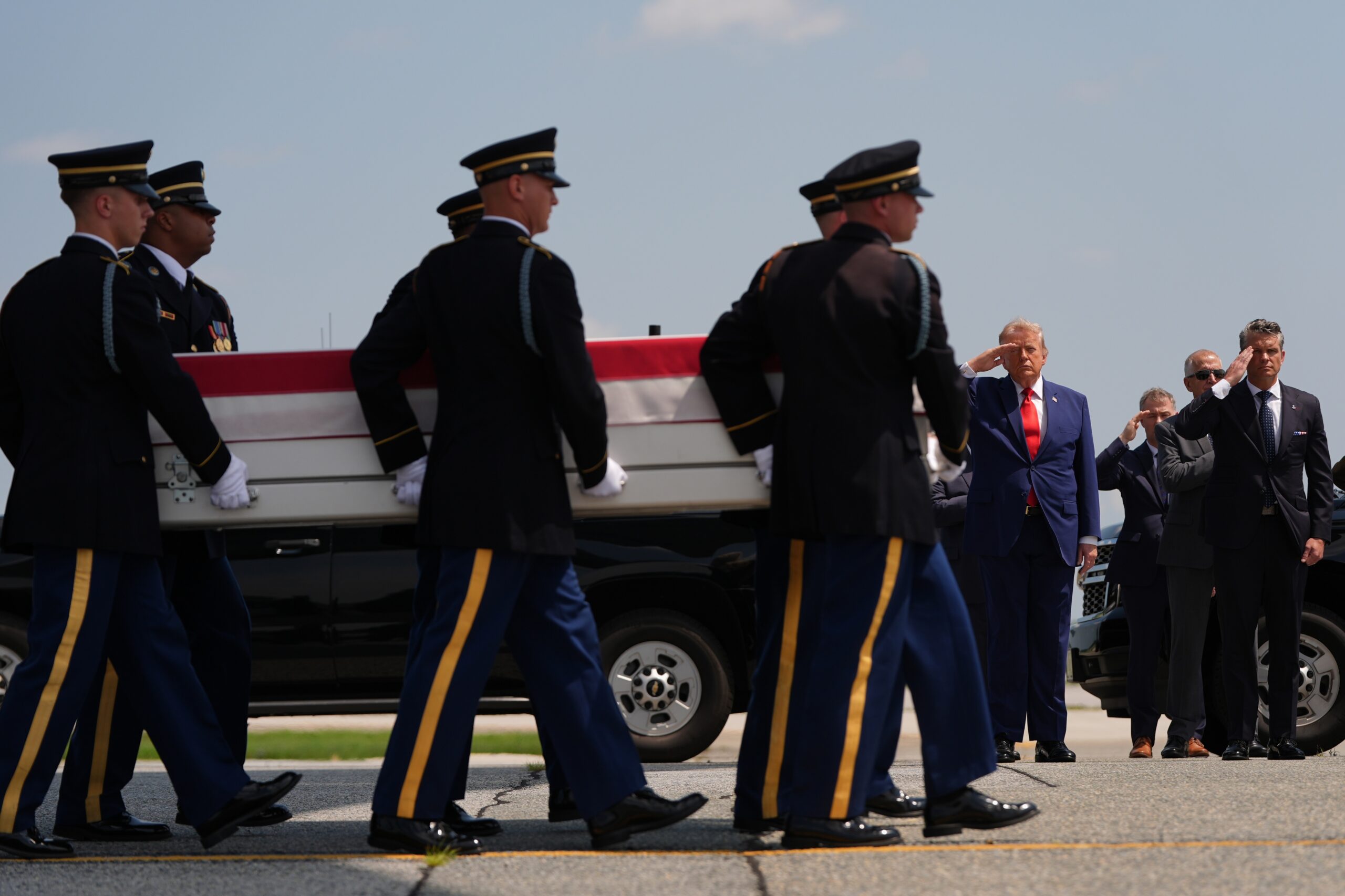
Veterans caution that the Trump administration’s move could affect troops’ ability to get care long after the conflict ends.
Read more Trump heads to Michigan to sell economy as GOP fears midterm fallout
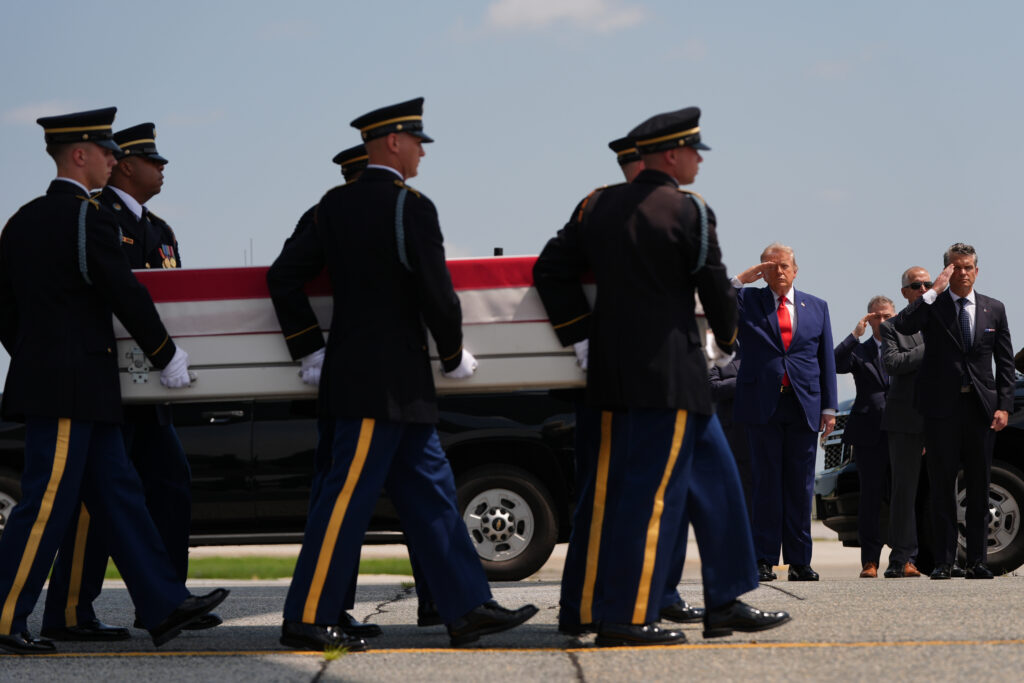
The Pentagon has reclassified service members who were killed and wounded during renewed hostilities with Iran in a way that separates them from other troops who have died or been injured as a result of the conflict, a move that critics say obscures the human cost of the Trump administration’s war and could have long-term implications for survivors.
Last week, the Pentagon removed four recent troop deaths — three from an Iranian ballistic missile strike that hit a base in Jordan on July 17, and one who was killed the following day during a controlled detonation of an Iranian drone at a base in Iraq — from its online database. Their removal from what the Pentagon calls its Defense Casualty Analysis System drew immediate congressional scrutiny. At the time, the Pentagon faulted a data-processing error.
The issue occurred as Defense Secretary Pete Hegseth and Gen. Dan Caine, chairman of the Joint Chiefs of Staff, were on Capitol Hill pressing lawmakers for billions of dollars in additional wartime funding. During their testimony, Hegseth said the current cost of operations since the Iran conflict began Feb. 28 is more than $37 billion.
On Sunday, the four deaths, and a previously undisclosed number of new wounded personnel, 207, reappeared in the casualty analysis system — but not attached to Operation Epic Fury, the name the Trump administration has assigned to the Iran war. Instead, those casualties were listed under a new category titled “Overseas Contingency Operations.”
The new category appears to encompass only those casualties that have occurred in the weeks since Washington and Tehran declared a ceasefire as the governments pursued a negotiated settlement to the conflict. Those talks broke down this month, and both sides resumed military attacks.
The Trump administration indicated Sunday that the president desires “some space” for diplomatic efforts to continue while he contemplates another military escalation. Officials have rejected reports indicating that the pause is due to the Pentagon’s depleted supply of key defensive weapons.
The Pentagon did not immediately respond to requests for comment on why the troops were first removed from the casualty analysis system and whether it has taken into consideration how reclassifying those casualties could affect survivors and beneficiaries. Last week, the Pentagon’s chief spokesman, Sean Parnell, blamed the removal on a “temporary data disruption.”
The New York Times, CNN and other media outlets have previously reported on the Pentagon’s data discrepancies.
Read more Trump demands Senate stay in Washington to pass voting bill
To date, the war in Iran has resulted in the deaths of 18 U.S. service members and wounded more than 600, according to the data. The Pentagon has said that many of those who have been wounded have since returned to duty.
Moving the recent casualties into a new category in the Pentagon’s database is not merely a public transparency issue; it could have long-term effects on veterans and survivors’ ability to receive government benefits, a major veterans advocacy group cautioned.
“The way you are recategorizing folks on the back end has second- and third-order effects” said Jess Finucan, an Air Force veteran and spokeswoman for Iraq and Afghanistan Veterans of America.
A service member’s permanent record is built around the military operations that Defense Department data shows they were a part of. That record affects areas including commendations, medical care and survivors benefits, Finucan said.
The administration needs to be “fully responsible and accountable for the full cost of war,” Finucan said.
President Donald Trump announced the start of Operation Epic Fury on Feb. 28 and then declared it over in May, following the announcement of a ceasefire. But U.S. military operations in the region did not end at that time, with two aircraft carriers patrolling nearby and continued air patrols, limited exchanges of fire and then a full resumption of hostilities July 7.
Since then, Iran has hit several U.S. facilities, resulting in scores of additional wounded personnel and four troops killed.
Read more 67 boat strikes. 221 dead. The cocaine hasn’t slowed, officials report.