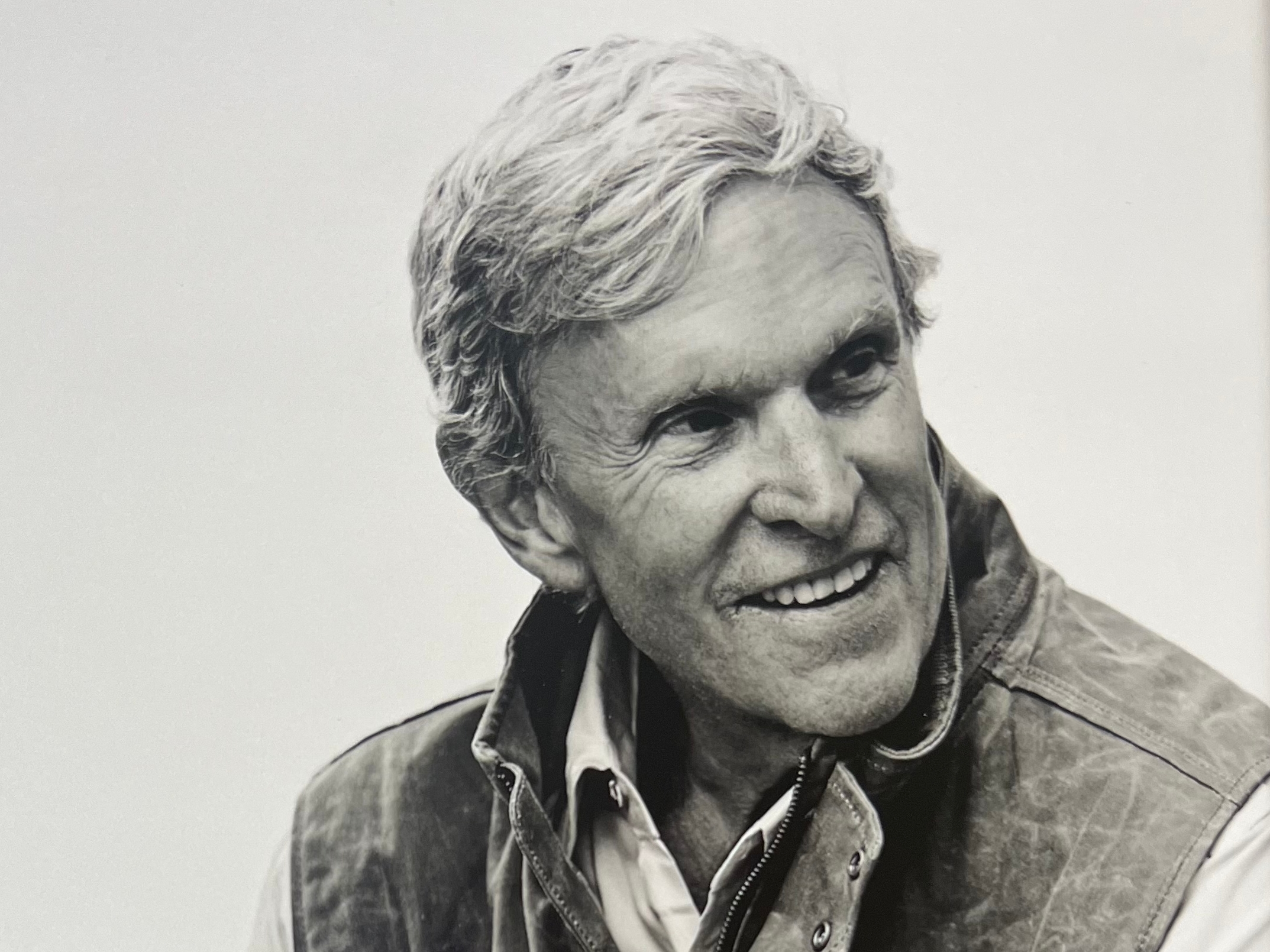
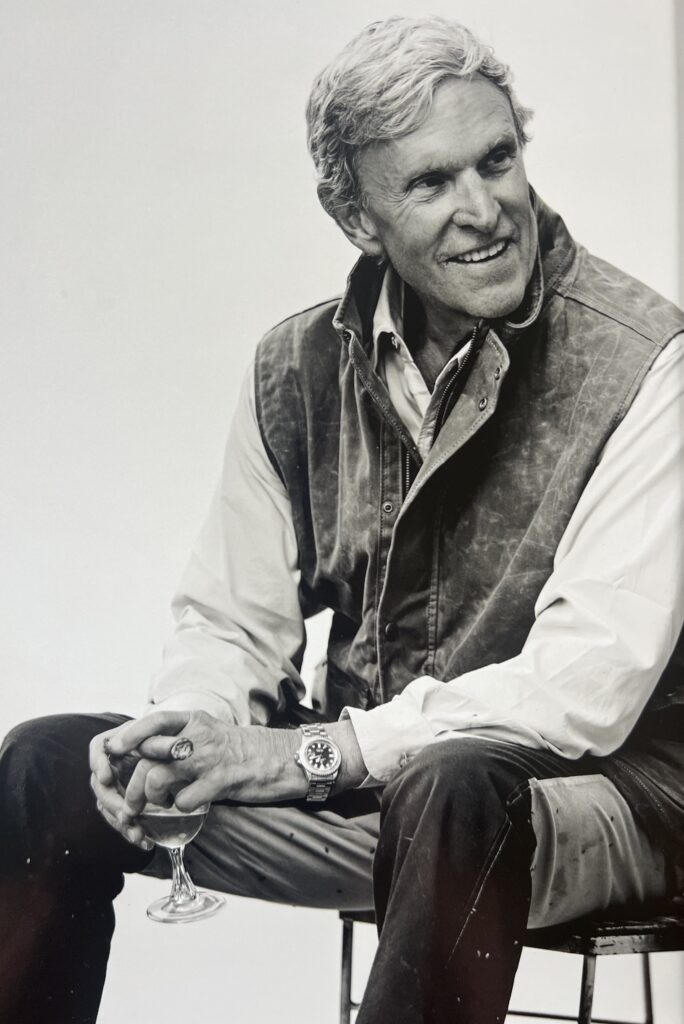
Like any good fisherman, Charles Gaines always seemed to know where to cast his line.
Read more On his 42nd birthday, Max Scherzer helps Blue Jays beat the Nationals
Mr. Gaines, who grew up catching tarpon with hand-tied flies in the Florida Keys, followed his curiosity and intuition while reeling in one unexpected success after another, building a singular career as a literary outdoorsman whose books and articles about fitness, sports and nature offered a window into human psychology and his own irrepressible love of adventure.
His fascination with bodybuilding, and especially with a heavily accented weightlifter nicknamed the “Austrian Oak,” led to “Pumping Iron,” a book and documentary that helped popularize the sport and its reigning champion, Arnold Schwarzenegger.
Years later, while trying to settle an argument with a friend, Mr. Gaines helped create a very different sport: paintball, which began as a survival game he played with his friends and has since grown into a billion-dollar industry.
Mr. Gaines, who wrote more than two dozen books while also advocating on behalf of environmental causes, was 84 when he died July 21 at his home in Monastery, Nova Scotia. He had cancer, said his daughter Greta Gaines, and was still fishing in the weeks before his death, traveling to Cape Breton Island to try his luck on the Margaree River, a haven for Atlantic salmon.
“He was interested in everything — and his interest was contagious,” Schwarzenegger said in a tribute on social media. “I’m lucky that he was always looking for new frontiers, because that’s how he found me and our niche sport of bodybuilding.”
“I can still hear his voice. ‘Hey, Oak!’ — always followed by some unbelievable insight or philosophy, always giving us the greatest gift: making us think.”
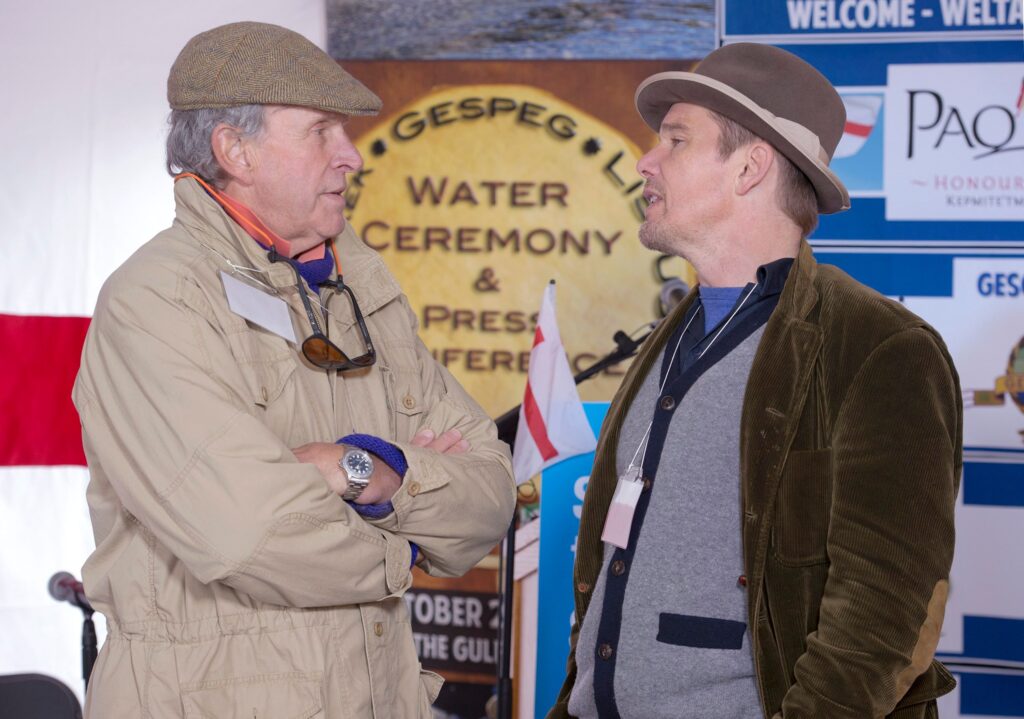
Like Ernest Hemingway, one of his literary idols, Mr. Gaines managed to intertwine hunting, fishing and writing in a life spent in the woods and on the water. He climbed mountains, hunted woodcock and grouse, and was a founding member of the U.S. competitive fly-fishing team. He chronicled his adventures in magazine articles and essay collections, including “The Next Valley Over,” in which he likened saltwater game fish to “Greek playboys, following pleasure and abundance from one sunny spot where the living is good to the next.”
But he was perhaps best known for “Pumping Iron,” which brought Schwarzenegger into the mainstream long before the bodybuilder became an action star and two-term “governator” of California. The 1977 documentary, which Mr. Gaines narrated and co-wrote with filmmaker and photographer George Butler, showed Schwarzenegger fending off rivals at the Mr. Universe and Mr. Olympia contests and casually comparing weightlifting to sex.
“The minute we met Arnold, both of us were just stunned,” Mr. Gaines told The Washington Post years later. He and Butler had been working on a 1972 Sports Illustrated article about bodybuilding, interviewing some of the sport’s biggest names, but “none of them had the combination of charisma, charm, pure force of presence, good looks plus this immense physique that Arnold had.”
Their magazine story laid the groundwork for the duo’s 1974 book “Pumping Iron,” which had an initial print order of 12,500 copies but went on to become a bestseller.
“Your average stockbroker still doesn’t put on skimpy little trunks on Sunday and hop onto a posing dais in a very public place,” Mr. Gaines wrote in the updated 1982 edition, “but the chances are very good now that he does exercises the way he has read that Arnold does them.”
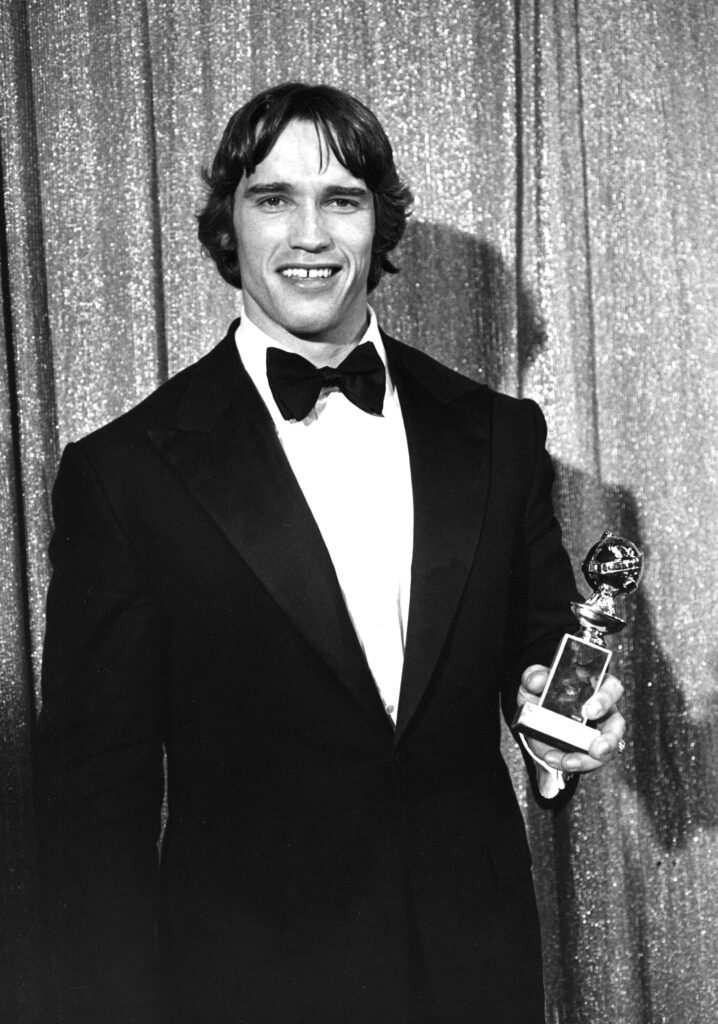
By the time the documentary came out, Mr. Gaines and Schwarzenegger had already worked together on another film, “Stay Hungry,” based on Mr. Gaines’s debut novel of the same name. The 1976 movie starred Jeff Bridges as a wealthy Southerner looking to buy a local gym, and gave Schwarzenegger his first major screen role as a bodybuilder with dreams of winning the Mr. Universe title.
Mr. Gaines, who co-wrote the script, went on to spend years working on film and television projects, ranging from segments of ABC’s “American Sportsman” series to a public-television adaptation of the Edith Wharton novel “Summer.” His earnings financed an increasingly frenetic lifestyle featuring custom suits, exotic fishing trips and lavish dinners where his companions emerged from the bathroom “with wired eyes and little white-powder mustaches,” as Mr. Gaines put it.
“It was a classic ‘dumb-country-boy-goes-Hollywood syndrome,’” he later told the Canadian magazine Maclean’s.
Read more CJ Abrams stays hot, and Nationals stay in the hunt
Sensing that his marriage was in trouble, Mr. Gaines decided to create a “walled garden” to protect his family and restart his life. In an experience that he later chronicled in his memoir, “A Family Place,” he and his wife bought 160 acres overlooking St. Georges Bay in Nova Scotia, where in 1991 they built a cabin with help from their three adult children.
Mr. Gaines went on to split his time between Nova Scotia and Alabama, and said he recommitted himself to his family while also returning to the outdoor activities that had sustained him since he was a boy.
“It’s spiritually gratifying. Fishing is like asking some gigantic question of the universe,” he told Garden & Gun magazine in 2015. “Every time you throw your fly out there, that’s a question. The bite of the fish is the answer.”
The older of two children, Charles Latham Gaines III was born in Jacksonville, Florida, on Jan. 6, 1942. He grew up in Mountain Brook, a suburb of Birmingham, Alabama, where his mother’s family ran an industrial supply business. His father joined the company as an executive and introduced his young son to fishing.
“They didn’t get along great, except when they were fishing,” Mr. Gaines’s daughter said. “My father’s always been a crazy free spirit — didn’t want to go into the family business, didn’t want to stay in the South.”
After graduating from Birmingham-Southern College in 1963 and marrying one of his fellow students — Patricia Ellisor, an artist and former Miss Alabama — Mr. Gaines moved to Ireland, where he sought to hone his craft while studying writers including W.B. Yeats, whose tombstone he visited to make a grave rubbing. He continued his literary education at the University of Iowa, where he received a master’s degree in 1967.
Within a few years he had moved to New Hampshire, “largely because he wanted beautiful places to fish and hunt,” his daughter said.
It was there that Mr. Gaines had a “eureka moment,” as he later put it, following a fateful argument with his friend Hayes Noel, a Wall Street stock trader. The two men got into a debate over who was better positioned to survive in the wilderness: the experienced outdoorsman, or the savvy financier with inborn talent.
In 1980, Mr. Gaines stumbled on a way to test their theories. Looking through an agricultural catalogue, he came across an air gun called the Nel-Spot 007, which fired paint pellets that foresters used to mark trees and ranchers used to identify cattle. Mr. Gaines ordered two of the carbon dioxide-powered pistols, then “called Hayes and invited him up to New Hampshire to be painted,” as he later put it in a Garden & Gun essay.
“On an October afternoon in my backyard, he and I became possibly the first people to conduct a formal duel with cattle markers, and Hayes perhaps the first man to learn what it felt like to be shot in the butt by one,” Mr. Gaines wrote. In the aftermath, the two men embarked on a playful gun battle in the woods around his home.
They couldn’t wait to tell their friends.
Mr. Gaines, Noel and 10 others took to the forests of New Hampshire the following year, competing in what is now considered the first official game of paintball. Several of the game’s competitors wrote for national magazines, leading to articles about the event in Time and Sports Illustrated, and prompting Mr. Gaines to capitalize on public interest by co-founding a paintball business, the National Survival Game Inc., with his friends Noel and Bob Gurnsey.
After a few years, Mr. Gaines said, he sold his share in the business “and went back to doing more work with less fun.” He was amazed to watch as the sport spread around the world, with paintball venues proliferating as participants began using more advanced equipment, including “hopper-fed, chip-controlled rifles capable of firing more than twenty paintballs a second.”
Mr. Gaines is survived by his wife and children, Latham, Greta and Shelby; a sister; and five grandchildren.
“Follow your bliss,” he advised in a 2024 appearance on Anchored, a fishing podcast. “I have a lot of admiration for people who shape a life around their bliss, and follow it — all the way.”
Read more After taking a flier on Curtis Mead, Nationals flip infielder for promising pitcher