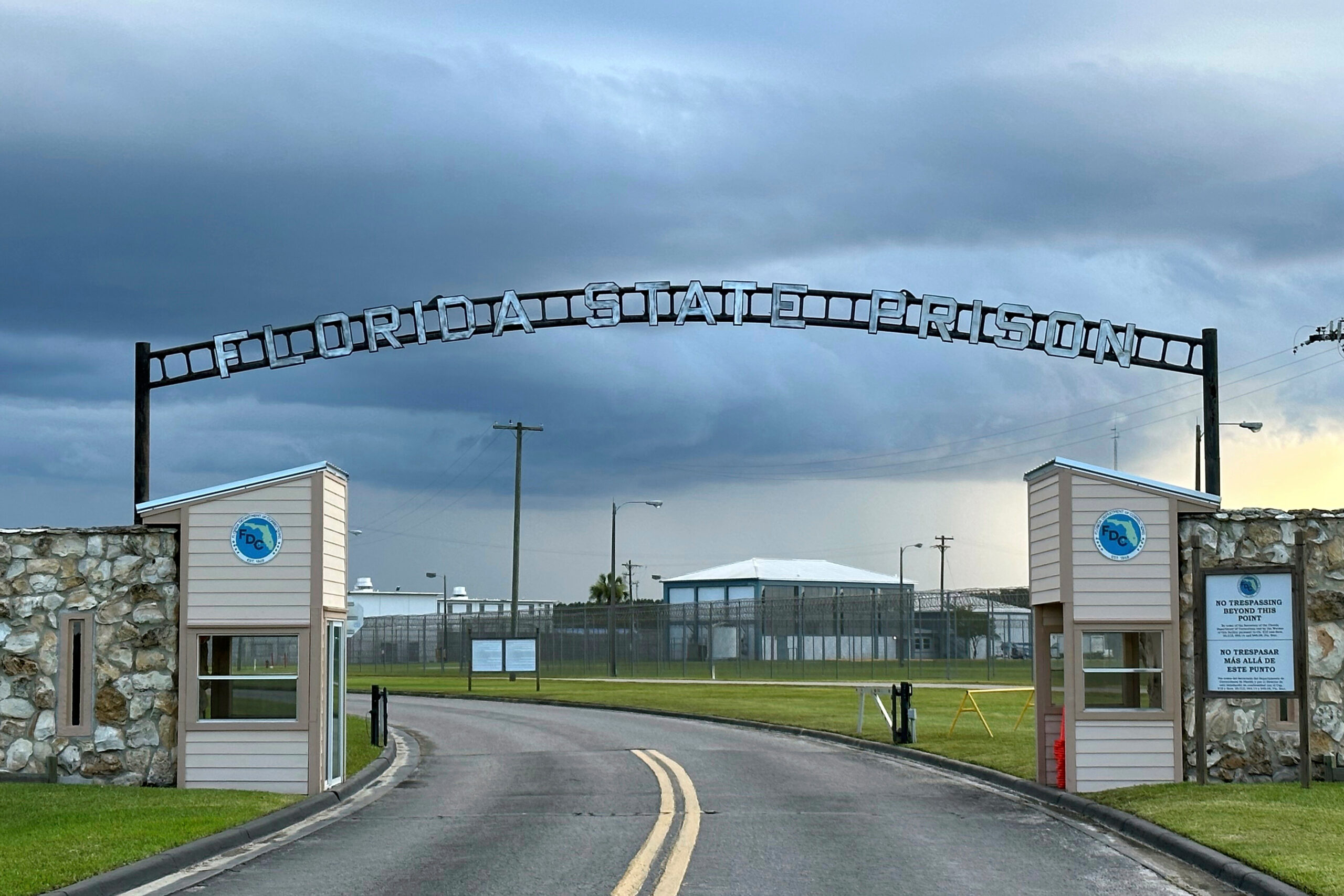
The executions, which include a man who maintains his innocence and an 80-year-old, cement Florida’s place as top death penalty state.
Read more For the DNC, no money, more problems
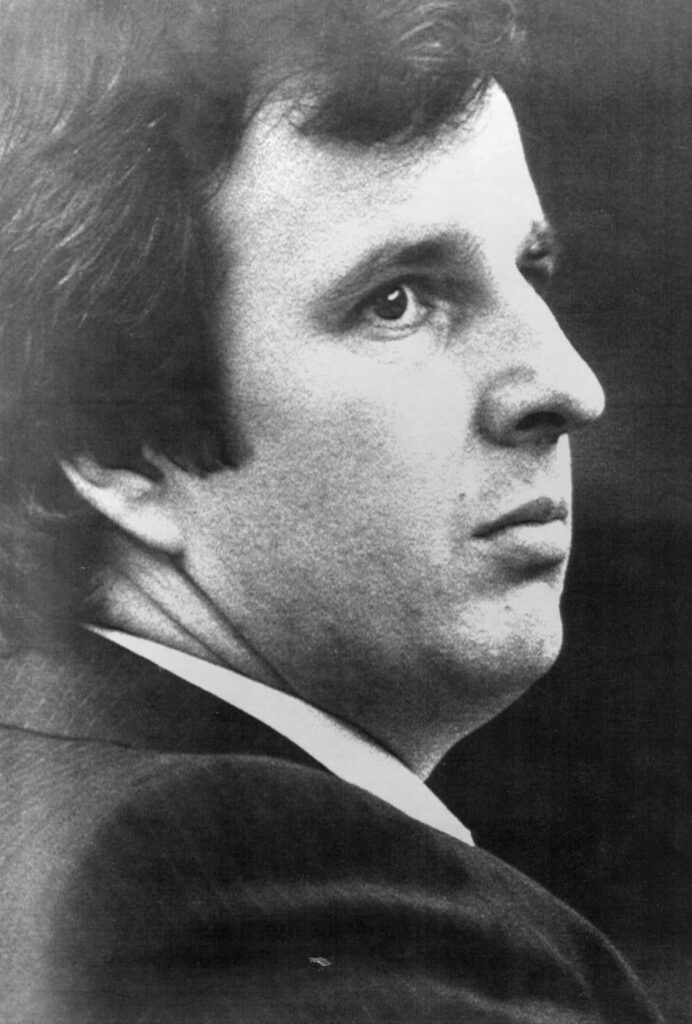
James Aren Duckett, a former Florida police officer, was convicted of raping and murdering 11-year-old Teresa McAbee in 1988.
Dominick Anthony Occhicone Jr., was convicted of killing his ex-girlfriend’s parents, Raymond and Martha Artzner, in 1987.
Both have been sitting on death row for decades. Both are scheduled to be executed Tuesday.
It’s the first time the state has carried out a double execution in 60 years, a decision by Gov. Ron DeSantis that further cements Florida as the most active death penalty state in the nation. Since the Republican governor took office in 2019, the Florida Department of Corrections has executed 38 people, a rate that exceeds any other state’s by a wide margin.
Florida executed 19 people by lethal injection in 2025, accounting for 40 percent of the nation’s executions and the most in one year in the state’s history. A new record could be set in 2026.
The next closest states — Texas, Alabama and South Carolina — each executed five people in 2025, according to the Death Penalty Information Center.
On Tuesday, unless the courts intervene, Duckett and Occhicone will be the 11th and 12th people executed so far this year in Florida, their deaths scheduled for noon and 6 p.m. respectively at the Florida State Prison near Starke. Both have appeals pending before the U.S. Supreme Court.
Occhicone, who is 80, would be the oldest person executed in Florida history.
The increase in executions in Florida comes amid a new era in death penalty politics, with President Donald Trump issuing an executive order on the first day of his second term ordering the Justice Department to prioritize capital punishment. The Trump administration has since lifted a Biden-era moratorium on federal executions, and the president directed federal prosecutors in Washington, D.C., to pursue the death penalty “to the maximum degree practicable.”
Shortly before leaving office, President Joe Biden commuted the sentences of 37 of the 40 prisoners on federal death row. A Trump spokesman at the time criticized the move as “a slap in the face to the victims, their families, and their loved ones.”
Americans’ approval of the death penalty continues to decline to near-record lows. A 2025 Gallup poll found that 52 percent of respondents were in favor of executing those convicted of murder and 44 percent were opposed — the lowest favorability numbers since 1972, when the U.S. Supreme Court ruled in a landmark case that many state death penalty statutes were “cruel and unusual.”
Lawmakers in 23 states and Washington, D.C., have abolished capital punishment, according to the Death Penalty Information Center, and the governors in four other states have paused executions for the duration of their terms. In the 27 states that still have capital punishment laws on the books, only about a dozen are actively carrying out executions.
All but two of the states — Alabama and Florida — require a unanimous recommendation from the jury before a judge can issue a death sentence. In Florida, none of the four execution recommendations made this year was unanimous, said Grace Hanna, the executive director of Floridians for Alternatives to the Death Penalty.
“Even as Florida’s decision-makers are carrying out more executions than ever, Floridians don’t share those feelings,” Hanna said. “We know that Americans overall are moving away from the death penalty.”
A spokesperson for DeSantis responded to a request for comment by referring questions to a news conference last year in which the governor addressed the rise in executions in Florida. In that news conference, DeSantis, a potential 2028 presidential candidate, said he signed few death warrants in his first term because he was getting adjusted to the job and then dealing with the coronavirus pandemic.
Once that was settled, the governor said, he wanted to be “victim-driven” in his approach to executions.
“We’ve heard from a lot of the family members of the victims over the years,” DeSantis said. “There’s a saying, ‘Justice delayed is justice denied.’ And so I felt that I owed it to them to make sure this ran very smoothly and promptly.”
Read more Unlikely duo seeks ban on using campaign funds to fight sexual harassment claims
The governor told reporters he believed capital punishment could be a “strong deterrent” if the process was carried out more quickly.
“My view is, it’s an appropriate punishment for the worst offenders,” DeSantis said. “But I still have a responsibility to look at these cases and to be sure that the person’s guilty, and if I honestly thought someone wasn’t, I would not pull the trigger on it.”
Both Occhicone’s and Duckett’s cases have legal and policy complexities that have prompted advocates to call on state leaders and the courts to halt their killings.
Since the day he was charged with Teresa McAbee’s rape and murder, Duckett has maintained he is innocent. An officer for the Mascotte Police Department, he was the only officer on patrol the night the 11-year-old girl died. He had spotted her outside a convenience store talking to a teenage boy and some older men, according to court documents, and said he stopped to encourage both children to go home because it was late.
Soon after, Teresa’s mother reported her missing. Duckett collected a photo of the girl, made posters and distributed them around town. The next morning, the girl’s body was found in a nearby lake.
Duckett was eventually convicted of sexual battery and first-degree murder, and a jury recommended the death penalty in an 8-4 vote.
Duckett has spent the decades since filing numerous appeals. Along the way, much of the prosecution’s case has been called into question — including false testimony allegations from key witnesses and limited physical evidence tying Duckett to the crime.
The former police officer was scheduled to die on March 31, but five days earlier the Florida Supreme Court stayed his execution pending DNA testing that Duckett’s attorneys said could exonerate him. The lab tests were inconclusive, according to court documents, and in June, Duckett’s own expert analyzed the DNA test results and also found them inconclusive.
On July 8, the Florida Supreme Court lifted the pause on Duckett’s execution against the objection of his attorneys. Less than a week later, DeSantis scheduled his execution for July 28.
“We are on the precipice of potentially executing someone for a crime he didn’t commit,” said Maria DeLiberato, senior counsel for the ACLU’s Capital Punishment Project. “There’s no do-overs.”
In both the Duckett and Occhicone cases, advocates have argued that nowhere else in the country would their executions stand because the jurors’ decisions were not unanimous — not even in Alabama, which requires at least 10 of 12 jurors to vote for the death penalty.
The facts behind Occhicone’s conviction are largely undisputed. He was charged with killing his ex-fiancee’s parents in an alcohol-fueled rage inside their Pasco County home, according to court documents. He cut the phone lines before attacking, police said, shooting Raymond Artzner first, then his wife, Martha.
A judge sentenced him to death after a 7-5 jury recommendation favoring execution, a ratio that under today’s state law would have landed him life in prison.
Occhicone’s attorneys have argued the courts should stop his execution because his old age and poor health make death by lethal injection “a shock to the conscience.” He would be the first octogenarian put to death by the state.
“This Court must intervene upon the egregious actions by the state,” attorneys for Occhicone wrote in their appeal for a stay to the U.S. Supreme Court, arguing that the back-to-back executions could lead to complications and irreparably harm the mental health of the Florida State Prison staff carrying out the killings.
Read more This grandma fought for a bill to allow happy hour at retirement homes
The Florida Department of Corrections did not respond to a request for comment.