The pathbreaking Republican served as the first female mayor of Fort Worth and spent 28 years in Congress, rising to lead the Appropriations Committee.
Read more Blanche formally rescinds plan for ‘weaponization’ fund, in deal to advance AG nomination
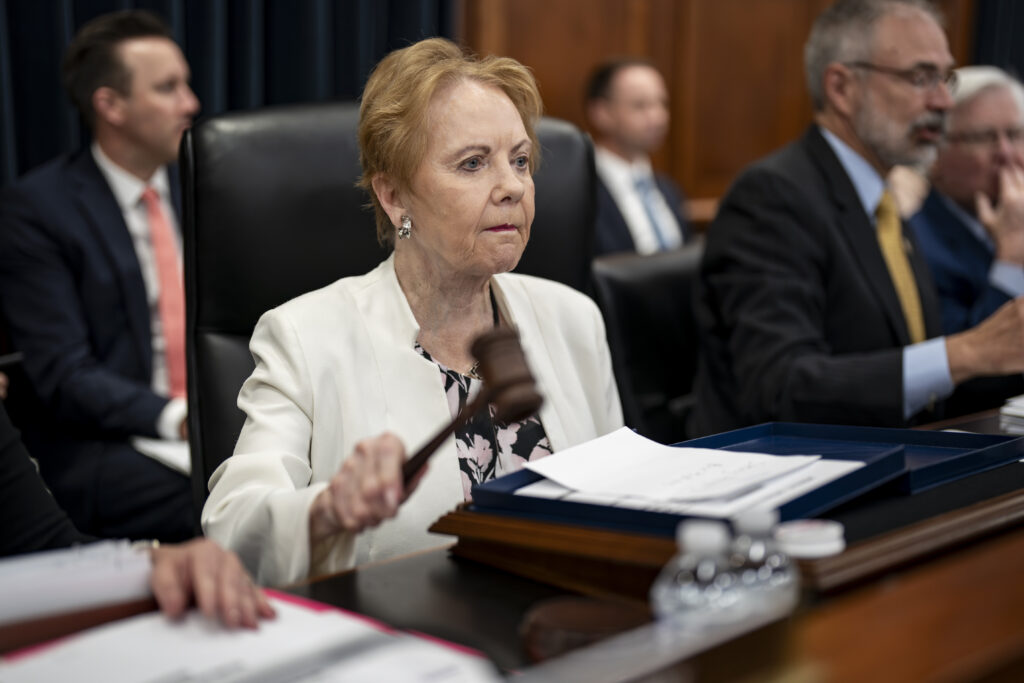
Kay Granger, a trailblazing Texas Republican who served as the first female mayor of Fort Worth and went on to spend 14 terms in Congress, rising to become the first woman from her party to chair the powerful House Appropriations Committee, has died. She was 83.
Her death was announced on social media Sunday by Speaker Mike Johnson and the House Republican Conference. Additional details were not immediately available. Ms. Granger’s family had announced in December 2024 that she had dementia, amid claims that her staff tried to conceal her cognitive decline.
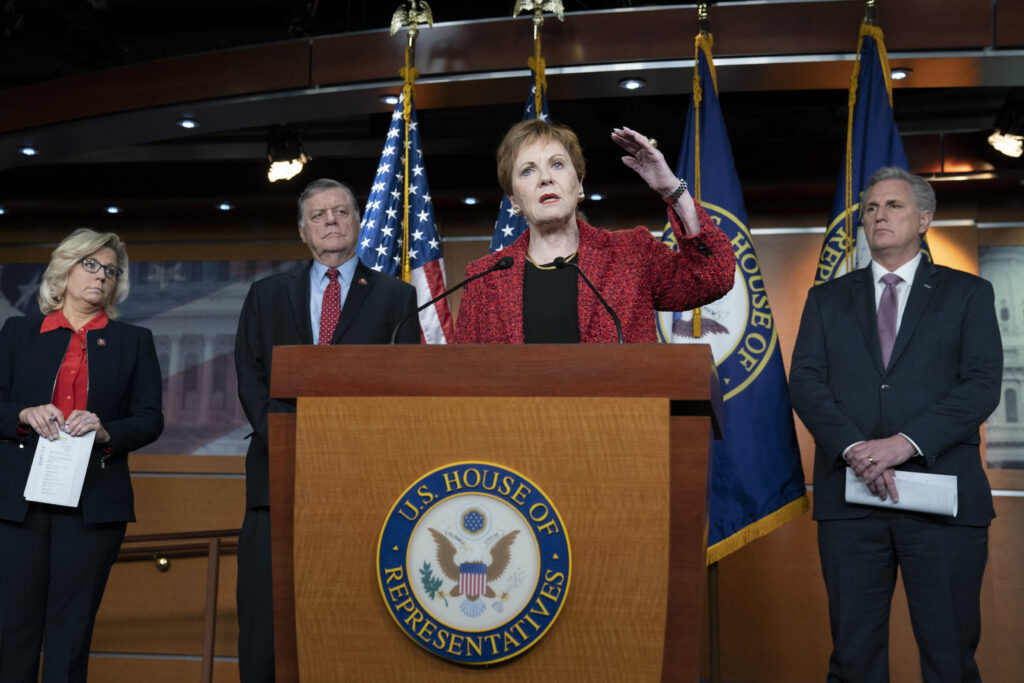
A former teacher and small-business owner, Ms. Granger served for four years as mayor of Fort Worth before being elected to Congress in 1996. After becoming Appropriations chairwoman in 2019, she wielded immense influence over federal spending and helped steer funds toward Fort Worth-based defense companies such as Lockheed Martin and the helicopter-maker Bell Textron.
Ms. Granger did not seek reelection and left Capitol Hill in January 2025, at nearly 82. Just before her term ended, the Dallas Express, a conservative Texas media outlet, reported that she had not cast a vote in Congress in nearly five months. Her office continued issuing news releases and posting on social media according to the story, but reporters for the publication could not reach Ms. Granger’s aides, and her Texas office appeared closed.
Two days after the article appeared, Ms. Granger’s son John Dean Granger confirmed that his mother had “some dementia issues late in the year” and was living in a Fort Worth senior facility, though not in memory care. Her absence sparked debate over a congressional culture that appeared unwilling to shake up senior leadership, with some veteran lawmakers in their early 80s or older.
“Kay Granger’s long absence reveals the problem with a Congress that rewards seniority and relationships more than merit and ideas,” said Rep. Ro Khanna (D-California). “We have a sclerotic gerontocracy.”
Texas GOP chairman Abraham George said Ms. Granger “should have stepped down and let a special election happen.”
Ms. Granger’s defenders pointed out that she had already announced her retirement before her condition became public. Other high-profile lawmakers such as Sen. Mitch McConnell (R-Kentucky), Rep. Nancy Pelosi (D-California) and Sen. Dianne Feinstein (D-California) faced scrutiny for clinging to leadership positions into their 80s. (In January 2025, Congress had 121 members over 70 years old, about 22 percent.)
Concerns about former president Joe Biden’s age and mental acuity — amplified by his faltering televised debate performance — contributed to his decision to drop out of the 2024 presidential race.
“We’ve had other members who’ve had strokes or debilitating illnesses who’ve been out for periods of time,” said Norman Ornstein, an emeritus scholar at the American Enterprise Institute. “The difference is for all of them it was public knowledge. There wasn’t a kind of cover up.”
Ms. Granger was born Norvell Kay Mullendore in Greenville, Texas, on Jan. 18, 1943. She said she felt drawn to her mother’s career path in education as a teacher, counselor and principal as well as her father’s work as a salesman for a Fort Worth clothing manufacturer.
She began her career as a high school English and journalism teacher after graduating in 1965 with a bachelor’s degree from Texas Wesleyan College (later a university). She worked in education for nearly a decade before becoming frustrated with her pay and moving to a job in the life insurance industry.
In 1978, after 14 years of marriage, Ms. Granger and her husband, John Granger III, separated. This left her the single parent with three young children.
“You just fight your way through the day,” she said in a 1986 speech.
Information on survivors was not immediately available.
Ms. Granger opened her own insurance firm in Arlington, Texas, and entered local politics by successfully organizing a citizens’ group to block construction of a waste-disposal plant in the late 1970s. That led to an appointment to the Fort Worth zoning board, where she served for eight years. In 1989, she was elected to the Fort Worth City Council.
Two years later, she became the city’s first female mayor as it was teetering on the brink of a financial crisis with defense spending shifts at the end of the Cold War.
Aerospace giant General Dynamics — one of the city’s biggest employers — ordered massive layoffs, and Carswell Air Force Base, another economic engine of the area, was set to close.
Read more Swept by the Braves, the Nationals will look to sell at the deadline
Ms. Granger carved out a reputation as a pragmatic centrist. She lobbied to have Carswell turned into Naval Air Station Joint Reserve Base, bringing jobs to Fort Worth. She championed Code Blue, a $3.17 million anti-crime effort to train new police officers and mobilize citizen engagement through volunteer patrol forces and resident-proposed anti-crime plans. The initiative became widely popular.
“If you’re the first female mayor of Fort Worth, you take it very seriously,” Ms. Granger told the Dallas Morning News in 1997. “There was a spotlight on me then, not because I was Kay Granger, but because I was a woman in that position.”
In 1996, she ran for an open seat in Congress in a longtime Democratic stronghold covering parts of the Dallas/Fort Worth area. Though Ms. Granger had identified as a Republican to the U.S. Conference of Mayors, the Fort Worth mayoralty is nonpartisan.
Both the Democratic and Republican parties courted her to campaign as their candidate. She decided to run as a Republican and fended off conservative critics in the primary who called her too moderate.
“If you cut taxes and you’re tough on crime and you work to build the economy, I never could figure out what was liberal about that,” Ms. Granger said. “Is it because I like children and believe in education?”
Her comfortable victory, with nearly 58 percent of the vote, ended the century-long Democratic hold on the district. She was the first Republican woman to represent a Texas district in the House. (Democrat Lera Thomas was the first Texas woman in the House, elected in 1966. Republican Kay Bailey Hutchison was the first woman to represent Texas in the Senate, elected in a 1993 special election.)
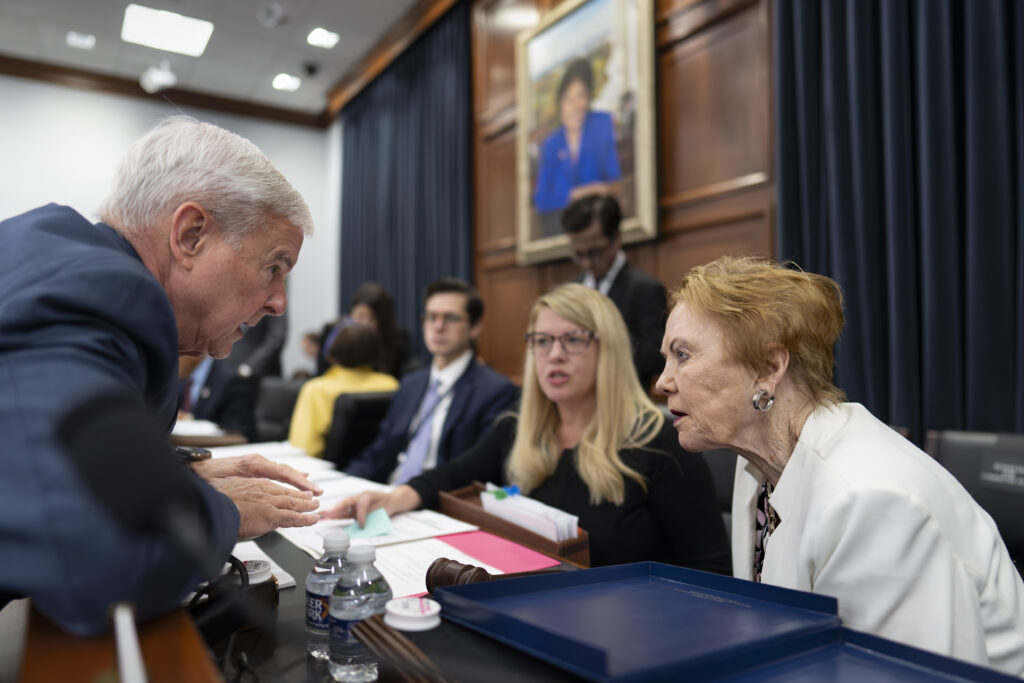
As chair of the Appropriations Subcommittee on State and Foreign Operations from 2011 to 2017, Ms. Granger allocated funding for the State Department and foreign aid. While foreign aid spending often met resistance within the GOP, Ms. Granger wrangled support from Republicans.
In 2016, she took the lead on a $38 billion military aid package for Israel, which she successfully pushed through Congress. The package included 33 Lockheed Martin F-35 fighters, built in Ms. Granger’s district.
She forged relationships with humanitarian aid figures, including Irish singer Bono of the band U2 who founded ONE, an advocacy organization aimed at combating AIDS and extreme poverty in Africa. In 2012, they traveled together for the opening of a new school in Ghana that Bono’s group supported.
Later, as the first Republican woman to take the helm of the Appropriations Committee, Ms. Granger advocated for increasing military spending and securing new defense contracts, particularly aircraft production.
Lockheed Martin landed a $34 billion Pentagon contract for 478 F-35 fighter jets. The aerospace and aviation industry directly employs more than 148,000 workers in Texas.
There was tension at times between Ms. Granger’s interests in securing money for her district and appearing true to the principles of fiscal restraint.
In 2022 she was accused of hypocrisy by political opponents and local activists for voting against the Biden administration’s Inflation Reduction Act while praising a $403 million investment into a Fort Worth riverfront and flood control project that had been allocated as part of the spending plan.
“I wasn’t against this project. I was against some of the other parts of that bill,” Ms. Granger told the Fort Worth Star-Telegram in 2022 when pressed by reporters.
By the end of her tenure, Ms. Granger found herself increasingly squeezed between her centrist roots and the rising hard-right MAGA movement in her district. She had once supported abortion access and sharply criticized Donald Trump — even calling for Trump to drop out of the 2016 presidential race after the “Access Hollywood” tape leaked with his vulgar statements about grabbing women’s genitals.
But in 2020, facing a MAGA-backed primary challenge from tech executive Chris Putnam, she pivoted. She secured Trump’s endorsement, adopted a staunch antiabortion stance, and won reelection. For the remainder of her time in Congress, Ms. Granger toed the GOP line.
Read more Nationals trade Luis García Jr. to Yankees ahead of deadline