It’s not just the anti-weaponization fund.
In his second term, President Donald Trump has amassed an extraordinary amount of power while Republicans in Congress have mostly looked on.
Read more Transgender federal workers sue government over health care cuts
But Senate Republicans may be starting to push back. Two Republican senators put enough pressure on the Justice Department that, this week, acting attorney general Todd Blanche agreed to put in writing that the department was rescinding Trump’s “anti-weaponization” legal fund popular with Jan. 6, 2021, rioters.
Trump still has an extremely pliable Congress.
Lawmakers have let him go to war with Iran despite the Constitution giving Congress the power to declare war. (The House and the Senate have both voted to limit Trump, but the administration has ignored what it argues are unconstitutional measures.) They’ve acquiesced in allowing an outside group led by Elon Musk, the Department of Government Efficiency, to access sensitive data in the federal government and dramatically cut federal agencies, despite Congress having the power to spend. They let Trump issue tariffs despite Congress having the power to tax. They’ve funded Trump’s mass deportation efforts for the next few years.
“Clearly Trump is losing a bit of his iron grip on congressional Republicans, but whether it’s a meaningful shift is unclear,” said Kimberly Wehle, a professor at the University of Baltimore School of Law.
“They’re not doing anything about the ICE killings or the grift and waste under his current Cabinet,” she added, referring to fatal shootings of U.S. citizens in Minnesota by federal immigration agents.
It’s worth noting some of the ways Senate Republicans are starting to push back on Trump as he prepares for his final two years in office.
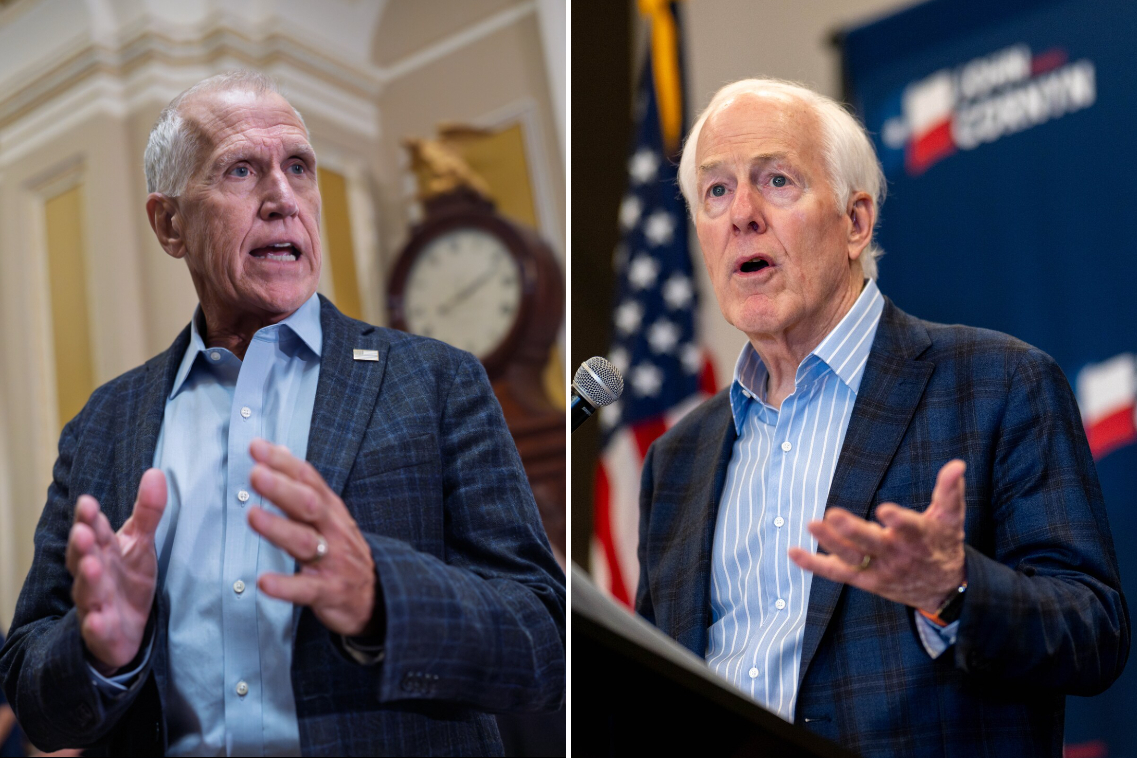
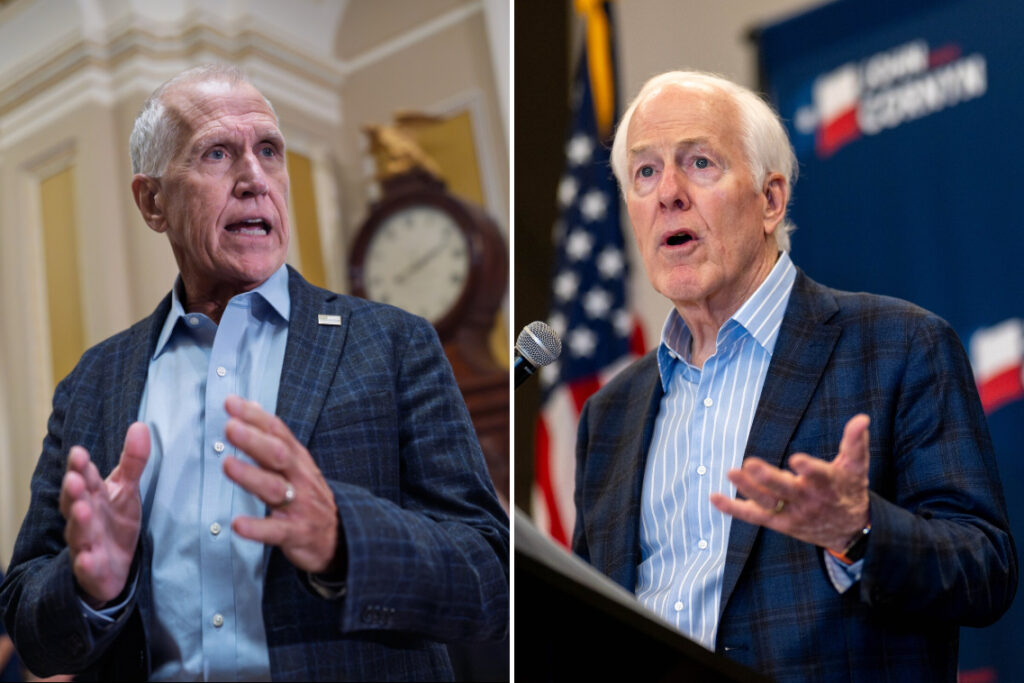
Trump has been struggling for weeks to get his attorney general nominee confirmed by the Senate. Outgoing Republican Sens. John Cornyn (Texas) and Thom Tillis (North Carolina) threatened to vote against Blanche over concerns that he would greenlight the “anti-weaponization” fund, despite previously telling Congress it was shelved.
Blanche is already serving in the job in an acting capacity, and on Sunday he formally rescinded the fund in writing. He also confirmed that a related deal shielding Trump and his family from IRS audits covers only their past taxes.
Just days earlier, Trump said he would “push hard” for the fund and wants Congress to approve legislation backing it.
The president’s critics see Blanche’s move as a fig leaf: Republicans got a written statement and no changes to the controversial tax immunity deal. In exchange, they are likely to approve Trump’s former personal lawyer to head the government’s entire prosecutorial apparatus. Blanche would serve alongside Trump loyalists leading the FBI, the Defense Department, national security agencies and the Department of Homeland Security.
“Having loyal and determined apparatchiks like them in positions of real power for the next two and a half years is not a good thing,” writes William Kristol, a never-Trump conservative, in his newsletter the Bulwark.
Trump has been demanding for months that Senate Republicans pass a strict voter-ID and voter registration bill ahead of the November midterm elections. A version has already passed the House, and the president has withheld bill signings, blasted Senate Republicans on social media and given a prime-time address to try to get the bill, called the Save America Act, through the Senate.
Read more House panel seeks censure of Rep. Chuck Edwards over conduct toward female staff
But while a number of Senate Republicans support the Save America Act, they haven’t budged on one important thing: getting rid of the filibuster to pass it. Under filibuster rules, Democrats have enough votes to stop the bill from advancing. Republicans don’t have the votes to get rid of the filibuster because many of them see it as a useful tool for when they’re in the minority. “It’s just a reality,” Senate Majority Leader John Thune (R-South Dakota) said earlier this year.
Last year, the Senate unanimously approved legislation requiring the Justice Department to release the Jeffrey Epstein files.
Trump had spent months trying to prevent Congress from mandating the release, but Republican lawmakers felt a lot of pressure from their base to do something to require the Trump administration to be more transparent.
The Senate acted only after Trump said he’d sign the bill into law. The files have been a major political headache for the president almost his entire second term. An Economist-YouGov poll in February found that half of Americans say they think Trump has been trying to cover up Epstein’s crimes.
Trump has filled his Cabinet with people who mostly seem to agree with him and carry out his orders. But he hasn’t gotten everyone he’s wanted through the Senate. His first pick for attorney general, former congressman Matt Gaetz, withdrew his nomination over Republicans’ objections before the Senate even held hearings.
Senate Republicans have also derailed Trump’s choices for key prosecutorial jobs, like election denier Ed Martin to be U.S. attorney for D.C., a prominent position. They also successfully pushed back on vaccine skeptic Casey Means to be the U.S. surgeon general.
Senate Republicans have also refused to heed Trump’s calls to eliminate a tool in the Senate that has allowed Democrats to block some of his judicial nominations, most notably his former lawyer Alina Habba to be U.S. attorney in New Jersey.
One of Congress’s most critical roles is the power of the purse, to approve how taxpayer money is spent. But the Trump administration has tried numerous ways to make its own spending decisions, like mass layoffs at the Education Department.
Some Senate Republicans are trying to push back. This week, they released a bipartisan spending bill that would prevent the administration from withholding research funding that Trump politically disagrees with.
Amber Phillips writes The 5-Minute Fix newsletter, a quick analysis of the day’s biggest political news. Send her an email here, or ask a question that could be featured in an upcoming newsletter.
Read more Commanders’ offense gets cooking and other observations from Monday’s practice