Democrats fight over age and ideology. Republicans test the value of Trump’s endorsement.
Read more Pirro, in rare move, convenes special grand jury in Washington
Progressive Democrats notched another big victory in Tuesday’s Minnesota Senate primary. But a moderate Democrat narrowly won the high-profile governor’s race in Wisconsin, defying expectations of an easy win for the party’s surging democratic socialist wing.
President Donald Trump, meanwhile, suffered a defeat after the candidate he endorsed for Minnesota governor fell short in the Republican primary.
Here are five takeaways from Tuesday’s primaries:
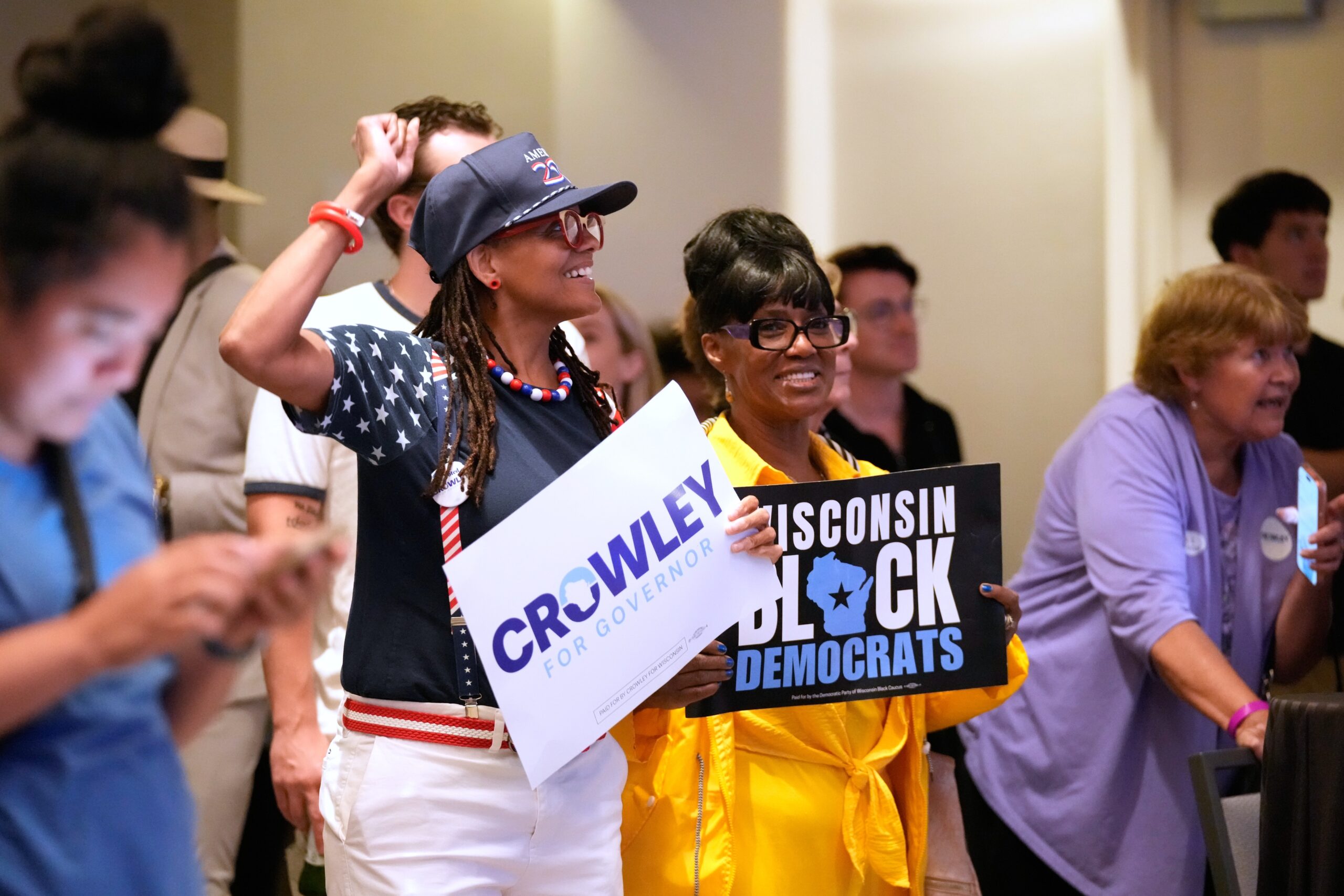
Milwaukee County executive David Crowley defeated Francesca Hong, a State Assembly member and democratic socialist, in the Democratic primary for governor after an unusually unpredictable — and unexpectedly close — primary.
Crowley initially dropped out last month, saying it was clear he could not win. Lt. Gov. Sara Rodriguez dropped out the following week, citing irregularities with her campaign’s financial reports. Then Crowley returned to the race with the endorsement of Wisconsin Gov. Tony Evers (D). After that, yet another Democrat — Mandela Barnes, a former lieutenant governor — dropped out, further scrambling the race. To add to the confusion, Barnes and Rodriguez remained on the ballot.
Hong was the latest democratic socialist to catch fire after several other democratic socialists defeated House Democrats in primaries earlier this year. She led in polling in the final weeks of the race but attracted criticism for calling years ago for the cancellation of Thanksgiving, which she described as a holiday “celebrating colonialism.” Evers warned that Hong probably could not defeat Rep. Tom Tiffany, who won the Republican nomination.
Another progressive, Lt. Gov. Peggy Flanagan, won the Democratic primary for an open Senate seat in Minnesota, defeating a more moderate rival, Rep. Angie Craig. Flanagan had the backing of Sens. Elizabeth Warren (D-Massachusetts) and Bernie Sanders (I-Vermont) and other progressives in Congress. She will face Michele Tafoya, a former sideline reporter for NBC’s “Sunday Night Football” who easily won the Republican nomination.
Republicans view Flanagan as vulnerable due to the welfare-fraud scandal that rocked the state while Flanagan was in office, and they have expressed enthusiasm that Tafoya could put the seat in play.
However, no Republican has won a Senate seat in Minnesota since 2002, and Republicans are more optimistic about flipping Democratic-held seats in Michigan, New Hampshire and Georgia than Minnesota. The Cook Political Report, which rates the race as “likely Democratic,” said it would maintain its rating regardless of which Democrat won the nomination.
Another progressive, Matt Little, won the Democratic primary to succeed Craig in the House. Little, a former state senator and Lakeville mayor, was endorsed by Rep. Greg Casar (D-Texas), the chairman of the Congressional Progressive Caucus, among others.
Luke Bronin, a 47-year-old former Hartford mayor, ousted Rep. John B. Larson, 78, from his House seat representing central Connecticut in the latest generational clash to convulse the Democratic Party.
Larson is not the only older House Democrat to lose a primary this year. Reps. Al Green (D-Texas), who is 78; Adriano Espaillat (D-New York), who is 71; Diana DeGette (D-Colorado), who is 69; and Shri Thanedar (D-Michigan), who is 71, all lost primaries to younger challengers. (Green lost his seat to another House Democrat, Rep. Christian Menefee, after redistricting reshaped their districts.)
Unlike some of those races, Larson’s primary did not feature a strong ideological divide. Instead, Bronin campaigned on “energy, urgency and change,” and urged Larson to “pass the torch,” though he did not explicitly criticize Larson as too old.
Larson, in turn, tried to cast himself as more progressive than Bronin and emphasized his experience representing the solidly Democratic district.
Read more Trump-Netanyahu rift widens as election pressures pull them in opposite directions
“It’s not about age, generational change,” Larson said at a recent rally alongside Connecticut Gov. Ned Lamont (D) and labor groups. “This campaign … is about who has the record of delivering in this community.”
Lamont, 72, who is running for a third term, also faced a younger primary challenger on Tuesday. He prevailed, easily defeating state Rep. Josh Elliott, 41.
Sen. Lindsey Graham (R-South Carolina) defeated a primary challenger in June, avoiding a runoff by winning a majority of the vote. But his sudden death last month forced South Carolina to hold a second Republican primary, pitting Graham’s sister, Sen. Darline Graham — whom Gov. Henry McMaster named to succeed him — against nine other Republicans.
Graham won 33 percent of the vote on Tuesday, leading her rivals. But she did not win a majority of the vote, forcing an Aug. 25 runoff. She will face Rep. Ralph Norman, who trailed Graham with 25 percent of the vote.
Trump endorsed Graham ahead of the primary, giving her an edge in the runoff — but it’s not clear whether it will be enough to defeat Norman.
Consider what happened in the Republican primary for South Carolina governor. Trump endorsed Lt. Gov. Pamela Evette, who made the June runoff along with Alan Wilson, the state attorney general. When it appeared that Evette might lose to Wilson ahead of the runoff, though, Trump also endorsed Wilson, allowing him to claim victory days later when Wilson won.
Trump could be more reluctant to back Norman, who endorsed former South Carolina governor Nikki Haley over Trump in 2024 in the presidential primary. It is also unclear whether Rep. Russell Fry — who finished third in the primary — will endorse Norman or Graham.
Asked Tuesday night whether he would campaign for Graham in South Carolina, Trump told reporters, “I think so.” He added that he also liked “the other people” in the race, without naming them.
“They’re all Trumpers,” he said.
Norman told The Washington Post last week that he wasn’t sure Trump would issue a dual endorsement again. “I think people see it for what it is,” Norman said. “Double endorsement, really, is problematic to me.”
But, he added, “I’d love to have it at any time.”
Trump endorsed Mike Lindell, the MyPillow chief executive who enthusiastically supported his efforts to overturn the 2020 election results, for governor of Minnesota.
But Trump’s endorsement wasn’t enough. Lisa Demuth, the state House speaker, defeated Lindell on Tuesday. She will face Sen. Amy Klobuchar, who easily won the Democratic nomination, in November.
Lindell’s loss was the latest blow to Trump’s endorsement record. The candidates he backed for governor in Georgia and Iowa also lost. So did Rep. Andy Ogles (R-Tennessee) and Amir Hassan, whom Trump backed for an open House seat in Michigan.
Other Trump picks prevailed on Tuesday.
Graham led in South Carolina. Tiffany won in Wisconsin. Michael Alfonso won the Republican primary for a House seat in northern Wisconsin that his father-in-law, Transportation Secretary Sean P. Duffy, once represented. And former congressman Jerry L. Carl and state Rep. Rhett Marques won primaries for House seats in Alabama that the state legislature redrew earlier this year following a Supreme Court ruling that weakened the Voting Rights Act.
Read more Democratic rebellion against older politicians reaches new battleground
Natalie Allison, Matthew Choi and Ben Binday contributed to this report.