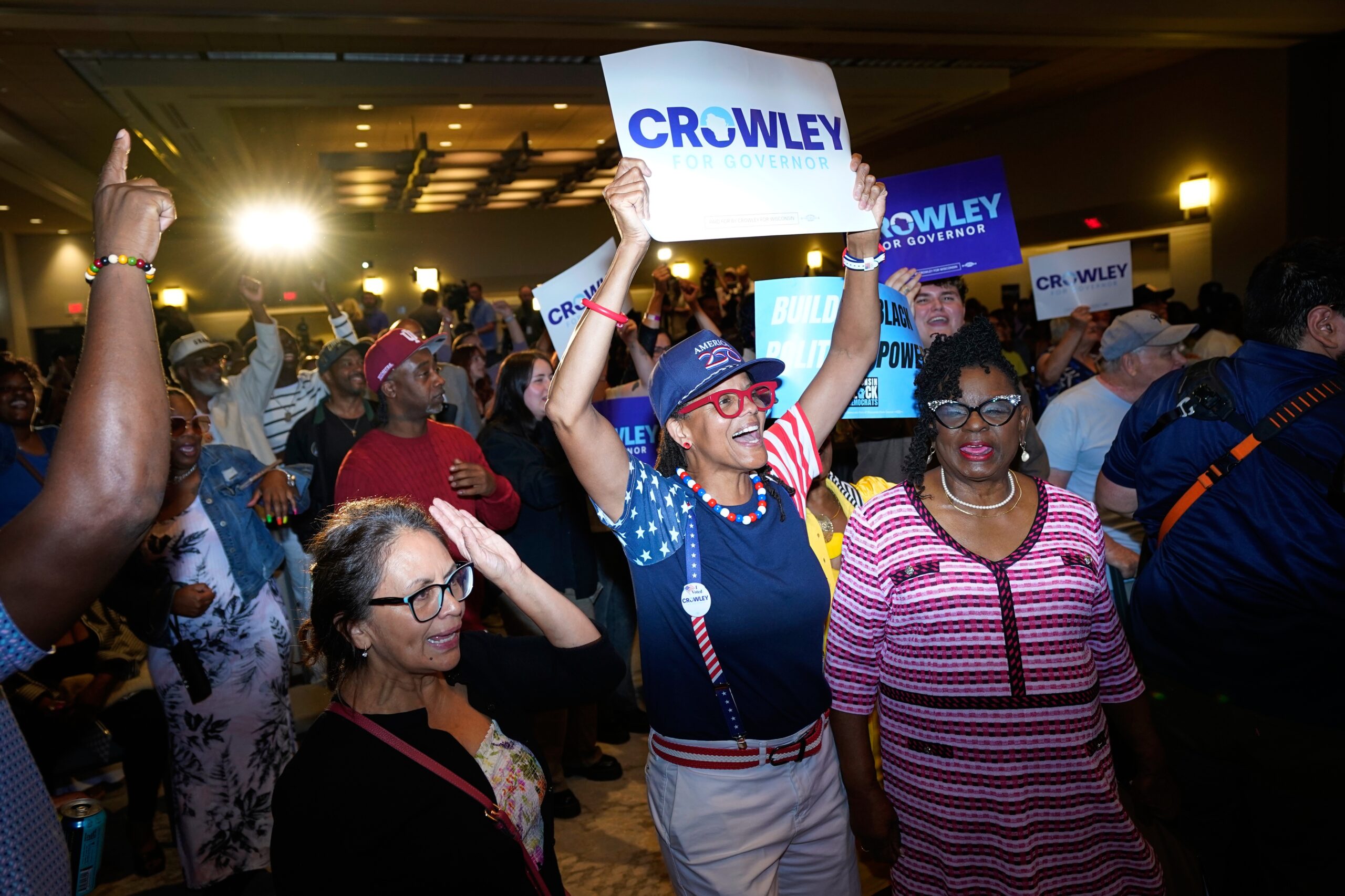
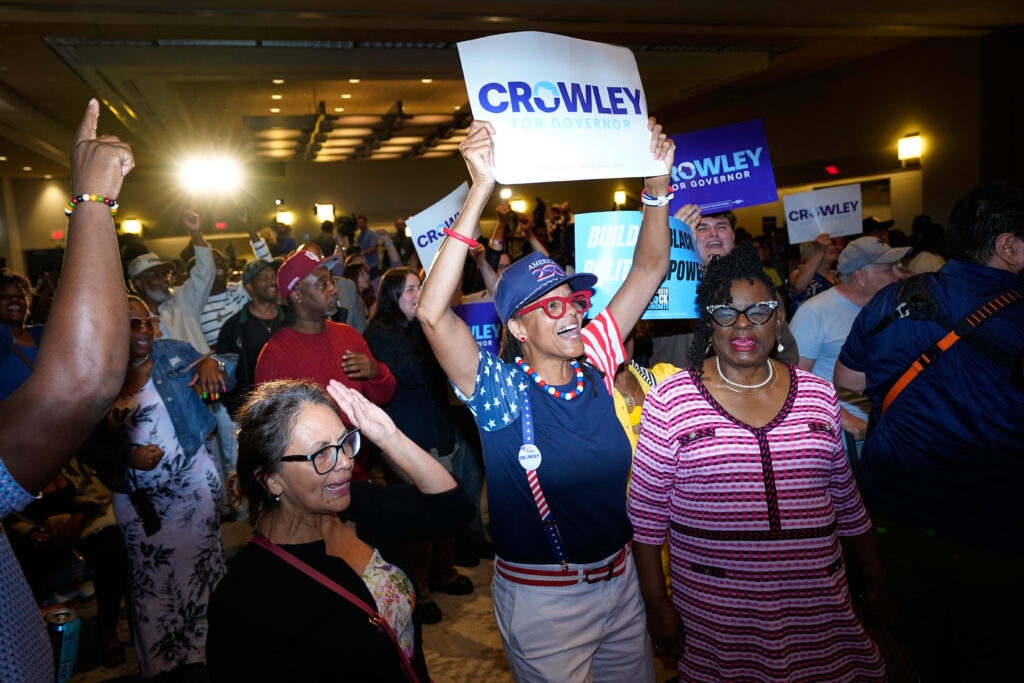
Wisconsin’s Democratic gubernatorial primary Tuesday could hardly have come to a messier finish, and the surprise victory of Milwaukee County Executive David Crowley counts as the comeback story of 2026.
Read more Record-breaking $12.5 billion deal for Lakers comes just months after previous sale
But for Badger State Democrats, the stakes go well beyond the question of who will sit in the governor’s mansion on Lake Mendota next year. The party establishment is breathing a sigh of relief that democratic socialist Francesca Hong, who had led pre-election polls by double digits, will not be topping their ticket.
With the significant exception of Donald Trump’s 2024 victory in Wisconsin, by the narrowest margin of any state, Democrats there have been on a roll in recent election cycles. They have reason to believe an even bigger payoff awaits in November. Doubts about Hong’s electability had cast a shadow over those hopes.
The last time Trump was in office, in 2018, Wisconsin Democrats swept all five of the statewide races that were on the ballot. High-stakes state Supreme Court elections have been going their way, most notably in last year’s contest, when the world’s richest man, Elon Musk, and affiliated groups squandered $25 million trying to defeat the Democrats’ choice.
With Trump’s low polling numbers setting the national barometric pressure in this year’s midterms, the House district in the Eau Claire and La Crosse area now held by vulnerable Republican Derrick Van Orden will be one of the most closely watched contests in the country. Democratic primary voters picked establishment favorite Rebecca Cooke, who had narrowly lost to him in 2024, for a rematch.
But the biggest prizes for Wisconsin Democrats will be in the capital, Madison. Gov. Tony Evers, who endorsed Crowley, had warned that Hong probably could not defeat Rep. Tom Tiffany, who easily won the GOP primary with Trump’s backing.
With a set of more favorable district maps having replaced the old heavily gerrymandered ones in 2024, Democrats also appear to be on their way to ending the drought that has kept them in the minority in both houses of the state legislature for the past 15 years.
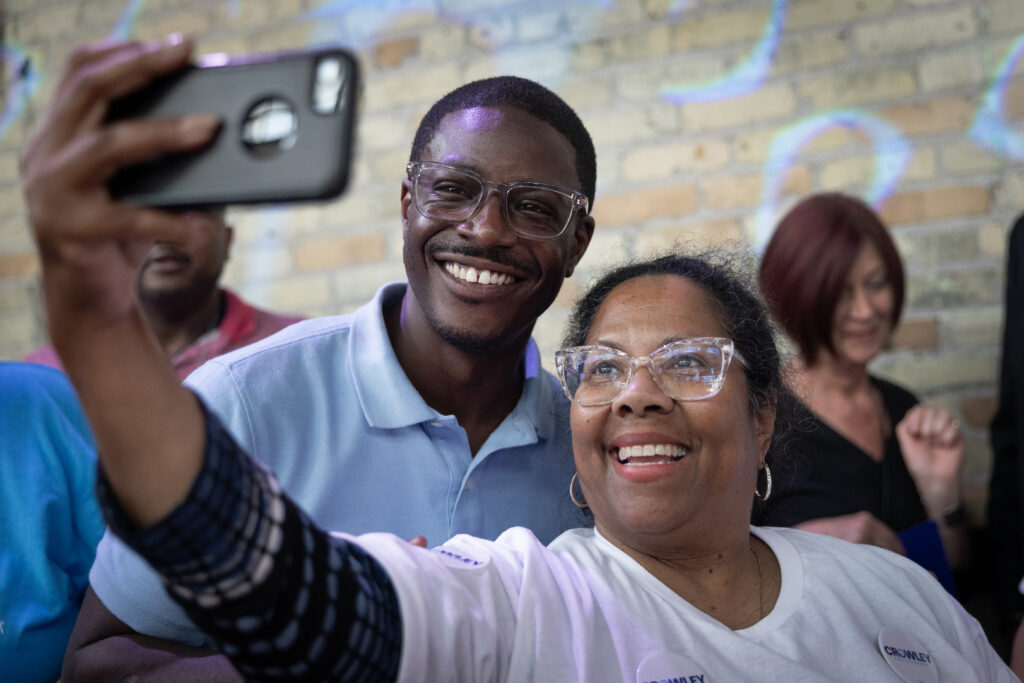
Democrats are favored to take back the state Senate, where they need to flip only two of four competitive seats. The State Assembly, where they must gain five seats, is a harder reach but not outside the realm of possibility.
Though legislative races rarely capture as much attention as federal contests do, this year’s gerrymandering battles underscored how crucial their role can be.
Currently, according to a tally by the National Conference of State Legislatures, there are 38 states with a “trifecta” — that is, both the governorship and the legislature in the hands of one party. It amounts to more single-party control across the map than at any time since at least the late 1930s. Of these trifectas, 23 are Republican, and 15 are Democratic.
This year, Democrats believe they have a shot of doing what the GOP’s tea party did in 2010, when Republicans picked up nearly 700 seats in state legislatures.
Read more Home is sweet for Nationals in 5-3 win over Reds
Had Democrats selected Hong as the gubernatorial nominee, Republicans had made no secret of their glee at the prospect of tagging their downballot candidates as fellow socialists and tying them all to the problematic and bizarre statements she had made in the past, including that Thanksgiving should be canceled.
On Monday, when it still appeared that Hong’s victory was all but inevitable, Robin Vos, Wisconsin’s powerful Republican State Assembly speaker, said in an interview: “As much as Democrats are going to try to say, ‘Look, that’s her, not us,’ they’re going to have to own it, just like Republicans at the national level have to own Donald Trump, whether they like it or not.”
In some regards, the Wisconsin result was a counterpoint to last week’s photo-finish Democratic Senate primary in Michigan, in which progressive Abdul El-Sayed barely squeaked by moderate Rep. Haley Stevens, despite having held a solid lead in the pre-election polls.
But the specifics in Wisconsin were vastly different; in the final month, the gubernatorial primary had come to resemble a car crash, with wreckage strewn across the roadside.
Crowley, trailing badly, had dropped out of the race on July 8, and thrown his support to Lt. Gov. Sara Rodriguez. She was forced to make her own exit less than 10 days later amid a controversy over her campaign’s finances. Crowley then reentered the race, with the backing of Evers, shortly before another high-profile contender, former lieutenant governor Mandela Barnes, ended his campaign.
By then, polling consistently showed Hong with a strong lead. “It’s become very clear who our nominee is going to be,” Barnes said when he dropped out.
So were the polls wrong? Or did they just fail to capture the chaos of the final weeks?
Charles Franklin, director of Marquette Law School’s highly regarded polling operation, noted that his latest survey showed Hong with 38 percent support, which was close to where she ended up. But 34 percent were undecided, and they appear to have coalesced to an unusual degree behind Crowley.
“None of which denies that we were way off on the margin. So were all the other polls. But small comfort,” Franklin said in a text message in the wee hours Wednesday. “Chaos in the race with 3 dropouts in July plus a reentry and endorsement. No wonder people were undecided late.”
Read more Laremy Tunsil’s season-altering injury casts pall on positive week for Commanders