A young Cuban American is selling democratic socialism door-to-door across Miami. But he cannot bring himself to discuss it across his family’s kitchen table.
Read more Angry at the Supreme Court, liberals push a slew of plans for overhauling it
MIAMI — Oscar Alvarez said little to his family about where he was going.
As his mom sat in the kitchen and his brother slept off a day at the beach, he quietly grabbed a tote bag and shoved in copies of his socialist zine.
There was no mention of his plans to canvass Democratic primary voters, going door to door with pamphlets for a socialist congressional candidate. He kept quiet about the tenant meeting he’d lead in a mobile home park later on.
Outside his house, mostly far from this city, young people like Alvarez, 22, are growing a movement once confined to the fringes of political life. Nearly half of Americans under 30 now say they would vote for a socialist for president.
But here in South Florida, a haven for people escaping from authoritarian, left-wing regimes in Latin America, it was almost heretical to embrace any kind of socialism — let alone his more radical views.
Alvarez’s parents and grandparents fled the Castro regime in Cuba nearly half a century ago. His abuelo, who kept a “Latinos Love Trump” sign in his yard, had spent evenings ranting over wine and dominoes about the evils of communism.
In 2020, attending his first year of college classes on Zoom as racial-justice protests swept the nation, Alvarez found the Marxist YouTube videos that seemed to explain what he was seeing on the news.
Everything he had been told about police and property was suddenly turned on its head. Family stories about repression in Cuba, he decided while scrolling late at night, left out the U.S.’s history of intervention.
Older political pundits have wrung their hands in confusion over why so many people like Alvarez have joined the Democratic Socialists of America, the big-tent group he supports. Moderate Democrats have called the socialist candidates now winning mayoral and congressional races “bomb throwers” who could hurt their party’s image.
But as Alvarez got in his gray SUV, driving past dollar-stores and glitzy skyscrapers, he saw another reminder of a wealth gap that he said could only be fixed with a shift away from capitalism and guaranteed universal access to basic needs.
Even in a place like Miami, he said, socialism could help people deal with stagnant wages and soaring costs of daily life — if only he could convince them to get past its heavy stigma.
He just couldn’t bring himself to do so with his own family.
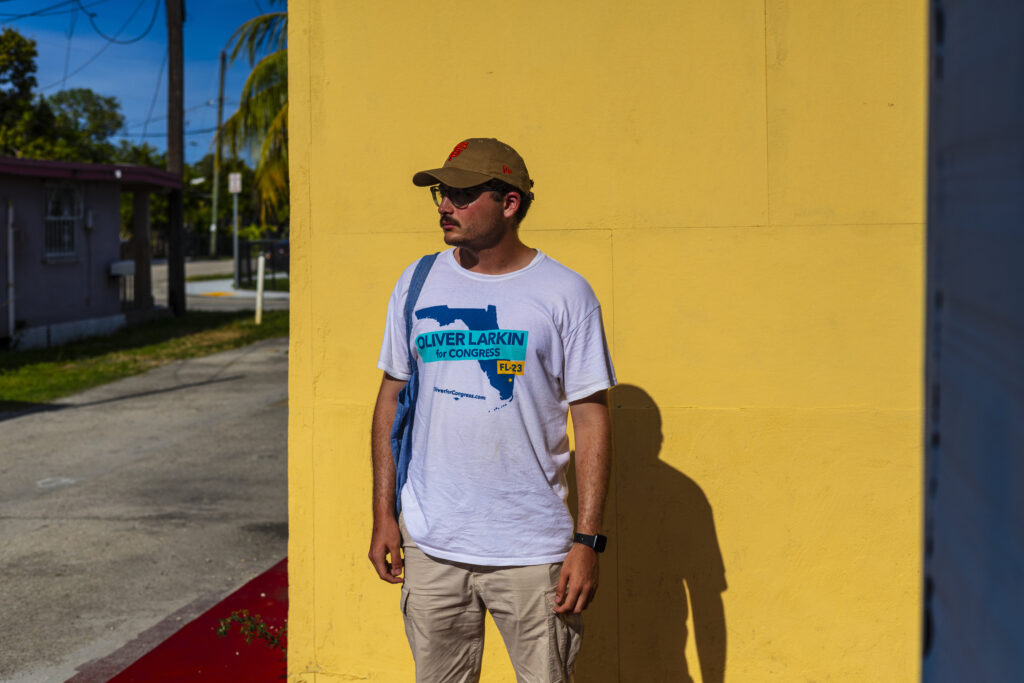
Standing in a Giants baseball cap and white Nike sneakers, Alvarez stood out from the circle of volunteers who had come out on a sweltering morning to knock on doors around South Beach.
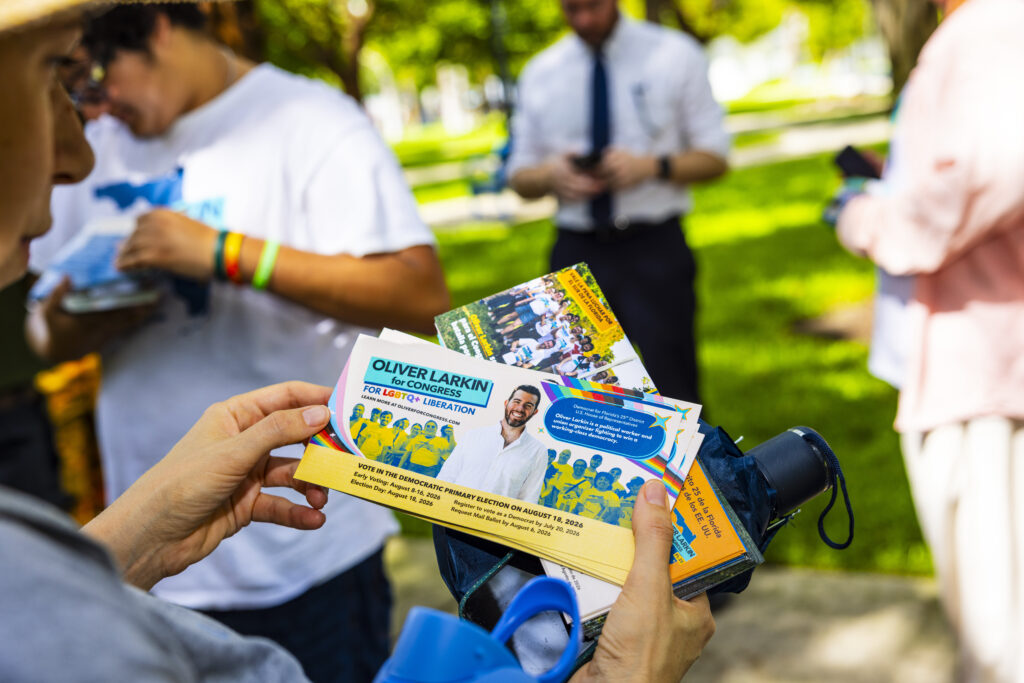
He had no piercings or tattoos. He showed up already wearing a T-shirt with the name of Oliver Larkin, a DSA member who is staging an insurgent primary challenge here against Rep. Jared Moskowitz (D) in this Tuesday’s primaries.
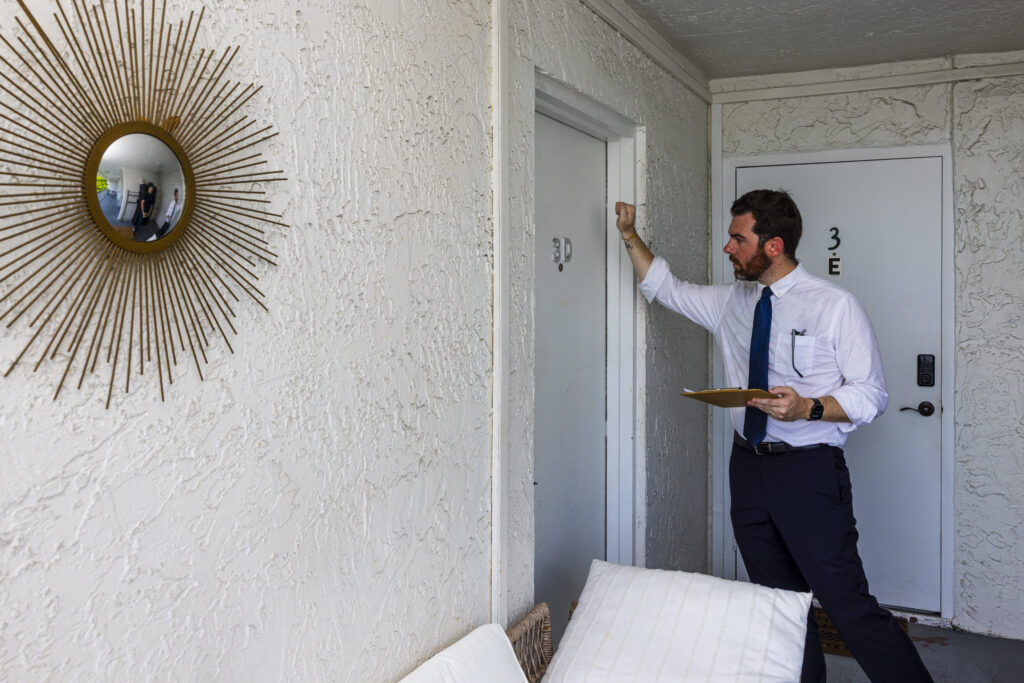
Walking from condo to condo with another DSA member, Alvarez didn’t lead with socialism, or police abolition, or his theories about “collective control.”
Instead, he opened with a question about mail-in voting as he approached Elisa Gonzalez, 57, before steering the conversation toward New York Mayor Zohran Mamdani.
Her smile was suddenly replaced by a furrowed brow.
“He needs to slow it a little bit,” she said.
A nurse and a leader in her union, she liked what Mamdani, another democratic socialist, had to say about Medicare-for-all. But his push for a rent freeze already had her friends speculating he would soon be seizing property.
“Hearing ‘socialist’ scares me,” she said, “because I come from Cuba. I don’t even want to hear that word.”
He nodded and handed her a pamphlet.
“I’m Cuban American,” he told her, “so I’ve heard it too … and in my family I wouldn’t even be able to talk about that.”
Alvarez’s maternal grandfather, also named Oscar, grew up as the youngest of seven siblings in a small town called Mayajigua, near the island’s northern coast. The family fought against the Cuban Revolution, and one relative was thrown in prison for years by the state police, family members said.
His abuelo had been too young to fight but later was regularly detained and interrogated for days at a time. He took nearly four years of college classes but was barred from graduating because he didn’t support the Communist Party.
So when a family member already in Florida successfully petitioned to get them visas, they got on a plane with their daughters — including Alvarez’s mom — and left for the United States in 1982.
Growing up in a mostly Cuban American enclave in southwestern Miami, near the airport, Alvarez never thought to question his abuelo’s condemnation of Castro and communism.
Those ideas were embedded into his community, as ever-present as the smell of frying plantains and the sound of Marlins games on the radio.
His grandparents and aunt grew to support Donald Trump, viewing him as a macho figure who would bring the hammer down on the left.
His dad, who divorced his mom decades ago, never even touched on the topic. These days, as Alvarez worked for his dad’s small repair business, they were more likely to talk about work.
Read more Senate hopeful Talarico touts his faith. Texas Republicans call it blasphemy.
But locked at home during the pandemic, he scrolled through clips of police violently quashing Black Lives Matter protests. Watching one video of protesters in Minneapolis burning down a police precinct, he started wondering if, maybe, the protesters had a point.
He found his way to the controversial left-wing streamer Hasan Piker on Twitch and YouTube channels like “Second Thought” and “Marxism Today,” digesting 10-minute explainers that distilled the U.S. health care system and “America’s two-party corporate duopoly.”
He printed out a copy of “Principles of Communism.” Within the year, he had joined his school’s chapter of the Young Democratic Socialists of America.
Most of the democratic socialists running for office — and many of their supporters — have disavowed Marxism and communism. They instead stress ideas common among progressives, like universal health care, high wealth taxes, and rent freezes.
But Alvarez, like many in his college’s DSA chapter, embraces labels and ideas that go beyond that, sometimes to negative reactions.
Some classmates jeered at him when he set up a table inside the student center, with a cartoon Marx and Engels doodled on a whiteboard.
A site devoted to tracking student activists put up a page with his photo, accusing him of “expressing support for terrorism” after the war in Gaza broke out. His phone number was posted online.
Alvarez’s mom grew nervous about him facing retaliation and chided him for spending so much time with the DSA.
His mother, who spoke on the condition of anonymity for fear of retribution from her community, said she admired her son’s devotion to educating himself. She might even be open to some policy ideas like universal health care.
But anything further left is “scary to any Cuban, and especially in Miami.” Experience made it hard to believe otherwise.
Crossing the causeway back into Miami, Alvarez parked near a store that sells toilet paper with Castro’s face on it.
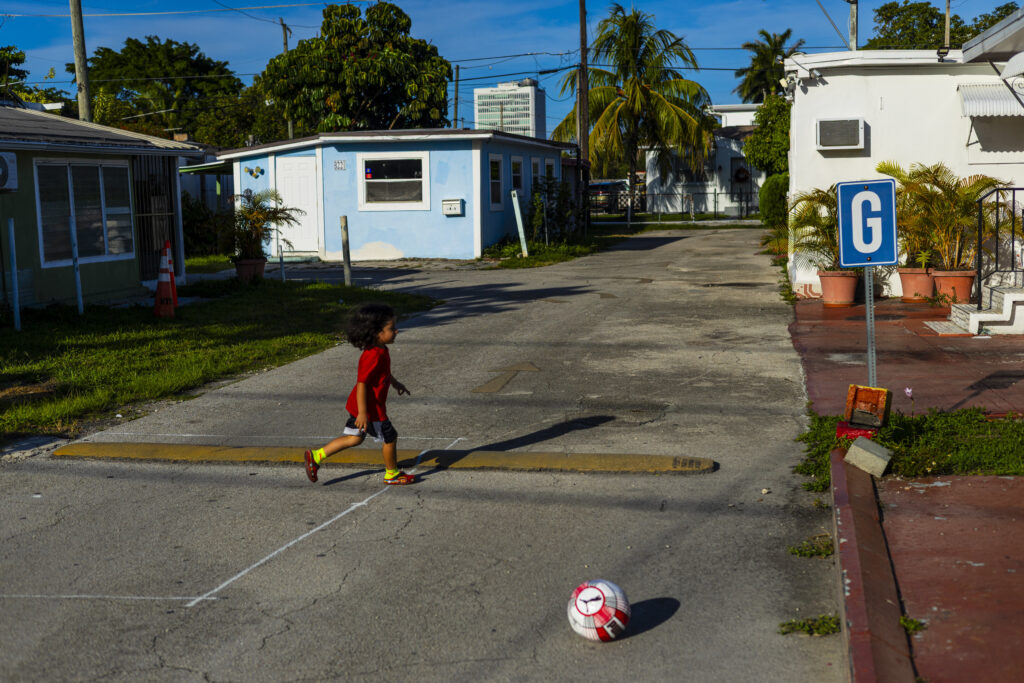
Here, in a gentrifying section of Little Havana, he had a different mission: organizing tenants in mobile home parks who were facing eviction.
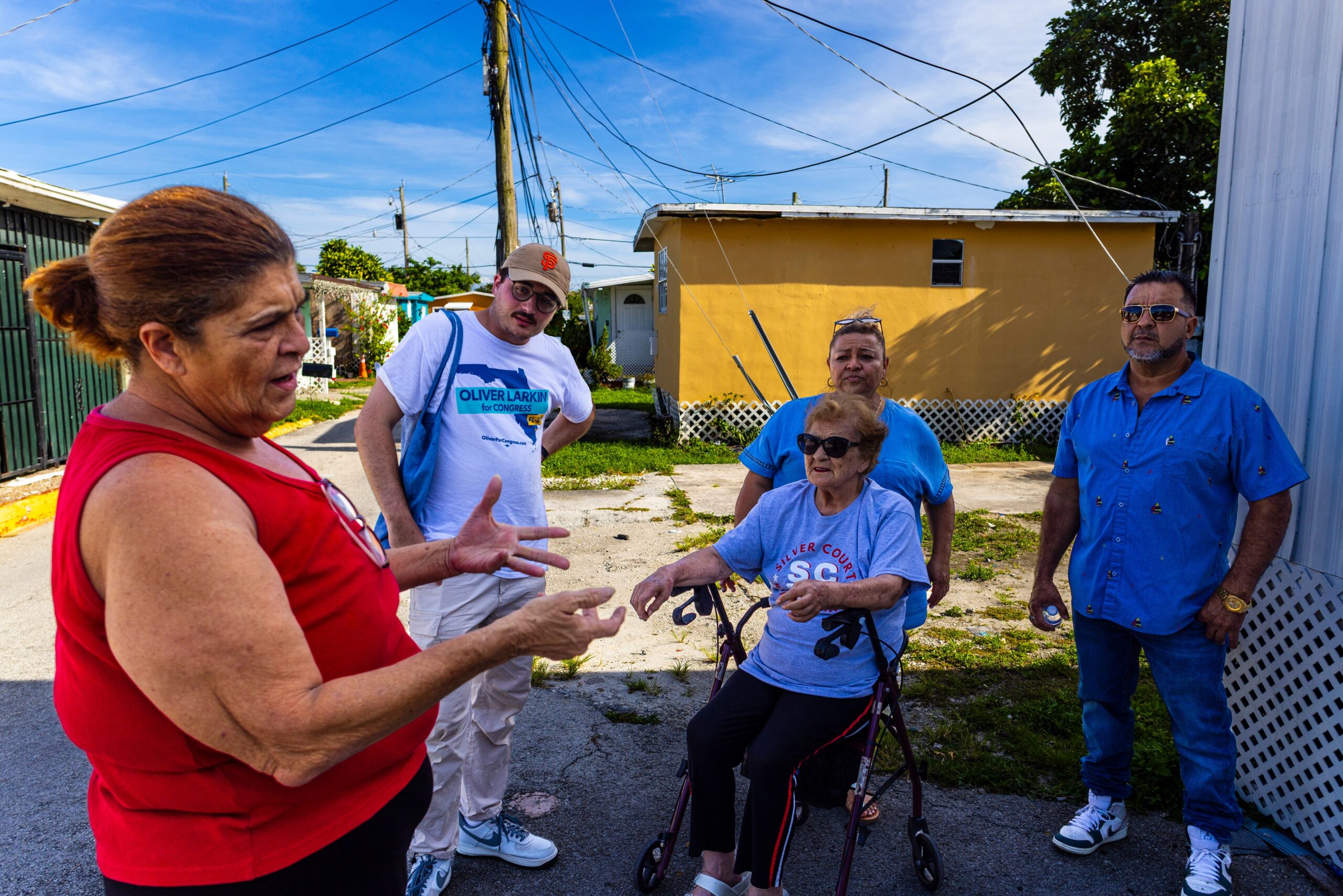
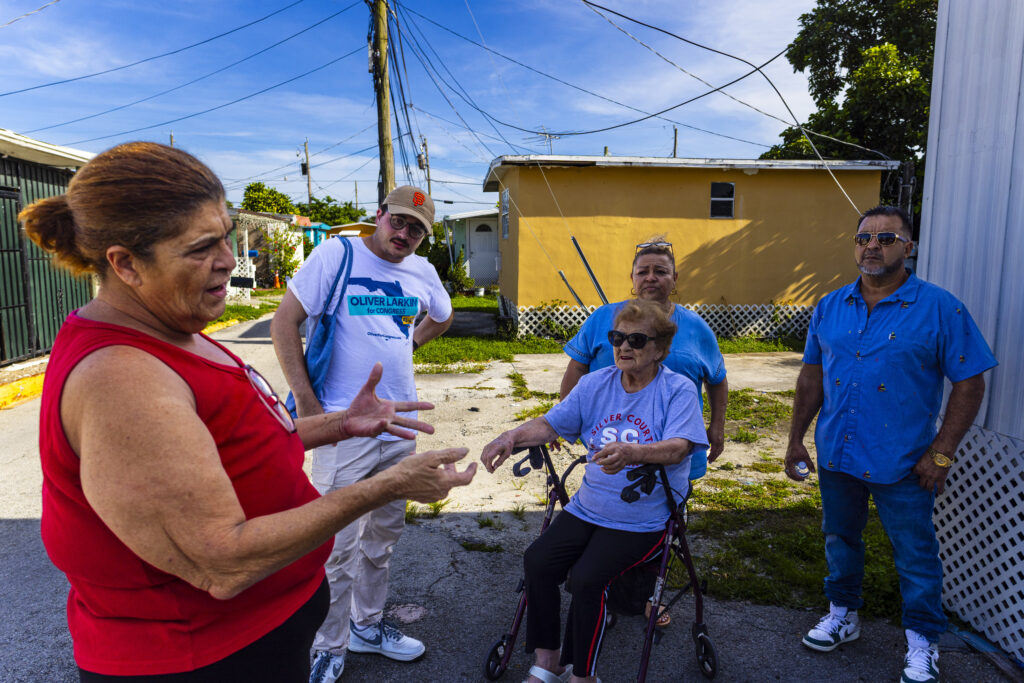
The residents here knew Alvarez as an activist trying to help them, but most did not know he was a socialist who was here working on behalf of DSA.
“Que tal, Oscar?” asked one of the tenants, Victoria Diaz, 68, as they pulled out mismatched chairs and gathered in a half-circle in the street.
Diaz, a Cuban immigrant and retired city employee, said she hadn’t been able to sleep.
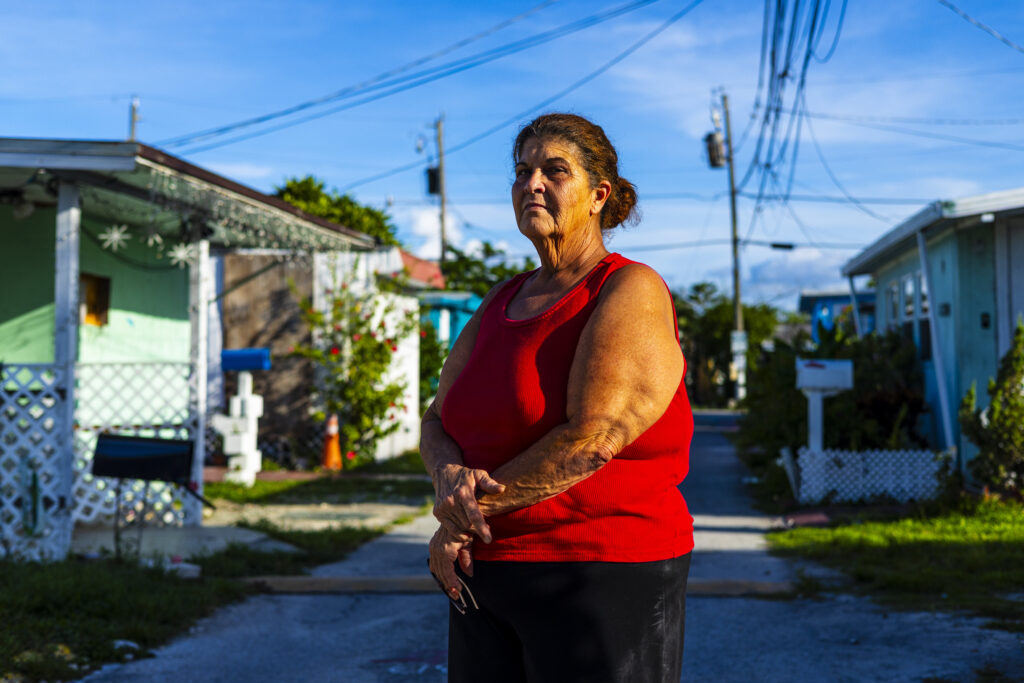
She and the other tenants had been offered $10,000 to leave the land on which their mobile homes sat. Then the offer was cut to $7,500.
But they did not really have a choice.
The few others who were still resisting the offer, hailing from nearly every country in Latin America, came with walkers and canes and began to share their stories. One burst into tears, proclaiming she had nowhere else to live.
Alvarez tried to redirect the conversation toward an upcoming county government meeting, where they would ask local officials to intervene.
The scenario, he said, proved the need to raise the minimum wage, stop rent increases and support candidates who shared those ideas.
He pointed at his T-shirt, with Larkin’s name on it. That guy was running on many of those issues, in a nearby congressional district.
“He’s a Democrat,” Alvarez told them in Spanish, “but his politics aren’t moderate.”
Diaz stood up from her chair.
Some of those people were socialists, or worse: communists. Socialism “is evil — very evil,” she said. How could someone like that expect to win, especially in Miami?
Diaz paced and then sat back down, still going on about communism. “These labels are confusing,” she said.
Read more Democrats approve 2028 primary calendar that puts South Carolina first
Alvarez nodded. He didn’t say anything in response.