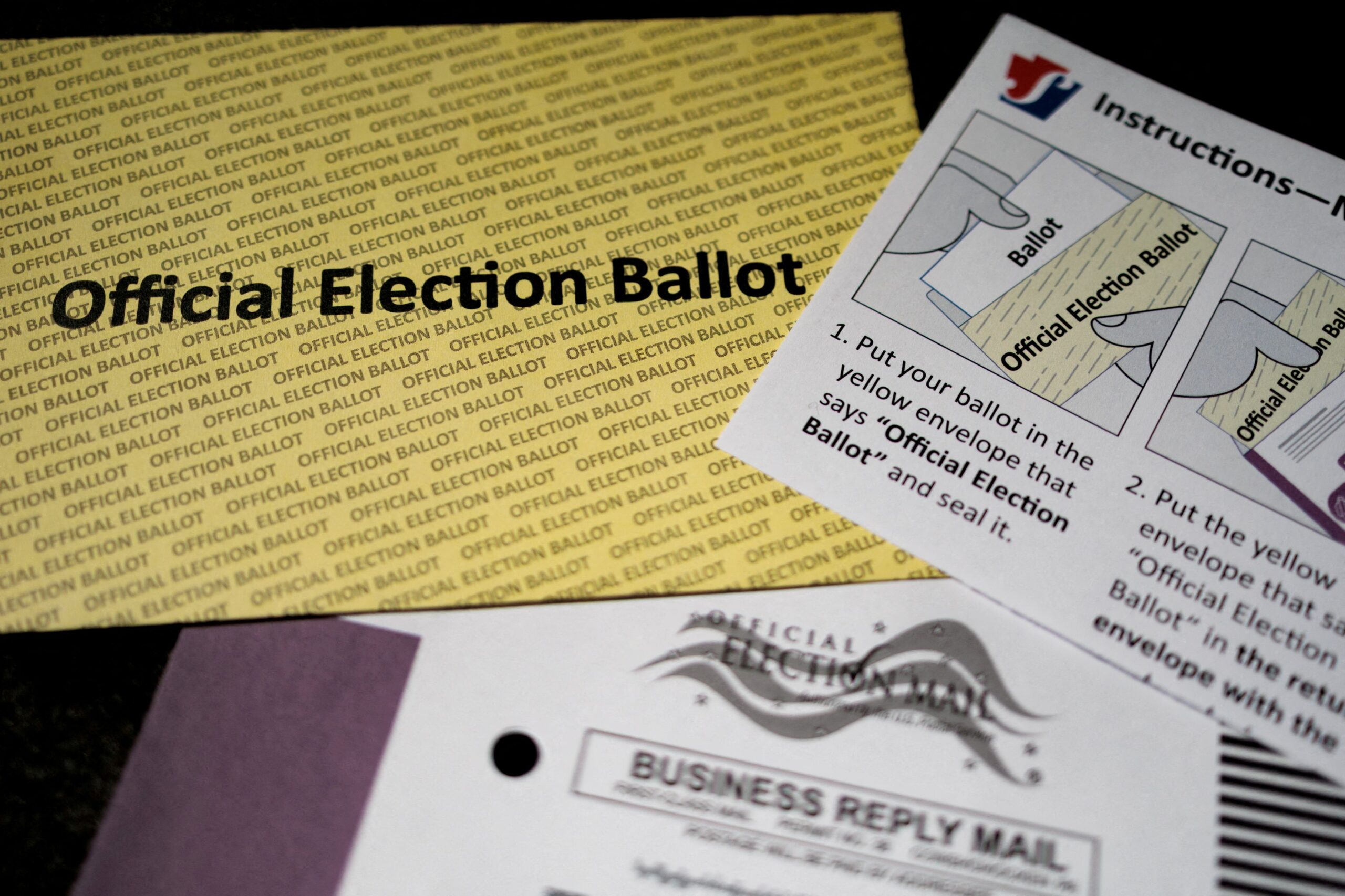
The president’s executive order is now in effect for the midterm elections, but the ruling leaves the door open to renewed challenges from rights groups.
Read more Alaska’s weird (and important) Senate race
A federal judge on Wednesday cleared the way for the Trump administration to impose sweeping restrictions on mail-in voting for November’s midterm elections, but the legal fight over the controversial measure is far from over.
U.S. District Judge Indira Talwani dissolved her block on the executive order that would bar the U.S. Postal Service from delivering mail-in ballots from voters not on a list of citizens created by federal agencies.
But she left the door open for the League of Women Voters and other voting rights groups that challenged the executive order to renew their request for a preliminary injunction, meaning the order could soon be blocked again.
Soon after, the groups did just that. Sophia Lin Lakin, director of the Voting Rights Project at the American Civil Liberties Union, called the Trump administration’s plans “chaos by design.”
“No administration should be able to manufacture confusion around how we vote and undermine confidence in our elections in the process,” she said in a statement.
It was the latest twist in a week of dizzying developments in an intensifying fight in the federal courts over President Donald Trump’s executive order to make voting by mail harder.
Talwani granted an administration request to remove the stay that had been in effect since June in light of a Supreme Court ruling in a similar case this week.
Read more Trump visa restrictions will worsen strains on the economy, experts say
The justices found that 23 states and the District of Columbia had challenged the executive order too soon, since rules for its implementation had yet to be finalized at the time it took up the case. Talwani said the same legal logic applied to the case brought by the voting rights groups.
The administration says the restrictions on mail-in balloting are necessary to keep noncitizens from voting, but voting rights advocates worry that the lists of citizens generated by federal agencies could be error-prone and that qualified voters could be mistakenly barred from casting ballots.
In addition, some state election officials said it would be daunting to implement the new rules just weeks before they begin distributing mail-in ballots in pivotal contests that will determine which party controls the House and the Senate.
In another development Wednesday, the states and D.C. refiled their legal challenge to the executive order, shortly after Postal Service rules for implementing the measure took effect.
On Tuesday, Talwani found the administration had violated her preliminary injunction by issuing the Postal Service rules.
The cases brought by the voting rights groups and the states and D.C. will continue, and one — or both — could end up back before the Supreme Court in the near future.
Even if the Trump administration ultimately prevails in the cases, it’s unclear whether there is enough time to implement the mail-in balloting changes in time for the November election.
Read more Case against lawmaker charged in Delaney Hall clash can proceed, appeals court rules