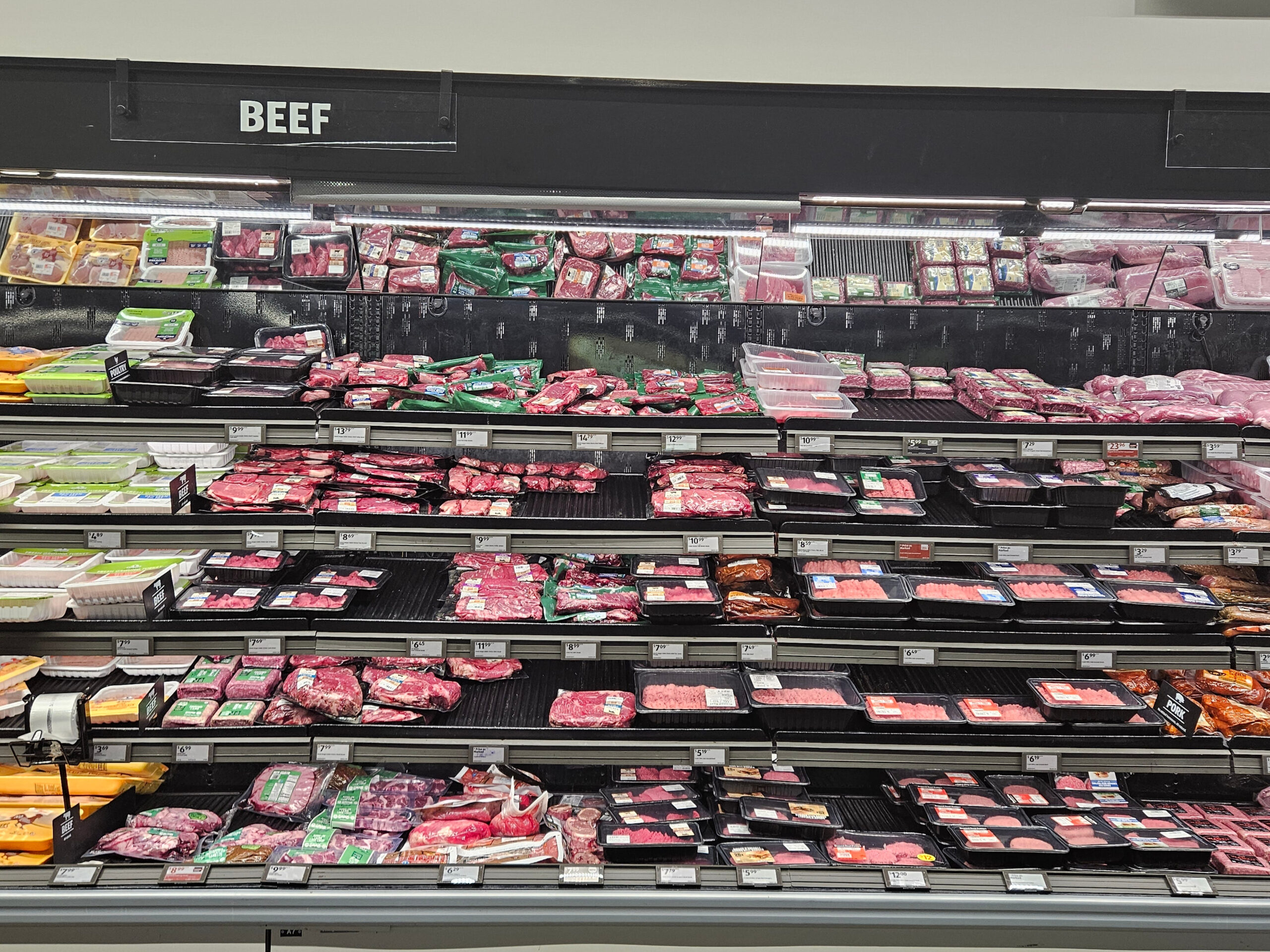
Late last week, President Donald Trump made a risky political decision: He is making it easier and cheaper for foreign beef to be sold in the country by lifting tariffs he originally put in place to boost American-made food.
Read more Trump signs order renaming Lake Ontario as Lake America, escalating Canada feud
“We want to get the beef prices down, so we’ll get them down a little bit, and that’s what people want,” Trump told reporters last week. “That’s what the voters want.”
Beef is indeed expensive. And so, too, are many other items at the grocery store. Forty-one percent of Americans are concerned about being able to afford groceries in the next few months, according to an AP-NORC poll conducted in late July.
Like gas prices, voters often use food costs as a marker of how well the economy is doing, and high grocery prices are likely to play a major role in who wins the midterm elections.
Here’s what to know about Trump’s attempts to bring down costs as elections near.
The president announced that he would temporarily remove tariffs on 300,000 metric tons of foreign ground beef. That’s a massive amount — so much that it’s not clear where all this beef is coming from.
Trump also said that the foreign beef will be sold at a discount for the next 90 days.
Trump is focusing on beef because the average cost of a pound of it has nearly doubled in a decade, reports The Washington Post’s Julie Z. Weil. A big reason is that American ranchers are struggling with dwindling cattle herds.
That is not an easy fix.
“Cattle stocks are at record lows,” said Diane Swonk, chief economist with the tax and accounting firm KPMG. “There is no way to alleviate that quickly. They don’t grow as fast as chickens.”
It’s a big change for Americans: Most of the beef sold in U.S. grocery stores is produced in the country, and in the past, there have been concerns about the quality of foreign beef. Last year, the Trump administration closed the border to foreign cattle over concerns about a parasite that can kill cows.
This is also a big change for American ranchers. Republican politicians in states like Nebraska and Montana immediately criticized the decision.
Read more Karoline Leavitt says she’ll miss the press on her last day at White House
“I’ve advised President Trump against this course of action for a year,” Sen. Tim Sheehy (R-Montana) posted on social media, “because American ranchers have been struggling against the packer monopoly for decades, and this will further harm them — most of whom are MAGA Republicans.”
Some Republicans worry that the new policy will actually hurt them in the midterms. Even if it lowers prices on grocery bills, if the flood of foreign beef angers ranchers, that could have notable effects on key races.
Nebraska has one of the most competitive House races in the nation. Montana and Nebraska both have Senate races in November (although they aren’t expected to be as competitive as many others). And any disenchantment among Republican voters would come as Democrats are experiencing record-high enthusiasm.
Flooding the market with foreign beef might temporarily lower prices, economists say, but it won’t change the fact that Americans’ purchasing power appears to be on the downswing.
Many Americans briefly benefited from the tax breaks in Republicans’ spending bill, said Nancy Lazar, chief global economist at the investment bank Piper Sandler, in a report this summer to clients. But that was short-lived as the war in Iran raised gas prices high enough and long enough to wipe out any income gains the average American might have gotten from the bill.
Inflation is stubborn and persistent. And Lazar notes that fewer Americans have been saving as their spending outpaces their income. That’s in part because average Americans’ incomes (when adjusted for inflation) remain below pre-pandemic levels.
Some economists argue that focusing on grocery prices, while highly visible to voters, won’t do much to alleviate Americans’ economic anxiety. Nearly 40 percent of Trump voters express some pessimism about the economy and its future growth, a new Economist/YouGov poll finds.
“The reason typical families have faced an affordability crunch in recent decades is not because prices have grown exceptionally fast, it’s because incomes for the vast majority have grown too slowly,” argues Josh Bivens with the Economic Policy Institute, a think tank focused on working families.
Amber Phillips writes The 5-Minute Fix newsletter, a quick analysis of the day’s biggest political news. Send her an email here, or ask a question that could be featured in an upcoming newsletter.
Read more Pirro’s special grand jury probing D.C. schools, city oversight of youth