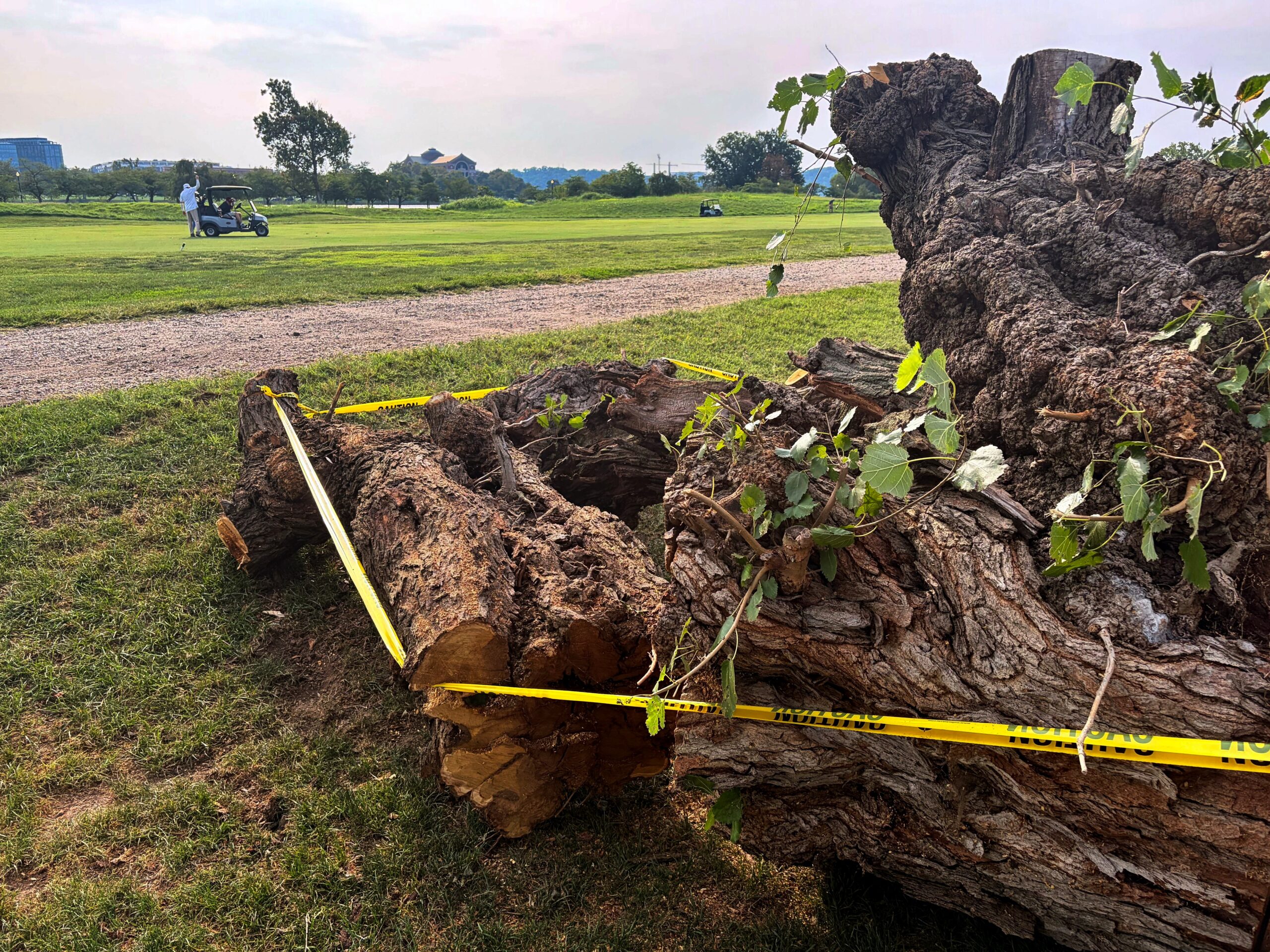
The president’s promised overhaul of the East Potomac course has not officially begun, but tree removal has already been taking place for weeks.
Read more Trump suggests cattle ranchers could bypass USDA-inspected meat plants
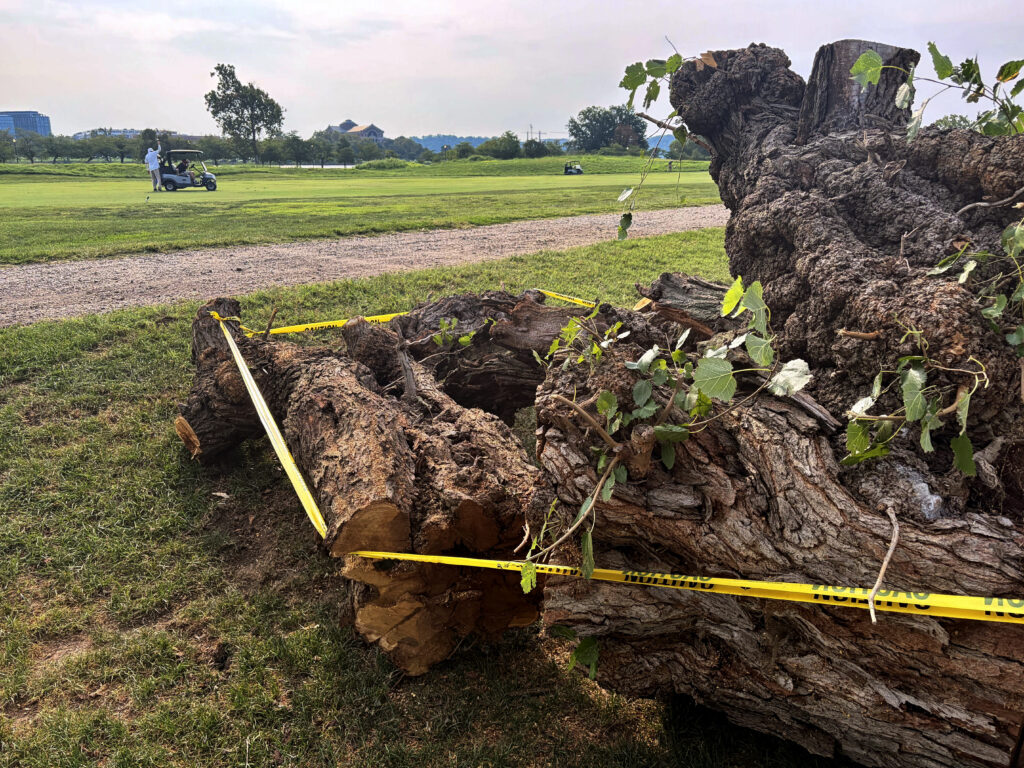
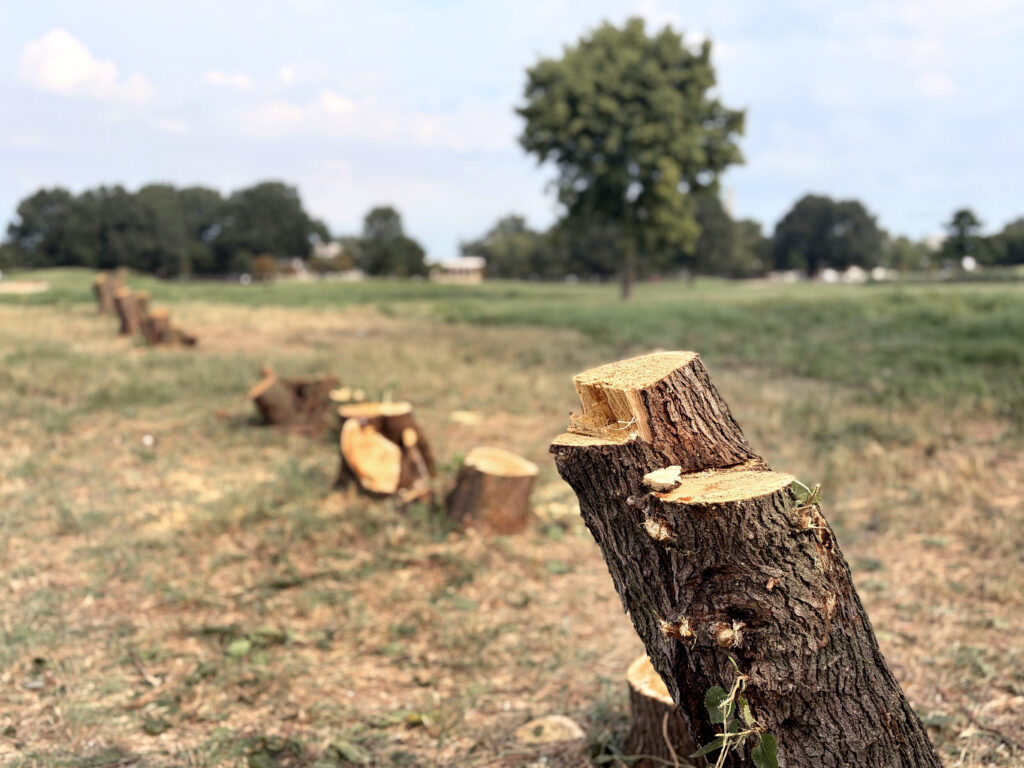
Across East Potomac Golf Links, amid golfers squeezing in late-summer rounds and wondering what will become of the beloved D.C. course, newly cut stumps and bare patches of dirt mark the places where dozens of trees recently stood.
The Trump administration’s promised overhaul of the course has not officially begun. The trees, however, have been coming down for weeks.
President Donald Trump said June 28 that work on the historical public golf facility would begin Sept. 1, but days before that date, his administration has released no final design, construction schedule or estimated cost. Officials have not said whether the course will close next week, what work might begin, or what golfers and other visitors to the national parkland should expect.
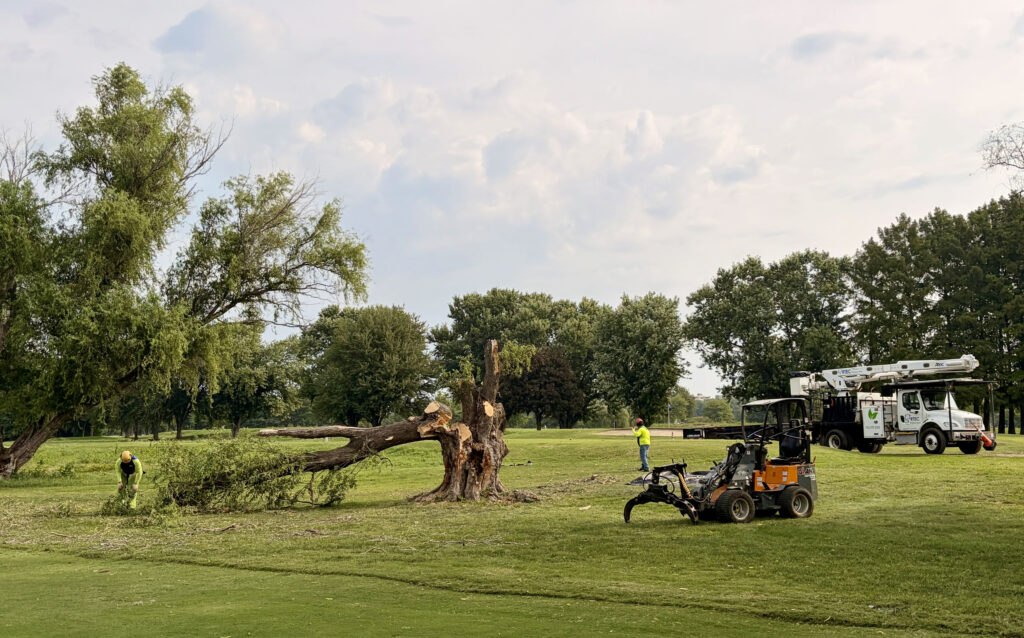
An informal count Thursday found that more than 60 trees appeared to have been removed in recent weeks. Many were around the perimeter and parking lot, but others had been removed from playing corridors on the Blue, Red and White courses.
Among the most conspicuous was a cherry tree near the 14th green of the Blue Course, one of East Potomac’s most picturesque holes, framed by cherry trees near the southern end of Hains Point. Nearby, two large sycamores had been removed around the fourth hole.
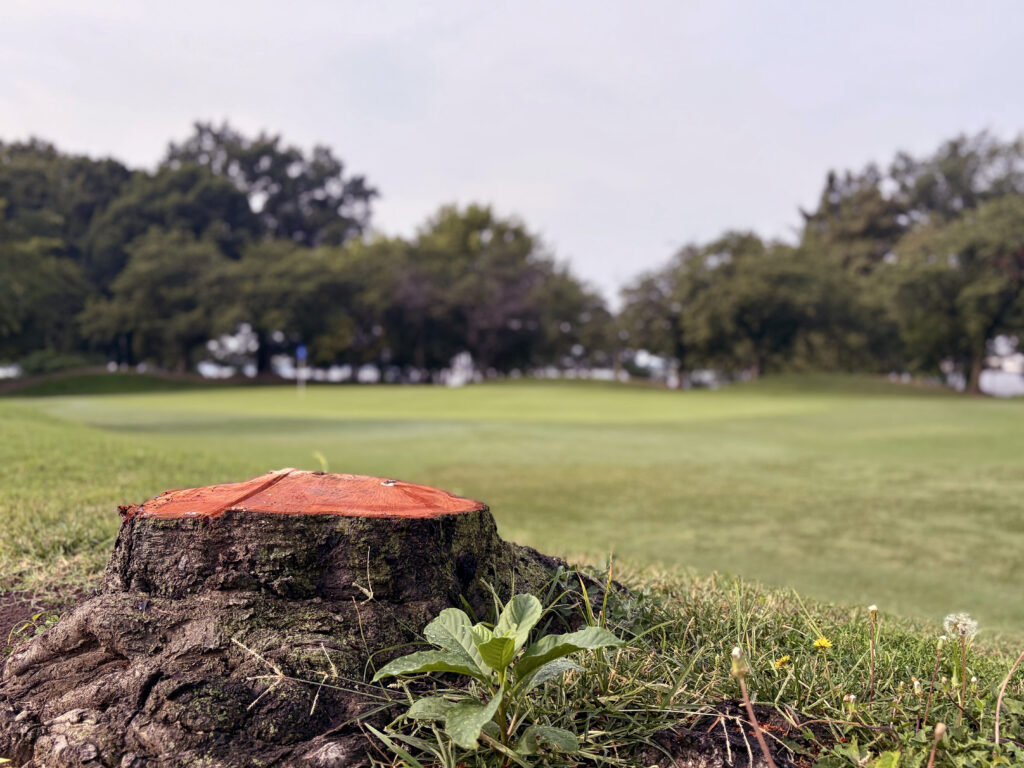
Tree removal is common in major golf course renovations, often to widen playing corridors, improve sight lines, and allow more sunlight and air to reach the turf. But the Interior Department characterized the activity as routine maintenance and did not connect it to the proposed redesign, nor did it answer questions about whether notice of the work had been provided to the federal court overseeing a legal challenge to the administration’s plans.
“Arborists are doing routine maintenance at East Potomac Park with selective removal of hazard trees, non-native invasive trees, and declining and dying trees that cannot be brought back to good health through any degree of intervention,” a department spokesperson said in a statement. “Trees throughout the park are regularly monitored for potential safety impacts to visitors, and when a tree is determined to be dying, declining, or hazardous our arborists may make the decision to remove it.”
During a May hearing in the lawsuit, brought by preservationists seeking to block the course overhaul, U.S. District Judge Ana C. Reyes declined to stop the government from performing necessary maintenance but warned administration lawyers against presenting the court with a fait accompli. She said she wanted advance notice before the government removed more than 10 trees or brought equipment larger than a sedan onto the property.
That direction was delivered orally and was not included in a formal written order. A person familiar with the legal proceedings, who spoke on the condition of anonymity out of fear of retribution, said the government has not notified the plaintiffs or the court about the recent tree work.
A joint court filing posted Friday added to the uncertainty surrounding Trump’s proposed Sept. 1 start date.
Read more A booming Gen-Z golf brand’s bad, bad week
The Justice Department, which previously has asked the court to dismiss the lawsuit, wrote that “no final agency action has occurred” and that “multiple public-facing steps” would precede a course redesign.
The plaintiffs, however, highlighted the tension between that position and the administration’s stated timetable. They quoted a government attorney telling the court during a July hearing that Interior and the Park Service were “trying to meet” a September construction date.
At the same time, the plaintiffs noted that the government has represented that before breaking ground, the Park Service will complete environmental and historical-preservation reviews, determine that the work would not impair park resources and obtain approval from the National Capital Planning Commission.
They cited an Aug. 6 email in which a Justice Department attorney said the Park Service “must secure final approval from NCPC before construction of a proposed redesign can begin.”
A National Park Service spokesperson did not respond to a request for comment.
Some of the required steps remain unfinished. An initial meeting in the historical-preservation review has twice been postponed and has not been rescheduled. And the golf course is not currently on the agenda for the National Capital Planning Commission’s next meeting, scheduled for this coming Thursday.
The administration also has not disclosed the project’s expected cost, the source or amount of private funding, or details of possible related work, including improvements to the seawall surrounding Hains Point.
Nor has it said how construction would affect public access to East Potomac’s three courses, driving range and miniature-golf course, or to the popular recreational path used by runners, cyclists and pedestrians. National Links Trust, which continues to operate the golf facility on an interim basis, declined to comment.
Across East Potomac, the conditions of the recently removed trees varied. Many of the remaining stumps were visibly hollow or showed signs of decay. In other areas, the stumps had already been ground down, leaving only circles of dirt.
RTEC Treecare crews were cutting trees Thursday. On the 13th hole of the Blue Course, a crew took down a large tree that showed clear signs of decay. A Park Service employee nearby was marking other trees but declined to answer questions.
White dots had been painted on some trunks elsewhere on the property, while yellow ribbons had been tied around numerous others. It was unclear what the markings signified or whether those trees were also slated for removal.
Read more White South Africans could get $4,500 in aid if they come to U.S. as refugees