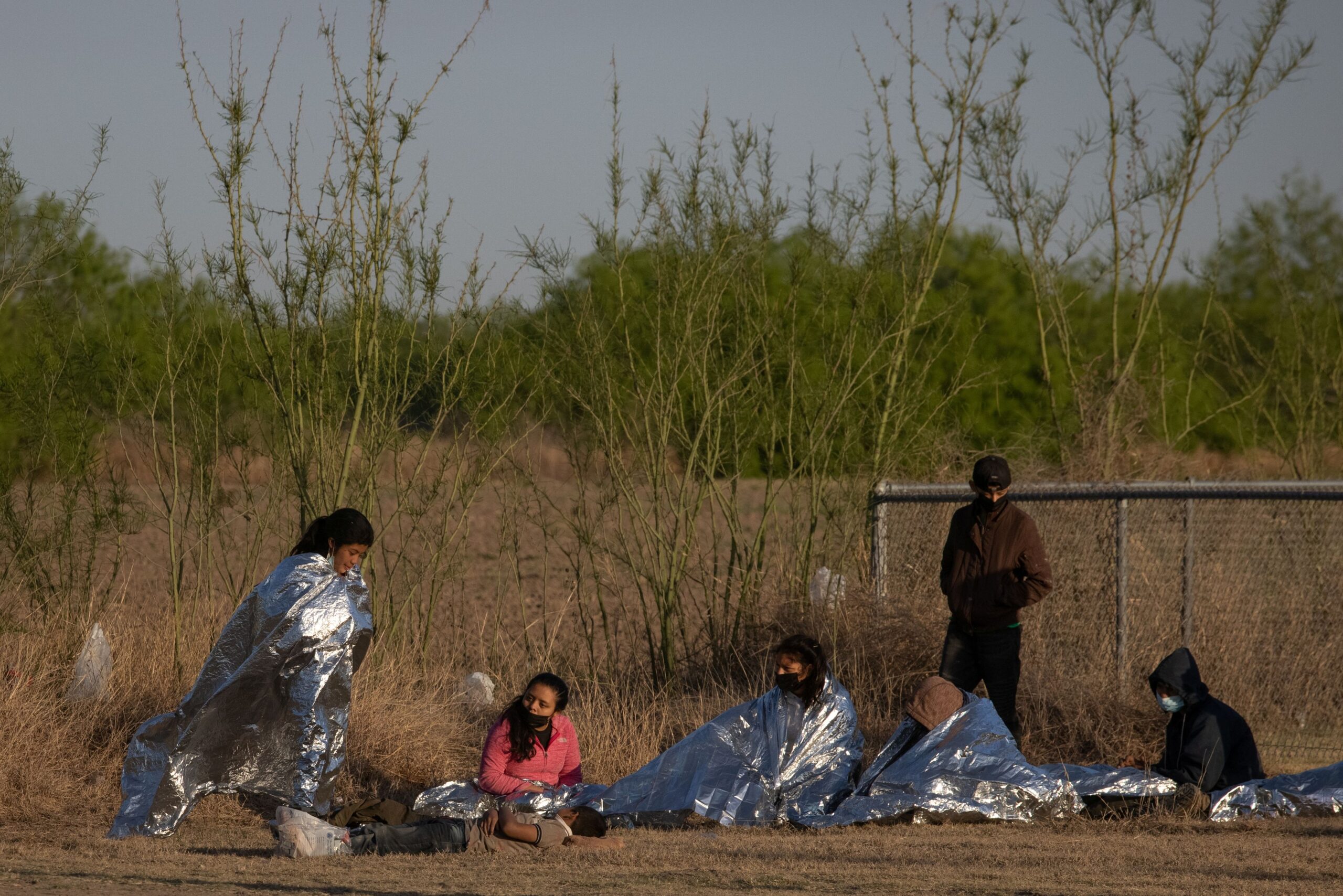
The administration is finding new ways to crack down on immigration as the midterms near.
Read more Prominent Texas Republican predicts GOP losses over data centers

Here’s what happened under President Donald Trump and his administration this week that you may have missed.
As the midterm elections near, Trump is ramping up his mass deportation effort, with immigration agents detaining more than 49,000 people in July, nearly half of whom have no criminal record. He’s also working to dramatically limit legal migration.
On his first day in office, Trump tried to close the border entirely to asylum seekers. That plan was struck down by the courts.
Since then, he’s focused on making asylum more difficult to apply for and obtain (with the exception of White South Africans); in July, he introduced a rule that would send some asylum seekers directly to deportation proceedings. Earlier this year, he won dual Supreme Court cases to tighten rules about claiming asylum at the U.S.-Mexico border and to cancel temporary humanitarian protections granted to migrants from countries deemed dangerous, like Haiti.
This week, the State Department announced it is revoking the visas of some who came to the United States on a tourism or business visa and then applied for asylum. Officials also paused visa appointment globally, saying staff needed better training on making sure migrants won’t become reliant on public benefits.
“They’re trying to systematically demolish any means by which a persecuted person could seek protection and safety in the United States,” Jeremy Konyndyk, the president of Refugees International, told The Washington Post this spring.
“Asylum isn’t supposed to be a loophole to circumvent immigration laws,” Deputy Secretary of State Christopher Landau said in a social media post this week. “Rather, it’s supposed to provide a narrow safe harbor for persons persecuted because of their ‘race, religion, nationality, membership in a particular social group, or political opinion.’”
Six months into its war with Iran, the U.S. faces a weapons shortage and a resistant Iranian regime. Now, Trump and his administration are turning to economic warfare.
This week, the Treasury Department announced sanctions against Iran, which is already a heavily sanctioned country, saying the new policy is designed for “economic asphyxiation” of the Iranian regime. But the sanctions won’t go into effect right away and don’t yet have the support of other major trading partners with Iran, like China.
Read more Rep. Crockett says she’ll be campaigning ‘downballot’ instead of with Talarico
A number of experts are concerned the administration has backed itself into a corner: The military campaign has stagnated, and sanctions options are limited unless Trump is willing to put the U.S.’s economy at risk.
“What worries me is … that actually the Iranian response is going to be, ‘We can handle all of this,’” Richard Nephew, who helped devise the sanctions regime during the Obama administration, told The Washington Post’s Michael Birnbaum.
Deep under the White House is a top-secret bunker designed to protect the president and a select few from a nuclear attack. As courts have stopped Trump from building his ballroom, he has shifted to claiming the ballroom must be built to protect the president in the event of an attack. (The courts have said construction can continue on the ruins of the East Wing only on facilities related to national security.)
The Post reported on all of this recently, including how Trump could spend as much as $900 million on revamping the White House. Construction crews are working around the clock to reshape the famous South Lawn to better suit a new helipad Trump is racing to install. There’s so much construction going on at the White House, it may have put the president in danger as he took off in the Marine One helicopter earlier this month.
This is all just within White House grounds. Trump has been moving fast (faster than courts or Congress) to redesign many other public lands in D.C. and beyond, often attempting to attach his name to historic landmarks. He argues he’s tackling much-needed repairs and working to beautify the capital.
This week, a group of 600 organizations, ranging from architects to tribal nations, announced it had formed an alliance to fight some of these projects and try to uphold historic preservation laws.
“The burden of standing up for congressional authority is falling heavily to civil society organizations, law firms, and individual Americans when Congress itself should be taking the lead,” the coalition wrote.
Amber Phillips writes The 5-Minute Fix newsletter, a quick analysis of the day’s biggest political news. Send her an email here, or ask a question that could be featured in an upcoming newsletter.
Read more Judge rejects Trump’s latest bid to challenge hush money conviction