
In races across the country, former GOP politicians are leaning into their pasts.
Read more Military leaders warn Hegseth against extending Iran war operations
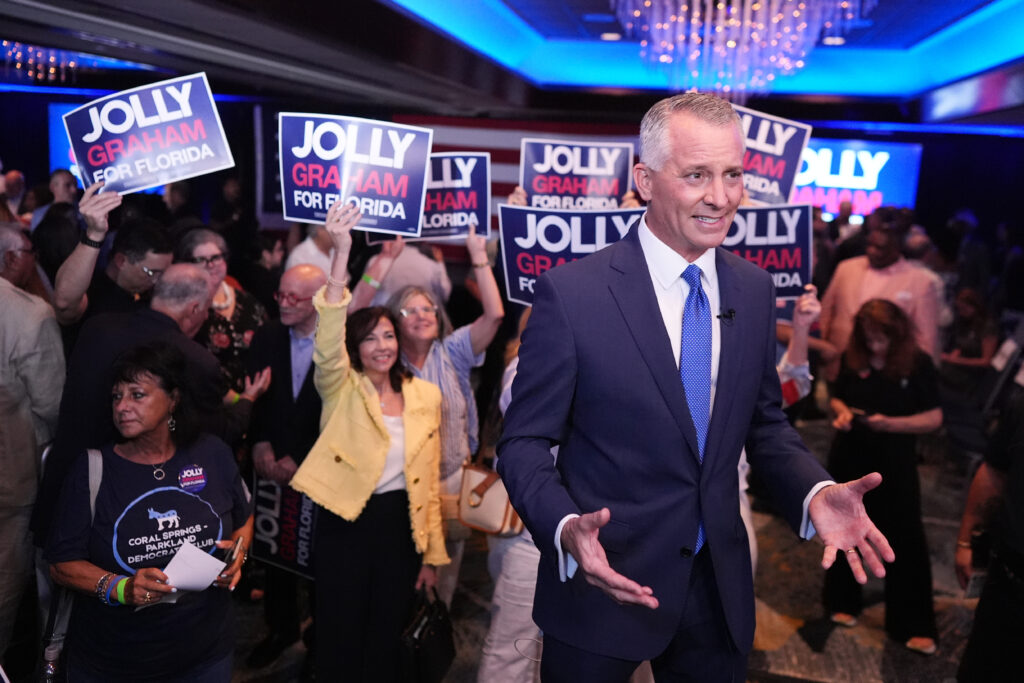
Democrats have struggled to win over Republican voters in recent elections. This year, some Democratic candidates argue they can change that — because they were once Republicans.
These party switchers say that they have unique insight into the concerns of voters distrustful of party politics, as well as those who feel they have no real home in either party, and that this knowledge will give them an edge in the upcoming midterm elections.
“It is a big tent, right?” said Nancy Lacore, who is looking to flip Rep. Nancy Mace’s (R) seat in South Carolina and who left the GOP for the Democrats a decade ago. “There is room … in there for everybody.”
There are at least three Democratic House candidates running in this year’s general election that are former registered Republicans. While the phenomenon isn’t new, in a midterm year where President Donald Trump’s popularity is slipping among some Republican and independent voters, it is indicative of what polling suggests is broader dissatisfaction with partisan politics.
In past cycles, party switchers sometimes have struggled in general elections. But Democrats hope that Lacore and other ex-Republicans such as former TV anchor Janelle Stelson in Pennsylvania and Navy helicopter pilot Rebecca Bennett in New Jersey can help their party win in districts where the odds are against them — and perhaps, in the case of Florida gubernatorial candidate David Jolly, manage to find a way to take a statewide seat that has eluded them for decades.
Part of the hope is that these party-switching candidates can reach Republicans who, like they did, have soured on Trump.
Lacore, who left the GOP in 2016, said she constantly runs into voters at Democratic events who go up to her and say, “I [am] a former Republican, too.”
“I’m really glad that I’ve got those folks on my side because that’s who we need going forward,” she said, noting that she wants to show fatigued Republicans that they have a place in the Democratic Party.

Though Trump’s support has slipped during his second term, 81 percent of Republicans still support him, and his GOP support has fallen by only seven percentage points since the beginning of his second term, according to polls taken by The Washington Post. The party-switching candidates acknowledge that they probably will not be able to swing any elections by attracting only disaffected Republicans.
Jolly, for instance, said there is a large pool of Republican voters who are not available to him — about 31 percent of the state, by his estimate, that makes up the hardened MAGA crowd. Because of that, part of his strategy, he said, is to focus on independents who are “just fatigued with Trump.”
A growing number of Americans identify as independents; a January Gallup poll found that a record-high 45 percent of U.S. voters called themselves independents in 2025. Most of them said they lean more toward the Democratic Party than the GOP — 20 percent Democratic leaders to 15 percent Republican leaders. According to Gallup, independents’ approval of Trump collapsed, causing them to align with Democrats. And that’s something the party-switching candidates hope to capitalize on.
“They say, ‘Okay, let me look at Jolly,’ and they kick the tires of this former Republican who says: ‘Look, I think the private sector should lead. Economic growth is good. I think we should stay out of your bedroom,’” he said. “And they start to say, ‘Maybe I could work with this guy.’”
In Florida, voters who aren’t registered with either party split 39 percent for Rep. Byron Donalds, the Republican gubernatorial candidate, and 38 percent for Jolly, according to a July poll from the University of North Florida, conducted before this month’s primary.
Democrats also aren’t completely in love with their party right now. And that has some candidates emphasizing their fidelity to the United States rather than their politics.
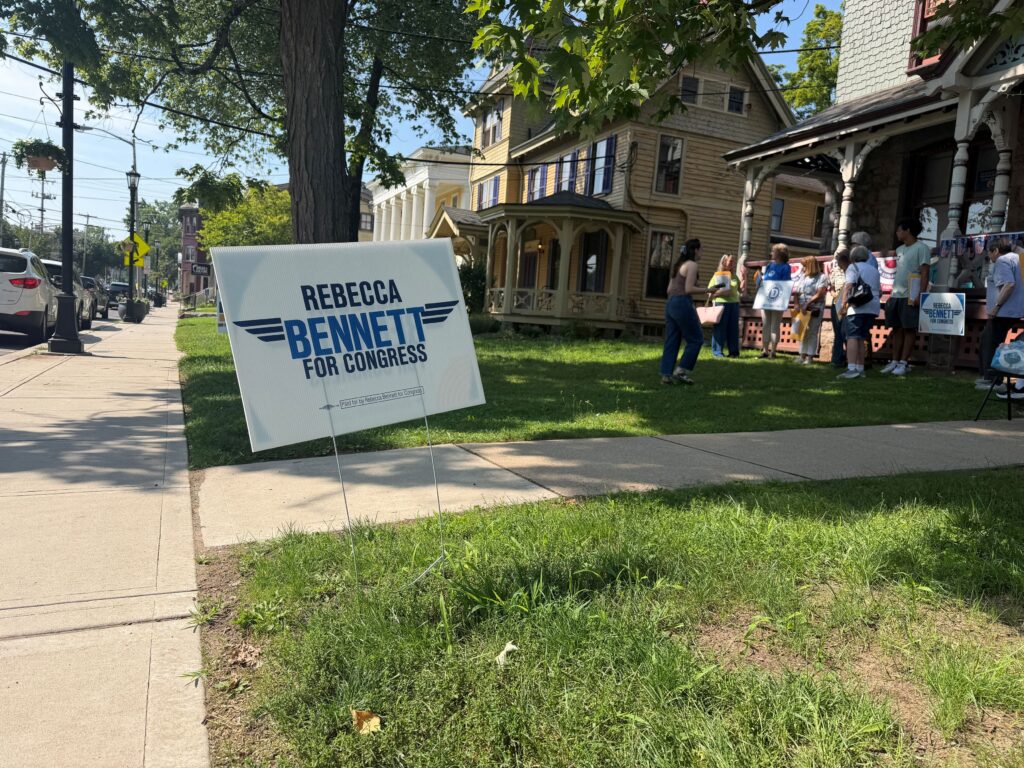
Bennett, the Navy helicopter pilot running in New Jersey against Republican Rep. Tom Kean Jr., expressed frustration with the hyper-partisan environment in Congress, arguing that partisanship has led only to a higher cost of living for Americans, including in her district.
“I led missions in some of the most challenging environments on earth,” Bennett said of her 15 years in the military. “We served not as Democrats or Republicans, but as Americans who were there to serve our nation and get the mission done.”
Read more An 80-year-old senator says he’s the voice of his state’s youth. Many believe him.
Similarly, Lacore, who served 35 years in the Navy and is running in a district with a lot of military personnel, is convinced that voters will look beyond party labels and see her as “somebody who understands what our military should be and where we need to get it back to.”
Many of the party switchers face tough races in traditionally GOP-held areas. And while all won their primaries, several other former Republicans (including prominent ones such as Republican lieutenant governor Geoff Duncan in Georgia and longtime conservative lawyer George Conway in New York) lost theirs.
Some strategists point to those losses as evidence that former Republicans running as Democrats may struggle to win both longtime Democratic voters and disaffected Republicans in a general election.
Jason Roe, a Republican strategist who has never supported Trump but remains in the GOP, said party-switching candidates generally face an uphill battle because partisan voters have a hard time accepting that someone “can just switch parties and embody the DNA of that party.”
Historically, party switchers have seen mixed results, with their success largely depending on whether their home states or districts underwent partisan realignment ahead of their change in affiliation. In the postwar era, for example, Southern Democrats such as Strom Thurmond (South Carolina) and Richard C. Shelby (Alabama) found success after joining the Republican Party because their states shifted to the right.
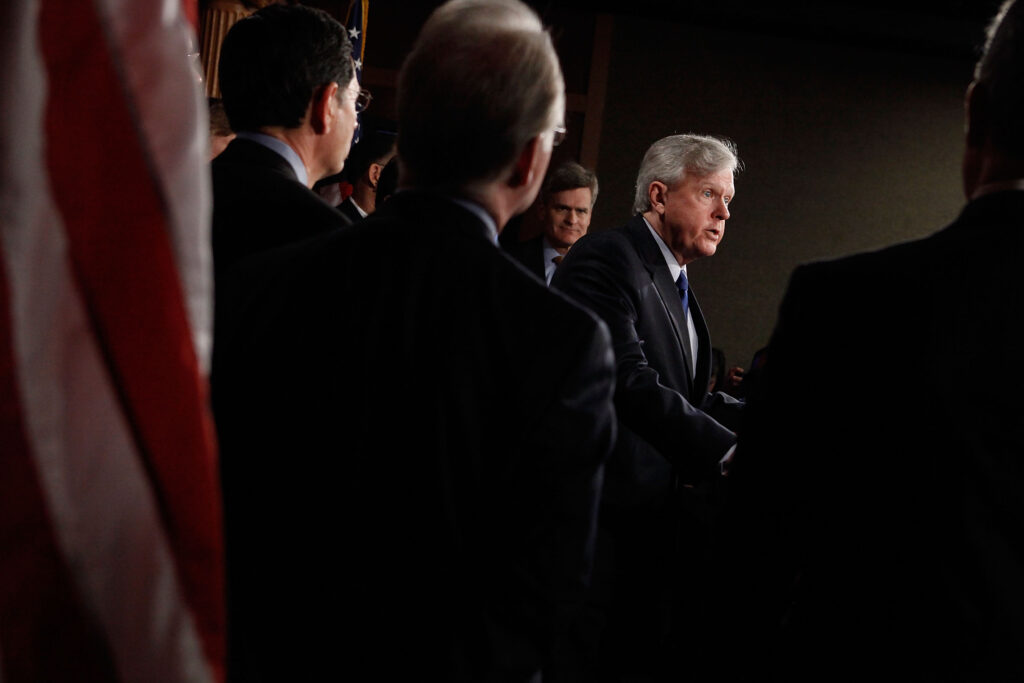
In more contemporary history, however, party switchers have encountered skepticism from their new party’s base over their conversion, as in the cases of Reps. Michael Forbes in 2000 and Parker Griffith in 2010, who lost their new parties’ primaries.
Republican-turned-Democrat Charlie Crist, of Florida, was able to win House races under his new party banner but lost statewide races, unable to convince enough Democrats that he was one of them or enough Republicans to see themselves in him.
Asked about Crist, Jolly brushed aside any parallels between them, arguing that Crist’s 2022 gubernatorial loss happened during a hyper-partisan moment in which Gov. Ron DeSantis’s (R) hold on the state was impenetrable.
“This is not an ideological, partisan cycle,” Jolly said about this year’s gubernatorial race. “This is a change cycle.”
Political strategists, however, have argued that only very specific types of party flippers succeed: those who are able to convince voters that they’ve fully embraced their new party’s outlook.
“I think it takes a special kind of former Republican to be able to pull it off in a Democratic primary,” said Eric Stern, a Democratic strategist. “That’s true on the other side of the aisle, too.”
Stern worked on the campaign of Bob Brooks, a firefighter who ran against former federal prosecutor Ryan Crosswell in the Democratic primary in Pennsylvania’s 7th District. Crosswell left the Republican Party in 2024, shortly before leaving the Justice Department. While Brooks ultimately beat Crosswell, Stern said he hopes “there are more Republicans out there who see the light.”
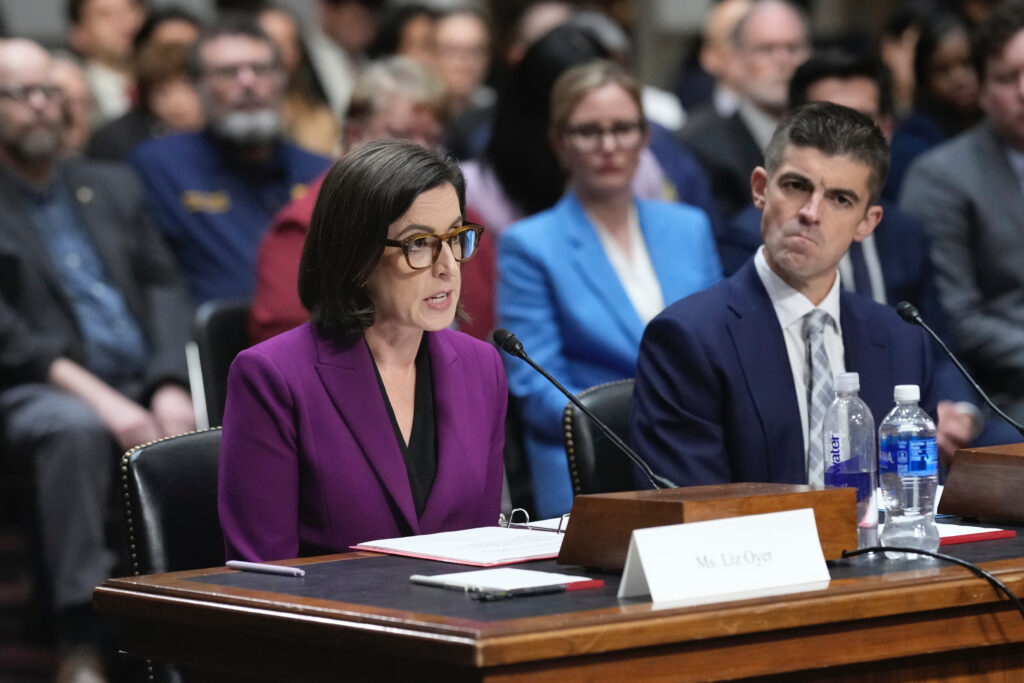
“I would be skeptical of them, and I think it is incumbent on Democratic primary voters to view them with skepticism,” he said. “But I also would absolutely encourage them to come on over — the water’s warm.”
Roe, the GOP strategist, predicted that the party switchers will not find a “warm embrace” from Democratic general elections voters because, in his view, “ever embracing Republicans is a character flaw” in the eyes of many Democrats.
“[The] difference between the two parties today versus 20 years ago is just so stark,” Roe said. “Just not liking Trump is not enough.”
Read more Youth football is growing again as coaches adapt to CTE concerns