The rally in a swing district illustrates the benefits and perils Trump brings to his party’s candidates.
Read more Canadiens look at home on the road entering Game 2 of Eastern Conference Final against Hurricanes
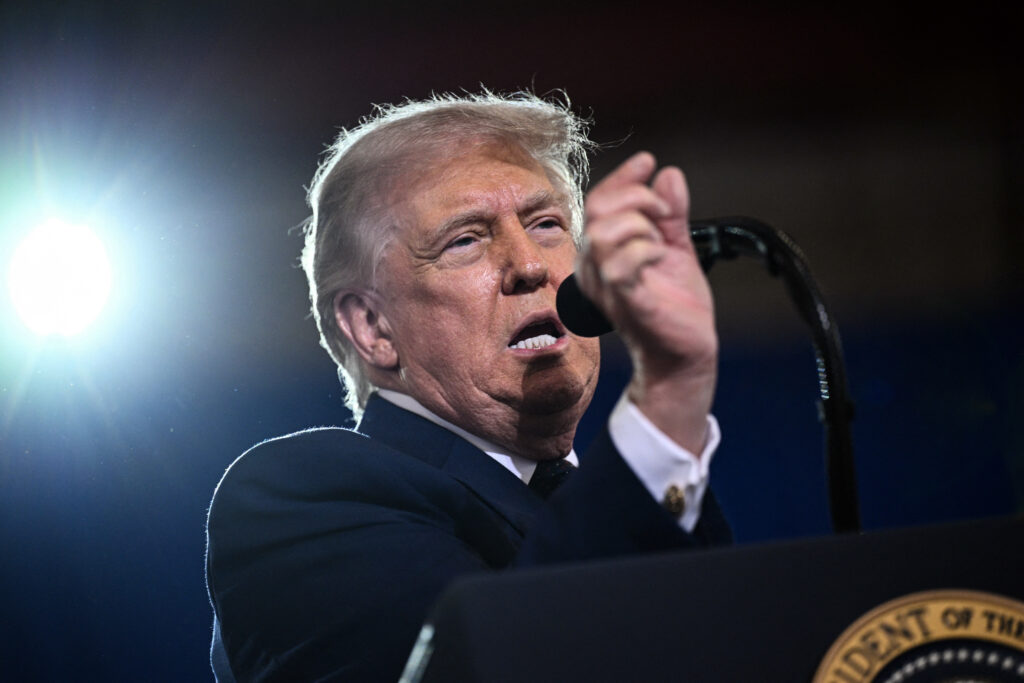
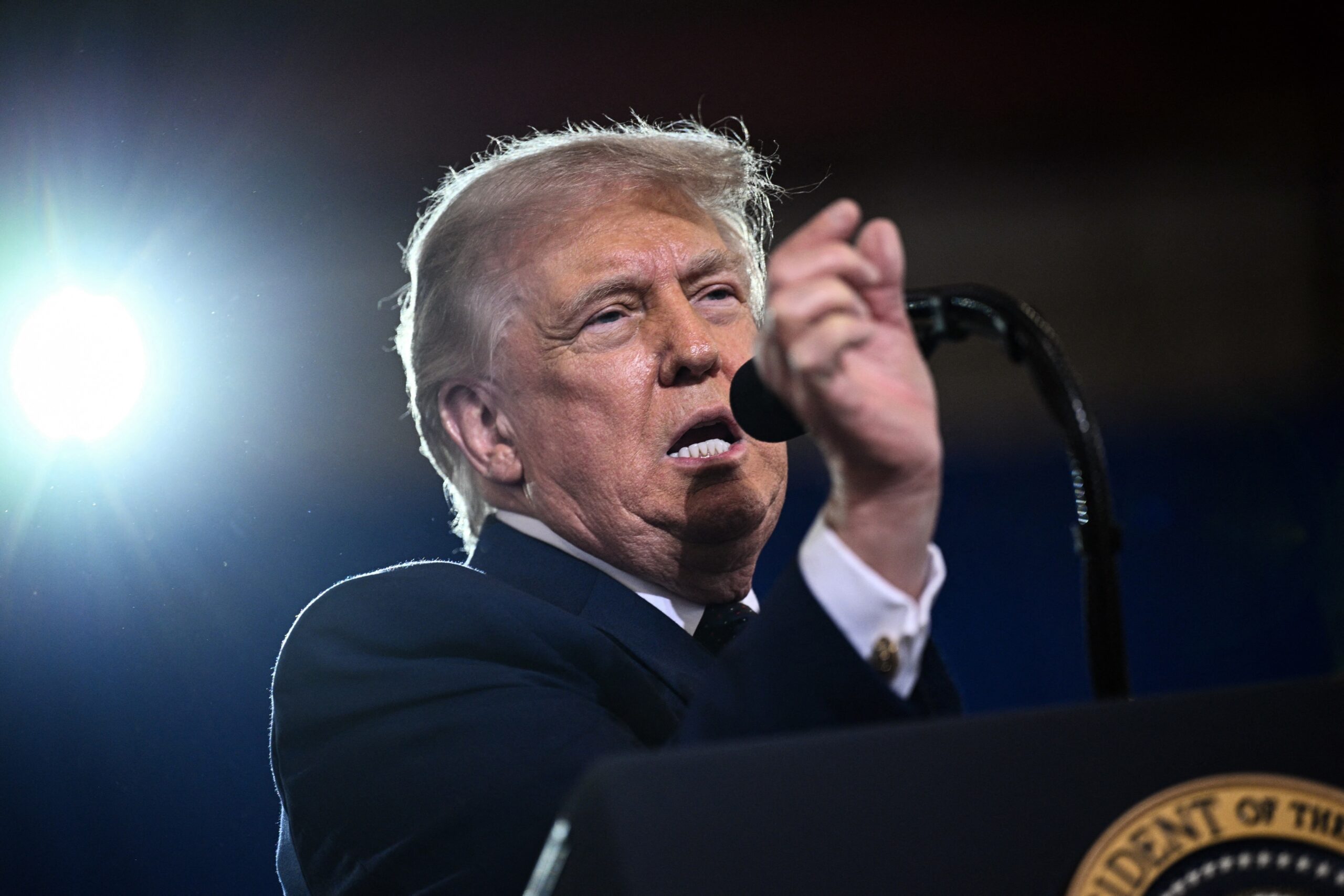
SUFFERN, N.Y. — President Donald Trump used a rally Friday in this town on the edge of the New York metro region to spotlight the economic message Republicans hope will resonate in battleground districts, touting new tax deductions he said would benefit millions of suburban voters.
But his speech repeatedly drifted into the freewheeling tangents and culture-war provocations that have long animated Trump’s political persona, showcasing both the political appeal and the liabilities Trump presents for Republicans in swing districts.
Trump praised incumbent Rep. Michael Lawler (New York) as a Republican who had embraced the MAGA movement while still reflecting the priorities of his suburban district. But his speech often lurched away from the economic message Republicans have been eager to keep front and center.
Lawler’s political survival has largely depended on persuading swing voters that he is not a typical Trump-era Republican. He won reelection comfortably in 2024 in part by successfully portraying his Democratic opponent, former congressman Mondaire Jones, as too liberal, particularly on policing and public safety issues tied to the “defund the police” movement. But he also touts his pragmatic willingness to work across the aisle with Democrats on issues of importance to his suburban constituents.
Trump’s freewheeling rally style — marked by personal grievances, improvised detours and combative rhetoric — can complicate the carefully calibrated image cultivated by Lawler and other Republicans in suburban swing seats.
Introducing Lawler at the rally, Trump highlighted one of the congressman’s signature issues — the deduction for state and local income taxes.
The congressman “fought so hard, harder for anybody for the SALT deduction,” Trump said. “He fights like hell.”
Lawler, who spoke for no more than 30 seconds, told the crowd that “over 90 percent of my constituents were able to deduct their state and local taxes.”
But Trump’s focus frequently strayed from such pocketbook themes.
He railed against transgender athletes, describing women competing against men with “legs the size of tree trunks” and “the wingspan of Shaquille O’Neal.” He mocked a protester, telling police to take the person “home to mommy” and reveled in his new insult for Democrats: “You take the ‘e’ out and replace it with a ‘u.’ They are Dumocrats, because their policies are dumb.”
Trump also invited on the stage the family of Sheridan Gorman, an 18-year-old freshman from Yorktown, New York, whose fatal shooting near Loyola University in Chicago became a national political flash point earlier this year.
The rally came at a turbulent moment for the GOP, as congressional Republicans have increasingly been divided over the administration’s signature policies and political demands.
In the Senate, Republicans erupted this week over a controversial $1.8 billion “anti-weaponization” fund that critics in both parties derided as a potential slush fund for Trump allies and Jan. 6 defendants. The backlash was so intense that Senate GOP leaders sent their members home rather than risk floor votes on the topic.
Read more Judge drops criminal case against Kilmar Abrego García, ruling it vindictive
In the House, Republican leaders had to abruptly pull a vote on a resolution to stop the Iran war after internal vote counts suggested enough Republicans would vote for it that it could pass.
With the president’s approval rating at a historically low level, Lawler and other vulnerable Republicans face a delicate balancing act. They need the president’s ability to motivate core Republican voters but also want to maintain the bipartisan, locally focused image that helped them survive in Democratic-leaning suburbs.
Lawler represents one of the nation’s most competitive suburban districts. New York’s 17th Congressional District stretches through New York City’s northern suburbs and exurbs — including Rockland and Putnam counties and parts of Westchester and Dutchess counties in the Hudson Valley. It is one of just three districts in the country that voted for Kamala Harris in the 2024 presidential race while also electing a Republican to the House. The nonpartisan Cook Political Report currently rates the district as a toss-up.
Nearly 1 in 5 residents in Lawler’s district are Latino, and the district includes one of the nation’s largest Haitian communities as well as a sizable Jewish population. It also features political crosscurrents, according to Lawler: roughly half of households include a police officer, firefighter, veteran or other first responder, while about half of adults hold a college degree or higher.
In a 2025 interview with The Washington Post, Lawler stressed that his ability to win back-to-back races in a district where Democrats outnumber Republicans had been helped by an image of across-the-aisle pragmatism.
“I’ve won three times now in districts that, on paper, Republicans shouldn’t win, but it’s because people, I think, appreciate the direct, blunt approach that I have … and that I’m willing to engage and build coalitions across the political spectrum and across the geographic spectrum,” he said.
Trump, however, has shown little interest in that type of bipartisanship or in allowing Republicans to put daylight between themselves and his political brand.
As vulnerable House Republicans try to tailor their message to swing voters ahead of the midterms, he has framed elections as tests of personal loyalty — aggressively backing allies, targeting critics and publicly celebrating the defeat of GOP lawmakers who crossed him.
On Tuesday and Wednesday, Trump repeatedly boasted about the success of candidates he endorsed in primaries, touting what he said was a 37-0 record for his preferred candidates across multiple states.
“We won all races last night. Every one of them,” Trump told reporters Wednesday after a series of victories by Trump-backed candidates.
The results reinforced Trump’s dominance inside the Republican Party — at the potential cost of worsening the political bind facing lawmakers in swing districts.
“In the past, presidents have allowed legislators up for reelection to distance themselves from the president if it was in their political interest to do so,” said Whit Ayres, president of North Star Opinion Research, a GOP polling firm. “But Donald Trump will not allow that to happen with any elected Republican. And that creates a challenge for Republican candidates in swing districts.”
Read more What else happened under Trump this week
Karen Tumulty in Washington contributed to this report.