After hearing an appeal in Iowa, the vice president scrambled to get involved in a wonky policy issue to offer some fuel relief.
Read more Pope Leo sent a letter blessing the White Sox ahead of playoffs win
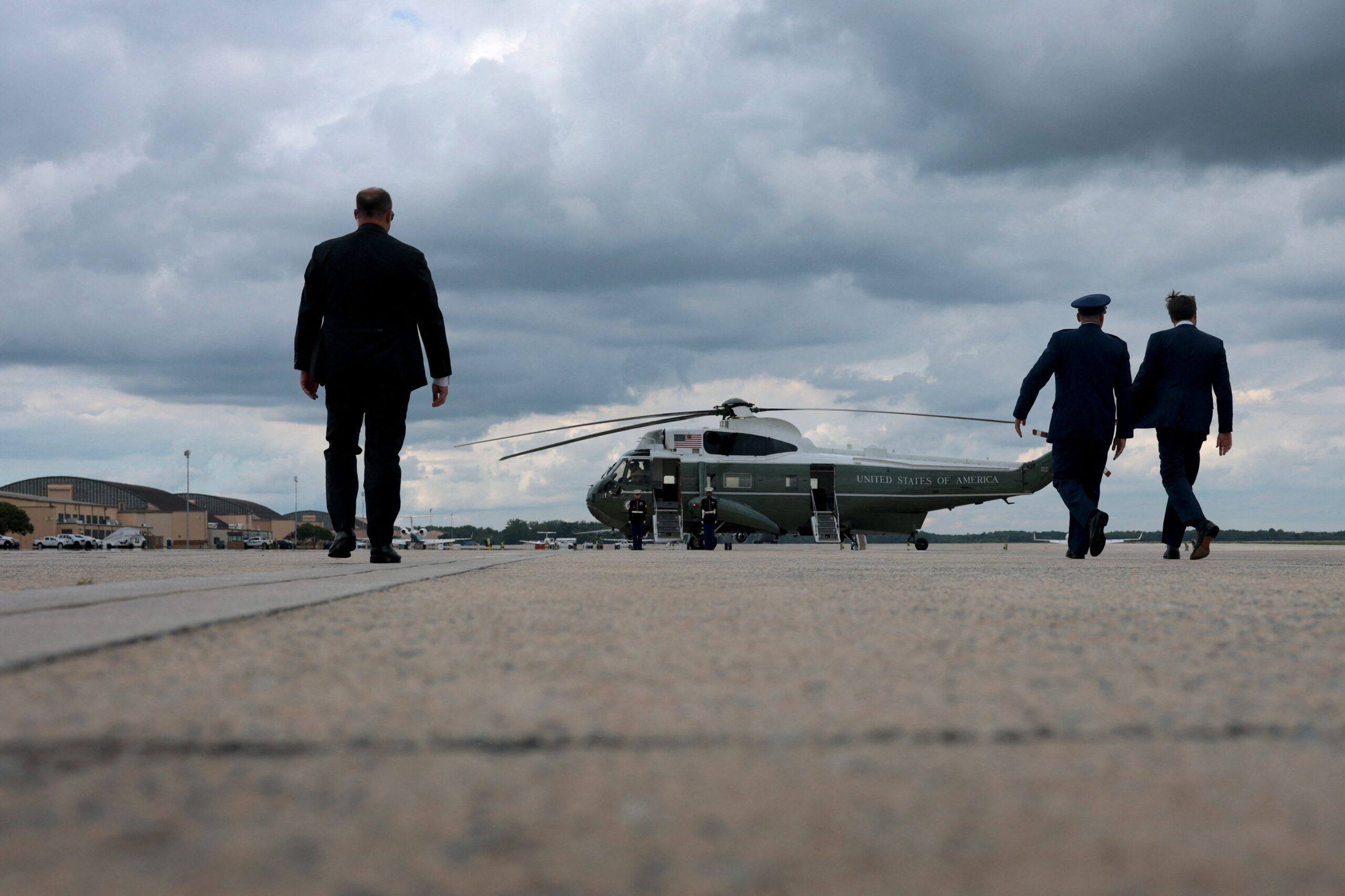
COUNCIL BLUFFS, Iowa — When Vice President JD Vance flew into this deep-red corner of a rural state, the soaring price of fuel was already increasing concern about Republican turnout in November.
The Republican Senate candidate, locked in a neck-and-neck race, didn’t come to the rally. Two of Iowa’s four Republican House members, both in their own worrying reelection fights, had just broken with the president to vote to stop the war with Iran. But Zach Lahn, the GOP nominee for governor who is trailing his Democratic opponent, was there to campaign with Vance’s support — and to make a plea.
Backstage, according to three people with knowledge of the conversation, Vance asked Lahn what the administration could do to help farmers, whose discontent with high fuel prices and poor market conditions has weighed down Republican chances across the Midwest. Lahn had an answer ready: Provide some relief from diesel costs by allowing farmers driving up and down the roads during harvest to take advantage of tax-exempt diesel intended only for off-road use on farms and construction sites. The three people spoke on the condition of anonymity to report on private conversations.
It was a wonky policy request involving so-called “dyed diesel” — a little-known topic outside the agriculture and energy communities. Vance told Lahn it was an “interesting idea.”
Back in his armored SUV heading to the Omaha airport, Vance asked his longtime adviser, Luke Thompson — now also working on Lahn’s campaign — to see what was feasible. Vance started making his own calls, lingering on the phone for several minutes before exiting the vehicle to board Air Force Two.
Just over two weeks later, President Donald Trump on Monday night signed an executive order putting the policy into effect, doing so on stage at a rally in Nebraska, another rural state his party is trying to shore up ahead of November’s midterm elections.
“Today, I’m announcing another unprecedented step to bring down costs,” Trump said, before signing the executive order, displaying his signature to the crowd of supporters.
“We’re not going to need it long,” he added, saying, as he has for several months, that prices would soon “plummet” because the Iran war will end.
The scramble to change the tax treatment of diesel fuel was the latest instance of Vance trying to play his own part in mitigating anticipated GOP losses at a time the president’s approval rating is at an all-time low. As he has traveled the country, the vice president has touted the administration’s policies while repeatedly acknowledging that work still has to be done to address voters’ economic pain.
Trump has largely dismissed concerns about the cost of living and fuel, insisting that the economy is booming — based on financial markets — and framing Americans’ disapproval as merely a matter of poor “public relations” by the White House.
In Nebraska, where he campaigned for the state’s incumbent Republican Sen. Pete Ricketts, Trump repeated that the current run-up in fuel prices was a “very small price to pay” to prevent Iran from obtaining a nuclear weapon.
The average price of diesel in the Midwest was $6.53 per gallon last month, up $2.80 from a year ago, according to federal statistics.
Trump also repeated his exhortation for his supporters to “pretend I’m on the ballot” and warned that “the fake news media is trying to demoralize Republican voters with rigged polls.”
Read more Trump kept silent in Brazil’s election. It might have helped his ally.
But the fact that Trump visited such a heavily Republican state within a month of the midterms illustrates how much economic woes — including high diesel costs — have hurt his party.
Ricketts, a former two-term governor of the state, faces a competitive challenge from Dan Osborn, a labor organizer endorsed by Democrats who is running as an independent. Osborne’s campaign has been boosted by the same economic concerns that have helped Democrats across the Midwest, although the Nebraska race does not appear as close as the contests in Iowa or neighboring Kansas.
Those cost concerns, especially as they apply to farmers, have had administration officials scrambling to find policies to bring prices down.
As part of that search, Agriculture Secretary Brooke Rollins, who throughout the year has been on the receiving end of appeals from farmers seeking help, had been kicking around the concept of tax relief for dyed diesel, but the vice president’s intervention expedited the process.
“Any time the vice president of the United States wants to get involved in the weeds of dyed diesel, that is much, much appreciated,” Rollins said.
Vance spoke with Cabinet members, and the vice president’s staff scurried to get buy-in from Energy Secretary Chris Wright, Interior Secretary Doug Burgum, Treasury Secretary Scott Bessent and top White House officials.
Dyed diesel gets its name from coloration put in to allow enforcement agents to easily detect misuse of tax-exempt fuel by truckers on the nation’s highways. Tax-exempt fuel is intended only for off-road use. Most revenue from fuel taxes goes into the federal government’s Highway Trust Fund, which finances road construction and repair projects.
The administration can’t waive taxes on diesel without congressional authorization. Instead, under Trump’s order, federal officials will simply not enforce the tax requirement through the end of the year. States, which also collect diesel taxes, can still choose to enforce the tax rules.
The administration hopes the move will lower costs for farmers driving on highways to transport their crops to mills and production facilities during the current harvest season.
Because federal enforcement will be paused for everyone, truck drivers and others traveling on highways who have access to dyed diesel, which is limited in availability at truck stops, would also be able to use the tax-free fuel.
In recent weeks, 10 states — nine led by Republican governors, plus North Carolina — have liberalized use of dyed diesel, according to ClearView Energy Partners, a D.C.-based research firm. Administration officials hope that other states will now follow suit.
Department of Agriculture projections estimate that farmers could save $640 million on federal and state diesel taxes combined during the current harvest season, based on each farmer driving 150 miles. The White House estimates truck drivers using dyed diesel could save $129 per refill, according to a person with knowledge of the policy.
Doyle reported from Grand Island, Nebraska. Allison reported from Council Bluffs, Iowa, and Washington, D.C.
Read more House Democrats add six more Republican-held seats to target list