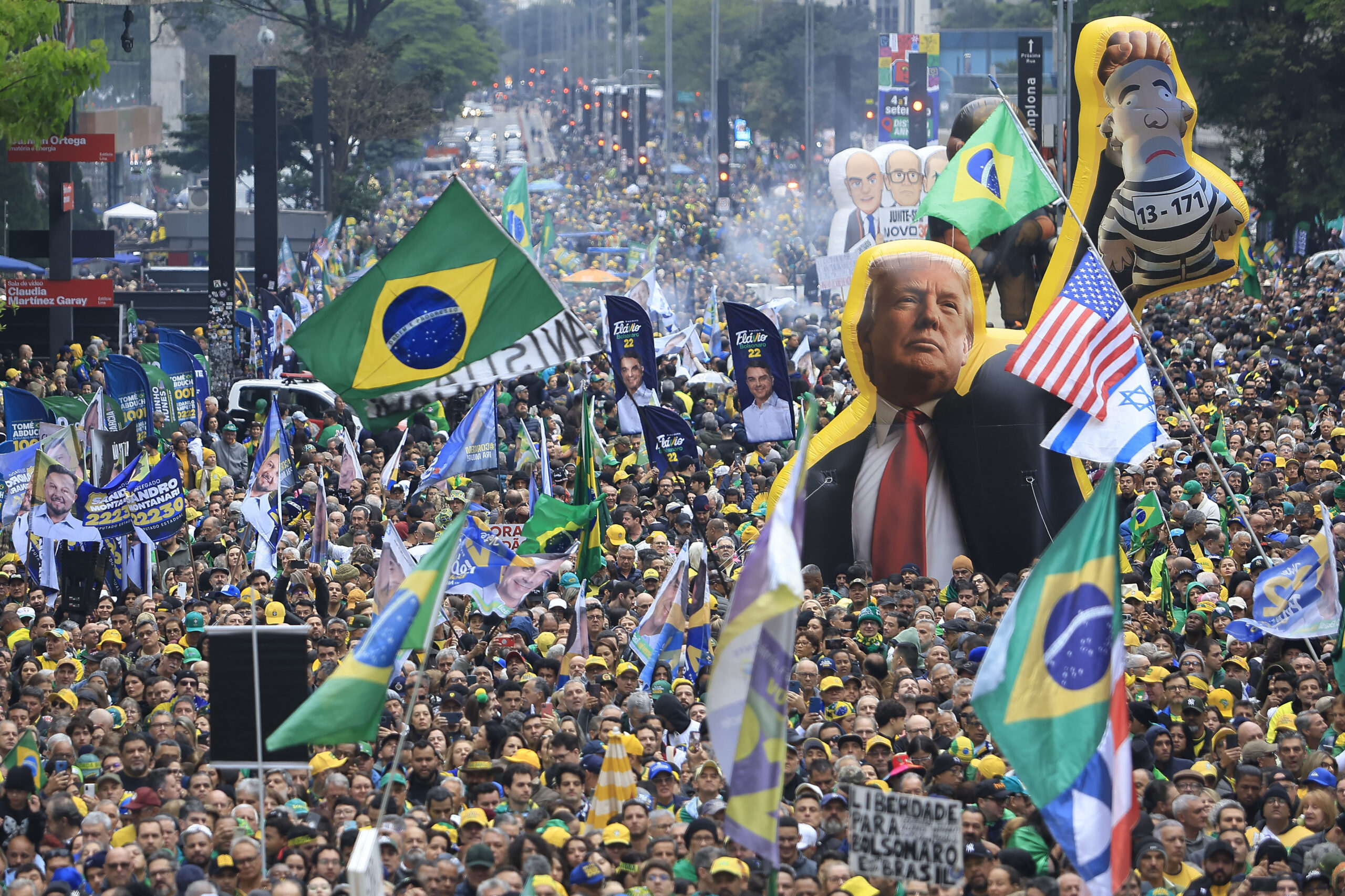
A White House adviser said the uncharacteristic reticence was a strategic decision as Flávio Bolsonaro takes the lead heading into the next round.
Read more House Democrats add six more Republican-held seats to target list
Flávio Bolsonaro’s team, visiting the White House in May, had a plan. Though he was running for president of Brazil, he wouldn’t ask President Donald Trump, his political ally and family friend, for his endorsement.
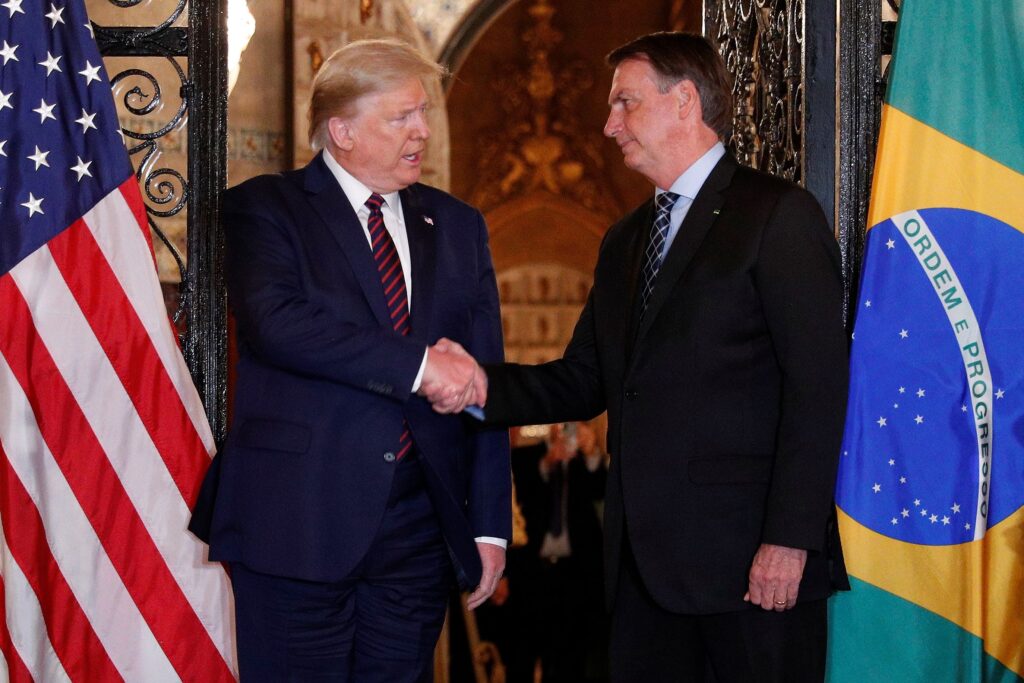
So when the eldest son of former Brazilian president Jair Bolsonaro met with Trump in the Oval Office he avoided discussing his candidacy, according to a Bolsonaro adviser who was present. And Trump, for his part, didn’t offer to endorse the son of his “great friend.”
The U.S. president, who has not shied from involving himself in overseas elections then maintained his uncharacteristic silence through the first round of Brazil’s election Sunday.
“He could have helped, and he didn’t,” said Paulo Figueiredo, the Bolsonaro adviser.
According to a White House adviser, the unusual reticence was a strategic decision, informed by the dynamics of Brazil’s raucous electoral campaign.
“The thinking was, ‘Just sit quiet,’” said the adviser, who spoke on the condition of anonymity to discuss the administration’s thinking. “If an endorsement is going to be counterproductive, don’t do it.”
The strategy paid off. Bolsonaro outperformed polls to lead the field with 47 percent of the vote, besting President Luiz Inácio Lula da Silva’s 45 percent, amid a rightward tilt across the country. Heading into the second round of the election later this month, Bolsonaro is considered the favorite to win the election.
The White House adviser predicted that Trump administration will not want to do anything to slow his momentum.
“Let the race go on,” he said. “We want to minimize any appearance or give any basis to the argument that the U.S. is interfering.”
The White House, asked to comment, referred to remarks Monday by Secretary of State Marco Rubio, who was circumspect: “It’s going to a second round, and I think everyone expected that it would. So we’ll see how that plays out.”
Trump has bulled his way into the domestic politics of countries throughout the world, but with particular force in Latin America. He endorsed Colombian President Abelardo de la Espriella and Honduran President Nasry Asfura. He made a $20 billion bailout for Argentina last year contingent on voters supporting President Javier’s Milei’s party in the congressional midterms.
He hasn’t been afraid to intervene in the politics of Latin America’s largest country. Trump and his allies, including billionaire Elon Musk, have openly criticized Brazilian officials over their efforts to enforce speech restrictions on social media and the prosecution last year of Jair Bolsonaro.
In an effort to pressure Brazil to drop the prosecution, the Trump administration has slammed the country with tariffs, imposed sanctions on its most powerful supreme court justice and revoked the visas of several senior officials.
Read more The WNBA’s top-seeded team is already out. Is the first round too short?
It didn’t work. The Supreme Court last year found Bolsonaro guilty of attempting a violent military coup to stay in power after his 2022 election defeat and sentenced him to more than 27 years in prison.
But the effort allowed Lula to cast himself as a defender of Brazilian sovereignty. He has repeatedly condemned foreign “interference” in the country’s affairs, including last month in his opening speech to the U.N. General Assembly. He started wearing a hat emblazoned, “Brazil is for Brazilians,” and made sovereignty a key issue of his campaign.
In a country long suspicious of foreign intervention, the rhetoric appeared to resonate. Lula’s approval rating rose last year when Trump imposed a 50 percent tariff on most Brazilian goods. One poll showed 46 percent of Brazilians held the Bolsonaros responsible.
Trump rescinded those tariffs, but slapped on more in July — again to Bolsonaro’s detriment.
“It hurt Flávio in the polls at a very delicate moment,” Figueiredo said.
Then Trump did something unusual: He kept his mouth shut, even amid a diplomatic spat in July, when his administration planned to send senior officials to Brazil, allegedly to question election integrity. Lula’s administration denied them visas, and the department canceled the Brazilian ambassador’s visa in retaliation. But Trump himself never weighed in.
“We could see it in the data,” the White House adviser said. “Any time Lula used Trump to say, ‘The U.S. is trying to abuse us and take advantage of us,’ that would resonate with the public. But every time you stepped back and let the race be about Brazil and Brazilian domestic issues,” the momentum appeared to tilt back.
Alexandre Bandeira, a political analyst in Brasília, said Lula’s attempt to frame his campaign around defending national sovereignty was unusual from the beginning. Elections in Brazil are typically decided on domestic politics. The argument was weakened even further by Trump’s silence.
“The expiration date on this question of sovereignty arrived during the electoral campaign,” he said. “It ended up not being an important ingredient.”
Lula tried to bait Trump into an attack, Bandeira said, posting on social media that Brazil “wasn’t anyone’s backyard,” and running an advertisement that warned of “danger” posed by Bolsonaro and Trump. But Trump never bit.
“Lula tried to relight a grill that was going out,” he said, “and the North American president didn’t respond.”
Trump did address the election Sunday evening, but only to comment on how quickly the ballots were counted, in a post aimed at again casting the American electoral process as corrupt, without providing evidence. He didn’t name either candidate.
For the next three weeks, the White House adviser said, Brazilians can expect the silent treatment to continue.
Bolsonaro “doesn’t need our help,” the adviser said. “Trying to proactively help just helps Lula.”
Read more The special meaning behind tonight’s game for Saints fans
Marina Dias and Michael Birnbaum contributed to this report.