The first debate in a race for a critical U.S. Senate seat featured lots of talk about Trump, high prices and the war in Iran.
Read more As Daniels nears return, Mariota is sidelined with another MCL sprain
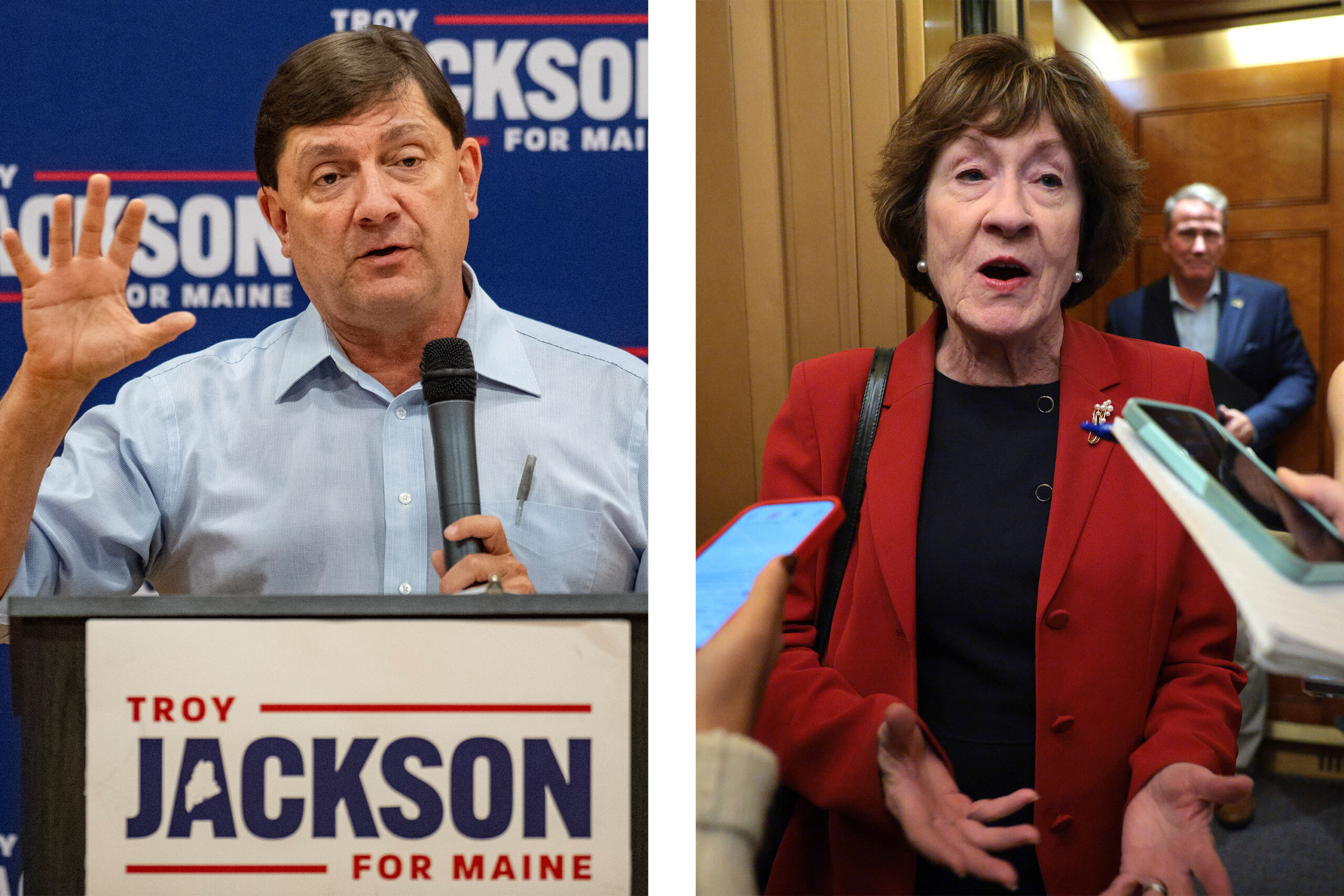
Democrat Troy Jackson attempted to pierce Republican Sen. Susan Collins’s reputation as an effective senator who steers millions of dollars to Maine in a Tuesday night debate, criticizing her for making life more expensive for Mainers by posing what he termed as inadequate resistance to President Donald Trump’s war in Iran and tariffs against Canada.
Collins, who is running for a sixth term, frequently accused Jackson of inaccuracies when he attacked her record. She blamed Jackson, a former Maine senate president, for his role in setting state policies that she said caused the high energy and housing costs. She touted steering $1.5 billion in funds to Maine in recent years.
Collins stood by her vote for Supreme Court Justice Brett M. Kavanaugh, who voted to overturn the right to abortion in 2022 and brushed off the idea that Trump could campaign with her in the blue state. “I’m not exactly his favorite senator,” she said.
Collins is the only Republican senator this year up for reelection in a state that voted for Kamala Harris in 2024. The race is crucial to Democrats’ hopes of gaining control of the Senate.
Polls show a tight race between the two, with a recent New York Times poll finding Collins with a slim edge over Jackson and showing Trump is deeply unpopular in the state.
The debate, hosted by WGME CBS 13 and FOX23, is the first of four the candidates have agreed to before the Nov. 3 election.
Here are our takeaways:
Jackson repeatedly pressed Collins on her 2018 vote to confirm Kavanaugh, who later went on to join an opinion overturning Roe v. Wade’s abortion protections. Collins has said she does not regret the vote, even though she disagreed with Kavanaugh’s abortion decision.
“What will it take for you to admit that you were wrong?” Jackson asked Collins.
The senator said she bases her decision on judges’ qualifications — not how they would vote on future cases — and has supported judges nominated by Democrats and Republicans. When pressed by the moderator, Collins said she did not feel Kavanaugh had lied to her when he told her in a private meeting before the confirmation vote that he considered Roe v. Wade to be settled law.
“I do not feel he lied, but I think that he should not have said it was settled law because, to me, that meant it would not be overturned,” she said. “But to be fair you cannot ask a nominee how he might vote on some hypothetical future case.”
Collins and Jackson, both longtime lawmakers, sought to shift blame for high prices facing Mainers onto the other’s political institution.
Jackson, who served as president of the state senate until 2024, blamed high gas and electricity prices on the Iran War that Collins initially did not vote to oppose. (She later voted for the resolutions calling for the president to withdraw U.S. troops.)
“The reason why our fuel prices are going through the roof … is because she wouldn’t stop President Trump with the Iran war,” Jackson said.
Collins blamed high housing prices, electricity rates and property taxes on policies approved in the state capital, Augusta, enacted under the “failed leadership of Troy Jackson.”
The two also sought to blame each other for high health care costs, with Jackson saying Collins should have reimbursed hospitals more under the Medicaid program.
“She’s been in Congress for 30 years. She touts how she’s chair of appropriations,” he said. “It would be great if she actually worked on that and got that done.”
Read more Trump reverses course, says he won’t use taxpayer money for campaign-style ads
Collins pointed out that the state of Maine could raise its Medicaid reimbursement rates for hospitals.
“The appropriations committee has no jurisdiction over the Medicare and Medicaid program,” she said. “The state does have jurisdiction over the Medicaid rates and could raise them to cover the cost.”
Collins distanced herself from Trump during the debate, saying she does not believe he will campaign with her.
“I’m not exactly his favorite senator,” she said.
Still, his presence loomed over the night, as Jackson repeatedly sought to tie her to his policies on Iran, tariffs and immigration enforcement.
Jackson also argued that Collins’s vote to advance Trump’s Big Beautiful Bill of tax cuts and social safety net cuts still mattered, even if she eventually voted against its final passage. Collins said she supported it advancing so she could append a $50 billion fund to support rural hospitals.
“She’s like an arsonist who helped set the fire, and then she wants credit for bringing a cup of water to put it out,” Jackson said.
Collins disputed a 2025 CQ Roll Count analysis showing she has voted with Trump 95 percent of the time, saying other analyses that include more votes find a lower number.
“I voted against my party more than any other senator on either side of the aisle,” she said.
Jackson turned much of the debate into a referendum on Collins’s effectiveness as a senator, a cornerstone of her reelection campaign in which she touts the money she’s brought home to Maine.
Collins advertised her ability to get some items removed from the tariffs Trump levied against Canada, including rock salt needed to make Maine’s icy roads safe to drive. She criticized Jackson for “mocking” her for those improvements to the tariff policy.
“I didn’t mock the fact that she got road salt back,” Jackson said. “I mocked the fact that: What about everything else? You can’t eat rock salt.”
He said fuel costs are so high, Mainers might not even be able to afford to drive.
Collins also questioned Jackson’s effectiveness, asking him why many of his bills faced unanimous resistance in committees when he served as senate president. “You couldn’t even find one Democrat on the committee to support a third of your bills,” she said.
“How do you think you’re going to get things done in a closely divided Senate as the most junior senator?” she asked.
Read more How JD Vance tried to ease diesel pain as the GOP faces midterm woes