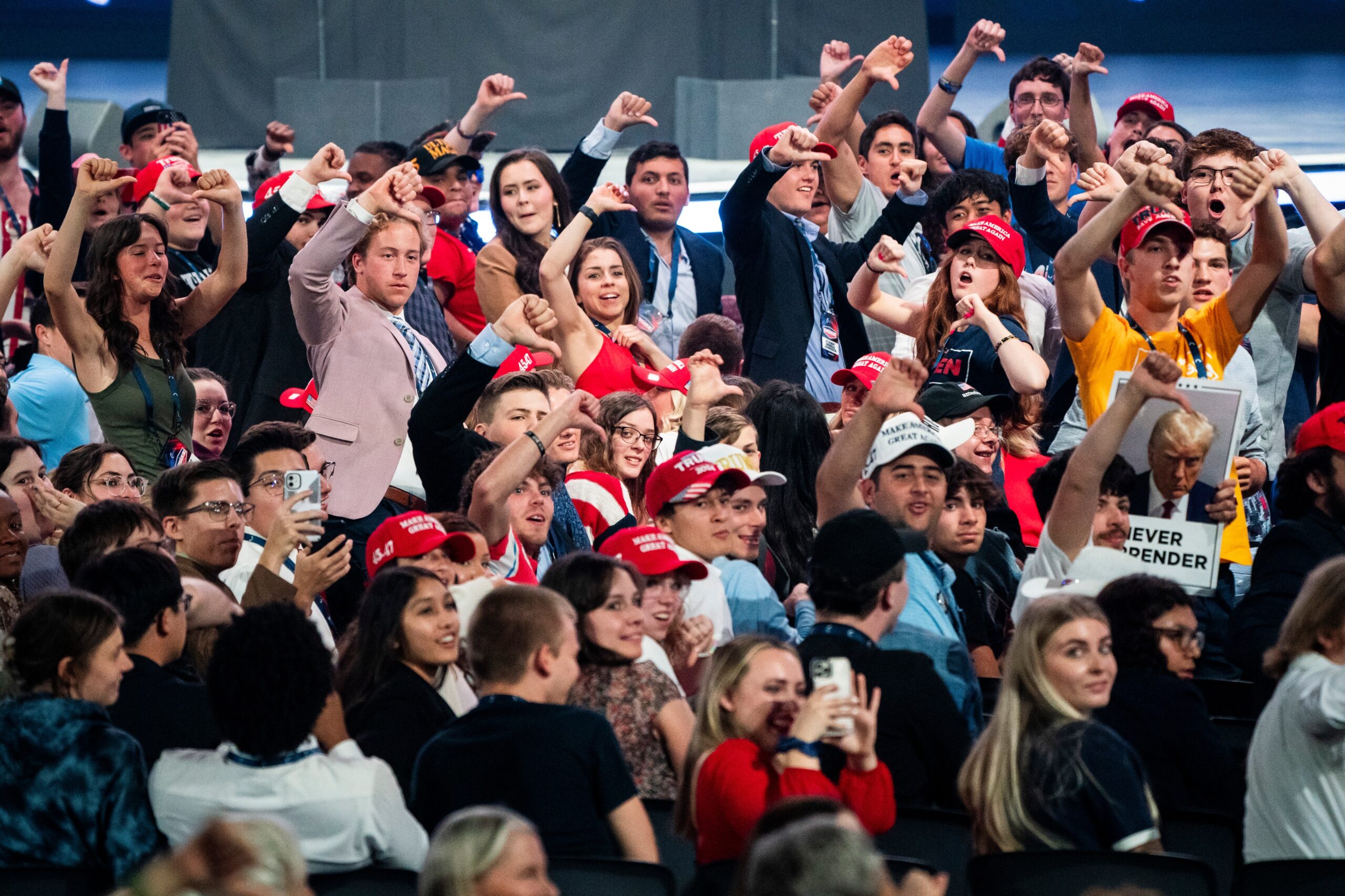
The symptoms have piled up in poll after poll: Americans rate them unfavorably, say they’re “out of touch” and disapprove of their leaders. Record numbers avoid associating with them at all.
Read more Why some Republicans are worried about Ken Paxton as a Senate nominee
The diagnosis is clear: America’s political parties are afflicted with Chronic Unpopularity.
But what exactly do Americans dislike about the Democratic and Republican parties? To find out, a Washington Post-ABC News-Ipsos poll last month asked more than 1,200 Americans to describe in their own words what they dislike most about each political party. Open-ended survey questions are useful in tapping the top-of-mind opinions people have about a topic, which can be useful in understanding the ingredients baked into each party’s image.
Americans offer wide-ranging complaints about the Democratic Party, but the two most common responses criticized their positions as too liberal in general or on a range of issues (12 percent), or that they were weak and don’t stand up enough to President Donald Trump (10 percent).
Here are some respondents in their own words (edited for clarity and style):
A slew of other criticisms were mentioned by 4 to 5 percent of Americans, including corruption, disliking “everything” about the party, Democrats’ immigration positions, being out of touch with everyday Americans and being too anti-Trump.
Comparing answers across partisan groups shows Democrats are most critical of their party for not standing up to Trump — 24 percent say this — compared with 9 percent of independents. Only 3 percent of Democrats complain that the Democratic Party is too liberal or “woke,” compared with 11 percent of independents and 20 percent of Republicans.
Trump tops the list of complaints about the Republican Party, but not by an overwhelming margin. Twelve percent of adults specifically cited Trump or loyalty to Trump when asked what they dislike most about the GOP, although another 4 percent criticize the Republican Party for not supporting Trump enough.
Read more Trump to hold Cabinet meeting amid declining approval on Iran, economy
Six percent apiece mentioned a lack of concern for ordinary people and/or mentioned dishonesty, hypocrisy and immorality, including some who mentioned files from the federal investigation of the late convicted sex offender and financier Jeffrey Epstein. Five percent mentioned corruption or self-enrichment — identical to the share who mentioned this for Democrats — while 4 percent each mentioned ineffective leadership, concerns about authoritarianism or the rule of law, hostile and bullying rhetoric, or concerns about racist or anti-diversity policies.
The scattered criticisms of both parties in the poll suggests there’s no silver bullet to rebuilding their popularity.
Democrats face a vexing challenge of overcoming criticisms that they are too liberal on race, social issues and immigration while also being faulted for not fighting hard enough against Trump, particularly among fellow partisans. Taking stronger stances against Trump on certain issues could reinforce perceptions that they are ideologically out of step.
Republicans also have major challenges, many related to Trump’s actions and personality. Their brand is probably tied closely to Trump as long as he is president, and the poll reveals this includes a wide range of concerns about both policy, abuse of power and rhetoric.
Read detailed results of the Washington Post-ABC News-Ipsos poll. The poll was conducted online April 24-28 among 1,267 U.S. adults nationwide reached through the Ipsos KnowledgePanel, an ongoing panel of U.S. households recruited by mail using random sampling methods. Overall results have a margin of error of plus or minus 2.8 percentage points. The sample was weighted to match population demographics, 2024 turnout/vote choice and political partisanship.
Open-ended responses were combined and coded by BTInsights, an AI open-end coding software that sorted responses into similar categories. Each response was then reviewed by a Post or ABC polling team member to ensure it was accurately categorized and, if necessary, recategorized. Category names were also edited after a review of all codes within each group.
Read more Did Trump pick the right blue for the Reflecting Pool? We asked a pool guy.