
She breaks down NFL film on ESPN and won “Celebrity Jeopardy!” Now Kimes will help viewers understand the competition of her youth: spelling.
Read more Climbers meet in Nepal to discuss the challenges of scaling Mount Everest

In a way, Mina Kimes’s next assignment isn’t all that surprising.
Before Kimes was one of ESPN’s most prominent NFL analysts, she was a studious kid who aced tests, devoured books and won trophies for spelling. If someone who knew her then had been asked whether she was more likely to grow up to analyze football on television or host the National Spelling Bee, Kimes said recently, “I think 9 out of 10 people would say the spelling bee.”
She won school spelling bees in the second, third and fifth grades and read so much that losing library privileges counted as punishment. “Obviously, I was very cool,” she joked. So as strange as it may sound that Kimes will play a prominent role on this year’s Scripps National Spelling Bee broadcast, she sees the assignment differently.
“In some ways,” she said, “doing the spelling bee is actually more of a homecoming for me.”
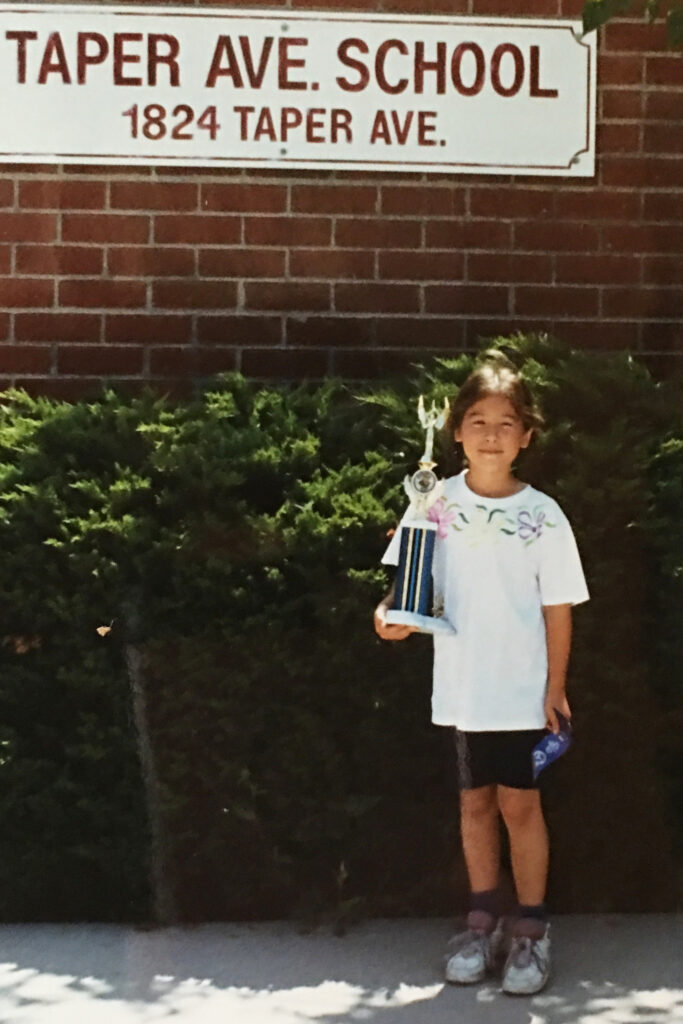
Kimes will co-host the Bee this week with longtime spelling broadcaster Paul Loeffler, as 247 spellers gather at Constitution Hall for the 101-year-old competition’s return to D.C. proper. (The last 15 have been held in Maryland.) For Kimes, 40, the unique assignment is a chance to revisit the world of academic competition that shaped her long before football did — and get an up-close look at how it has changed.
“I thought I cared a lot at the time,” Kimes said, “but now as I read about these kids’ preparation and everything they do, I realize I had no chance of ever going far in spelling bee, even if I was at my school level, because, holy mackerel, the studying that they do is impressive.”

Kimes has been preparing for the Bee the way she prepares for football analysis: studying film and trying to understand where she fits.
She has been revisiting old Bee broadcasts to understand the show’s rhythm — where the host can explain, where an analyst can add context and where the spellers need room.
“It is a little bit like my job grinding tape,” Kimes said, “trying to understand how things are happening and also what I can bring to the table.”
Her role during Wednesday’s semifinals and Thursday’s finals is akin to that of a color commentator in a sports broadcast booth. Loeffler, a former speller and the longtime voice of the Bee, brings deep institutional knowledge, and Kimes will try to frame the stakes and guide casual viewers through the competition without getting in the way of it.
“I’m in some ways the voice of the everyman,” she said.
The more she has watched, the more she has come to understand that the Bee requires restraint. The competition moves quickly. The spellers do not leave much dead air. The drama often lives in the quiet between the moment spellers hear the word and recite the first letter.
“As much as it’s important for me to figure out what to say,” Kimes said, “I think it’s equally important for me to figure out when to not speak.”

The nightmare scenario, Kimes said, is not that she will be asked to pronounce the words. Jacques Bailly, the Bee’s longtime pronouncer, has that job. She is more focused on the children’s names and on rare contingencies that could suddenly reshape the broadcast.
One possibility is a spell-off, the rapid-fire tiebreaking format adopted after the 2019 Bee ended with eight co-champions. If the competition reaches that point, Kimes knows the moment could be extraordinary television — and difficult to explain quickly.
“I just want to make sure I’m brushed up, that I’m caught up or at least very conversant in all of the history of the Bee,” she said, “so that if a scenario like that emerges, I can properly give the context.”
What has struck Kimes most about elite spellers is not the memorization, she said, but the method. As a child, she studied from hard copies of word lists. Today’s top spellers prepare year-round, learning roots, language patterns, definitions and strategies for words they may never have seen before. She hopes the broadcast can show not just whether a child spells a word correctly but also how that child thinks.
Read more Iga Swiatek improves career record at French Open to 42-3 as she reaches 3rd round
In other words, in an age of spell-check and artificial intelligence, spelling still matters.
“It’s not just becoming a computer and mimicking words or memorizing them,” she said. “It’s learning how to study, learning how to solve problems, learning how to do that under pressure, in a short period of time.”

Kimes has spent much of her ESPN career blurring the old line between jock and nerd, making football friendlier to the obsessively curious and carving out space for a reasoned, deeply researched voice in a sports TV culture that often mistakes loudness for authority. Her recent “Celebrity Jeopardy!” victory and her new Bee assignment suggest a comfort she did not always feel.
“If this had happened maybe six or seven years ago,” she said, “I would have been apprehensive about showing this part of myself or leaning into it. But now I’ve sort of built enough confidence and equity in the football space to where I feel less apprehensive about leaning back into the things that I love and that I’ve always loved.”
Michael Davies, the executive producer of “Jeopardy!” and CEO of Embassy Row, which is producing the Bee, called Kimes a “unicorn,” with a rare mix of curiosity, humor, journalistic instincts and live-television skill. He said her sports background helps her understand how to frame the spellers as elite competitors.
“Covering sports really helps in terms of contextualizing these kids and their work ethic and their concentration and their focus and their preparation and just their star quality,” Davies said.
Kimes, a Yale University graduate who worked as an investigative business reporter before joining ESPN the Magazine in 2014, was always cut from a different cloth than many football analysts. She has appeared as a New York Times crossword answer, served as the phone-a-friend who helped chef David Chang win $1 million on “Who Wants to Be a Millionaire,” and this month won “Celebrity Jeopardy!,” earning $1 million for a Los Angeles charity focused on homelessness.

“She’s made her intellect part of her brand, and I feel like that matches the Bee so well,” said Corrie Loeffler, the Bee’s executive director. “She is so good on the sports side of things, so obviously is very in tune with the competitive drive behind what these kids do, but then also brings this intellectual side with her that will match the academic strength and kind of the brain-sport side of what these kids do.”
The Bee is trying to refresh its television presentation at a transitional moment. This year, it tapped Davies and Embassy Row to produce the broadcast and enlisted Kimes to help give the competition a big-game feel.
But the Bee’s drama is delicate. Its tension is not loud. It is a child at a microphone, a word most viewers have never heard, long pauses and then the ding of a bell.
Kimes believes the Bee can work on viewers the way the Olympics often do: Introduce a competitor quickly, reveal enough of a story to make strangers care, then let the performance carry the emotion.
“You know when you’re watching the Olympics and all of a sudden you’re like, I love this athlete who I never heard of an hour ago?” she said. “I think the spelling bee can do the same thing.”
When Davies first called Kimes about the job, he said what struck him was not her reaction to the career opportunity but to the spellers themselves. To Kimes, they were “the coolest kids of all time.”
Now her job — an assignment she’s spent a lifetime preparing for — is to make everyone else see them that way, too.
Read more The Blue Wave from tiny Curaçao is making World Cup history