The race is the first of three Senate primaries that will show whether midterm voters prefer a moderate message or a fiery indictment of the establishment.
Read more What to know about California’s messy governor’s race
MASON CITY, Iowa — Two Democrats running for an open Senate seat in Iowa are testing whether the way to win a state that President Donald Trump carried three times is a moderate message — or a fiery indictment of the Democratic establishment.
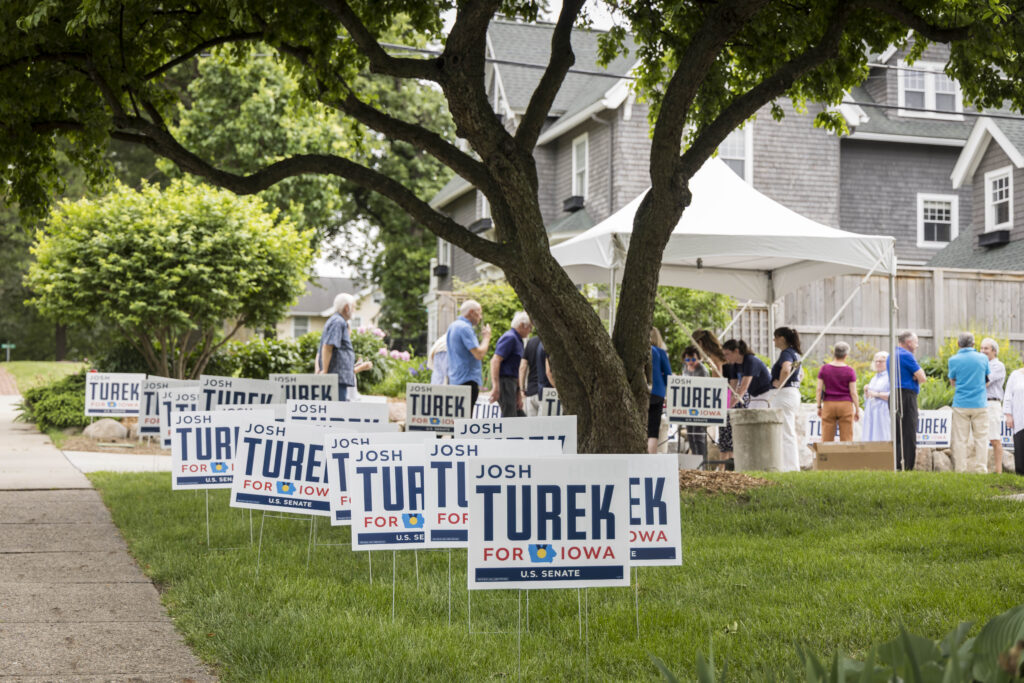
Senate Minority Leader Charles E. Schumer (D-New York) and his allies view state Rep. Josh Turek as the party’s best shot at flipping Iowa in November and helping Democrats recapture the Senate.
Meanwhile, state Sen. Zach Wahls, who is running against Turek in Tuesday’s primary, sees Schumer as part of the problem.
Wahls has repeatedly laid into Schumer on the campaign trail, pledging not to support him as the Democratic leader in the Senate if he wins. Challenging his party’s leadership, Wahls argues, will give him credibility with Republicans and independents in a state that has not elected a Democratic senator since 2008.

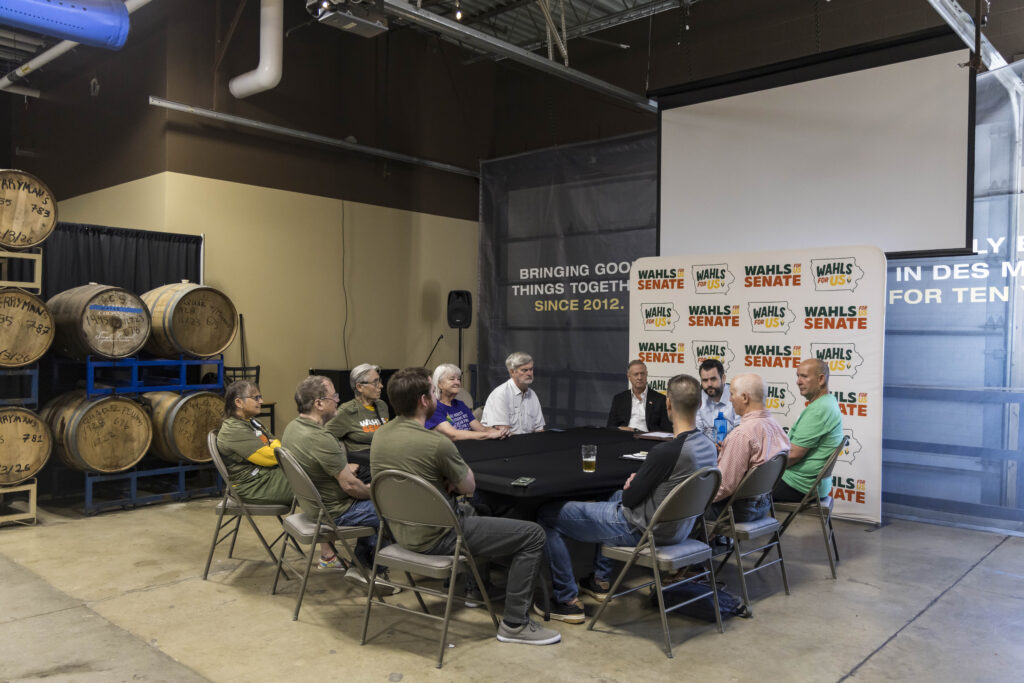
Speaking to a crowd in a packed bar in Mason City last month, Wahls said, “It is going to be a hell of a lot easier to win back the voters whose trust this party has lost with a candidate who can look them in the eye and tell them with a straight face: I don’t owe Chuck Schumer or anybody else in Washington, D.C., a damn thing.”
The race in Iowa is the first of a trio of Democratic Senate primaries this summer — followed by Michigan and Minnesota — that will test how much appetite the party’s voters have for candidates skeptical of Democratic leadership in Washington.
State Sen. Mallory McMorrow, a Democrat running in the Michigan primary, has said she will not support Schumer if she wins. Lt. Gov. Peggy Flanagan, who is facing a more moderate Democrat in Minnesota, has said she is “uncommitted” to Schumer.
Sen. Elizabeth Warren (D-Massachusetts) is backing McMorrow, Flanagan and Wahls, describing their primaries as a chance “to bring in some fresh blood that’s ready to reset the Democratic agenda.”
“All three of them have laid out a bold agenda for lowering costs for working families,” Warren said. “And all three have said they will not be beholden to the Democratic establishment.”
Other Senate Democrats are backing their rivals — Turek, Rep. Haley Stevens in Michigan and Rep. Angie Craig in Minnesota — arguing they have a better shot in November.
“If you don’t pick the right people, you could potentially lose the general,” said Sen. Ruben Gallego (D-Arizona).

Of the three states, Iowa is the steepest climb for Democrats, making electability all the more important.
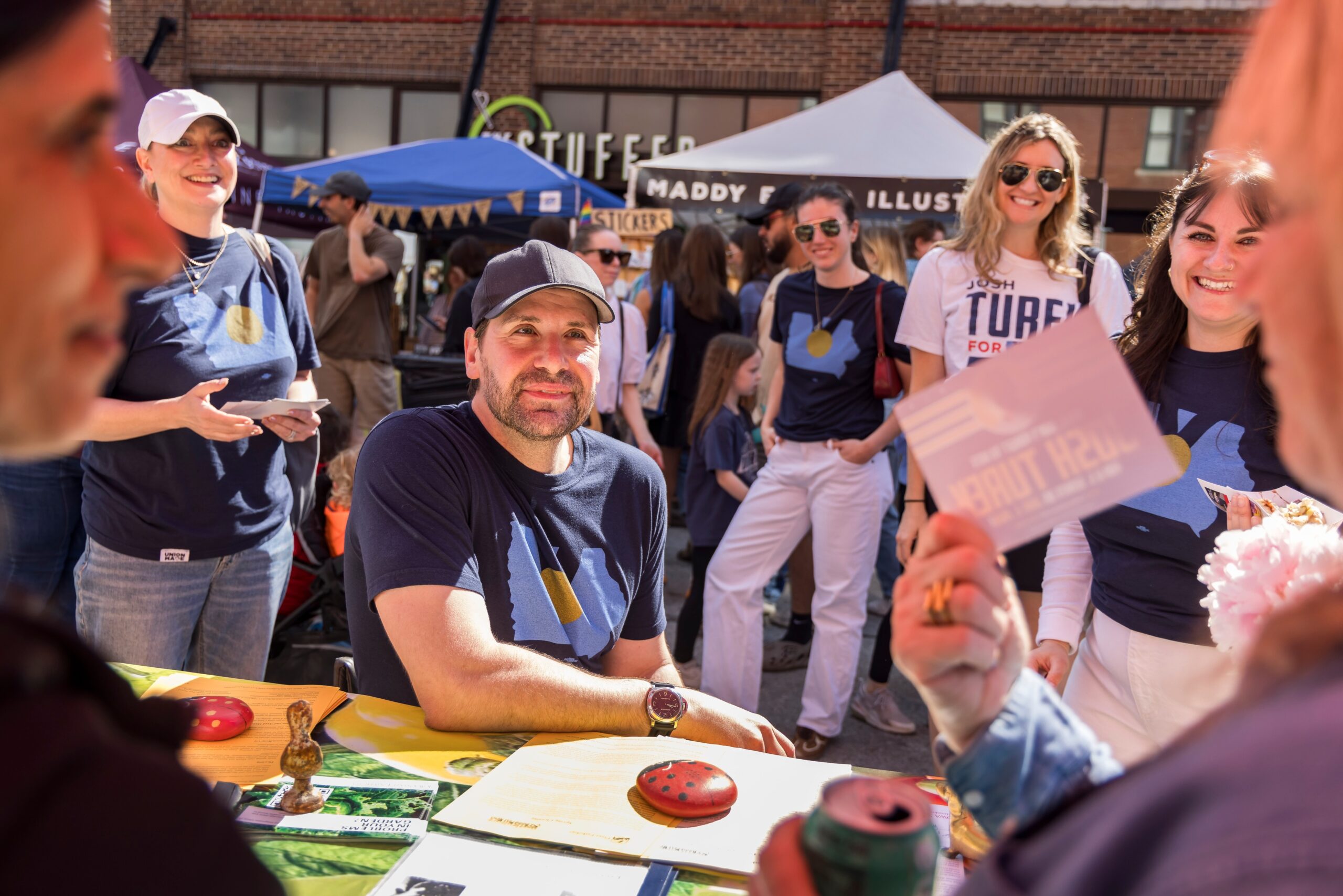
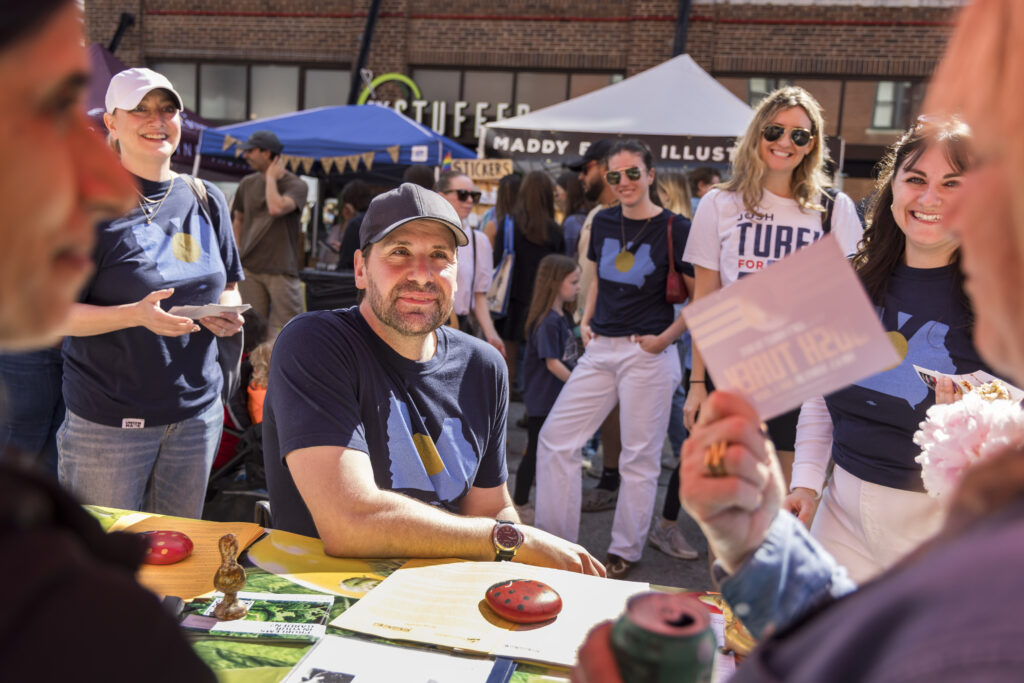
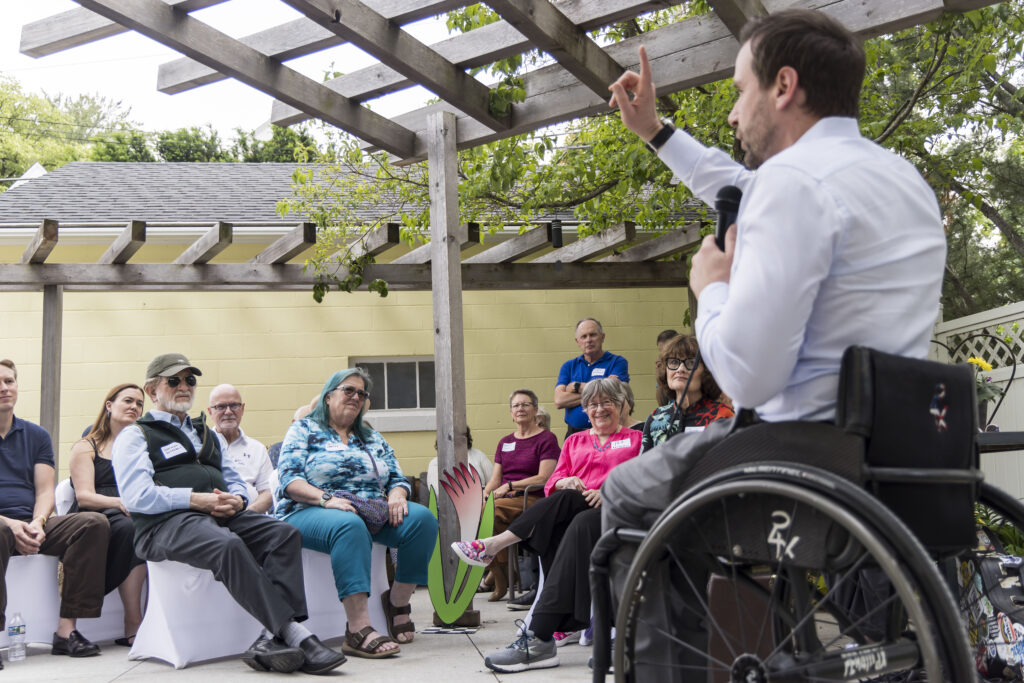
Turek has leaned into his personal story to make his case. Born with spina bifida, Turek won gold medals in the Paralympics playing wheelchair basketball. He won a Republican-leaning state House seat after hauling himself up steps using his arms to knock on voters’ doors and dragging his wheelchair with him.
Schumer is unpopular. More Democrats said they disapproved of his record as Senate minority leader than approved, according to an Economist/YouGov poll in March. But Turek — who has not criticized Schumer — noted that voters bring up the cost of living, not Schumer, when he knocks on their doors. He said he is focused on defeating Rep. Ashley Hinson, the likely Republican nominee for the seat.
“I’m not running against Schumer,” Turek said. “I’m running against Ashley Hinson and Trump.”
Turek has had help in the primary from an unusual ally: VoteVets, a super PAC that typically supports Democratic veterans and their families. Turek is not a veteran, although his father served in Vietnam. Turek has said he was born with spina bifida due to his father’s exposure there to Agent Orange.
VoteVets has spent nearly $10 million on ads supporting Turek, according to ad-tracking firm AdImpact — more than six times as much as what Wahls’s and Turek’s own campaigns have spent.
Wahls has accused Schumer of orchestrating the VoteVets ads, which VoteVets and Schumer have denied. Wahls has built his case against Schumer around comments that the Democratic leader made a decade ago, when he predicted ahead of the 2016 election that Democrats would win over two or three moderate Republicans in the Philadelphia suburbs for every blue-collar voter the party lost in western Pennsylvania.
“That math might work in New York,” Wahls said at his Mason City event. “It doesn’t work in Iowa. And frankly, that is not the Democratic Party that I want to belong to.”
Read more Early Brief: The liberal-establishment divides in California’s House primaries
Schumer was wrong about Pennsylvania — Trump carried the state in 2016, while Democrats lost a close Senate race — but his party has also seen victories under his leadership. Democrats won close Senate races in Michigan, Wisconsin, Nevada and Arizona in 2024, even as Trump won those states.
“Leader Schumer is focused on one thing: taking back the Senate to stop Donald Trump’s reign of devastation, chaos, and high costs for American families,” Allison Biasotti, a Schumer spokeswoman, said in a statement.
In an interview after his Mason City event, Wahls faulted Turek for not breaking with Schumer, describing it as an “enormous liability” for Turek if he wins the primary.
Wahls’s criticism of Schumer has drawn applause at events — “You had me at your Schumer,” one woman told him in Indianola — but it may be driving other Democrats away.
“Josh, I’m supporting you,” Richard Higdon, 68, told Turek after he spoke in Osceola, Iowa. “The main reason is I heard your primary opponent speak, and he spent half his time attacking Chuck Schumer.”
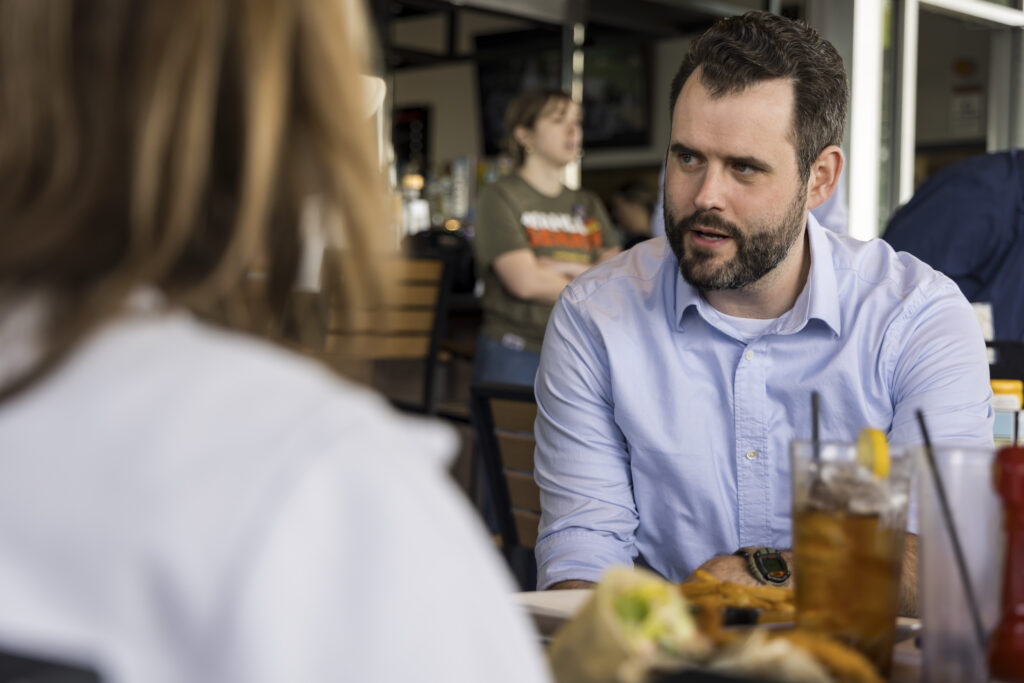
Like Turek, Wahls has a compelling personal story to tell. He went viral at 19 after he testified before an Iowa state House committee about being raised by lesbian parents as the state was considering banning same-sex marriage. Now 34, he has struck a more pugnacious tone while campaigning than Turek, which has helped him win over some voters.
“I like that Zach is a little bit more progressive and he’s willing to push the envelope a bit more,” said Athena Levad, 28, who lives in Mason City and works in finance.
Turek, she added, might appeal more to the sort of Democratic voters who supported Hillary Clinton over Sen. Bernie Sanders (I-Vermont) in 2016.
But the divide between Wahls and Turek is more complicated than progressive versus moderate. The two candidates have acknowledged that they agree on most issues.
“I don’t think there’s a nickel’s worth of difference there, quite frankly,” said Tom Harkin, the longtime Democratic senator from Iowa who left office in 2015 and has endorsed Turek. “I know them both. It has more to do with style and … what you lead with.”
Wahls has campaigned on his support for Sanders’s bill to impose a 5 percent wealth tax on billionaires. Turek doesn’t bring up Sanders — but he said he also supports a wealth tax, describing himself as a “common-sense prairie populist.”
At a gathering of Democrats in a living room in Osceola, Turek said he’s running on three issues he believes resonate beyond the Democratic base: health care, corruption in Washington, and water contamination linked to Iowa’s rising cancer rate. He tries to avoid culture-war fights, he said, because he views them as divisive.
“I think I have a unique ability to make progressive ideas seem like common sense,” Turek said afterward in the home’s garage. “I am very, very disciplined in terms of my messaging.”
Some Democrats said they’re supporting Turek because they think he has a better shot of winning in November.
Jessica Dirks, 48, an education consultant who lives in Ankeny, a Des Moines suburb, said she voted early for Turek even though she may be more liberal because she thinks he can win.
“He’s going to appeal to a wider segment of disaffected Iowa Democrats and independents,” Dirks said.
Roman Vald, 56, an attorney in Des Moines, said electability was his top priority. A former Republican, Vald said he’s worried about what he described as the party’s growing authoritarianism. He is supporting Turek — but he said he would not hesitate to back someone else if he thought they had a better shot of winning in November.
“If I saw a poll and it appeared that there was one candidate who had a clear advantage in the general election,” Vald said, “I would change my vote for that reason alone.”
Read more Who’s leading the wide-open 2028 Democratic presidential field?