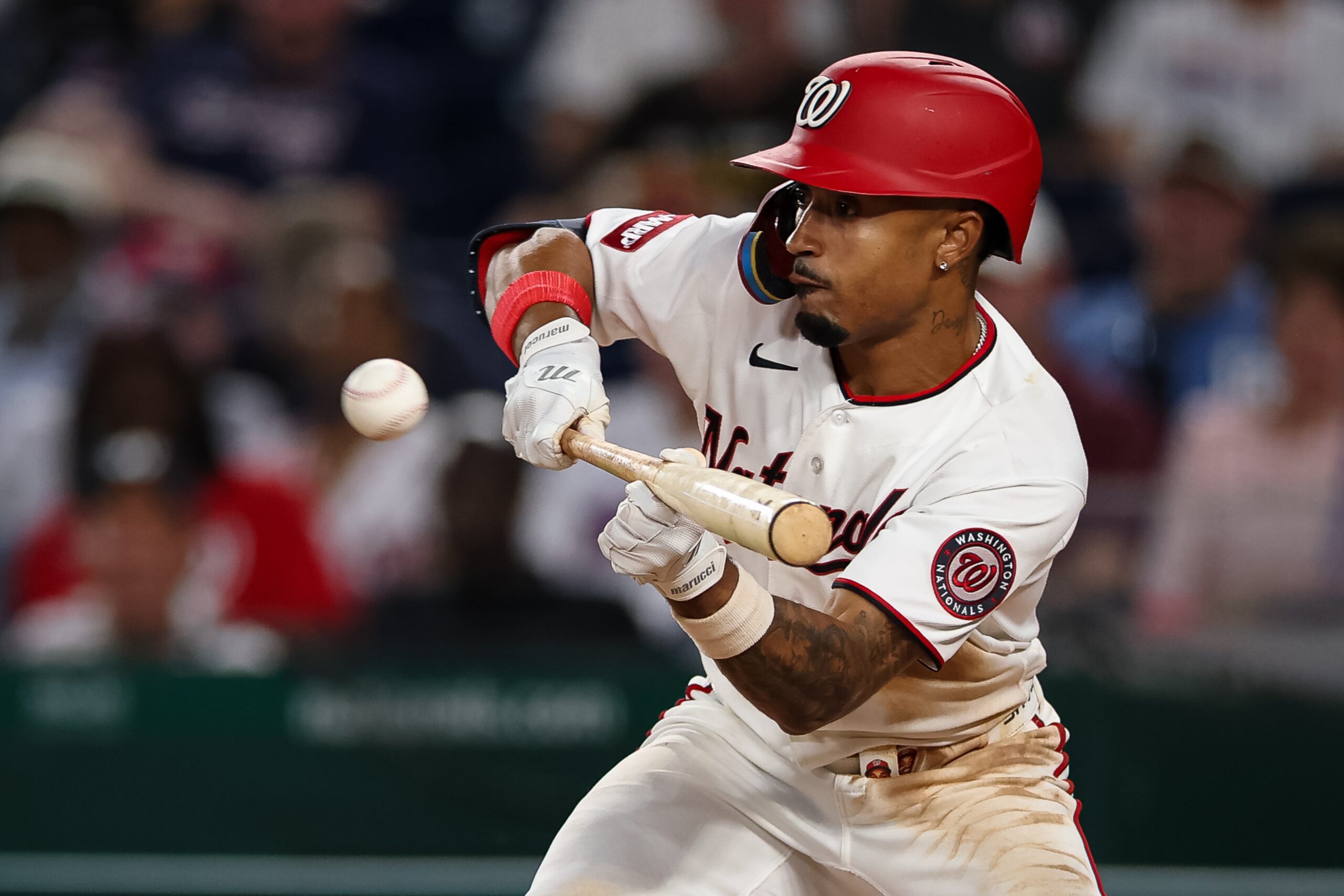
Baseball’s long-lost art is making a minor comeback, including in Washington.
After the Washington Nationals wrapped up their best month in nearly three years Sunday, Manager Blake Butera leaned back in his chair and thought about the things the team still needs to work on.
Read more Kimi Antonelli beats Max Verstappen to pole at Monaco Grand Prix
There’s defense — that one’s obvious. The Nationals have made more errors than anyone else in baseball. But second on his list? Bunting. He wants his team, which is leading MLB in runs, to be confident in squaring up if the situation calls for it.
“I look at bunting the same way as CPR,” Butera said. “You don’t really want to do it, but when you do need to do it, you need to be really good at it.”
It’s something the Nationals have improved upon already under this new administration. They have 10 sacrifice bunts through the first 63 games, compared with 18 for all of last season. They also have four bunt hits, on track to beat the nine they pulled off in 2025.
The Nats’ focus on a seemingly lost art matches a trend taking place across the sport. Bunting, generally considered an old-school tactic, has been on the decline for years, as analytics shifted teams’ focus. Adding the designated hitter to the National League meant pitchers no longer had to hit, reducing its prominence even further.
This season, though, the bunt is on the rise as teams use it as a tactic to combat increasingly dominant pitching and unsuspecting defenses. It’s also cheaper for teams to carry speedy, lower-power hitters than to acquire sluggers who require eight- or nine-figure contracts. Before Friday’s games, there have been 195 bunt hits, compared with 139 at this time a year ago.
The three teams with the most bunt hits — the Milwaukee Brewers, Tampa Bay Rays and Arizona Diamondbacks — are also among the three teams with the lowest home run totals. Bunting helps them get production from players who aren’t able to consistently hit the ball hard in the air.
The same goes for the Nationals. A player such as James Wood, who has 16 home runs already, won’t be asked to bunt. But someone such as Nasim Nuñez, who has an OPS of .498 and no home runs, probably will be.
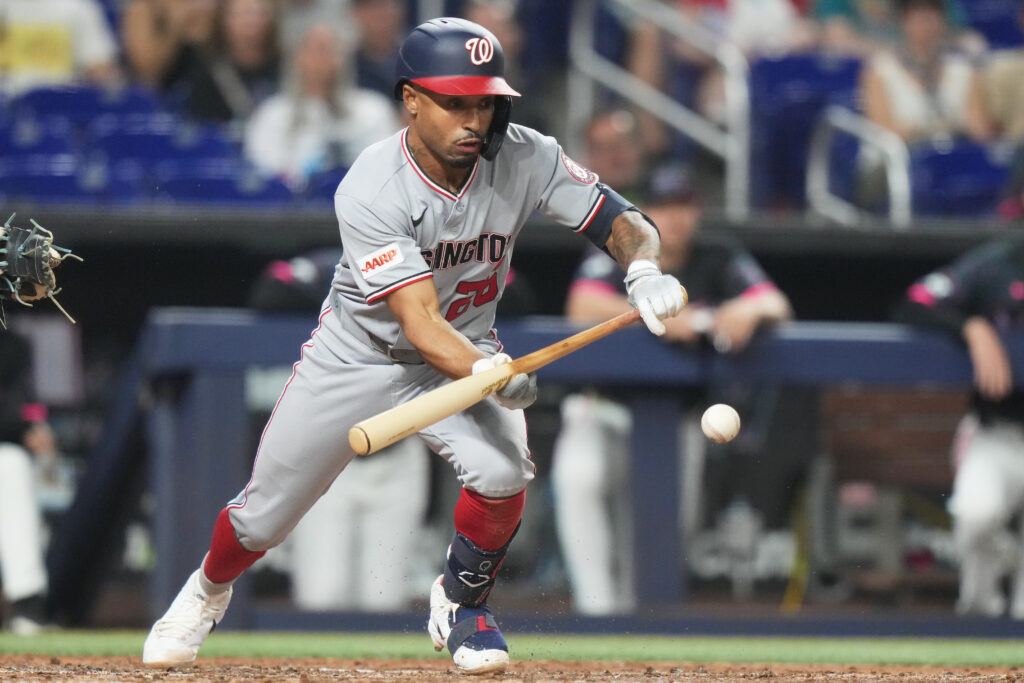
“I just think you need to be well-rounded and be able to do a lot of different things, especially when you are facing good arms and runs are hard to come by,” Butera said. “If we’re going to lean on doubles and home runs, that’d be awesome, but I don’t think every night we’ll be able to do that. When times call for it, you need to be able to do it.”
For the Nationals, it all began in the offseason. When Butera was hired in October, he met with every player on Zoom. Each one, he said, expressed a desire to get better at the little things that can make a difference between a win and a loss. Bunting, in Butera’s philosophy, is one of those things.
Read more West Ham joint-chairman David Sullivan quits ahead of ‘historic allegations’ to be made against him
That’s why, when the team gathers early on game days, bunting is often a priority. On Monday, half of the hitters were on the field getting work in around 2 p.m., more than four hours before the game against the Miami Marlins. It’s not mandatory, but the expectation of the new coaching staff is that players will participate more days than not.
Some players, such as Jacob Young, are comfortable bunting. When he was coming up through the minors, the Nationals told him he would be expected, given his profile, to bunt. He practiced it and continues to refine it, four to five days a week.
His first Major League hit in 2023 was a bunt, and he has one sacrifice this year.
“I’ve messed up in big situations on the bunt,” Young said. “I’ve been smoked in big situations on the bunt, and I’ve succeeded on them, too. I always say it’s easy to bunt the machine, that’s, you know, throwing it right down the middle, it’s harder when the guy is throwing different pitches at a lot harder speeds.”
There’s also the fear factor. Bunting requires the hitter to turn their body toward a ball that’s often traveling over 90 mph. Nuñez leads the team with five sacrifice bunts, tied for fourth-most in MLB, even though he admits it scares him.
When he was in Class AA, he was hit in the foot by Brewers pitcher Abner Uribe when attempting a bunt. The umpire didn’t think it hit him, so Nuñez, now with a sore foot, had to square up again.
“I think bunting is hard,” he said. “They say it’s easy, but you’re in a vulnerable state.”
Luis García Jr., who has never been hit but was almost smoked in the face once, said he has seen more players emphasize the skill this year. As he has learned first base this year, defending bunts made him uneasy at first. Now, he said, he’s much more comfortable with bunting, both offensively and defensively.
“I think it’s really important, especially in today’s game,” García said through an interpreter. “I don’t think a lot of defenses are expecting teams to build, or they’re not ready for it, so that’s why I think it’s really important to have that skill.”
Read more The World Cup poses an unprecedented security challenge at a fraught moment. Is the US ready?