Activists rallied behind the liberal lieutenant governor, while a moderate congresswoman says Democrats could lose the seat if they move too far to the left.
Read more Trump’s birthday spectacle contrasts wildly with Biden’s understated 80th
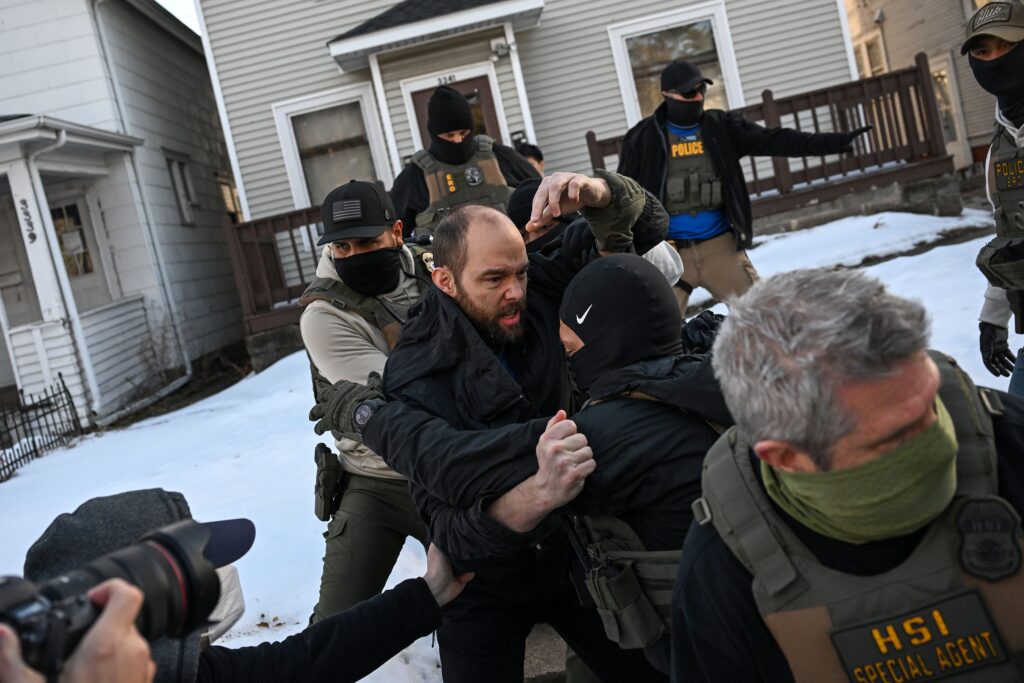
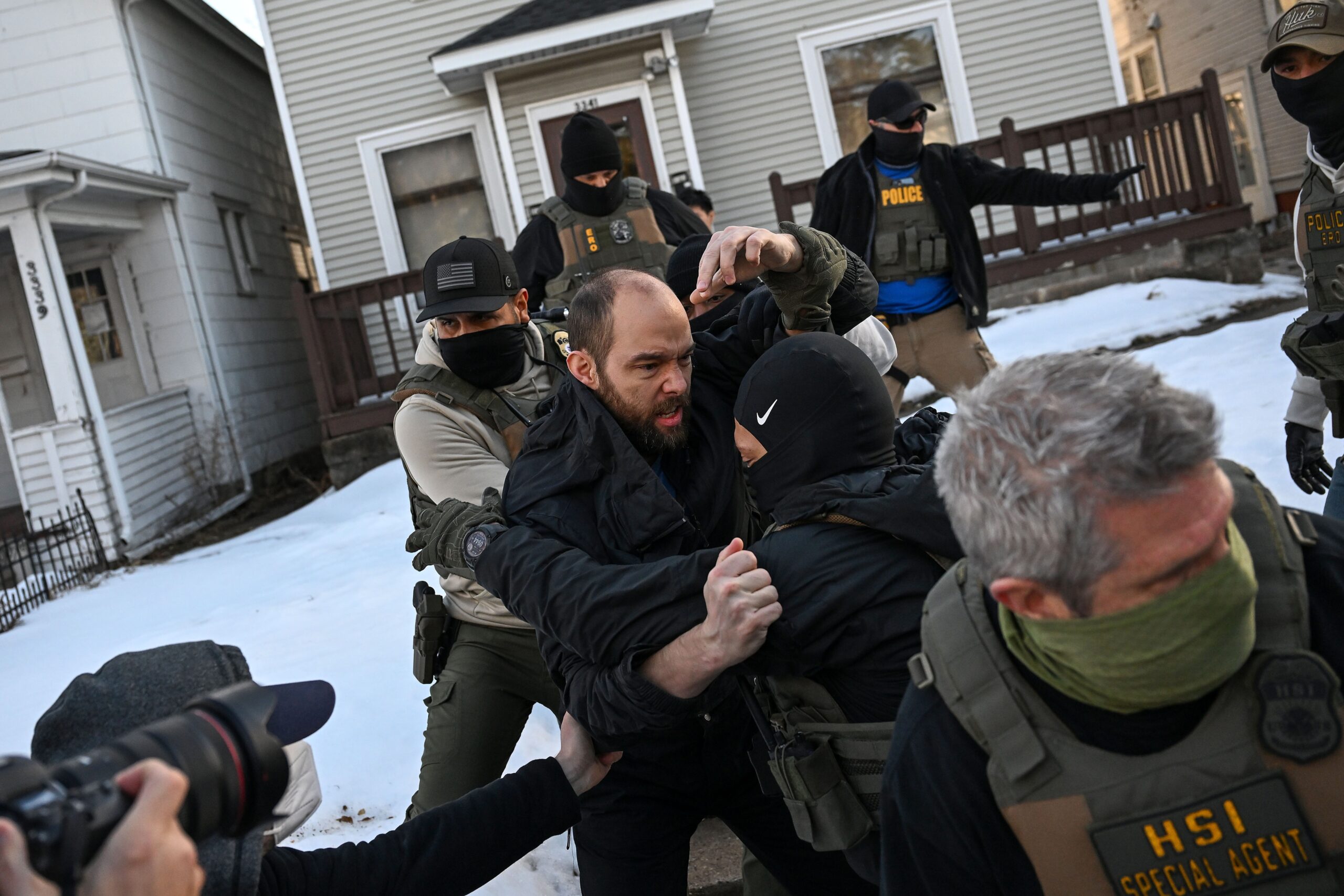
ROCHESTER, Minn. — Ellen Goode was driving to meet a friend for lunch this winter when something caught her eye: masked federal immigration agents detaining a man near a field.
She pulled over and started recording. The agents warned her to back up, but Goode kept filming until they drove away.
What she witnessed shook her. “Seeing the eyes, the face of the man who they had pulled over — he was terrified. I’ll just never forget it.”
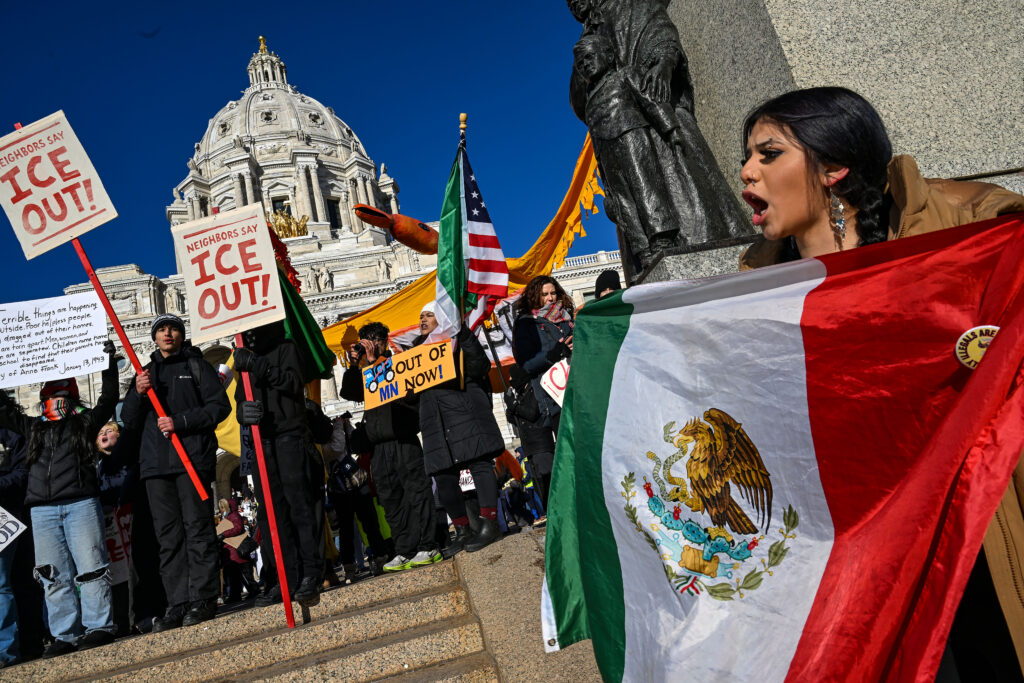
The encounter was one of thousands between everyday Minnesotans and federal immigration agents during Operation Metro Surge, the Trump administration’s sweeping immigration crackdown in the state. The operation, which ended in February, captured national attention with images of mass arrests and the fatal shootings of two U.S. citizens, Alex Pretti and Renée Good.
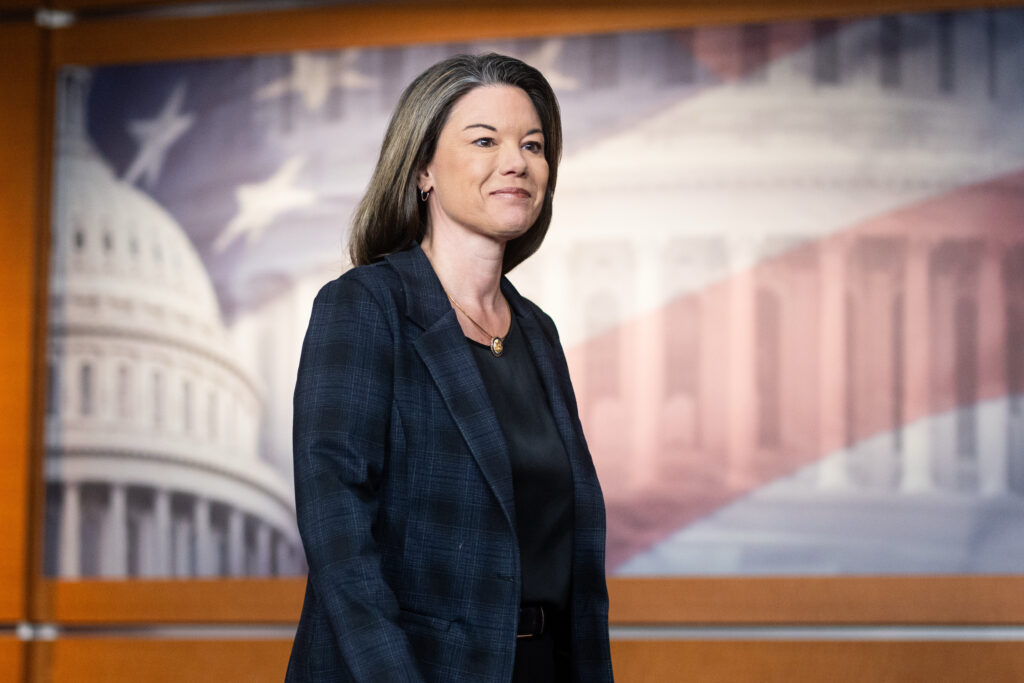
Months later, Metro Surge’s political aftershocks are driving Minnesota’s Democratic Senate primary. The backlash has helped energize the party’s activist base, boosted progressive Lt. Gov. Peggy Flanagan and turned Rep. Angie Craig’s past support for Republican-led immigration enforcement legislation into one of the central liabilities of her campaign.
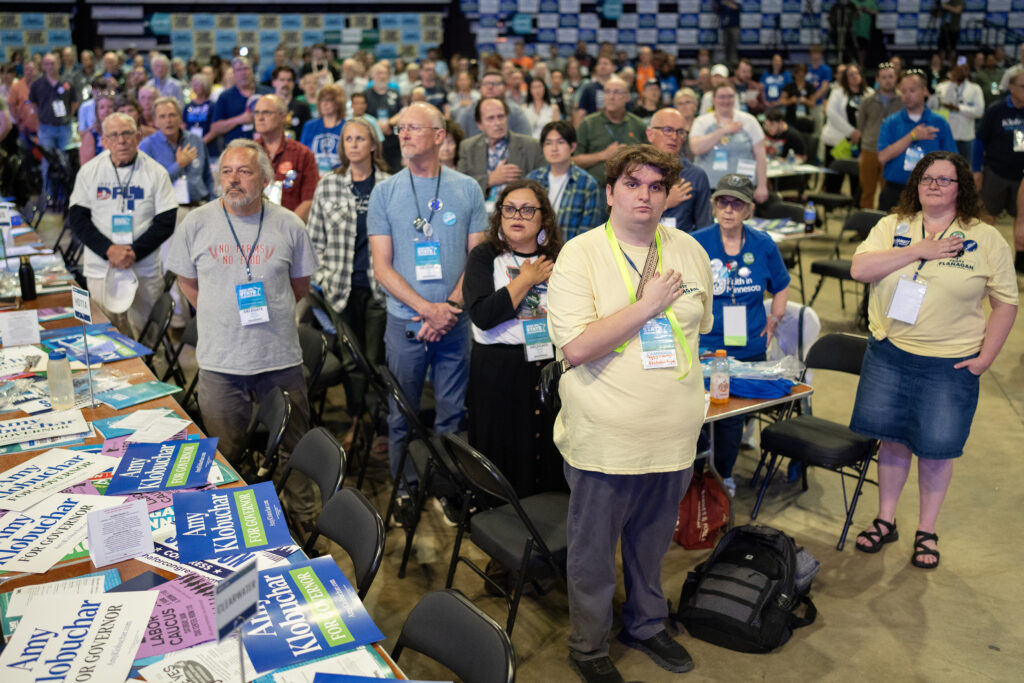
The operation has also galvanized unprecedented participation in the party, with 57 percent of participants in this year’s state convention first-time delegates. It was a record for new engagement after months of organizing around the immigration crackdown, and the party voted overwhelmingly to endorse Flanagan.
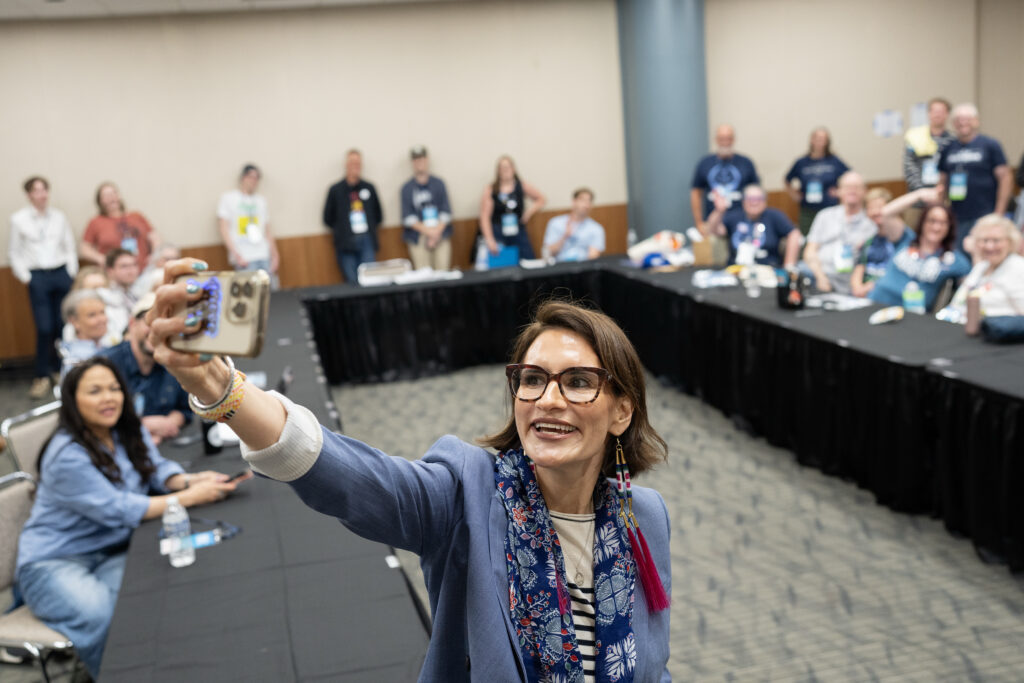
Goode was one of them. She came out in support of Flanagan and criticized Craig.
“She has not been consistent against ICE,” said Goode, a quantitative health sciences researcher in Rochester. “We were just so impacted and devastated all winter and it’s been horrible. I mean, that’s what got me personally into all of this stuff.”
But Craig warns that the fury over Operation Metro Surge is not enough to guarantee that Democrats win in the general election. Outside the urban areas, Republicans still dominate much of Minnesota, with Democrats holding a one-seat majority in the state Senate and tied for control in the state House. Craig argues that Flanagan doesn’t have the demonstrated ability to win over independent and Republican voters. Democrats have feted Craig in the past for repeatedly winning in a Republican-leaning district starting in 2018.
“Minnesota is a purple blue state,” Craig said in an interview. “We could lose if we’re not careful.”
Numerous Democratic primary voters, elected officials and convention delegates said that the operation remains the driving factor in their support in the Senate primary. They pointed with frustration to Craig’s vote last year for the Laken Riley Act, a Republican-led law mandating detention for undocumented immigrants arrested or convicted for theft and other crimes.
Democratic state Rep. Dan Wolgamott, who is running to be the state’s auditor, initially endorsed Craig, citing her ability to win in a swing district. But he switched his endorsement to Flanagan in early May over Craig’s vote for the Laken Riley Act.
“The more I looked at her votes, the more I felt sick to my stomach,” Wolgamott — who said his Hispanic father-in-law was harassed by U.S. Immigration and Customs Enforcement agents — said of Craig. “Peggy would never ever in a million years vote for anything like that.”
Craig has expressed regret over her vote on the Laken Riley Act and stressed her own opposition to Operation Metro Surge, including her resistance to fund the Department of Homeland Security during the shutdown and her push to impeach then-Homeland Security Secretary Kristi L. Noem.
Speaking with a group of supporters in a brewery recently, Craig said her past agreements with Republicans did not make her any less of a fighter against the Trump administration’s aggressive immigration operations.
“I can punch with one hand and I can extend with the other,” Craig said.
Craig’s regret over the vote hasn’t quieted concerns from primary voters. Wolgamott described the change of heart as a political calculation and “too little, too late.” Flanagan has jabbed at Craig for her changed stance. Onstage at the convention of the Democratic-Farmer-Labor Party — Minnesota’s affiliate of the national Democratic Party — she condemned Democrats who “have been weak” and “a pale shadow of our opponents,” garnering some of the loudest applause of the event.
Read more Eriksen ‘doing well’ and expected to leave the hospital after on-field collapse, Denmark team says
“Folks want someone who is going to rip ICE apart and hold them accountable. And that’s our campaign,” Flanagan said on the sidelines of the convention, noting that she had the support of about three-quarters of all of the delegates.
Craig said outside of Minnesota’s deep-blue primary electorate, the party will have to confront an electorate driven by issues other than immigration, including an affordability crisis, economic pinches on the state’s agriculture sector and, above all, fraud.
Republicans have made fraud one of their central attacks on Minnesota Democrats following a major case involving the nonprofit Feeding Our Future. Federal prosecutors charged scores of people involved in the group in a roughly $250 million scheme that exploited pandemic-era child nutrition programs. The scandal battered Gov. Tim Walz’s administration and contributed to his decision to end his reelection bid this year.
Flanagan has highlighted the governor’s work with the legislature to create new accountability measures to avoid future fraud. She rejected Craig’s claim that she would be more vulnerable to attacks on fraud, arguing that any statewide Democrat will face Republican attacks over the issue, whether the nominee is Flanagan, Craig or another Democrat.
“I think it’s interesting, and I say that in the most Minnesotan way possible, that Congresswoman Craig is just taking a page out of the Republican talking points,” Flanagan said in an interview.
Meanwhile, national Republicans are backing former sports commentator Michele Tafoya in the Senate race, while the state Republican Party endorsed former Navy SEAL Adam Schwarze. Craig argued that Tafoya could be formidable because of her name recognition from years on television, especially among male swing voters.
Craig is still performing competitively by other metrics. She leads in fundraising, and more has been spent on ads supporting her than Flanagan. Several other candidates have also gone on to win the Democratic primary without the party’s endorsement — including the 2018 Walz-Flanagan gubernatorial ticket — though Craig will be running without the party’s resources or the support of any DFL-endorsed downballot candidates.
Craig’s backers cite her work for farmers at a time when many of them are facing economic strain and environmental pressures. Craig is the highest-ranking Democrat on the House Agriculture Committee.
“I don’t think that she’s going to be able to pull greater Minnesota, and those are the votes that we need,” state Rep. Ethan Cha, a Craig supporter, said of Flanagan. “We don’t need a 10 percent margin in the Twin Cities. What we need is a 5 percent spread in the suburbs and in greater Minnesota.”
Outgoing Sen. Tina Smith (D-Minnesota), who has endorsed Flanagan, suggested Flanagan may not need to carry the party’s moderate appeal alone. Sen. Amy Klobuchar, a more moderate Democrat, is running for governor, and Smith said Klobuchar at the top of the ticket could help draw voters who might be less inclined to support more liberal Democratic candidates.
Outside the Rochester convention hall, the impacts of Operation Metro Surge are plastered throughout Minnesota’s cities. Homes and car bumpers are covered with signs and stickers cursing out ICE. Goode, the medical researcher, said her community chats are still active organizing memorials and helping community members.
James Leonardo, a Minneapolis resident, noted that immigration arrests are still happening in the city, even if they aren’t as drastic as during Operation Metro Surge. Leonardo didn’t say whether he was supporting either candidate in the primary, though he had a preference for Flanagan.
“Craig is positioning herself as if she’s anti-ICE,” Leonardo said. “Everybody’s kind of like ‘woke’-washing stuff and pretending that they’re more progressive or left than they really are.”
Valentine and Tasha Riedman were both wearing anti-ICE T-shirts while walking their dog through Powderhorn Park on a recent morning. The park was the site of one of the largest anti-ICE demonstrations in January, and both said that immigration was still top of mind when thinking about the elections this year.
“We’re definitely more Flanagan,” Valentine Riedman said. “Craig had some moments, too, during the ICE raid stuff that she did speak up a little bit, but not as much as we feel like Peggy did.”
Read more Manav Suthar picks up 6-33 on debut as India enforces follow-on against Afghanistan