Military hawks within the Republican Party are directing their ire over the still-unclear Iran deal toward the vice president, more so than Trump.
Read more Four takeaways from primaries in Georgia, Alabama and Oklahoma
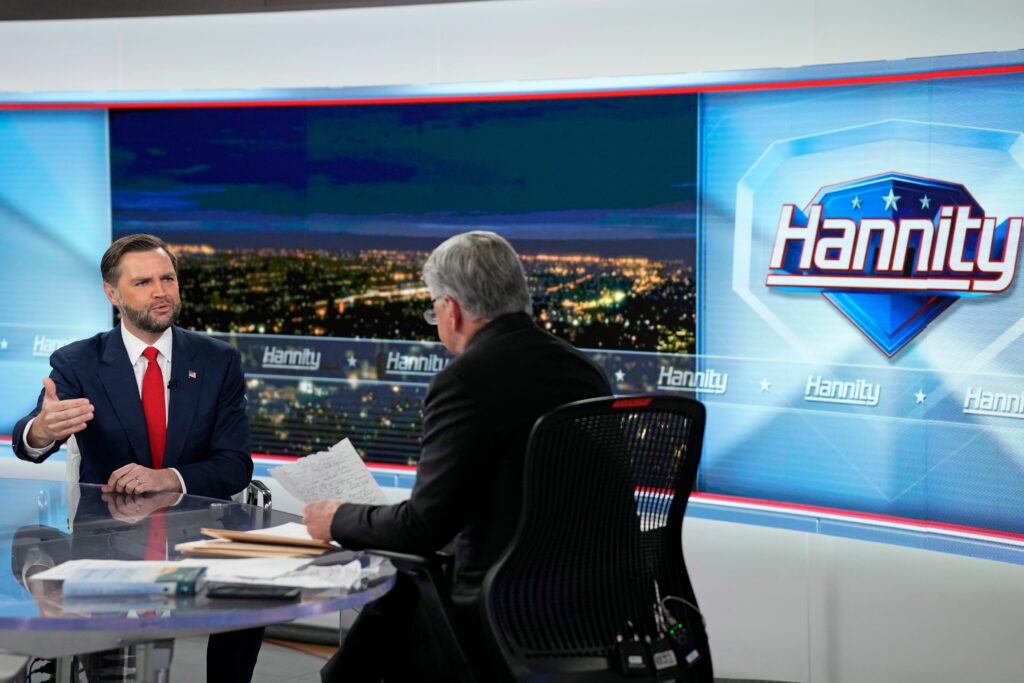
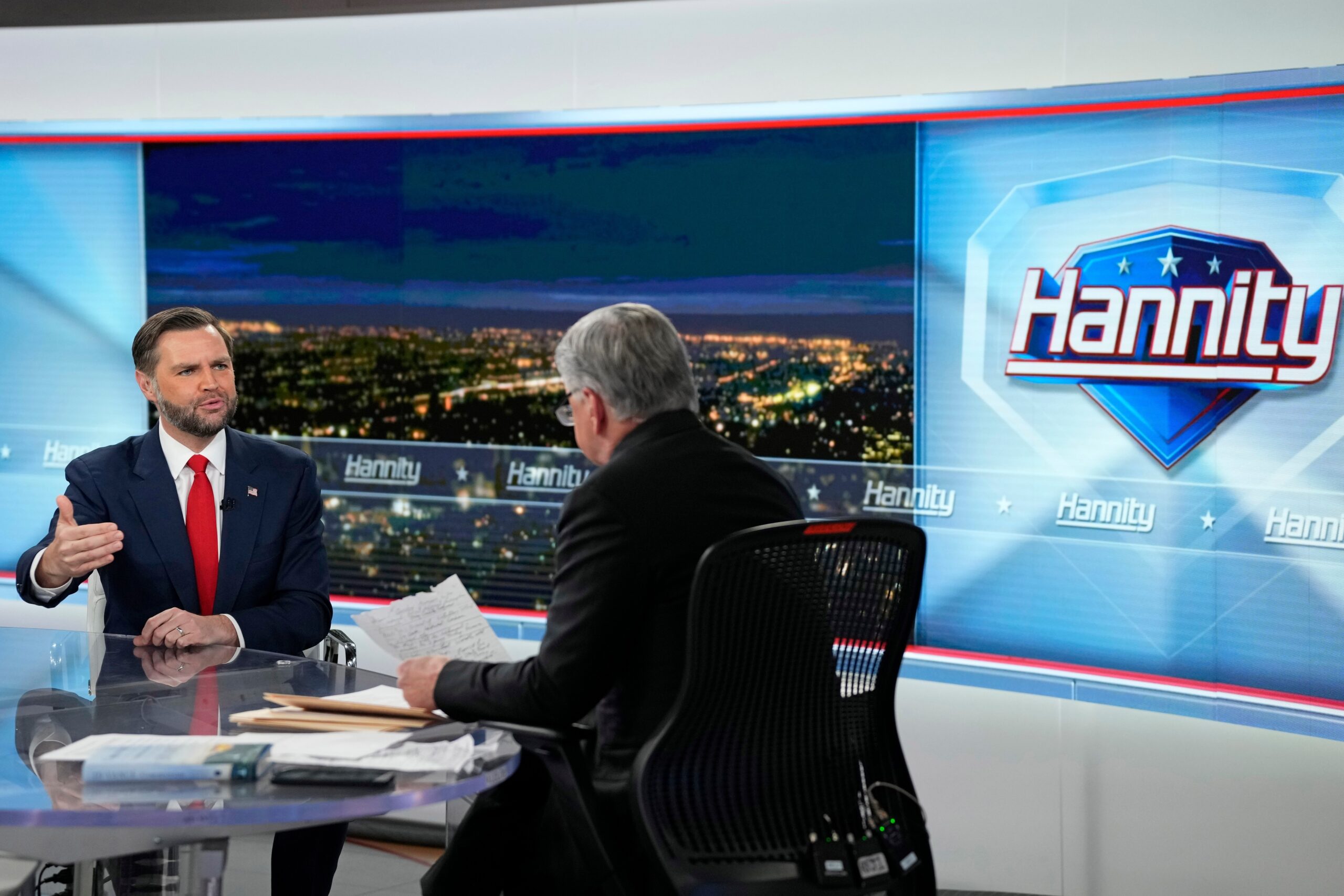
Vice President JD Vance has become the face of a temporary peace agreement designed to end an unpopular war against Iran that he was skeptical of entering to begin with — a position his allies maintain is a net positive politically, even as it puts him at odds with influential hawks within the GOP.
The skeptical, in some cases hostile, reaction to the tentative Iran deal from prominent Republicans has created a challenge for the Trump administration and a high-stakes moment for Vance, the 2028 GOP front-runner. The vice president has faced mounting criticism from the Iran-hawk wing of the party, a sign of the pushback he is likely to receive if he announces a presidential run.
Hawkish Republicans have directed their ire more toward Vance than President Donald Trump, despite Trump and Vance both having signed the memorandum of understanding with Iran on Sunday. They’ve suggested the vice president’s influence is part of the reason Trump’s earlier objectives in Iran are unlikely to come to pass.
“Are we going to just backslide into being some hillbilly Obama kind of GOP?” conservative commentator Ben Domenech said on Fox News, riffing on the name of Vance’s first book, “Hillbilly Elegy.” He praised Trump’s decision to attack Iran earlier this year and criticized the new agreement that would wind down the war — a conflict that has proven to be overwhelmingly unpopular with voters.
“That is not something that is acceptable to me, it should not be acceptable to Republicans, and it should not be acceptable to any conservative who is interested in the success of America going forward,” Domenech said.
Some critics of the deal have warned that U.S. deterrence against Iran was weaker now than it was before the war because the threat of a military attack has been tested, and Iran’s regime was able to survive.
Marc Thiessen, another commentator who has praised the war in Iran, called the agreement the “Vance peace deal,” while Sen. Lindsey Graham (R-South Carolina), one of the GOP’s foremost cheerleaders for regime change in Iran, described Vance as the “architect of the deal” in a social media post that outlined his concerns.
Allies of Vance, meanwhile, maintain that his efforts to bring about an end to the conflict — about which he had privately expressed concerns before Trump launched the attack on Iran on Feb. 28 — should be a net positive with voters in the future.
“The only people attacking JD for this are people that were never going to vote for him in a primary anyway,” said a person close to the White House, who spoke on the condition of anonymity to talk about the sensitive dynamics. The person downplayed the impact of hawks criticizing the vice president.
The GOP’s military hawks have long been cool toward Vance and resentful of his professed skepticism of foreign interventions. Many are also strong advocates of close ties between the United States and Israel and see Vance as insufficiently supportive of that alliance. Israeli Prime Minister Benjamin Netanyahu has been openly critical of some aspects of the emerging deal. Trump himself, meanwhile, has leveled increasingly public criticism toward Netanyahu in recent days.
Some prominent hawks have both publicly and privately advocated for Secretary of State Marco Rubio to emerge as the party’s 2028 nominee.
Rubio, who traveled with Trump to France for the G7 summit this week, has remained quiet about the Iran deal, further fueling speculation that the secretary of state has tried to distance himself from it, though Rubio has not suggested that to be the case.
Rubio and Defense Secretary Pete Hegseth questioned aspects of the latest memorandum of understanding ahead of Trump’s approval of it on Sunday, a person with knowledge of the conversations confirmed to The Washington Post. But the men had not advocated against reaching a deal with Iran, the person said, speaking on the condition of anonymity to discuss the internal deliberations. The reservations from Rubio and Hegseth about the deal were first reported by Axios.
Vance had sharp words Tuesday for hawkish critics, telling conservative podcaster Megyn Kelly that “they want this to go on until every bomb has been dropped, or until every Iranian is dead.”
“That’s not what the president of the United States wants,” Vance added.
The vice president, however, noted that the coalition that won Trump the White House in 2024 had a wide span. It included conservatives like himself, Kelly and Tucker Carlson, who have been critical of Middle East wars, as well as others like Graham and Fox News host Mark Levin, a vocal ally of Israel who has wanted an even greater military response by the U.S., Vance said. Both sides should remain in the pro-Trump fold, he added.
As Vance sat for a flurry of appearances on cable networks and podcasts Sunday through Tuesday, part of a media tour intended to promote his new book on faith, the vice president touted the agreement he helped negotiate. He is expected to fly to a signing ceremony in Switzerland on Friday.
His interviews defending the deal generated a flurry of pushback from traditional Republican foreign policy experts who have long advocated a tough line against Iran — and who were skeptical of what Vance, Trump and others were describing about the deal.
“It’s a shell game, and my favorite part of this is the parallel language that’s being used by JD Vance and his allies to the language that was used to promote the JCPOA,” or Joint Comprehensive Plan of Action, the Obama-era deal with Iran, said Danielle Pletka, a senior fellow at the American Enterprise Institute.
Read more After draping White House in gold, Trump heads to ‘the real deal’: Versailles
Vance has said that the changed leadership in Iran has opened the door to new and more open conversations about future relations. There’s a possibility that an improved Iranian economy could drive Tehran to adopt political reforms, he said.
Pletka said that exact argument was a part of the Obama administration’s thinking about interactions with Iranian policymakers.
But the vice president’s hard push has persuaded some in the party.
Sen. Roger Marshall (R-Kansas) said he was cheering on the agreement after speaking with Vance on Monday. He said he believed Iran would give up its nuclear ambitions, that the U.S. is not giving Iran any money, and that other Middle Eastern countries are excited about the agreement.
“The strait’s open,” Marshall said, referring to the Strait of Hormuz, a vital passage for oil shipments. “Iran’s not going to have nukes. What else is there to know?”
Others who criticized the Obama-era deal for being too soft on Iran were cautious about pushing too hard against a deal whose details have been kept even from close Republican allies outside of the White House.
In the Senate, skepticism about the deal has been fueled in part by the administration’s refusal to release the text of the agreement with Tehran.
Senate Majority Leader John Thune (R-South Dakota) told reporters that he had asked to see the memorandum of understanding and to be briefed on it, and that neither had happened yet.
The lack of detail has made criticism tricky for some Iran hawks since they can’t be sure what’s in it. Many doubted that Iran was ready to make the concessions that would be necessary for a grand bargain about its nuclear program, which the White House has said will be discussed in the next 60 days.
“From an actual threat perspective, we’ve done a great deal, the byproduct of taking out their accelerating ballistic missile program before it accelerated out of control and created a force field around the country, and therefore gave them a missile breakout to enable a nuclear breakout in the future,” said Richard Goldberg, who worked in both Trump administrations and is now a senior adviser at the Foundation for Defense of Democracies, a Washington-based think tank that has long advocated a tough line against Iran.
He said that he was cautious about the relief from economic sanctions that Vance and others have floated. Vance has insisted that would come only after Iran meets certain criteria and would not involve U.S. money being given to Iran.
Vance also said there has been an advantage to speaking at high levels to the Iranian leadership, making it easier for the U.S. side to extend the possibility of a broader normalization of relations should Tehran want to transform into a more cooperative partner.
That optimism isn’t shared among longtime skeptics of deals with Iran.
“You have to have a pretty seismic sea change in order to all of a sudden say ‘We love America, we love Israel,’ right? So I’m not positive that rationality is there, and I retain a healthy dose of skepticism, notwithstanding the vice president’s good faith effort to extend his hand,” said Mark Wallace, the chief executive of United Against Nuclear Iran, a group that has promoted tough sanctions against Iran.
Many Senate Republicans have also been reluctant to praise the deal that Vance has spearheaded without seeing it for themselves.
Trump on Tuesday remained vague about when the current memorandum of understanding would be sent to the legislative branch.
Sen. Thom Tillis (R-North Carolina) said he would judge any deal on whether it achieves the aims that Trump articulated when the U.S. struck Iran in February. But he said it’s not clear to him that there’s much to evaluate yet.
“I think it’s generous to call it a deal,” Tillis told reporters. “It sounds like it’s a deal in progress — and that’s good. I mean, if we’re making progress that’s good. But at the end of the day, a deal that we only get described in broad strokes, how can I judge that?“
The administration and the Iranian government have described the memorandum of understanding differently, making it difficult to tell what’s included in it and what it not. Vance has used his public appearances to decry what he says is misinformation being spread by Iran about the agreement.
“The deal being talked about by the administration would be great,” Graham told reporters. “The deal described by Iran would be terrible. Time will tell.”
Read more DOJ urges appeals court to let Trump build ballroom, citing failed UFC attack