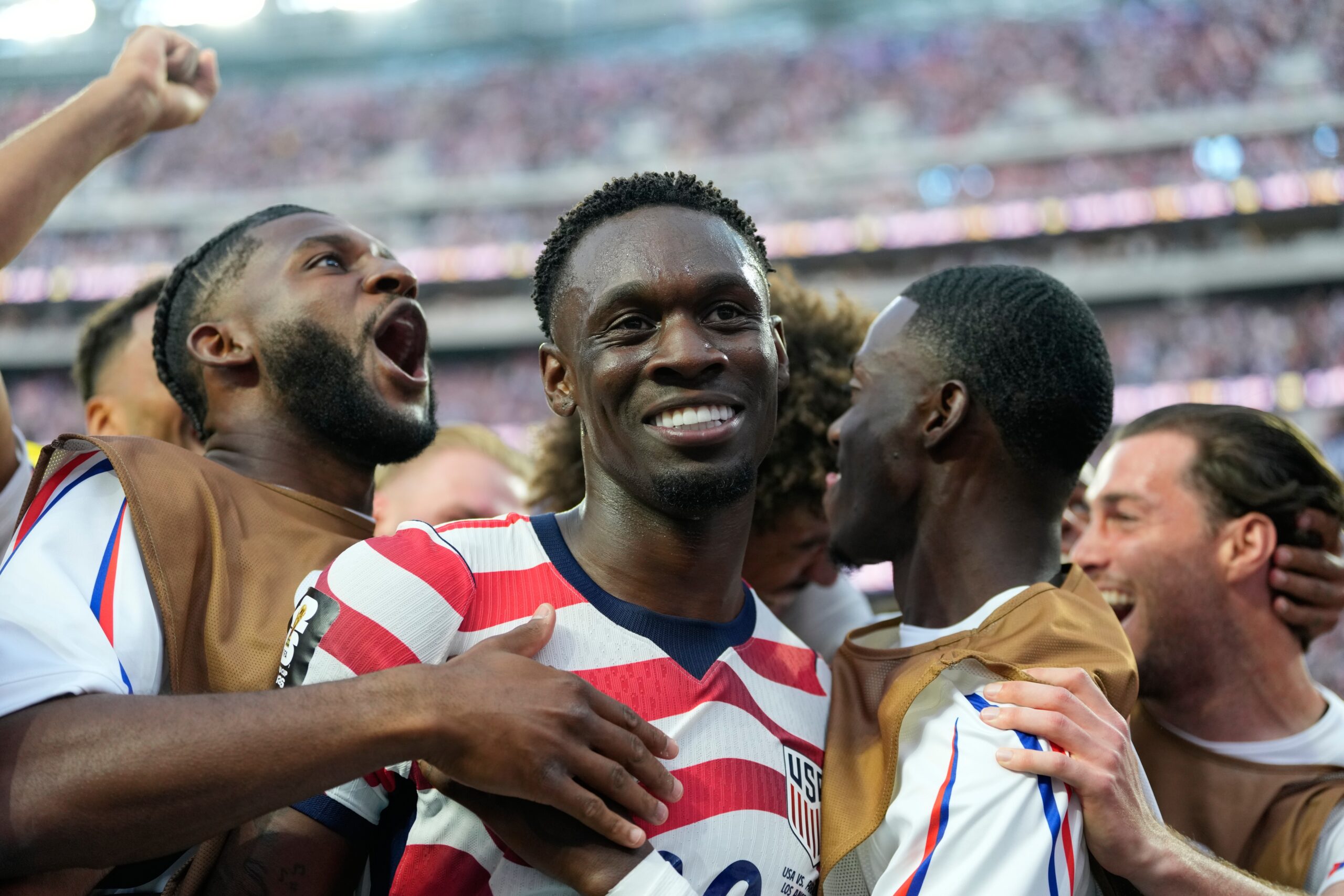
A long-ago travel snafu meant Balogun had not one but three national team uniforms to choose from come 2026.
Read more Young heavyweight Moses Itauma set for ‘litmus test’ against Filip Hrgovic of Croatia
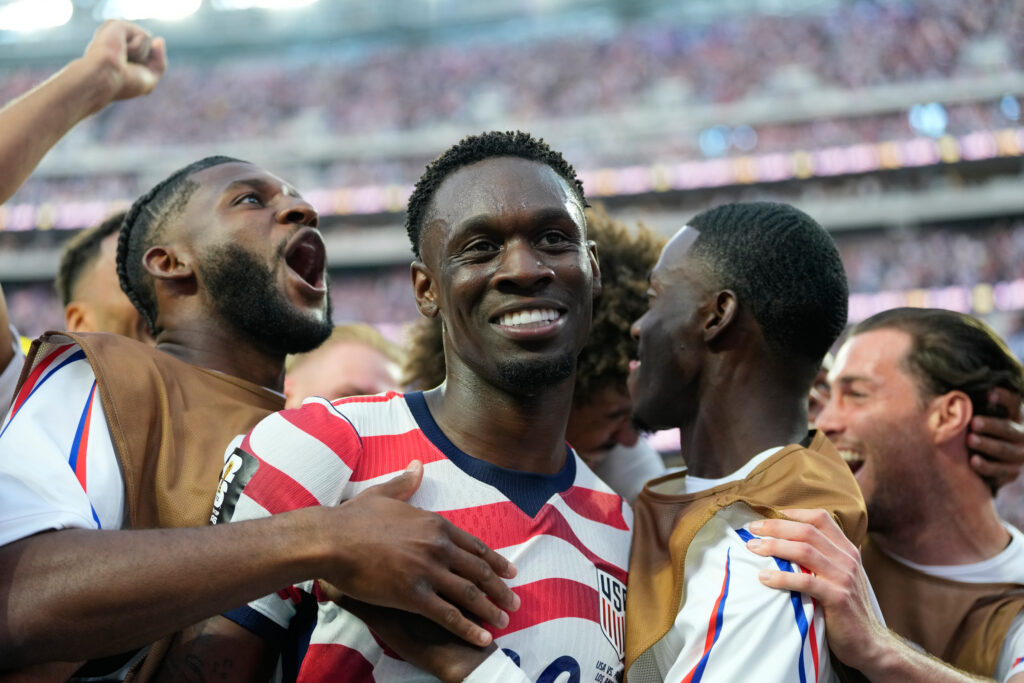
IRVINE, Calif. — Before the ball even arrived, Folarin Balogun seemed to have it all choreographed.
He had room to run, beat one defender with ease and sidestepped another like a trained dancer. The finish was ruthless, and it was the kind of play, from the kind of player, the U.S. men’s soccer team had spent years wondering if it would ever find: a striker who could make the position feel less like happenstance and more like a threat.
U.S. Soccer has long searched for a forward who did not simply wait for chances but helped create them with movement, timing and a finisher’s certainty. Balogun, who plays for the French club AS Monaco, was hardly guaranteed to be part of that search.
Raised in England by Nigerian parents, Balogun, 24, spent most of his youth international career in England’s system and once seemed destined to suit up for England. But a long-ago travel snafu, combined with his Nigerian ancestry, meant Balogun had not one but three national team uniforms to choose from come 2026.
The soccer world followed his recruitment closely, including a supposedly clandestine meeting in Orlando that American fans helped blow open with online pleas and hotel-lobby lobbying. Balogun made his choice official in May 2023, but he introduced himself to the once-every-four-years crowd last Friday night. He scored twice, including on that left-footed rocket, and nearly added a third in the Americans’ 4-1 trouncing of Paraguay.
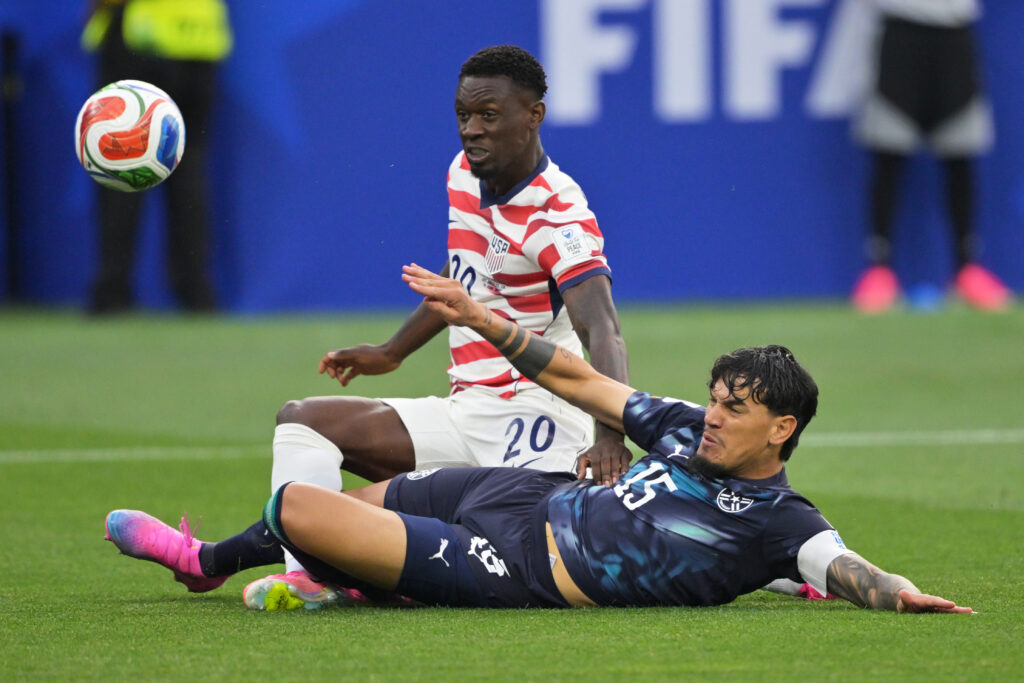
On Friday in Seattle, he’ll try to follow up on his breakout performance when the United States faces Australia in its second group-stage match. It will be a test case for a larger idea: that the Americans might finally have the scoring threat they spent years trying to identify.
“He’s a little different,” said Alexi Lalas, the lead soccer analyst for Fox Sports and a former U.S. national team defender. “The opportunities that he can create even at times for himself — and obviously his finishing ability, which we’ve seen and certainly saw the other day. What you want from somebody up there is to have the confidence that if given that one opportunity, they’re going to bury it.”
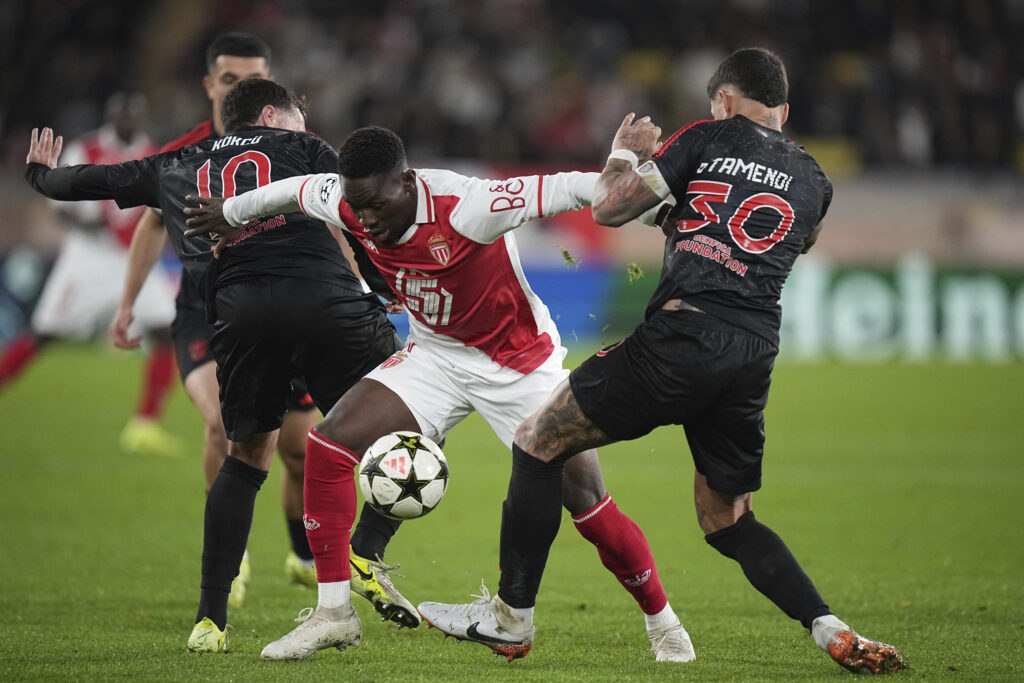
In the summer of 2001, Balogun’s Nigerian-born parents were living in London when they traveled to New York. Florence Balogun was seven months pregnant at the time, and, as she has recounted it, wasn’t allowed to board her return flight without medical clearance. So she gave birth in Brooklyn before the young family left the country weeks later. They named him Folarin, a Yoruba name often translated as “walks with wealth.”
The second of three children, Balogun was raised in London and started playing for Aldersbrook, a grassroots club, before he was spotted by Arsenal and joined the team’s Hale End academy at age 8.
England became his soccer home: the academy, the youth national teams, the pathway that seemed most obvious. But his international options remained open: the United States through his Brooklyn birth; Nigeria through his parents; and England, his home.
England, among the favorites at this World Cup, seemed the obvious path. But in 2023, after Balogun scored 21 goals while on loan from Arsenal to the French club Reims, his choice became more urgent — and far more closely watched.
Perhaps no one needed him more than the U.S., which managed just three goals in four World Cup matches in 2022 and had missed the 2018 tournament completely.
The U.S. has had go-to strikers before, including Brian McBride, Jozy Altidore and others who carried the weight of the position in different eras. But the search for a modern, reliable “No. 9” — soccer shorthand for the central striker who leads the line and turns chances into goals — has stretched across World Cup cycles.
In Qatar in 2022, coach Gregg Berhalter started Josh Sargent, Haji Wright and Jesús Ferreira in four games in search of a spark. When Wright scored off the bench in the round-of-16 loss to the Netherlands, it marked the first goal by an American striker at a World Cup since McBride in 2002.
So the U.S. made its push, joining England and Nigeria in a competition that was unfolding away from the field for one of the sport’s more intriguing young forwards.
The next year, Balogun withdrew from England’s under-21 camp and flew to Orlando, where the U.S. team was gathering for Nations League matches. What was meant to be a quiet rendezvous quickly became something else. Fans spotted clues on his Instagram, tracked him to Florida and flooded his social media with American flags and messages urging him to choose the United States.
Even in person, Balogun felt the push.
“There were so many fans motivating me and telling me how much they wanted me to represent [the U.S.] on my social media,” Balogun said. “And even when I was in Orlando, there were people recognizing me and saying, ‘We want you to play for the U.S.’ And that was motivating because it just shows, you know, how — people say soccer is not a big thing over here, but I do think it is.”
The recruitment had the feel of a college visit. U.S. Soccer officials met with him. The Orlando Sports Commission supplied courtside tickets to an Orlando Magic game and a VIP pass to Universal. The New York Yankees invited him to spring training. U.S. players including Weston McKennie, Matt Turner, Yunus Musah and Christian Pulisic took him to dinner.
“That was the first time actually meeting Weston,” Balogun said. “CP, a lot of the boys were there. … It was cool and they made me feel welcome.”
“I just remember having to take him out to a nice dinner, and I didn’t get that treatment,” McKennie said with a chuckle. “But I guess you can say he cashed in the chips and delivered in the game against Paraguay. … In the return it was not an expensive dinner — it was a cheaper dinner for what we got.”
Read more Australia flogs the Netherlands for a third straight Women’s T20 World Cup win
Balogun would later call the decision a “no-brainer,” saying “it feels like I’m at home here.”
“When I broke the news to my family they were all just over the moon,” Balogun told the U.S. Soccer website shortly after the announcement, “especially my mom. She said, ‘What took you so long?’”
For Balogun, the decision has always been framed less as a transaction than a return. He chose the country where he was born, the team that made him feel wanted and the fan base that, in his telling, recruited him before he was sure he wanted to be recruited.
“The fans gave me so much motivation, showed me so much support,” Balogun said after the Paraguay game. “The most important thing has always been to be able to repay that.”
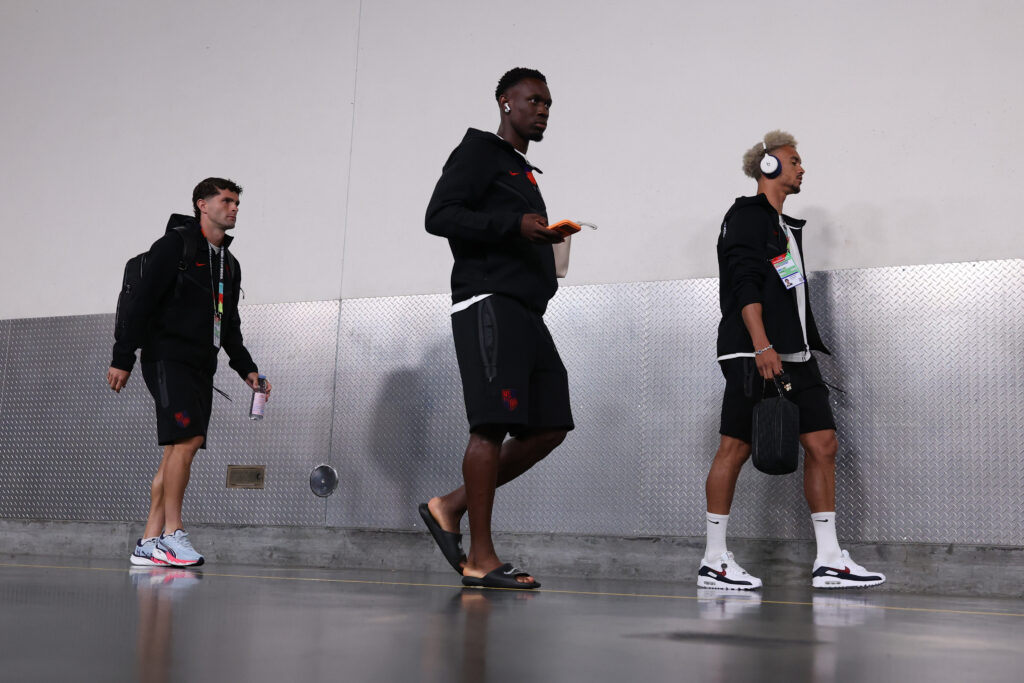
Balogun’s emergence has filled a sizable hole when the U.S. needed it most, as it hosts its first World Cup in three decades.
On this squad, he offers something different from Ricardo Pepi, who can play with his back to goal, and Wright, the 6-foot-3 runner who can overwhelm defenders with size and speed. Balogun has the speed and positional awareness to stretch opposing back lines and the two-footed finishing prowess to turn half-chances into goals.
He also gives the Americans the kind of defensive pressure they want from the front, chasing immediately after turnovers and helping them win the ball back before opponents can break out. And for a 5-foot-10 forward, he is stronger than he looks, able to absorb contact and maintain possession long enough for teammates to join the attack.
A striker, Lalas said, can also be “the first line of defense,” and Balogun gives the U.S. that, too. He forced Paraguay’s defenders into uncomfortable decisions, initiated pressure high up the field and made the kind of runs that do not always show up in a box score but often create the goals that do.
He said Balogun is “lethal in the box,” but is also “very, very good at finding runs.” His second goal against Paraguay — the left-footed blast — is Exhibit A.
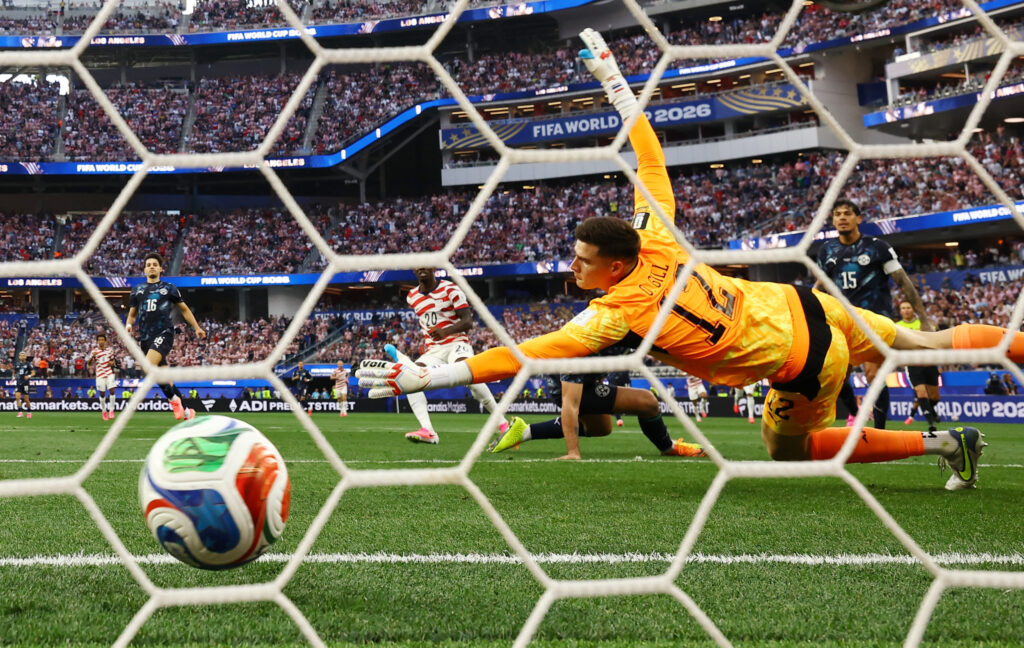
“He almost showed where that ball needed to be in the way that he took that run,” Lalas said. “And then the ability to cut it back and obviously to finish. So you saw the contrasts of what he does. It’s not just one-dimensional, which is a good thing.”
His teammates say they noticed more than the finishing. McKennie said Balogun is drawn to the net, but he’s also a striker willing to do the parts of the job that rarely make highlight reels.
“He’s getting stuck into tackles and putting his body on the line,” McKennie said. “I feel like in the past a lot of people maybe have not made him out to be a player like that. But I think he just showed everyone today that he’s willing to do the dirty work as well.”
Tyler Adams, the U.S. midfielder, described Balogun as “really unique” for a No. 9.
“He’s obviously not huge, but he’s extremely strong,” Adams said, “and I think a lot of center backs think they can kind of get in a grappling match with him. But he spins you and you’re not catching him after that.”
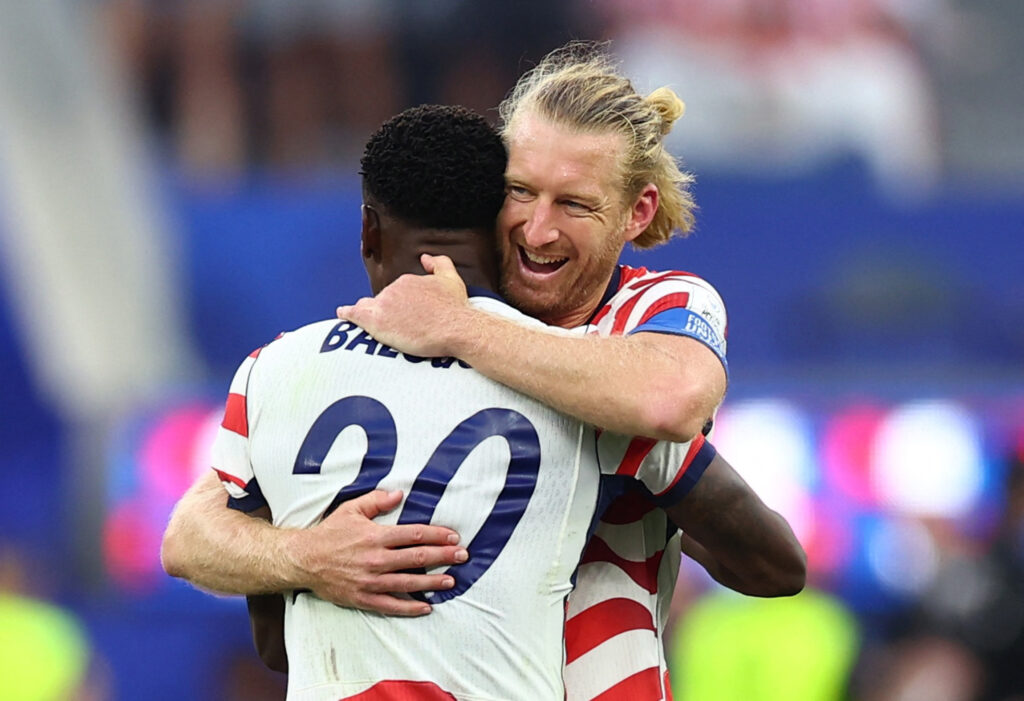
If the Paraguay game was repayment, the Australia game offers something different: confirmation.
Mauricio Pochettino was careful not to turn the opener into a coronation. The U.S. coach praised Balogun — but he also praised Pulisic, McKennie, Adams and nearly all of the starting 11 by name.
“It’s not only Balogun or different players who can perform,” Pochettino said. “I think the team was amazing.”
For years, the United States has had good players, promising players, hard-running players, versatile players. What it has not always had is a striker who could make the attack feel inevitable. Against Australia, the U.S. gets its next look at whether the missing piece is really in place.
“Obviously, the overarching goal of a striker is to score goals, right?” Lalas said. “You don’t need me to tell you that. But he does so much more.”
Read more A year after smashing a locker, Wyndham Clark finds himself leading at another US Open