

LONDON — Connolly’s, a pub in West London, is normally a favorite with Scottish football fans, but not when England is playing. Then, the Scots stay home to avoid any unpleasantries, like an England victory.
Read more MLB’s draft overhaul would limit choices for teen players — and be a boon for colleges
“You won’t find any Scottish fans here tonight,” owner Jason Connolly said during England’s World Cup match against Croatia, which was playing on screens around a barroom jammed with fans in red and white. “Not to see England. I mean, what if England won?”
The horror.
But wait. Did that one man in a neutral white shirt tucked into a corner allow himself a subtle smile when Croatian Martin Baturina tied the score with England at 36 minutes? Was that a discreet fist pump as the rest of pub emitted a collective groan?
It was. Tom Connor, born outside of Glasgow but working in London, agreed to talk. “Look, I don’t mind if England wins to an extent,” said Connor, an accountant. “But please God, not the whole tournament. There will be no living it down.”
The Scots did come out two nights later when Scotland played Morocco, converting Connolly’s into a sea of tartan and blue.
The World Cup is a complicated joy in the United Kingdom, especially when the country is overrepresented.
This year, both England and Scotland qualified, a quirk of ancient international football rules that allow Britain to send more than one team.
That gives most Scottish fans two teams to root for, but the second one is not England. It’s whomever the English are playing.
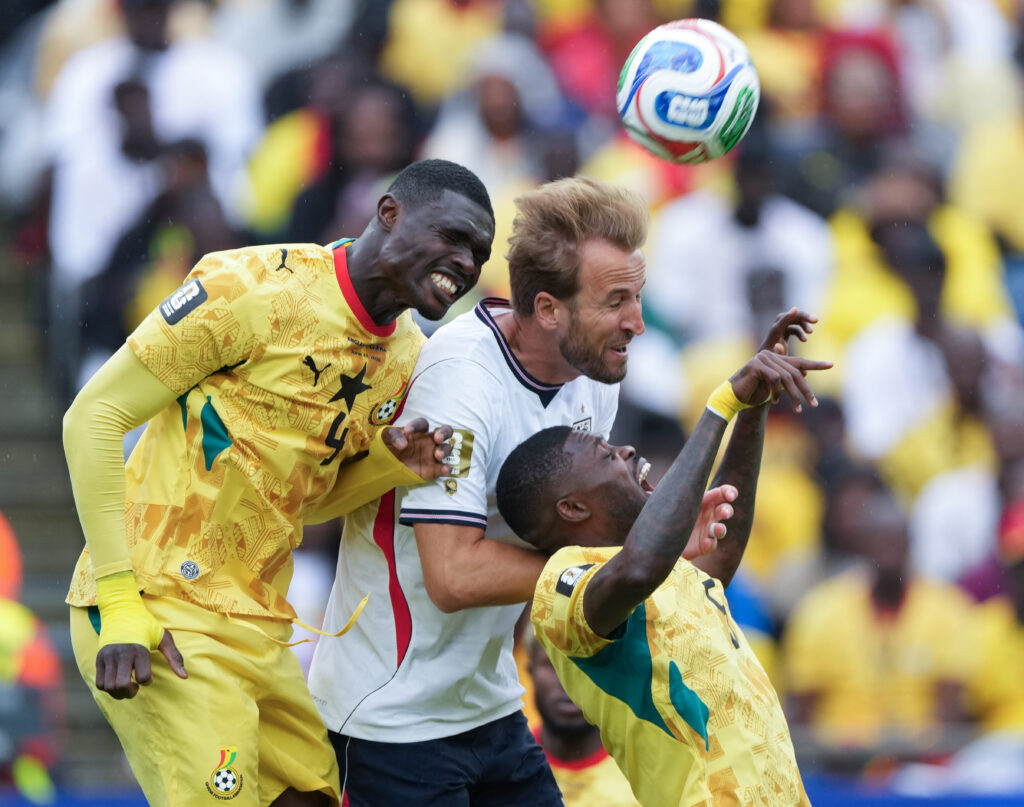
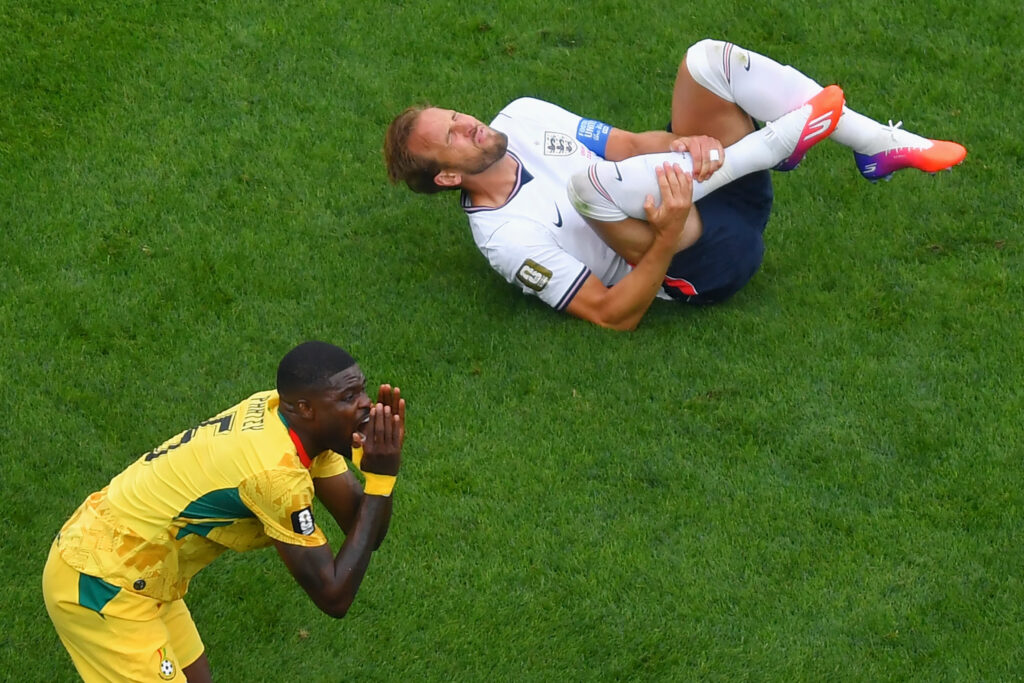
“Anyone but England” is a rallying cry for the Tartan Army whenever their dominant southern neighbors are on the field.
It’s a sports rivalry that goes way back to the first international football match in 1872, which was England vs. Scotland in Glasgow (a 0-0 tie, of course).
And it’s not just about sports, but politics, and history and national identity and the complex feelings many Scots have about being part of the U.K. — for now anyway — yet not being very British and absolutely not English, no matter how many Americans confuse their accents.
“We talk about the auld enemy, A-U-L-D,” said Connor, who has lived in London for decades and even has English friends and all that. Heck, his kids are basically English. But that doesn’t mean he is. “It’s us against them,” he said. “The minority against the majority.”
Some fans just tune it out whenever England is on the verge of winning. Others actively boo, although more lustily in Scotland’s pubs than England’s. Sales of England’s opponent’s jerseys are known to spike in Scotland in the run-up to big matches — Italy in the 2020 European Cup final, France in the 2022 World Cup quarters.
Winners of the accolade include Mikel Oyarzabal, whose last-minute goal in the 2024 European final finished the off the Three Lions.
Otherwise, Riddell pays as little attention to England as possible. He didn’t actually watch that Oyarzabal match — he went out to cut his hedges for two hours. And he said he had no plans to tune into any of England’s World Cup appearances this time.
“I don’t watch their matches, I don’t read about their matches, I really don’t think about them at all,” Riddell said on Tuesday, a couple of hours before England took the field against Ghana. “I brought my fishing gear. That’s what I’ll be doing.”
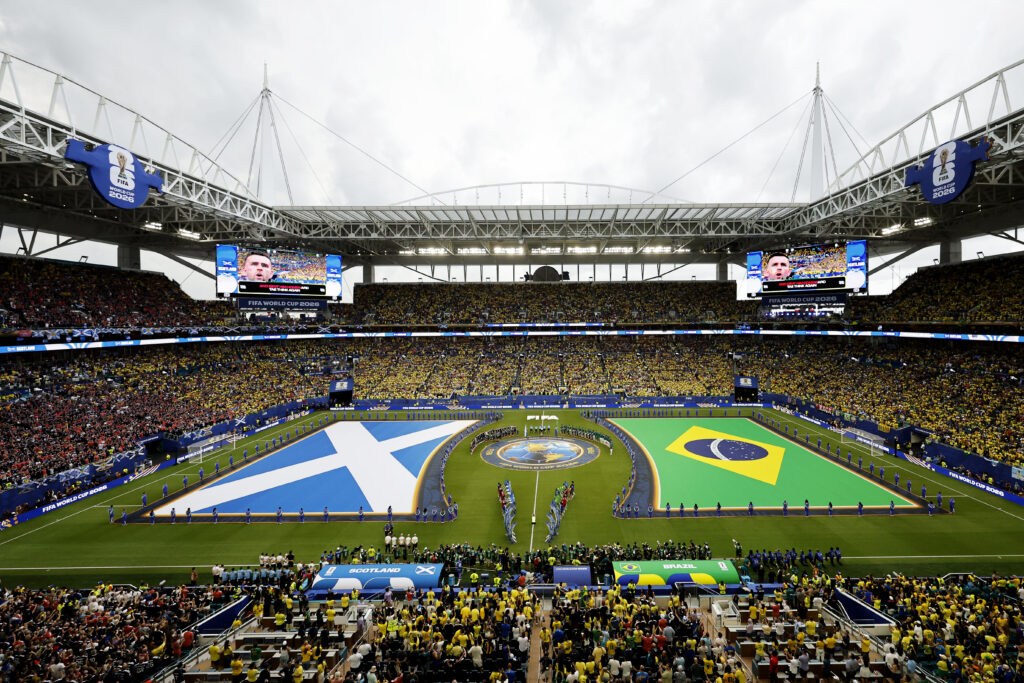
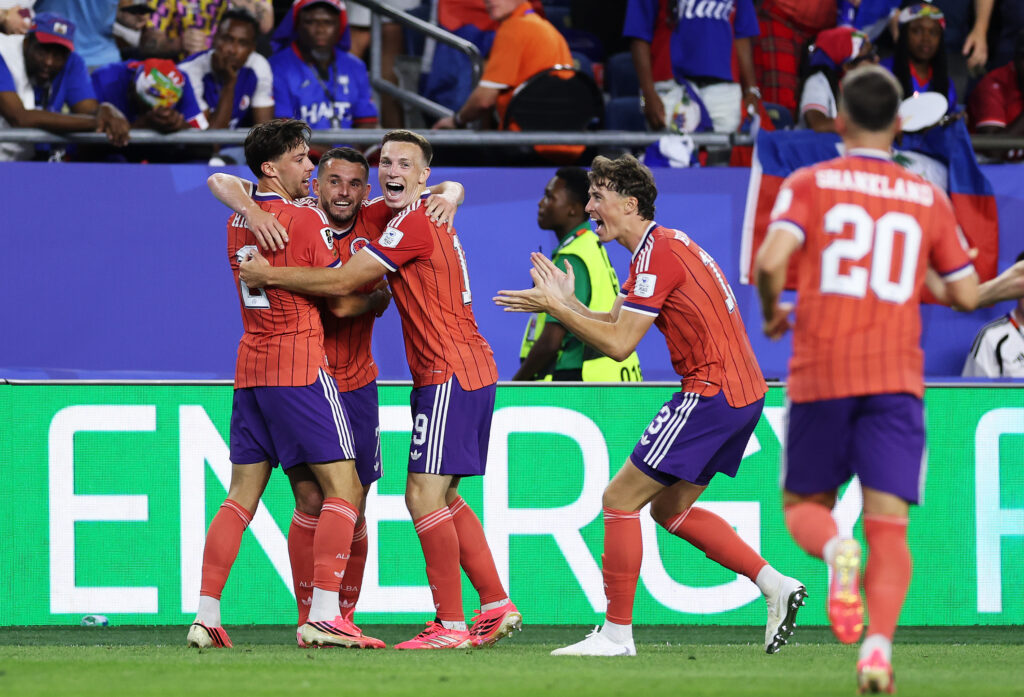
He was in Fort Lauderdale. After nine days in Boston for Scotland’s Group C matches — a win against Haiti and loss to Morocco, he and his mates relocated to Florida for their team’s finale against Brazil Wednesday, also a defeat.
Scotland still has a slim chance of reaching the 32-team knockout stage but that will depend on the outcomes in group stage matches to be played this weekend.
Like other Scotland fans, Riddell and his friends must watch and wait. They’ve had a blast but if Scotland is knocked out, they’ll be done no matter how that other U.K. team is doing.
“We’ll fly home the next day,” said Kevin Donnelly, the president of the London Scottish fan club and another never-miss supporter of Scotland matches. “It’s over for us then.”
Read more Paris police seek to halt Diamond League meet as historic heat wave strains services
This year marks Scotland’s first World Cup appearance since 1998, which was also the last time Scotland and England both made it. They are in opposite halves of the draw, meaning there is no possibility of playing each other unless both reach the later knockout rounds.
That would be something — they’ve never met in a World Cup match — but it’s not likely. England has been in the World Cup 17 times and won it once. Bookies are ranking them the third or fourth favorite to win again and will give you roughly 6-1 odds on that.
Scotland, with one-tenth the population, is making its ninth appearance and has never advanced beyond the first round. Their current odds to go all the way to this year’s final: 250-1.
If Scotland can’t outplay England, they can at least out-charm everyone else.
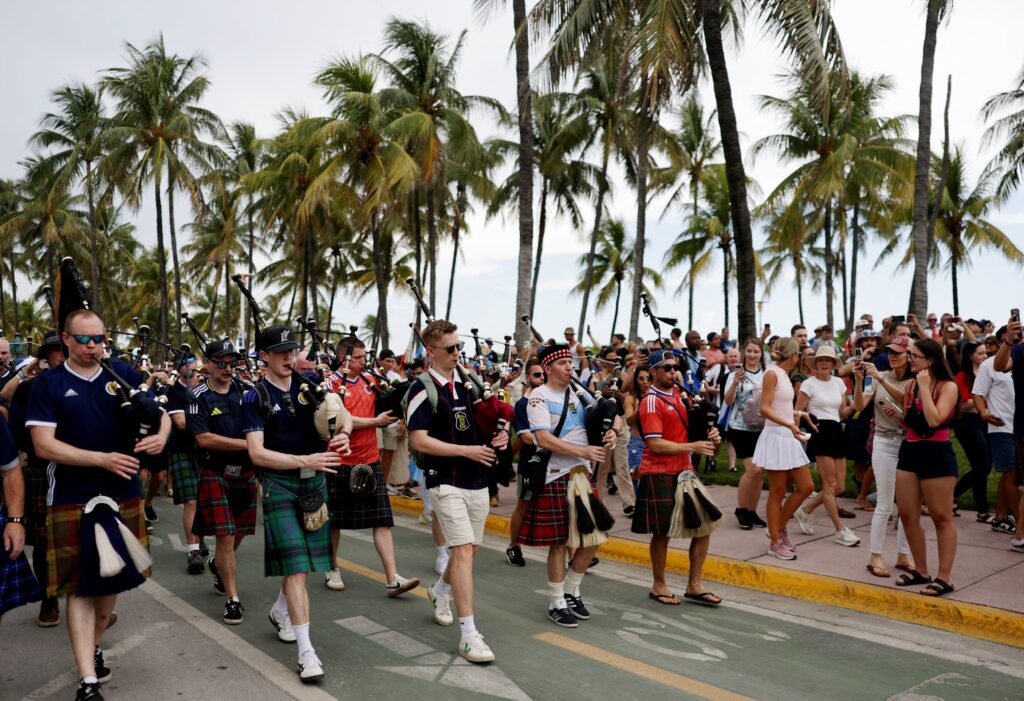
In Boston, the Tartan Army turned grumbling about FIFA’s disorganization into bagpipes at dawn, Fenway sing-alongs, and a Red Sox “Scottish Celebration” night — earning tearful goodbyes from bartenders.
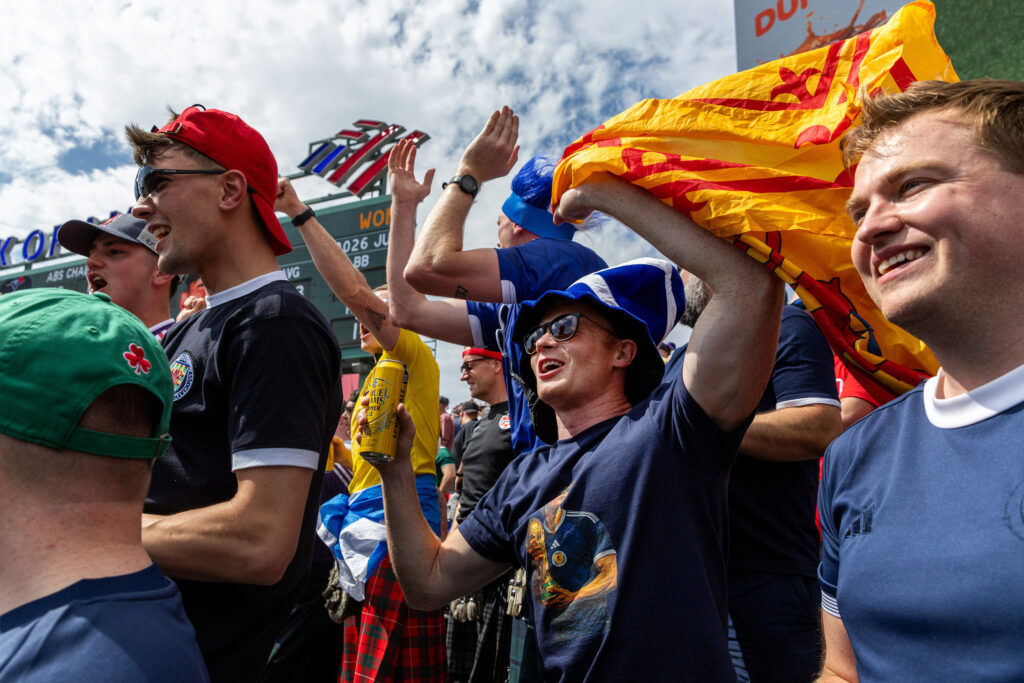
That’s not incidental, according to Stuart Whigham, a professor of the sociology and politics of sports at Oxford Brookes University. Whigham argues that Scottish fans built their carnival identity not just from ebullient personalities, but in contrast to England’s hooligan-tainted reputation.
“It’s a little bit how the Scottish fans like to enjoy their football,” said Whigham. “Because we don’t win on the pitch, we can win friends off it.”
That the two teams are both there at the same time in the first place is thanks to football’s infancy in the British Isles.
The modern rules were born in England (the American-preferred “soccer” is actually old British slang for “association football”). And by the time FIFA was formed in 1904, England, Scotland, Wales and Northern Ireland had already been playing one another for more than three decades.
The price of admission to global football was a permanent carve-out, baked directly into FIFA’s statutes: Each component nation of the U.K. keeps its own flag, its own seat, its own shot at glory.
Some other countries within countries can qualify, such as Curaçao, the Caribbean island, which is part of the Kingdom of the Netherlands. (The Netherlands is also in this year’s tournament.)
But other non-sovereign territories do not get quite the same deal, although some have asked, including the Basque Country of Spain. Some territories or regions, including Sardinia, Kashmir, Tibet (and the U.K.’s own Cornwall), play for their own championship in CONIFA, an alternate federation.
Nobody in Scotland wants a merger, even though folding into the bigger, richer English program would likely produce a stronger team, Whigham said. Better to lose repeatedly as Scots than win more often as part of something called Great Britain.
When London hosted the 2012 Olympics and Britain sought to organize a unified football squad, Wales joined but Scotland refused, not wanting to give FIFA any precedent for dissolving the separate associations.
“As Scots, we’d rather have the talent pool diluted and have a second- or third-rate Scottish team than see a British team with maybe one or two Scottish players,” Whigham said.
The professor, who has studied the currents of nationalism, separatism and pride at play when the two teams are on the pitch, was born and raised in Scotland and once a committed member of the anyone-but-England camp.
But his years as an objective academic in England, and his role as a husband and father to English people, have defused some of his intensity. This week, Whigham bought his son an England jersey for the first time, something he hesitated to admit for publication.
And he planned to sit beside the boy during England’s next match and be supportive. Outwardly, anyway.
“I’m trying to mature and grow and be a better father,” he said. “But if they lose, deep down in my heart, the joy of their failure will still come through.”
Read more Ex-national security adviser expected to plead guilty in classified files case