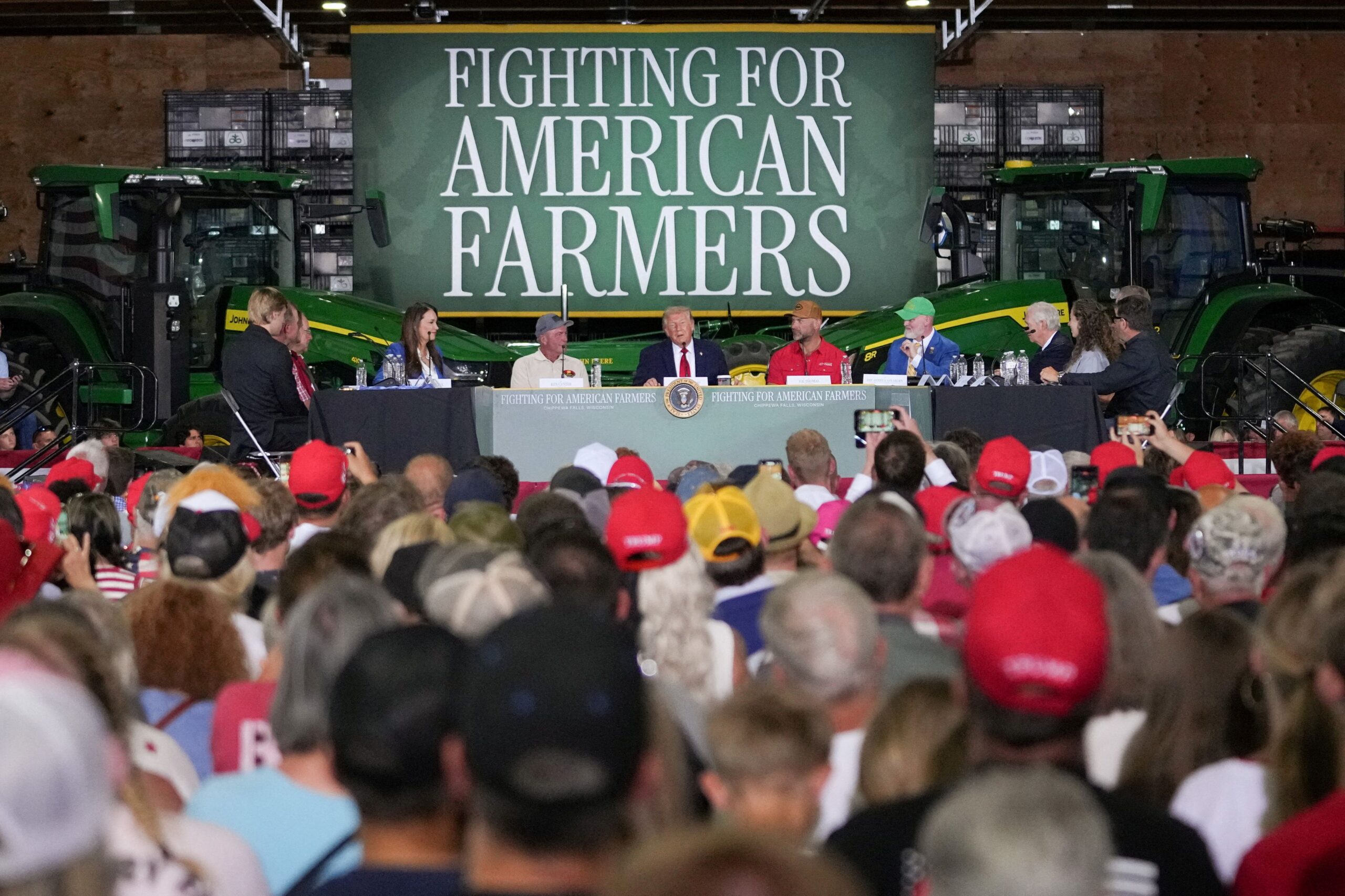
President Donald Trump was expected to announce the expansion of a guest-worker program to the dairy industry at a Wisconsin event. Instead, the news came out in a press release.
Read more Trump reveals new images of passport with his portrait to mark America’s 250th
The Trump administration opened a new legal pathway for migrant farm workers, yielding to an aggressive lobbying campaign by the dairy industry and upsetting immigration enforcement hard-liners.
The administration announced in an agency memo that it would allow dairy farms to bring in migrant labor, after shelving plans for a more public announcement by President Donald Trump during a trip to Wisconsin earlier this month, according to one lawmaker and two trade groups, who spoke on the condition of anonymity because they weren’t authorized to disclose internal deliberations. The pulled-back announcement hasn’t been previously reported.
The widening of the H-2A guest-worker program to include the dairy industry followed a years-long push on both the Biden and Trump administrations by trade groups that represent the country’s biggest dairy cooperatives, including Dairy Farmers of America, Land O’Lakes and Tillamook, according to interviews with six business groups.
“We certainly see this as a very good first step and also … an acknowledgment from the administration that dairy doesn’t have access to a viable guest-worker program,” said Trey Forsyth, a lobbyist for the National Milk Producers Federation, the country’s largest dairy farmer trade group. “We’re just excited to see them doing what they can.”
But the move has pitted farmers against immigration hard-liners aligned with the White House homeland security adviser, Stephen Miller. They argue the policy will expand the foreign-born workforce while cutting jobs and wages for American workers.
“There’s no question that American workers will be pushed out of the dairy industry because H-2As will be cheaper,” said Rosemary Jenks, a founder of the Immigration Accountability Project, which advocates for immigration restrictions and is a member of the Mass Deportation Coalition, a group of right-wing and MAGA-aligned organizations.
The Trump administration is trying to address mounting dissatisfaction among farmers fed up with soaring fuel prices, tariffs and fertilizer inflation. On Thursday night, Trump hosted farmers at the Rose Garden Club at the White House to shore up support with a key constituency.
“The White House recognizes that there are real problems in the agricultural community with the agenda they have had,” said Marc Short, a Republican strategist who was chief of staff to former vice president Mike Pence. “They’re working overtime to try to mend the fences that I think, unfortunately, have been broken in the last 20 months.”
Anna Kelly, a White House spokeswoman, defended the president’s decision.
“President Trump listens to a variety of opinions on any given issue, but ultimately decides based on what he feels is best for the country,” she said in a statement. “This action merely clarifies laws currently on the books and ensures dairy workers receive [the] same treatment as other workers in the agriculture industry. While the President continues to do right by our farmers, he will also continue enforcing our immigration laws and deporting criminal illegal aliens, just as he was elected to do.”
Dairy farms have never before been eligible for the agricultural guest-worker program, which began in 1987.
The program was intended to allow migrant labor to enter the United States for just a few months to help harvest seasonal crops without displacing U.S. workers. Industries considered year-round such as dairy farms, livestock ranches and commercial nurseries have traditionally been excluded from the program.
“The law that Congress passed very clearly says that H- 2A workers have to be temporary or seasonal,” said Jenks. “Last I checked, there are no dairy animals that take breaks.”
But dairy officials argue that they have been unfairly excluded from a program that the rest of the agricultural industry relies on. In fiscal year 2025, some 398,000 H-2A visas were approved, up about 45 percent compared with five years earlier, according to Labor Department data.
In recent months, officials from the White House and the departments of Labor, State, Agriculture and Homeland Security have been open to conversations about the workforce concerns of powerful agriculture trade groups, several business leaders said.
Read more Parents of former NFL player Doug Martin allege excessive police force led to his wrongful death
At the same time, some MAGA candidates have been losing in agriculture-heavy states. Last month, five hard-right Idaho lawmakers lost their Republican primary bids to the state legislature, due in part to their embrace of tough immigration enforcement, which some farmers see as a threat to their workforce. And in Iowa, Trump’s pick for governor, Rep. Randy Feenstra, lost to farmer and business leader Zach Lahn in the Republican primary.
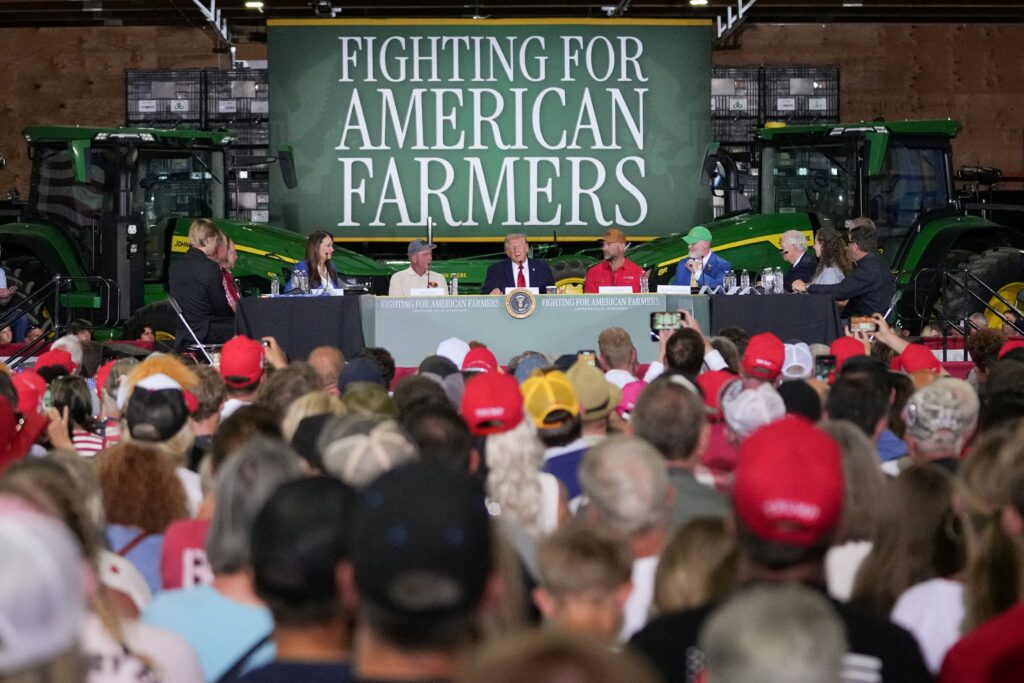
Trump was expected to announce the expansion of the guest-worker visa program to the dairy industry earlier this month during his visit to a farm in Chippewa Falls, Wisconsin with Rep. Derrick Van Orden (R), according to trade groups and Van Orden.
But Trump didn’t mention it. Instead, the administration rolled out the policy with little fanfare in a U.S. Citizenship and Immigration Services memo and a press release by the U.S. Department of Agriculture.
One business leader who had been in conversations with the administration told The Washington Post they thought that Trump feared a public announcement would upset his MAGA base.
“They were worried about the pushback from MAGA, so they ended up just talking about tariffs and other stuff,” said the business leader, who spoke on the condition of anonymity to reveal private conversations.
However, Van Orden, a Trump ally who also took credit for persuading the White House to expand the H-2A program, said the policy announcement was delayed because it wasn’t ready in time for Trump’s visit to Wisconsin.
“It just took longer than they had anticipated, because the president flew out to my district, yes, and did an event for our farmers, and just the T’s weren’t crossed and I’s weren’t dotted, and we got to get things like that right,” said Van Orden, who called the change a “feather in my cap.”
The White House did not respond to The Post’s question about why the announcement was delayed until after the Wisconsin trip.
Van Orden acknowledged that some voters oppose opening the country to more migrant laborers.
“People think, oh my gosh, they’re taking American jobs. That’s not the case,” Van Orden said. “Remember, I live, eat and sleep in a dairy barn, and so when my farmers across the board are saying they can’t get enough labor, that’s not anecdotal. It is cost prohibitive to start a dairy now.”
Union advocates decried the program’s expansion. United Farm Workers President Teresa Romero said the “Trump administration seems to want every American job in agriculture to be replaced by vulnerable and often-exploited foreign guest workers.”
Dairy industry leaders, though grateful for the change, worry that policy is vulnerable to a legal challenge, because most dairy jobs are not seasonal. They are hopeful that Congress will introduce legislation to address that.
Rep. Glenn Thompson (R-Pennsylvania), chairman of the House Agriculture Committee, who is a descendant of dairy farmers, is expected to introduce bipartisan legislation in coming days that would dramatically expand the program.
Read more Thunder and Isaiah Hartenstein agree to 3-year, $75 million deal, AP source says