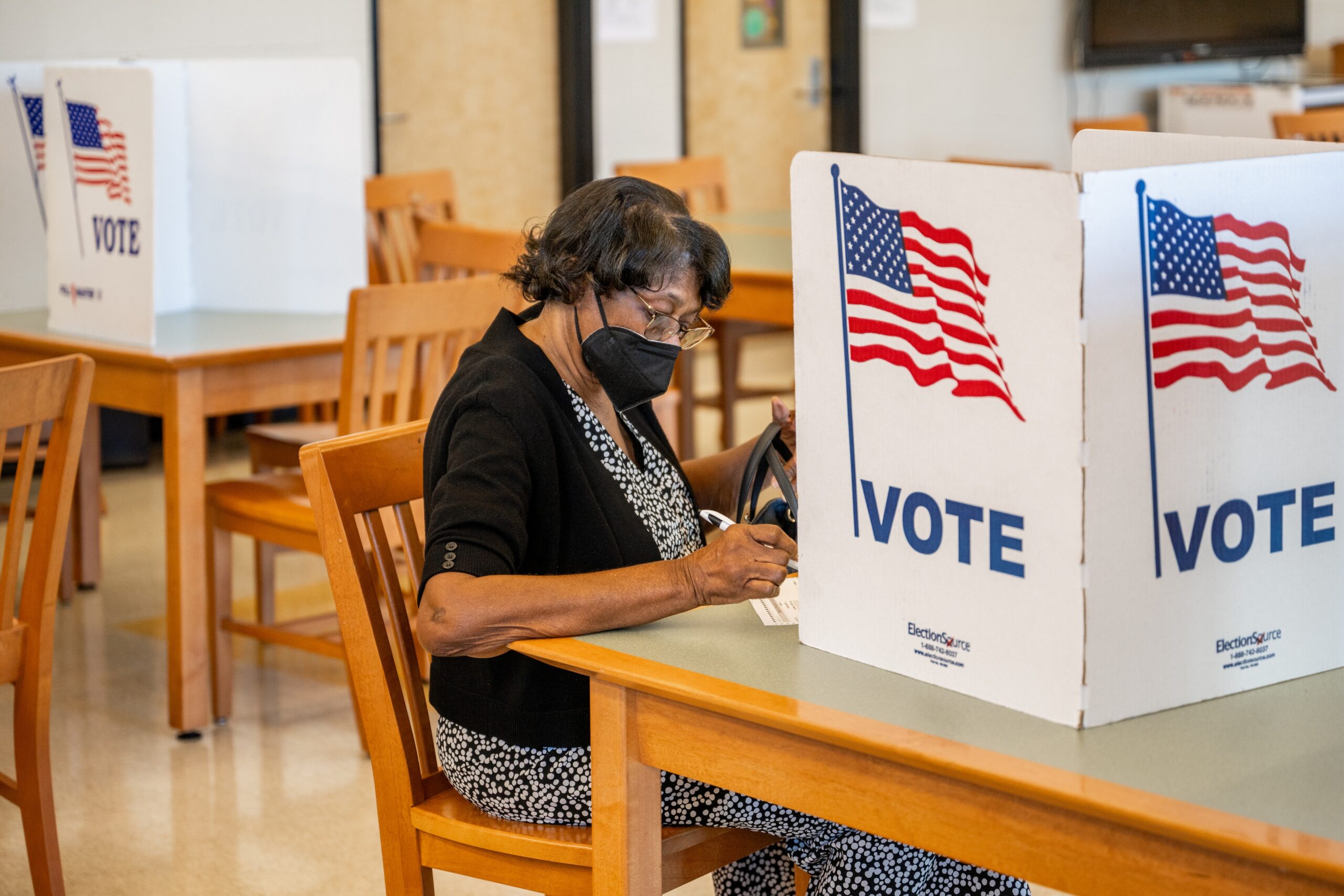
A decision against such ballots could have upended election procedures in states across the country ahead of the midterm elections.
Read more Supreme Court lets stand $5 million civil verdict against Trump in Carroll case
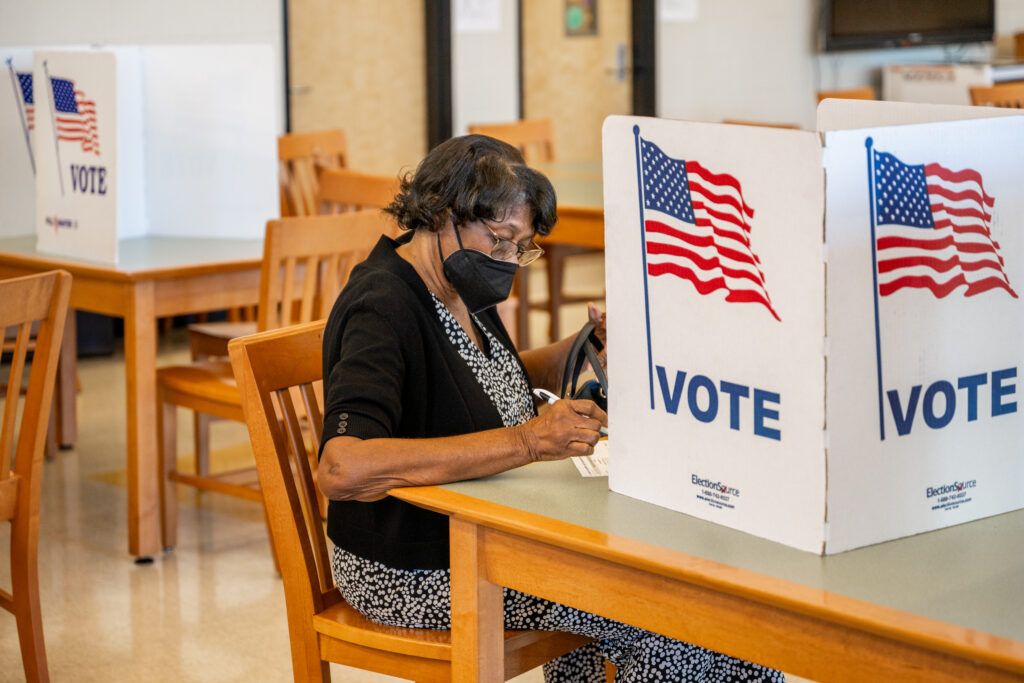
The Supreme Court on Monday upheld a Mississippi law that allows officials to tally mail-in ballots postmarked by Election Day that arrive later, a decision that keeps voting procedures in place in several states as the midterm elections loom.
In an 5-4 ruling, the justices turned aside a challenge by Republicans and Libertarians, who argued federal law preempts a Mississippi statute that allows the counting of such ballots that arrive up to five days after polls close.
The decision could make less likely similar legal challenges in 14 states that allow the counting of ballots that arrive days or weeks after polls close. Most states require mail-in ballots to be received by Election Day.
President Donald Trump and some Republican allies have falsely argued that voter fraud is rampant in mail-in balloting. Trump partly blamed his loss in the 2020 presidential election on mail-in votes and unsuccessfully called on states to stop tallying them during the contest.
Republicans in a number of states have launched legal challenges to mail-in voting, which has grown in popularity since the onset of the coronavirus pandemic. One study found about 1 in 3 voters voted by mail in 2024, but the practice is more widespread in Democratic-leaning states.
Conservatives in Congress also have introduced legislation to limit mail-in voting.
In March, Trump issued an executive order telling the Postal Service to send ballots only to voters who appear on lists of citizens created by states in conjunction with the federal government, but opponents have questioned the order’s legality and are challenging it in court.
Despite his criticism of mail-in voting, Trump voted by mail in a special election in Florida earlier this year.
The Republican National Committee, the Mississippi Republican Party, a state voter and a county election commissioner sued Mississippi in 2024, claiming it was illegal to count mail-in ballots that arrive after polls close because federal law sets elections for a specific day. The Libertarian Party later filed a similar suit.
Read more New Zealand clinches test series win against England to spoil Ben Stokes farewell
The cases were consolidated by a federal judge, who allowed groups of veterans and retirees to intervene in the suit on behalf of Mississippi. The judge dismissed the case, but the U.S. Court of Appeals for the 5th Circuit reversed that ruling. Mississippi then appealed to the Supreme Court.
During arguments in March, Paul D. Clement, an attorney for the conservatives, told the justices that casting and counting ballots at the same time has long been “intertwined.” He said allowing mail-in ballots to be counted after Election Day could increase fraud and undermine faith in elections, particularly if the winning candidate was not the one ahead when polls closed.
“The losers are going to doubt the result, full stop,” Clement said. “That is bad for our system.”
Mississippi Solicitor General Scott G. Stewart countered that existing law required only that voters fill out their ballots by Election Day. He said mail-in voting has a long history in the United States, pointing to field voting that occurred during the Civil War.
“States have allowed it for over a century, and Congress has respected it,” Stewart said.
This term has been an active one for the justices on voting and election issues. In January, the court allowed a Republican congressman from Illinois to challenge the state’s mail-in balloting laws, finding candidates have inherent standing to sue over election rules.
The case brought by Rep. Mike Bost also argues that federal law prohibits ballots from being counted after Election Day. The case was sent back to the lower courts.
The justices also severely limited a key section of the Voting Rights Act, which has cleared the way for a number of Republican-controlled states in the South to carve up districts held mostly by Black Democrats ahead of the midterm elections. Hundreds of other minority officeholders could be redistricted out of their seats in state and local boards.
The court has yet to rule in a case challenging limits on spending coordinated between political parties and candidates that is being pushed by the Republican Party. Striking down the spending limits could give Republicans a big money boost in November.
Read more France star Antoine Dupont will miss opening rounds of the inaugural Nations Championship
This is a developing story. It will be updated.