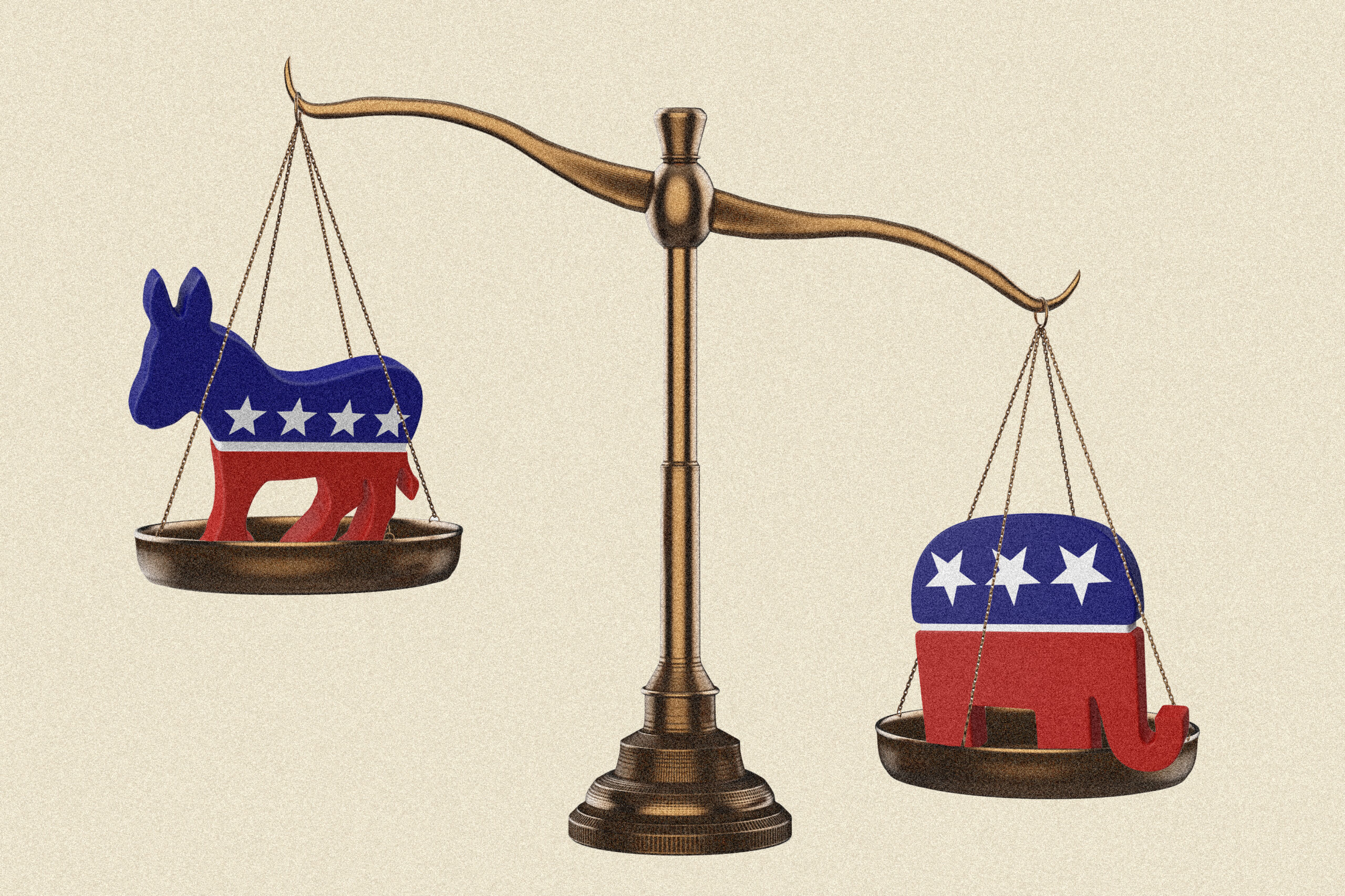
The timing and speed of the justices’ moves are all but unprecedented in recent years, legal experts said. Republicans are expected to reap the most rewards.
Read more Why designers loved the 1986 World Cup logo and can’t stand this year’s
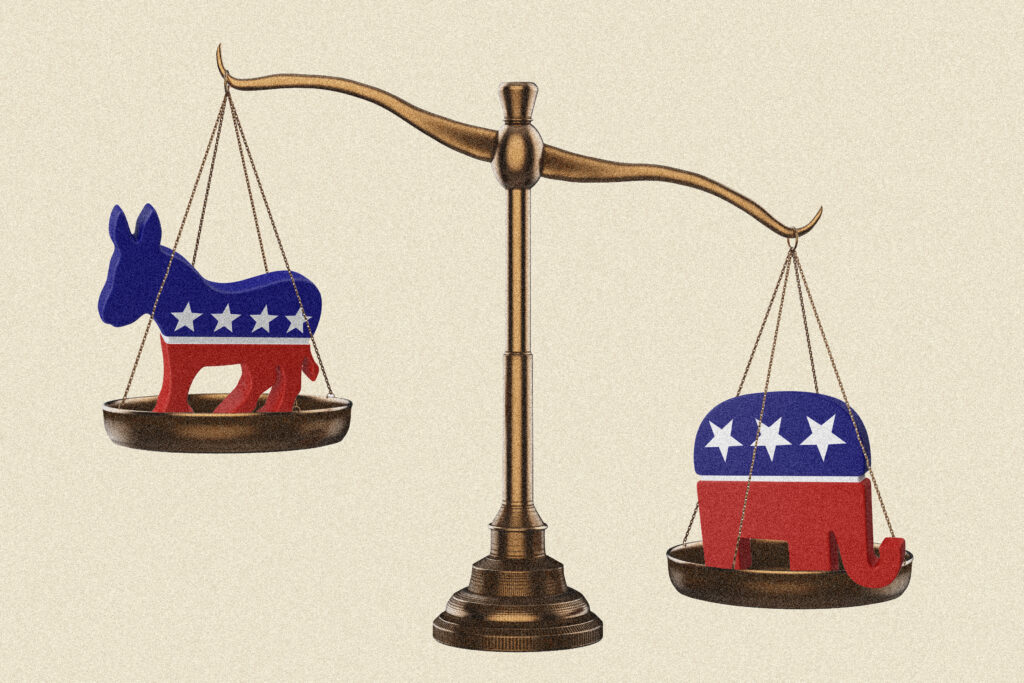
The Supreme Court dramatically reshaped elections in recent months, sharply limiting a law that has been a cornerstone of minority voter empowerment, allowing states to gerrymander maps and loosening campaign finance regulations.
The conservative majority says the series of decisions helps correct an election system that has run afoul of the Constitution. In rulings, they cite ideas they have long championed — undoing programs that advantage minorities, allowing partisan redistricting and eliminating restrictions that impinge on free speech rights.
Most of the rulings, which have rolled out as the country heads toward pivotal midterm elections, benefit Republicans. That’s led critics — starting with some of the court’s liberal justices — to complain the court’s conservative majority has gone beyond enunciating broad legal principles and put a thumb on the scale in upcoming races.
What is clear is that the Supreme Court has tilted this fall’s electoral landscape toward Republicans as they struggle with voter discontent.
In one of the most consequential rulings of the term, the conservative majority in April significantly weakened the Voting Rights Act’s last pillar, which required states to draw congressional districts to ensure the voting power of minorities under certain circumstances. In its opinion, the court said the protection was no longer needed by a country that has made “great strides in ending entrenched racial discrimination.” That decision touched off a push by Republican-controlled states to eliminate districts mostly held by Black Democrats across the South.
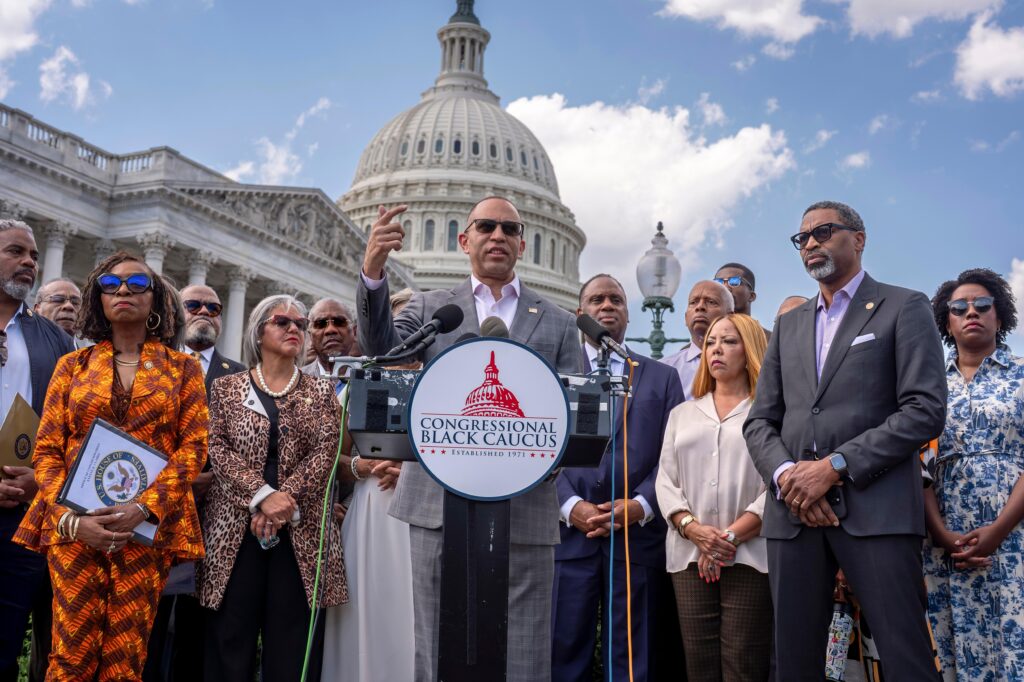
Other rulings cleared the way for specific voting maps preferred by Republicans. And one loosened campaign finance limits — a change that brings the most immediate boost to Republican candidates.
Democrats notched few outright victories, but they avoided some outcomes that they would have viewed as particularly disruptive. In one case, the court allowed states to continue to tally mail-in ballots even if they arrive after Election Day. Mail voting in recent years has become more popular among Democrats than Republicans.
Legal experts said the justices’ intervention amid an election cycle and the pace at which the court is moving to implement changes that largely benefit one party is all but unprecedented in recent years.
Richard L. Hasen, an expert in election law and political science at UCLA, said Chief Justice John G. Roberts Jr., who is known for his slow, methodical approach, lately appears to be a justice “in a rush.”
“The court has been moving toward weakening voting rights, freeing up campaign money and letting partisan actors run loose — that’s not a new trend,” Hasen said. “But the speed with which things are happening is much faster.”
The decisions represent a dramatic coda to more than a decade of work by the justices, who have rewritten election law under Roberts in ways that one analysis found have pushed it to the right of any other court over the past 70 years.
Republicans face an uphill battle in November’s contests because the president’s party historically loses seats in the midterms, and Trump’s low approval rating, the high price of gas and the unpopular conflict in Iran have been a drag on GOP candidates.
Democrats have a shot at taking the House and Senate, but the Supreme Court’s moves have erected a higher hurdle. Today, Republicans control 219 seats to Democrats’ 212 in the House, while Republicans enjoy a more solid advantage in the Senate, with 53 seats to 47.
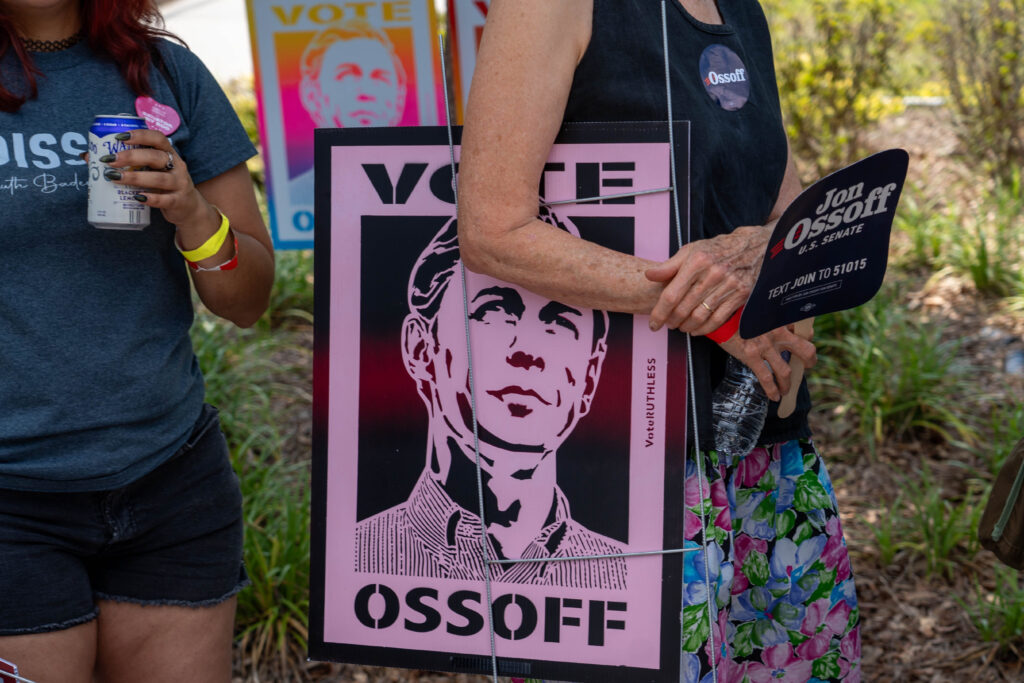
Earlier this year, the nonpartisan Cook Political Report had rated 217 House seats out of 435 as leaning Democratic, and projected Democrats needed to win only one of the tossups in November to capture the House.
Cook recalibrated after the Supreme Court’s landmark Voting Rights Act ruling sparked the push to redistrict. It now lists 206 House seats as leaning toward Democrats, meaning Democrats need to win at least 12 of 18 tossups to gain control.
“The fundamental question for 2026 is whether or not the structural firewall that Republicans have built up around their majority is strong enough to withstand what is shaping up to be a punishing political environment,” said Amy Walter, the publisher and editor of Cook.
Democrats have issued bitter recriminations over the rulings as polling shows many in their base believe the court’s rulings are motivated by politics.
“This is the most partisan Supreme Court in the history of the nation,” Sen. Ruben Gallego (D-Arizona) recently posted on X.
Roberts publicly addressed such criticisms at an appearance in early May, denying politics was a factor in the court’s rulings.
“I think at a very basic level, people think we’re making policy decisions. … We’re saying we think this is what things should be as opposed to this is what the law provides,” Roberts said. “I think they view us as truly political actors, which I don’t think is an accurate understanding of what we do.”
In its latest ruling, the court struck down limits on political parties spending money in coordination with candidates, finding they violated parties’ constitutional free-speech rights. Justice Brett M. Kavanaugh, writing for the majority, said the ruling ”treats all political parties equally” and will allow them to “participate more freely and compete more fully in the political process.”
It’s unclear which party will benefit long term, but there’s one clear winner for the midterms: the GOP.
Republican party committees have amassed a more than $100 million advantage over their Democratic counterparts, some of whom have struggled to raise money.
Several of the high court’s other rulings have centered around how officials split their states into voting districts, creating maps that can give either political party an edge.
In one of its earlier cases of the term, the high court greenlit Texas Republicans’ unusual move to redraw the state’s congressional maps between censuses, an effort that touched off a nationwide redistricting war. The decision could net the GOP up to five additional congressional seats in Texas alone.
The justices later blocked New York from redrawing the district of Republican Rep. Nicole Malliotakis. That reversed the mandate of a state court, which had ordered officials to include more Black and Latino voters, a change that could have likely flipped the seat to Democrats.
And in May, the court rejected a longshot emergency bid by Virginia Democrats to revive a gerrymandered voting map that would have allowed the party to pick up as many as four seats in the House in November.
In its most sweeping decision of the term related to voting, the high court pared back a key part of the Voting Rights Act known as Section 2 that required states to draw maps that help minority communities elect candidates of their choice under certain circumstances. In the process, the court struck down a second Black-majority district in Louisiana, saying it was an unconstitutional racial gerrymander.
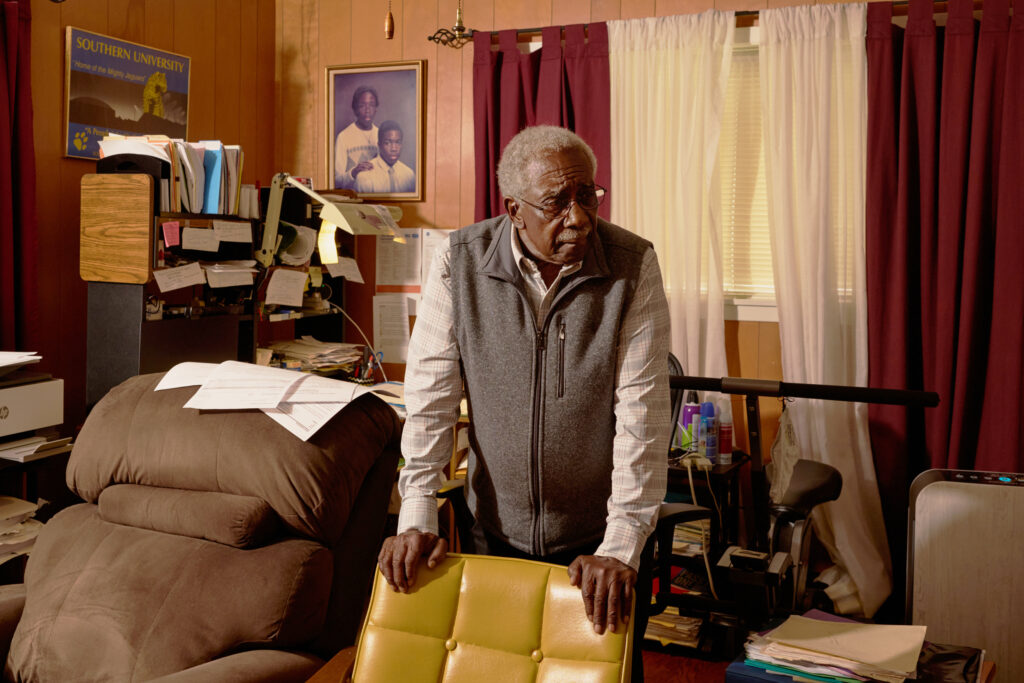
With the help of the ruling, Republicans have drawn 16 districts with more favorable lines since last year, compared to six for Democrats.
In the wake of the VRA ruling, a complicated fight over Alabama’s congressional map has raised questions about what room remains for minority communities to pursue claims that discriminatory redistricting violates the Constitution, possibly signaling even greater gains for Republicans.
In June, the high court allowed Alabama to revert to a map with one Black-majority congressional district instead of two, a move that will likely flip a Democrat-controlled seat to the GOP.
The decision came over a lower court finding that Alabama intentionally discriminated against the state’s Black voters in creating the map and then defied a court order to remedy the racial bias. In its ruling, the high court’s majority rejected that finding, citing “our colorblind Constitution.”
The ruling was notable because the conservative majority held its Voting Rights Act ruling did not disturb the Constitution’s protections for minorities from “present-day intentional racial discrimination regarding voting.”
But voting rights and minority advocates said the Alabama ruling indicates that protection might be a dead letter. Deuel Ross, director of litigation at the Legal Defense Fund, which advocates for racial justice, said in a statement he worries minority groups will lose political power.
Read more Nationals get little at the start in 7-1 loss to the Pirates
“The Supreme Court’s decision gives cover to Alabama and others to deliberately and openly discriminate against Black voters without fear of any consequence,” Ross said.
Not every case went Republicans’ way. The Supreme Court dealt the GOP a setback when it upheld a Mississippi law that allows mail-in ballots to arrive up to five days after polls close. The ruling could have affected 13 other states with similar laws. Voting by mail is particularly popular with Democrats.
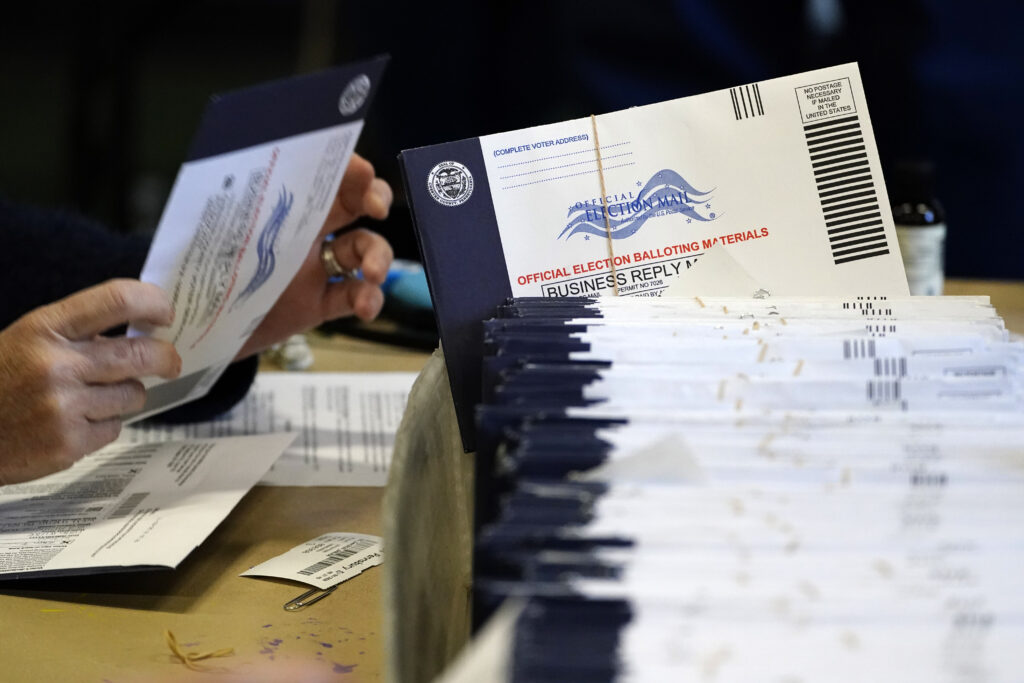
Nevada Secretary of State Cisco Aguilar (D), who oversees elections in his battleground state, praised the Watson v. Republican National Committee case on mail ballots, but said the decision meant less in light of other rulings this term.
“The fact that they destroyed the Voting Rights Act is detrimental to the fundamental foundation of our democracy,” he said. “Yes, they may have done something with Watson, but in the totality of it, the Supreme Court has become politically active in the overall administration of our election.”
The clearest win for Democrats came when the court allowed California to gerrymander its voting maps to give Democrats up to five additional House seats. The California push came in response to Texas’s move to redraw its maps.
The court’s liberals and some legal scholars have not just taken issue with the substance of the court’s decisions, but how the justices have arrived at them.
The Supreme Court has regularly invoked the Purcell principle, a doctrine that holds federal courts should not change election law too close to elections because it can create confusion among voters.
In the Texas redistricting case in December, with primary elections a few months away, the conservative majority referenced Purcell in allowing the use of redrawn maps favoring Republicans. A lower court had blocked the maps.
“The District Court improperly inserted itself into an active primary campaign, causing much confusion and upsetting the delicate federal-state balance in elections,” the majority wrote of the primary scheduled for March.
But in April during an active primary, the conservative majority struck down Louisiana’s second majority-Black congressional district in the Voting Rights Act decision. The seat is held by a Democrat.
The decision came after thousands of voters had already returned mail-in ballots in the contest. The Supreme Court then expedited the ruling, paving the way for Louisiana Republicans to quickly redraw the district to favor Republicans.
Liberal Justice Ketanji Brown Jackson issued a sharp rebuke, saying the conservative majority was willing to employ the Purcell principle in the Texas case when it favored Republicans, but ignore it in Louisiana when it did not.
“The Court unshackles itself from both constraints today and dives into the fray,” Jackson wrote in a dissent. “And just like that, those principles give way to power.”
Conservative Justice Samuel A. Alito Jr. shot back in a concurrence that the claim the court was acting in a partisan manner was “a groundless and utterly irresponsible charge” and it needed to act to prevent an election in Louisiana from going forward with an unconstitutional map.
The court’s liberals have also accused conservatives of misusing Purcell in the Alabama and New York redistricting cases.
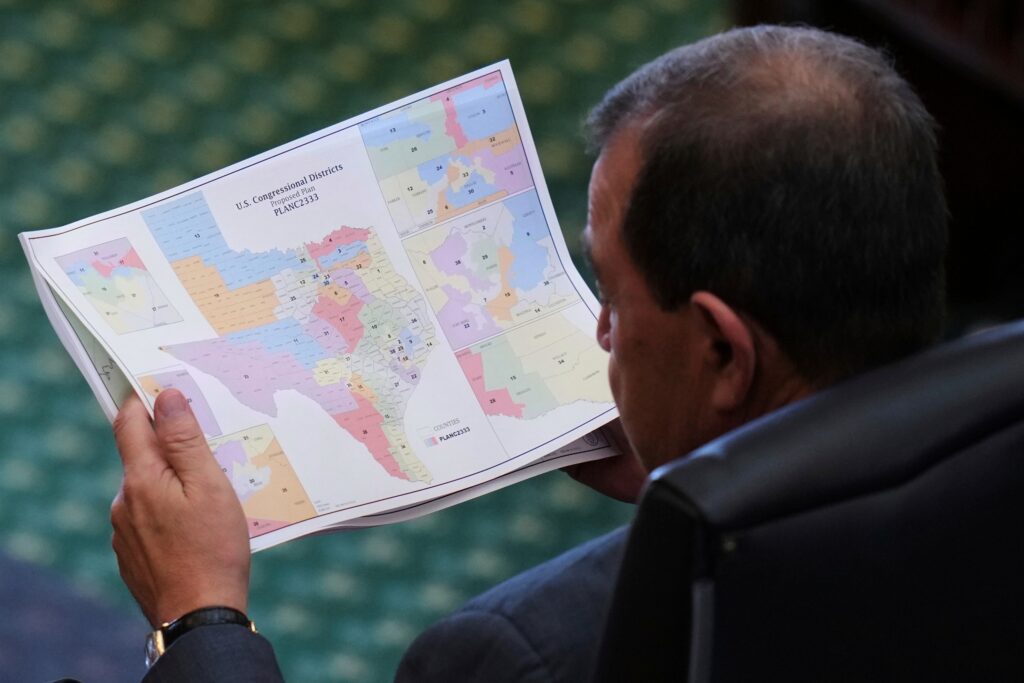
Legal scholars differ over whether the court was employing Purcell in an even-handed fashion. Edward B. Foley, who specializes in election law at Ohio State University, said the rulings were hard to square.
“They may think they are being principled and consistent, but it sure doesn’t look that way,” he said of the court’s use of Purcell. “This principle seems to favor Republican partisan results.”
Derek Muller, a Notre Dame law professor who specializes in election law, said he saw a legal logic to the court’s moves.
“The Supreme Court is stepping back from cases in Alabama and Louisiana. It’s not issuing a rule to alter the rules of the election,” Muller said. “It’s allowing the legislatures to issue the rules they want.”
The way the court handled the New York redistricting case also became an issue of contention. Liberal Justice Sonia Sotomayor accused the conservative majority of carrying out an “unprecedented” power grab by ruling before a state Supreme Court had a chance to weigh in.
Sotomayor said the move trampled precedent against federal courts intervening in state court cases while litigation is still ongoing.
“The Court’s 101-word unexplained order can be summarized in just 7: ‘Rules for thee, but not for me,’” Sotomayor wrote.
Alito wrote in a concurring opinion that the intervention was necessary because New York courts approved a map that “blatantly discriminates on the basis of race.”
Justin Riemer, former chief counsel at the Republican National Committee, rejected the notion the court is making partisan rulings, saying it had issued rulings favoring Democrats in recent years.
He highlighted decisions dismissing a challenge to Trump’s 2020 election loss and rejecting arguments put forward by Republicans in 2023 that state legislatures could set election rules without interference from state courts.
“I really don’t think that they’re in the tank one way or the other,” said Riemer, president of the group Restoring Integrity and Trust in Elections. “I think they have a judicial philosophy that they apply … that works for the types of claims we bring.”
The redistricting and campaign finance decisions may provide immediate benefits to Republicans, but they may not last for long, said New York University law professor Richard Pildes.
Democrats will have opportunities to redraw congressional districts in states they control after the midterms and political parties typically adapt to campaign finance rulings to keep up with their opponents, he said.
Democratic anger over the decisions is intense, and it could fuel efforts to ban mid-decade redistricting, limit partisan gerrymandering and pack the Supreme Court with more justices, he said. One Democratic congressman went so far as to introduce articles of impeachment against Roberts.
“This is a real sort of avalanche that’s kind of been unleashed,” Pildes said.
Legal experts said the court’s decisions this term are of a piece with its rulings on voting rights and campaign finance over the last decade-and-a-half.
Those include the 2010 Citizens United decision that loosened campaign finance restrictions on corporations and unions, the 2013 Shelby County ruling that knocked down a section of the Voting Rights Act that required states with a history of racial discrimination to get federal pre-clearance to change voting laws, and the 2019 Rucho decision that found federal courts could not hear partisan gerrymandering claims.
Guy-Uriel Emmanuel Charles, a Harvard law professor who focuses on political power and race, said regardless of which party benefits, this term’s cases could supercharge the era’s bare-knuckle politics.
“This Court is sending a clear message: It will not impose many limits,” Charles wrote in an email. “The Court is incentivizing political parties to push the boundaries as far as possible to gain an advantage.”
Read more Babar Azam replaces Shan Masood as Pakistan test captain