Republicans’ sprawling One Big Beautiful Bill Act was meant to be their party’s crowning legislative achievement heading into the 2026 midterms. But Democrats are bringing up the legislation much more frequently on the campaign trail, saying its constrictions on the social safety net make it a liability for the GOP despite the tax cuts it delivered.
Read more JuJu Watkins back on the court after ACL recovery as USC begins summer camp
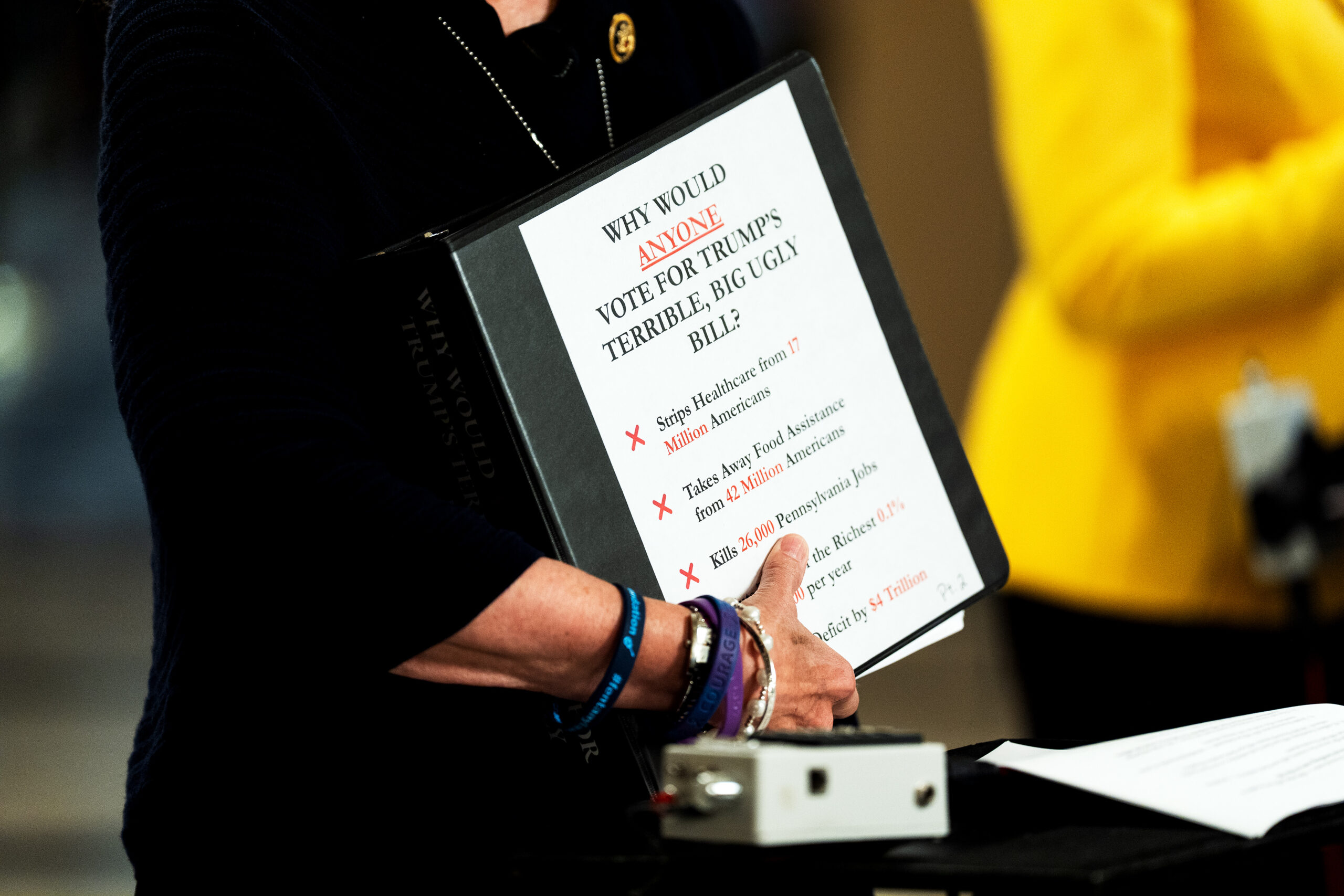
Congressional Democrats talk about the law twice as often as Republicans, according to a Washington Post analysis of public statements and social media posts. The legislation has emerged as a central talking point for the Democratic Party, with candidates deriding it as the “Big Ugly Bill” and tying the changes it brought to Medicaid and food assistance programs to voters’ anxieties about the cost of living.
In California, for instance, Rep. Derek Tran has blasted the legislation as jeopardizing benefits for the Supplemental Nutrition Assistance Program, formerly known as food stamps. In Florida, Rep. Kathy Castor has said the law is killing clean energy projects necessary to meet rising energy demands and protect the environment. In Nevada, Rep. Susie Lee derided the legislation as the “largest transfer of wealth from working families to the rich in history.”
Republicans have largely retreated from talking about the law by name, as they did more often earlier last year — opting instead to focus on the tax cuts under it. Democrats assert that the shift is a sign of the Republican Party’s acknowledgment of the law’s low overall approval.
“Instead of boosting GOP midterm prospects, the bill has turned into a political albatross and vulnerable House Republicans are stuck defending this disastrous legislation in an already brutal midterm environment,” the Democratic Congressional Campaign Committee wrote in a memo last week advising Democratic House candidates to lean heavily into some of the law’s provisions.
But Republicans haven’t entirely abandoned their biggest legislative win of President Donald Trump’s second term. GOP candidates regularly discuss individual provisions of the law that poll favorably, such as tax cuts on tipped wages, during campaign events.
In Wisconsin, for instance, Rep. Derrick Van Orden has toured manufacturing centers to tout the tax cuts for working voters. In California, Reps. David G. Valadao and Vince Fong held a roundtable focused on health care that featured the $50 billion rural hospital fund established by the law. And in New York, Rep. Mike Lawler and Trump have praised the law’s temporarily raised deduction caps on state and local taxes.
The legislation is Republicans’ marquee accomplishment in the current Congress, featuring the lion’s share of Trump’s legislative priorities. It extends the tax cuts included in Trump’s 2017 Tax Cuts and Jobs Act and creates stricter work requirements for Medicaid and food assistance programs. Those priorities polled well among voters when the law was being negotiated.
Failing to extend the 2017 tax cuts would have led to one of the largest tax increases in U.S. history, and new tax cuts, including credits for tipped wages and overtime, also landed well among voters. Republicans continue to defend the legislation for saving taxpayers an average of almost $2,300 per filer, according to estimates by the nonpartisan Tax Foundation.
“I don’t care what you call it. It’s what delivers for America,” said House Republican Conference Chair Lisa McClain (Michigan), who ticked off several provisions in the legislation, including the “Trump Accounts,” a program that allows parents to open investment accounts for children born during Trump’s second term and receive $1,000 from the government.
“That legislation resonates for real people,” said McClain, who has taken the lead in framing Republican talking points about the legislation.
The dynamic illustrates the challenge of controlling the narrative around massive catchall legislation, which often polls more poorly as a whole than on its individual parts.
McClain acknowledged that the sheer scale of the legislation — spanning more than 900 pages and touching on issues as varied as transgender athletes, border security and student loans — could distract from the tax provisions.
Democrats had similar difficulty selling the benefits of what they dubbed the Inflation Reduction Act during the 2022 midterm elections. That law sought to lower prescription drug costs, invest in clean energy production and raise corporate taxes, among other provisions.
Read more Women’s leagues in Canada, US, aim to take advantage of men’s World Cup
“These bills just become conglomerations in people’s minds. Like, nobody knows what’s in these bills,” said Neera Tanden, who directed the Domestic Policy Council in President Joe Biden’s White House. Republicans rebranded Democrats’ marquee legislation, which included the largest ever investment in combating climate change, as driving up gas prices by disincentivizing fossil fuel production.
But Tanden said Republicans have a unique challenge in selling their catchall legislation because there are visible and immediate impacts to voters’ access to health care.
The nonpartisan Congressional Budget Office predicted that the legislation’s changes to Medicaid, including new 80-hour-per-month work requirements, would result in around 10 million Americans losing health care coverage by 2034. Numerous lawmakers, including several Republicans who wound up voting for the legislation, voiced concerns while it was being negotiated that a provision related to Medicaid funding could lead to more hospital closures, particularly in rural areas.
Some of those outcomes are already becoming reality, Democrats say. Iowa state senator Sarah Trone Garriott, a Democrat running to unseat Rep. Zach Nunn (R) in a competitive race, said a number of health clinics have closed or announced plans to close in her district, citing federal funding and policy changes to Medicaid that she said added to long-standing financial difficulties.
“Here in Iowa, health care was already hanging by a thread, and then when Medicaid was cut, those cuts were so significant that hospital systems are already making changes to try to anticipate the impact,” Trone Garriott said. “My congressman said that it was a myth that it was going to close rural hospitals. It is already happening.”
Nunn disputed that the closures were directly caused by the changes to Medicaid and noted his community opened a major health clinic that will be aided by the rural hospital fund included in the Trump law. He added that “work requirements for able-bodied adults are how we prevent fraudsters from stealing billions and keep Medicaid strong for the Iowans who truly need it.”
Several Republicans in vulnerable seats warned last year that proposals in the legislation affecting Medicaid and food assistance could make reelection difficult. The anxiety led to fierce conflicts between moderates, who wanted stronger protections for Medicaid, and deficit hawks, who placed a greater emphasis on curbing spending, that nearly derailed the entire package.
“Communities like ours won us the majority, and we have a responsibility to deliver on the promises we made,” a dozen Republicans in swing districts wrote in a letter to GOP leadership in April last year. All of the signatories eventually voted for the legislation after securing compromises that could cushion some of the political pushback, including the $50 billion fund for rural hospitals that could see funding dry up because of Medicaid changes.
A number of components of the legislation don’t go into effect until after the midterms, including the Medicaid work requirements, which start in January. Democrats accused Republicans of delaying the provision to avoid backlash during the November elections.
“That is so conniving,” said Marni von Wilpert, a Democrat running for a competitive open seat around San Diego. Von Wilpert said that she encounters Medicaid recipients who are unaware of the coming work requirements and that conveying them to voters has been a challenge.
McClain said the changes to Medicaid and other social safety programs were aimed at gutting fraud and abuse, a concern that she said voters continue to cite in internal Republican polling.
Republicans have also combated Democrats’ attempt to cast the legislation by rebranding it. Their new preferred name for the law: the “Working Family Tax Cuts Act.”
Read more After Asia’s World Cup stumble, resignations pile up from Seoul to Riyadh