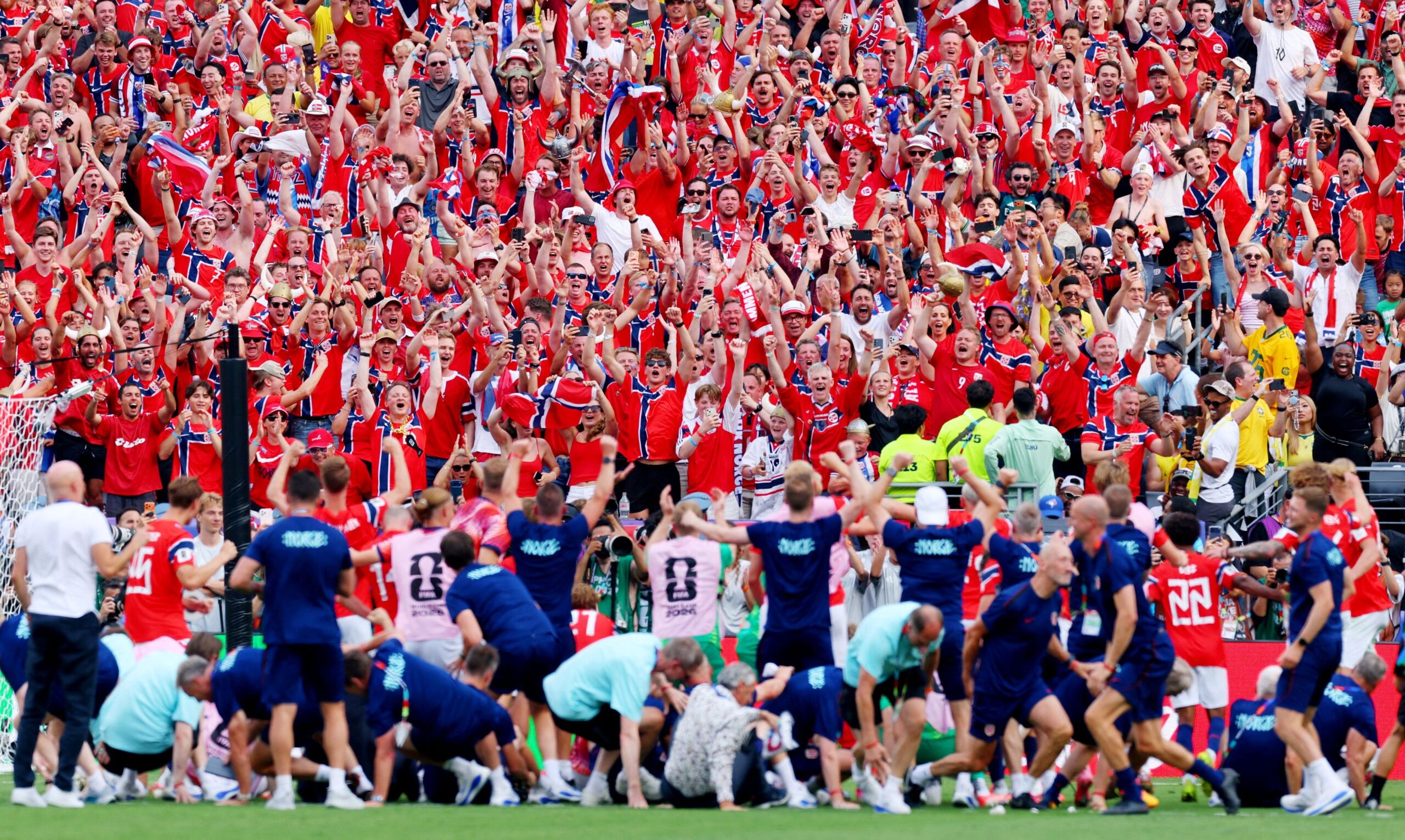
For the most devout fans, calories are in and cash is out while traveling North America in lockstep with their side.
Read more It’s Fery vs. Zverev and Sinner vs. Djokovic in the Wimbledon semifinals
Joe Hammond was sitting in a stranger’s home in Connecticut when Norway’s hulking hero, Erling Haaland, thankfully, knocked in a late goal some 1,700 miles away to topple Ivory Coast. It meant the boat-rowing, high-scoring Norwegian team had survived, and Hammond’s World Cup vacation had survived along with it.
But his bank account was about to take another hit.
Hammond, a 36-year-old accountant from Oslo, decided then that he couldn’t bear to miss another game. He had spent much of the tournament avoiding the worst of the World Cup’s surge pricing by renting a suburban Airbnb, taking trains, buses and Ubers to Norway matches in Boston and New York but skipping the round of 32 game in far-off Texas.
There was no way he’d miss their quarterfinal match, if they made it that far. But there was also no price hack that could get him cheaply to Miami for Saturday’s match against England. So Hammond opened his laptop and bought the flight.
“It cost maybe $1,000 roundtrip to go down there,” he said. “Not the hotel. Only flight.”
That is the strange prize for fans whose teams keep winning in this World Cup: Their summer vacations keep going, whether they have the budget, stamina or stomach lining for it or not.
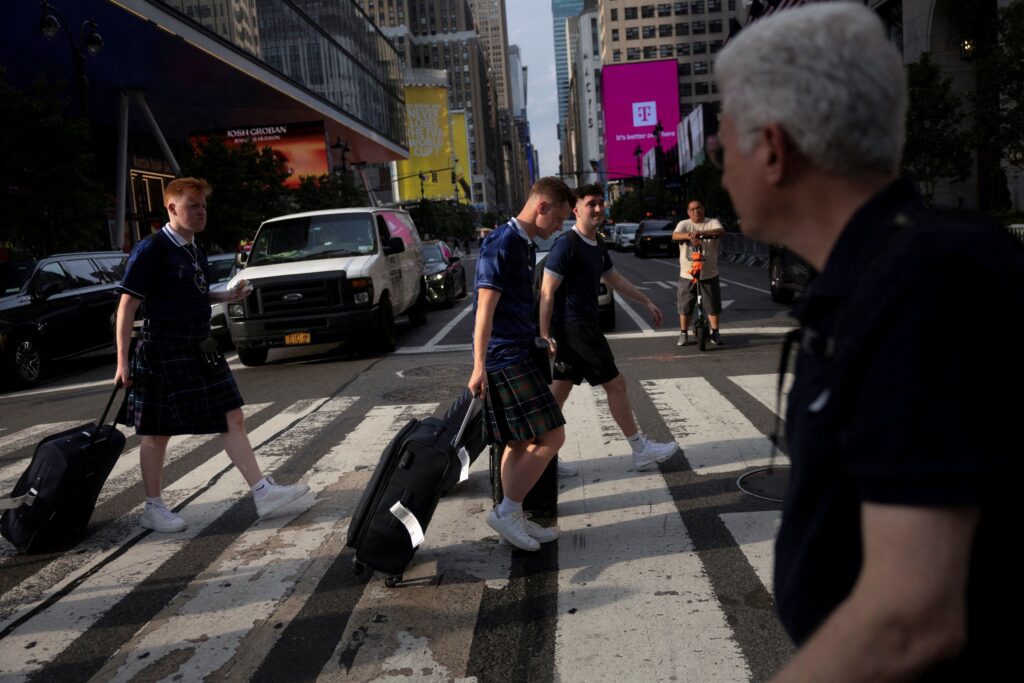
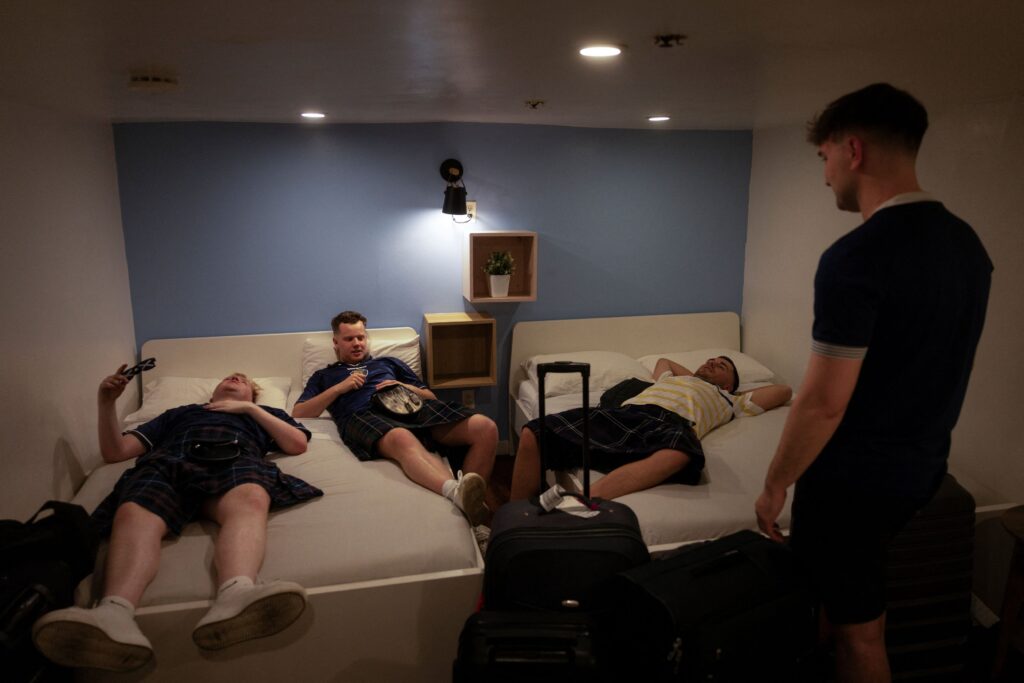
By this week’s quarterfinals, many fans of the surviving eight teams had been in North America for more than five weeks, following a tournament that has turned devotion into a test of endurance and improvisation. Fans on a budget have been subsisting off tacos and tequila in Mexico, gas station poutine in Canada and endless fast food in U.S. cities. They have slept in hostels, on overnight buses and in rental cars. They have mastered cancellation policies, tracked hotel prices like day traders and learned that a team’s late goal can instantly become a four-figure travel problem.
This is the hidden bracket running alongside the real one. The players advance through knockout rounds, and their fans advance through logistical (and gastrointestinal) ones.
“I’ve been to Five Guys at least 15 times,” said Léa Thomas, a 22-year-old France fan from Paris, before pausing to acknowledge the absurdity. “We have these in France, so I’m not even sure why I keep going. … But we’re saving money, so, like, I’ll keep doing it, I guess.”
For the most ambitious fans, the ticket tab alone can be staggering. Based on average resale prices tracked by SeatPick, a ticket-marketplace aggregator, a Norway fan following the team from its opener through a possible World Cup final would spend more than $30,000 on average-priced tickets for eight matches. Even using the cheapest available get-in prices, the same run would top $12,000. France fans face a potential ticket bill of roughly $35,000 at average resale prices to follow Les Bleus through the final, while fans of England and Argentina would be looking at minimum ticket costs of at least $15,000.
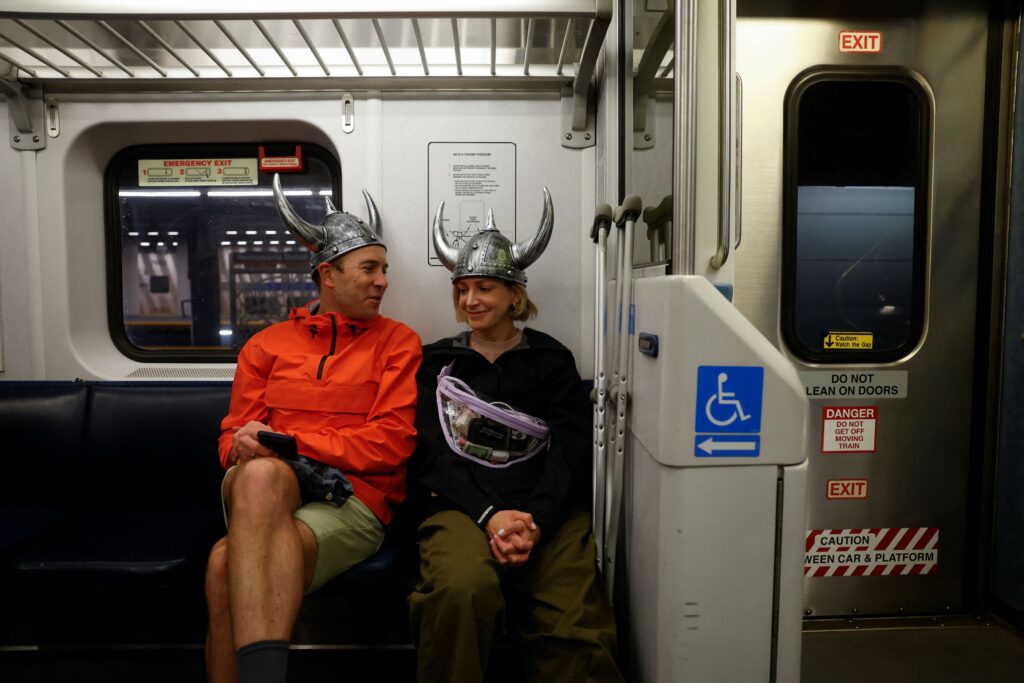
Before the tournament started, fans said, they could pretend to be practical. They could build budgets, pick rounds, book return flights and decide how much is too much. But when their teams win, the entire spreadsheet becomes emotional.
Hammond bravely skipped that Texas match — “It just didn’t make sense” — but others made the opposite calculation. Victor Romero, a retired electrical engineer from Asunción, Paraguay, said he expected to spend $5,000 to $6,000 per person following Paraguay with his wife and son. After Paraguay upset Germany, they canceled flights and stayed for the round of 16 game in Philadelphia. Romero estimated his trip’s cost more than doubled from his initial estimate.
“I knew it was going to be expensive,” he said. “But not [this] expensive.”
Tickets, of course, are only one column on fans’ blood-red spreadsheets. Some teams’ matches have been conveniently clustered, allowing supporters to turn a cheaper rental home, bus route or train line into a survival plan. To get to New York from his suburban Airbnb, Hammond took an Uber to the MTA and rode the train in. To get to Boston, he bought bus tickets from Hartford, Connecticut. He figured the arrangement saved him more than $1,000.
Other teams, though, have dragged their fans across the continent.
England’s path to the quarterfinals has run from Dallas to Boston to New York to Atlanta to Mexico City to Miami — roughly 5,100 air miles of city-to-city travel. The players have team charters and first-class accommodations. Their supporters have flight alerts, multiple connections and cheaper middle seats.
Callum Murchan, a 33-year-old England fan who lives in Dubai, and his London-based friends not only booked for the Three Lions’ group-stage matches, they also booked trips for the first three knockout rounds: Atlanta, Mexico City and Miami.
Read more Trump fires members of bipartisan elections commission
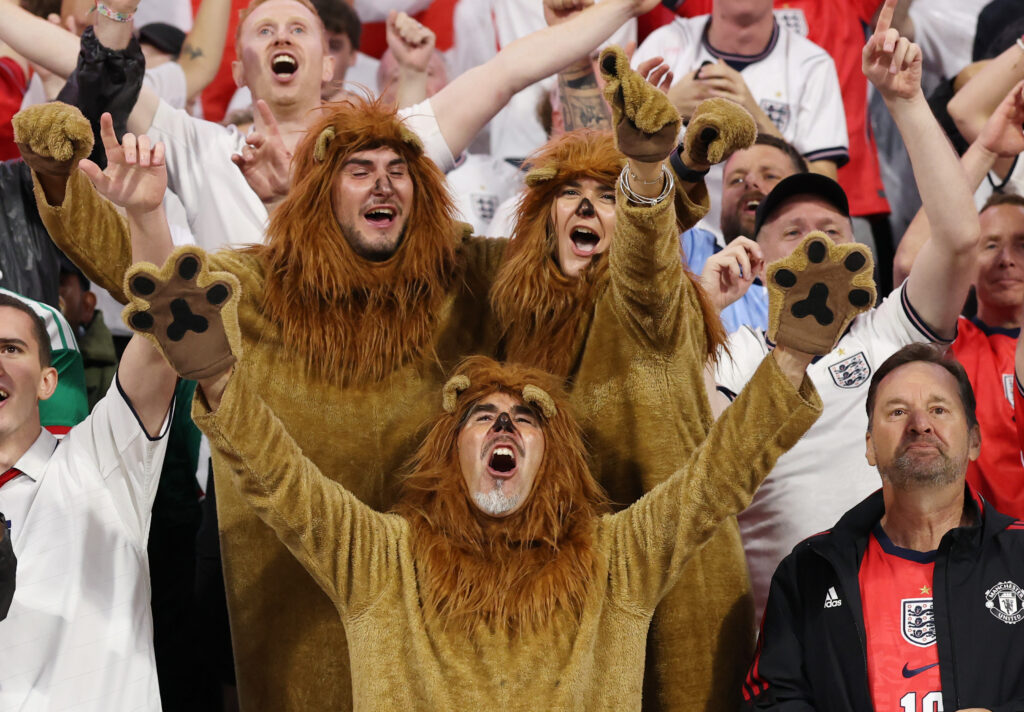
“We’re England fans,” Murchan said. “We’re confident.”
That confidence was tested when England fell behind Congo in its first knockout match in Atlanta. A loss, Murchan said, would have “ruined the trip.” England came back, and the trip stayed alive. So did the party.
From the moment they arrived in Mexico City, the friends said, there was no great mystery about the itinerary. “Tacos and tequila,” said Arun Nijjar, 33, from London.
The Thomas sisters, by contrast, approached France’s World Cup run less like a rolling party than a business venture with a high-caloric intake. Louise Thomas, 26, and her sister Léa were determined to chase around their national team and its larger-than-life star, Kylian Mbappé.
During the group stage, they moved around New England by Greyhound, with most rides costing between $30 and $45. For hotels, they booked early and built in escape hatches: cancelable reservations in every possible knockout-round destination.
Each evening, Léa checked the hotel reservations, watched how prices had changed and made sure they still had time to cancel rooms that were no longer needed. Some reservations, including a Marriott in the Bronx for the final, had already locked in.
“They’re going to be in the final, so I’m not worried,” Léa said.
For traveling fans, the answer to every practical question depends on the next result. And sometimes the whole contraption collapses in 90 minutes.
James Ferriera, a 33-year-old banker from Porto Alegre, Brazil, arrived in New York on June 12, the day before Brazil’s first match. He and seven friends rented a Honda minivan and bounced around the tournament in it. In New York, they stored it in an MTA lot in Stamford, Connecticut, where Ferriera joked it was “likely charging up tickets.” In cities where parking was too difficult, they stayed in hostels. In Brooklyn, Ferriera was sleeping in a top bunk in an eight-person room that cost $130 a night.
The van cost about $170 per day, which the group considered a bargain. Their food strategy was even simpler: loaves of white bread, Nutella and peanut butter sandwiches while driving between cities. Ferriera said he ate about five a day. They tried Chipotle but decided it was not worth the extra money. They also stopped at Arby’s, which Ferriera knew from commercials as “the place of the meats,” and left unimpressed. So they went back to the sandwiches.
Then Brazil lost to Norway in the round of 16. The van had to be returned early, and an itinerary that had been open-ended suddenly had an expiration date.
“I probably should get back to work sometime,” Ferriera said.

For fans whose teams were still alive, a World Cup that lasts this long stops feeling like a trip and starts feeling like a temporary life. Hammond has felt that creeping exhaustion. He began the tournament thinking he would cook more of his own meals, but the travel made that difficult. He has become a regular at McDonald’s, even though he said it makes him feel “disgusting.”
“You don’t account for the time commitment,” he said. “You just become so exhausted that it’s easiest to just eat whatever you see first.”
The Thomas sisters understood that, too. Their carefully managed French itinerary had not protected them from the cumulative effect of weeks on the road. They felt more tired than usual and believed they had probably gained some weight.
“The trip has been a lifetime experience,” Louise said, “but this much time in a different place is just a lot.”
Léa was tired and had eaten enough greasy meals to begin dreaming of Paris.
“The more Five Guys,” she said, “the more I want to go home.”
Then she considered what France might still do here these next couple of weeks.
“But a trophy would definitely keep us here,” she said.
White reported from New York. Albert Samaha contributed from Mexico City; Les Carpenter from Philadelphia; Rachel Lerman from Seattle; and Mariana Trujillo Valdes contributed from Inglewood, Calif.
Read more Egypt’s soccer team gets a warm welcome home after World Cup loss