

For the second time in a month, an ambulance was sent rushing to the home of a sitting U.S. senator.
Read more World Cup semifinals: Four previous champions, a bitter rivalry, Mbappé vs Yamal and Messi vs Kane
The first arrived on a June morning at the home of Sen. Mitch McConnell, 84, the Kentucky Republican and formerly his party’s leader in the chamber. He was hospitalized and has not appeared in public since, with his office still declining to explain what sent him there. The second arrived this weekend at the home of Sen. Lindsey Graham, 71, of South Carolina, who died late Saturday.
Both men were members of a Senate that was one of the oldest in American history.
The Senate has always been a chamber of older men and women. And it has always had to reckon with the effects of age and illness. But it has never built the necessary rules and procedures to deal with such problems, according to experts in congressional history. Its members have served through comas and strokes, vanished for years and died in office — and each time the institution has improvised, only to move on without a rule.
Age in itself is not the problem, experts say. Graham was working to the end, just back from Ukraine, and many senators serve into their 80s undimmed. But the Senate has provided no answer for when its members inevitably can no longer serve – and no requirement that anyone say so.
Members of Congress must, by law, disclose the stocks they trade. Nothing requires disclosures about their health, whether they can still do the job, whether they are still conscious or, in at least one case in history, whether they were even known to be alive.
The average age in Congress has steadily risen, with a few sporadic exceptions, since the early 1980s. Today, the 119th Congress is the third-oldest in American history, and the three oldest in the nation’s history have all convened since 2017.
In the early days of the republic, being a member of Congress was viewed as a temporary occupation rather than a long-term career, historians note. In the mid-1800s, for example, the average tenure in the Senate was three to five years, compared with roughly 11 now. The average member of the House was in their mid-40s and the average age of senators was around 50, while now the average House member is 58 and the average senator is almost 64.
One factor is the perks of incumbency, according to experts. The longer senators stay in office, the more powerful they become — with seniority and committee chairmanships — and the more able they are to steer money toward their states.
McConnell chaired the Senate Ethics Committee and Senate Rules Committee before becoming the long-serving party leader in Senate history. Graham, who was running for a fifth term at the time of his death, chaired the Budget Committee.
Graham’s death temporarily deadlocks that committee, while his death plus McConnell’s absence could deeply complicate the Appropriations Committee, leaving Republicans with a 13-14 disadvantage until McConnell returns. And until that happens and Graham’s replacement is sworn in, Senate Republicans are governing with a slimmer voting margin — 51 to 47.
With age comes greater potential for illness. And the people with the power to make rules on requiring health disclosures or how to handle situations when a senator can no longer serve are the same 100 senators who would have to abide by them.
In more than two centuries, they never have.
No law or Senate rule governs how to proceed when a senator is deemed “incapacitated.” And the Senate has never expelled a member because they were physically unable to do the job.
In 1856, Sen. Charles Sumner of Massachusetts was beaten nearly to death with a cane on the Senate floor and returned only intermittently over the next three years, while his state left his chair effectively empty. Sen. Karl Mundt (R-South Dakota) had a stroke in 1969 and never returned, holding his seat from home for more than three years until his term expired. Sen. Carter Glass, a Virginia Democrat who chaired the Senate Appropriations Committee, was gone from Washington from 1942 until his death in 1946 while keeping his gavel, with his wife zealously guarding access to him.

Only once has either chamber forced the issue of a medical absence: Gladys Noon Spellman, a Maryland Democrat who had served three terms in the House, collapsed from cardiac arrest while campaigning in 1980 and fell into a coma.
Her district reelected her anyway. But her term expired as she remained comatose, and when the new Congress convened in 1981, she could not be sworn in for the next. The House declared her seat vacant — the only time either chamber has done so for incapacity.
For members already sworn in, however, such a tool does not exist.
“This is definitely something the Senate has dealt with, unfortunately, with some regularity,” said Michael Thorning, director of the Bipartisan Policy Center’s Structural Democracy Project. “If a member is incapacitated, the only way a senator’s service ends is their term ends, they die, they’re expelled or they resign. There isn’t really a mechanism short of those for Senator McConnell’s Senate service to end.”
While such a rule might help, it’s also difficult to design a solution without the risk of having it used as a political weapon against members who are temporarily ill and recovering, said Georgetown Law professor Josh Chafetz. He noted that expelling a senator for incapacity by a two-thirds vote or deeming by majority vote that a senator does not meet the qualifications for office is very likely to be ruled unconstitutional.
The Senate has faced a version of this question in recent years, and both Graham and McConnell were involved.
Read more Tigers rookie Kevin McGonigle will be a hometown kid at All-Star Game in Philadelphia
In 2023, Sen. Dianne Feinstein (D-California), then 89, was absent for nearly three months while she recovered from shingles. Without her, the Judiciary Committee was evenly split between Democrats and Republicans. Some Democrats urged her to step down because the tie was stalling then-President Joe Biden’s judicial nominees.
Feinstein asked to be temporarily replaced on the committee so its work could go on. Republicans refused in order to block judicial confirmations.
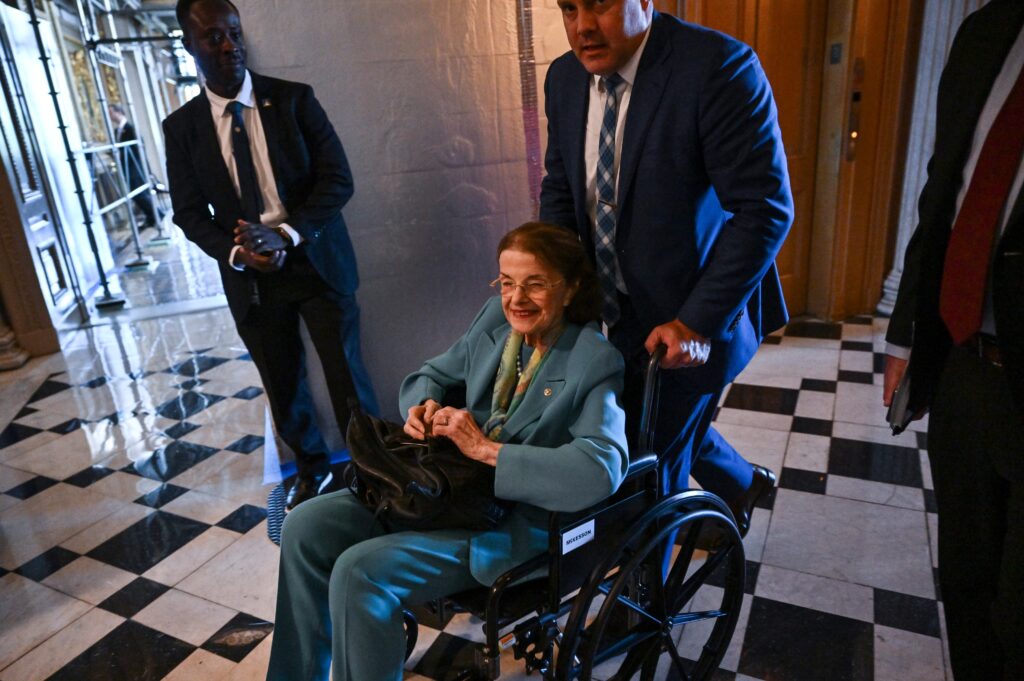
The objection on the floor came from Graham, the committee’s ranking Republican. And it was McConnell, then the minority leader, who put the party’s position plainly: The Senate would not take part in “sidelining a temporarily absent colleague.”
Feinstein kept her seat. Some nominations remained stalled. She returned that May and died in office that September.
Now, Graham is gone, and McConnell is the temporarily absent colleague. Without McConnell, the Appropriations Committee is deadlocked and will struggle to advance the government’s spending bills.
As chair of the Budget Committee, Graham oversaw the reconciliation process — the tool Republicans use to pass major legislation on party-line votes. President Donald Trump is pressing for a third reconciliation bill, this one carrying defense funding. Until Republicans fill Graham’s seat, the Budget Committee is split evenly between the parties. They will probably move quickly to fill his seat, but any delay narrows the odds of finishing before the midterms.
On age, there are signs the tide is beginning to turn, with a younger generation of candidates running for Congress in the upcoming election.
Democratic voters, perhaps chastened by their experience with Biden, have increasingly rejected older, establishment candidates.
By one analysis, the median age of Democratic candidates in competitive Senate races has fallen from 63 in the 2018 midterm elections to the mid-40s now. Even the current Senate has become slightly younger, with the retirement and death of some members, though it remains near a historic peak in age.
In Graham’s case, South Carolina law allows Gov. Henry McMaster, a Republican, to appoint a temporary successor until an election fills the seat, resolving the issue quickly.

What happens with McConnell’s seat is vastly more complicated.
McConnell’s office has refused to talk in detail on why McConnell was brought to the hospital, what his condition is and when he might return.
Before he was hospitalized, former aides and allies had planned to meet at the U.S. Capitol this month to honor McConnell with the unveiling of a portrait of him. But along with McConnell’s other work in the Senate, the portrait event has been postponed indefinitely, according to three people familiar with the event.
If McConnell doesn’t recover and is unable to serve out his term, filling his seat will be difficult. Twice in four years, Kentucky’s Republican-led legislature has changed the law for filling a U.S. Senate vacancy, each time stripping power from the state’s Democratic governor, Andy Beshear.
In 2021, at McConnell’s urging, lawmakers required the governor to fill any vacancy from a list of three names chosen by the departing senator’s own party — a measure designed to keep Beshear from handing a Republican seat to a Democrat. In 2024 they went further, taking away appointment power from the governor and replacing it with a special election.
The result is that no one can quickly fill McConnell’s seat if it came open. It would stay empty until an election.
McConnell announced last year that he would not seek reelection, with his term ending this coming January.
Last week, Beshear publicly pressed McConnell’s office to disclose his condition, saying Kentuckians deserved to know the condition of their senator.
“As public officeholders, we have made a commitment to our constituents to do our best to represent them,” Beshear wrote in a letter to McConnell. “I believe this requires clear communication about one’s ability to serve.”
Read more Los Angeles Sparks part ways with GM Raegan Pebley, assistants to share interim role