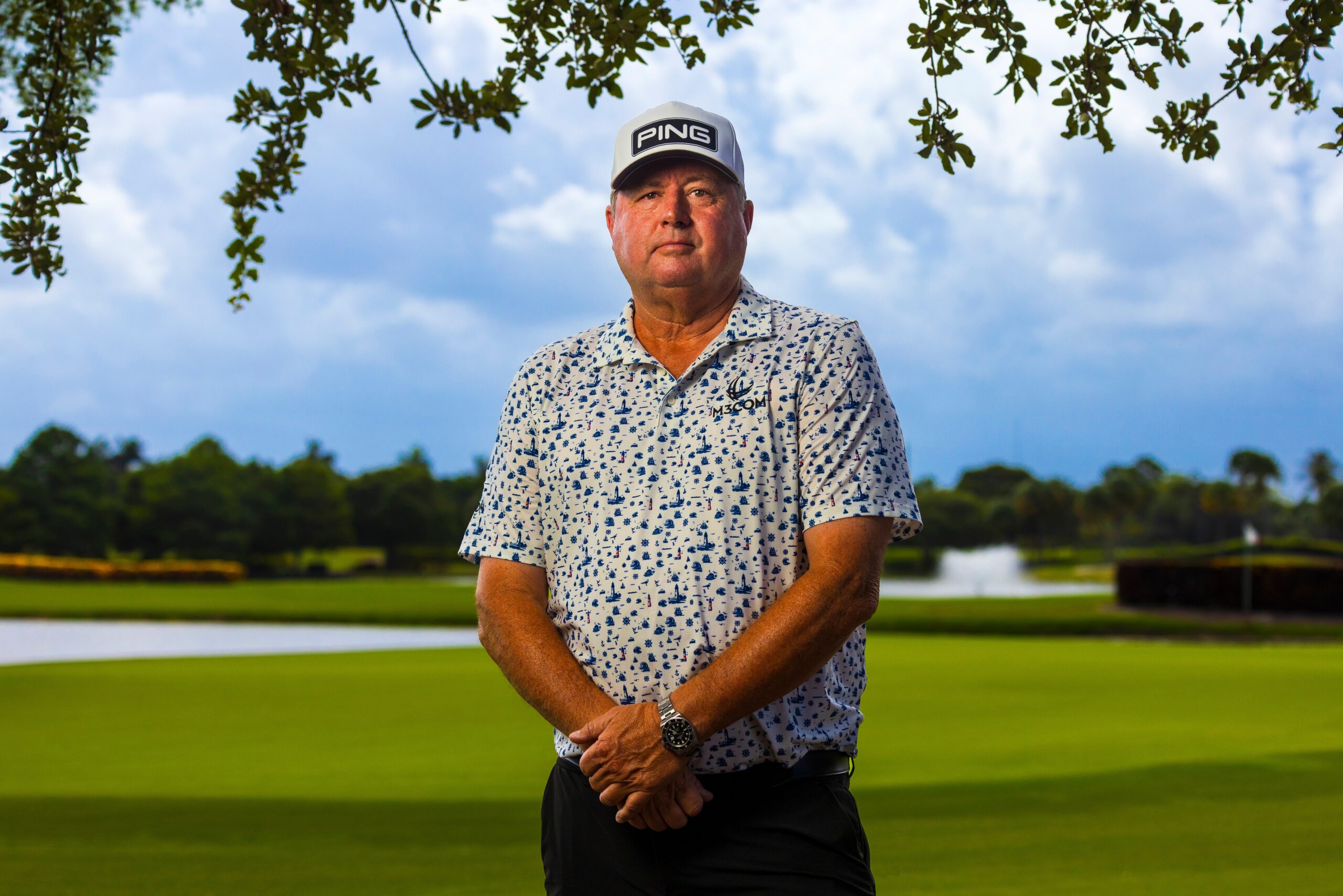
A new U.K. system requires Americans to get an Electronic Travel Authority visa to enter the country, tripping up Eric Larson for a past mistake.
Read more Sad-eyed pooch at baseball game finally gets his hot dog
SOUTHPORT, England — Delta Flight 34 was scheduled to leave Atlanta’s Hartsfield-Jackson International Airport on July 4 at 10:55 p.m., allowing plenty of time for Eric Larson to make his connecting flight between West Palm Beach, Florida, and Scotland.
Larson, a veteran PGA Tour caddie, knows that among the maxims of his business is to show up early everywhere: the course, the practice range, the tee box. So with millions on the line for his boss — and a fat commission at stake for him — Larson was taking no chances, planning to arrive in Scotland a day before his golfer to scout the course.
But Larson didn’t get on that flight, or the next. He missed the Scottish Open, where his nine-year “loop” — the American golfer Harris English — was scheduled to play. Nor will he be at this week’s British Open, the season’s last major, where a nearly $18 million prize purse is on the line.
All because of a 30-year-old mistake that Larson thought he put behind him half a lifetime ago.
“The crazy thing is I’ve been over there 10 times before all this,” Larson, 65, said in a phone interview from his Florida home last week, while English was playing in the Scottish Open.
At the root of Larson’s predicament is a 30-year-old drug trafficking conviction for which he paid a hefty price: 10 years in federal prison, a $25,000 fine and two years of probation. He successfully rebuilt his life and career after that, and for years he had no difficulty traveling to the United Kingdom.
But a new system implemented last year requires Americans to get an Electronic Travel Authority visa. For most, it takes about five minutes online. For Larson, it has proved a nightmare. Despite paying more than $20,000 in legal fees to London attorneys, he said, he has repeatedly been denied because his case is not viewed as “exceptional” or “compassionate.”
“It’s wild; it just sucks,” English, a 15-year pro who has five PGA Tour victories and played for the U.S. last year at the Ryder Cup, said last week in Scotland. “He did everything he was supposed to do. … It’s been fine for so long, and then all of a sudden, it’s not.”
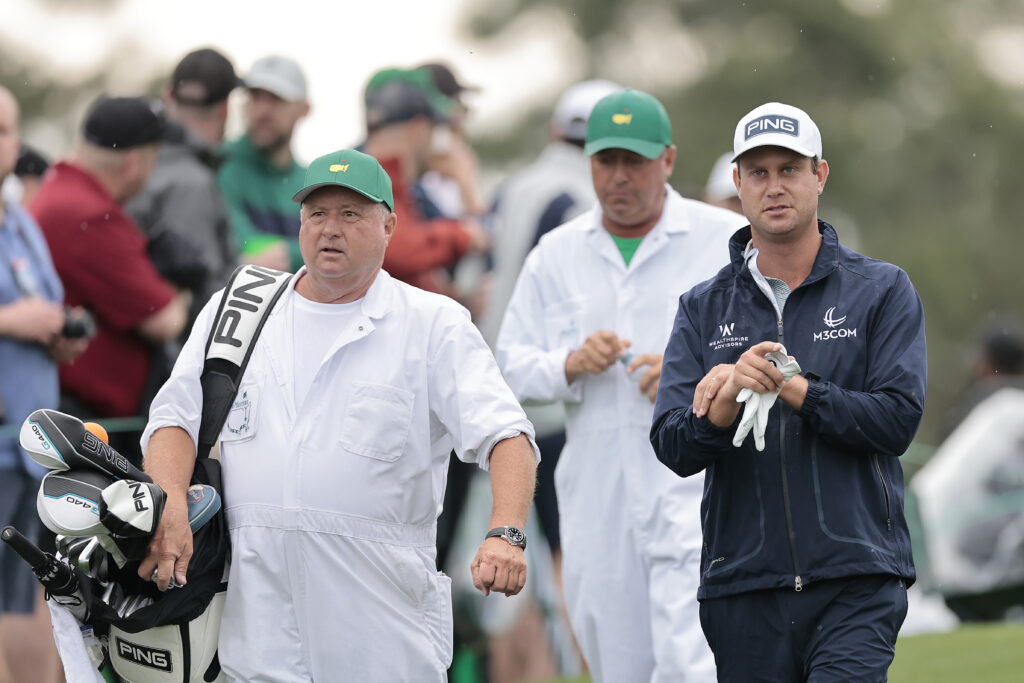
Larson grew up in Appleton, Wisconsin, and considered a partial golf scholarship offer to the University of Wisconsin at Madison before deciding to instead head to Florida, one of America’s pro-golf epicenters. He played two years at South Palm Beach Junior College, graduating in 1981. It was around then that he met golfers Ken Green and Mark Calcavecchia, who would go on to successful pro careers.
“I realized how good they were,” he said, “and how I wasn’t close to them.”
Larson said he did security work for IBM and then odd jobs at golf courses, including caddying. That, he said matter-of-factly, is when he “slowly got into the cocaine business.”
“I had some people who I knew who would ask me if I could get them something. Living in South Florida, I knew people who had it,” he said. “I saw how easy it was to make some money. It started off small, an intermittent-type thing. But over several years, it adds up.
“Somebody wants a couple of ounces, next thing you know it turns into four ounces and then six ounces. I did that from the mid-1980s to before I ever caddied on the PGA Tour. I was playing golf, doing that, doing whatever I wanted to do.”
Larson kept climbing the caddie ranks, though, and by the early 1990s, he was carrying bags on the PGA Tour, a potentially lucrative career. (Caddies typically make 5 to 10 percent of their golfer’s earnings.) In 1994, he caddied for Calcavecchia, a 13-time winner and British Open winner.
Then he got indicted — twice. A cocaine supplier tipped off authorities, Larson said, and soon he faced federal trafficking charges in Tennessee and Michigan. A jury acquitted him in Tennessee. But in 1995, four days into his trial in Michigan, Larson pleaded guilty on charges of conspiracy to sell cocaine.
A judge in 2026 would be granted some flexibility in sentencing a convicted trafficker such as Larson. But in 1995, federal judges were beholden to strict sentencing laws that have since been upended by reform efforts. Larson was given 13 years in prison, five years of probation and a $25,000 fine. He ultimately served a little more than 10 years in four federal prisons.
Read more In reversal, Luria backs congressional stock-trading ban in House comeback bid
Calcavecchia was the only player to visit Larson in prison, the caddie said, and promised him a job when he got out. When Larson was released and off probation in 2007, the golfer made good, allowing Larson to caddie for him at the 2007 Honda Classic and, later that year, at the PGA Championship. Calcavecchia won the 2007 PODS Championship, his first win since 2005, their first together since the 1995 BellSouth.
“It’s what you dream about,” Larson said. The redemption, but also the paycheck: He netted a six-figure commission, which helped put him on his way to getting his life in order.
“Eric has been a friend for a long time,” Calcavecchia said following that win. “His attitude is great. … He doesn’t do anything but try to stay positive himself and help me.”
Calcavecchia, determined to return the favor, insisted his caddie needed to find a better, younger player, to make more money. Larson would eventually caddie for phenom Anthony Kim, winning twice together, and for Jeff Overton. Larson was even on the bag for the 2010 Ryder Cup — in Wales.
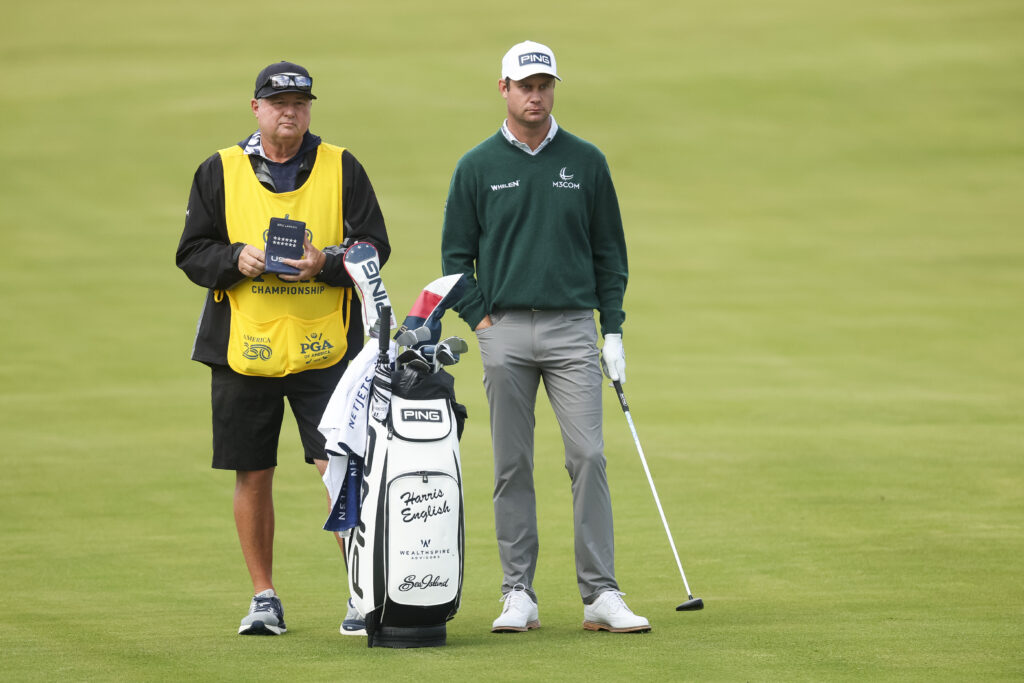
The U.K. started requiring the electronic visa last year, saying it hoped to enhance border security and improve the travel process. Though the new rule has caught some Americans by surprise, it’s typically a quick fix.
But before last year’s Scottish Open, Larson was denied his ETA. He attempted to secure a regular visa but struck out. He said some people suggested he fly to Dublin, which is not in the U.K., and then drive to last year’s British Open in Northern Ireland.
“But I wasn’t going to do that. I ain’t trying to hide,” he said. “Either accept me or don’t accept me.”
English has three victories with Larson, including last year’s win at the Farmers Insurance Open at Torrey Pines. But Larson wasn’t in Northern Ireland when English finished second to Scottie Scheffler during last year’s British Open at Royal Portrush, earning $1,759,000. Larson lost out on a potential six-figure commission.
This year, Larson started the process early. English wrote a letter on his behalf. So did the PGA Tour and the R&A, which runs the British Open and is based in St. Andrews, Scotland. A nonprofit called Operation New Hope, which helps those who were incarcerated return to society, also signaled its support.
The response was the same. On July 4, hours before his scheduled flight, U.K. authorities told him no visa was forthcoming.
“It’s just a tough situation for everyone,” said English, who employed a veteran caddie, Geno Bonnalie, at this year’s Scottish Open (where he missed the 36-hole cut) and is using his putting coach, Ramon Bescansa, this week at the British Open. “He did his time in prison. Everybody out here knows him. So many people vouched for him, how good of a citizen he is. He’s over here to do a job, probably would be rooming with other caddies, and he’d be out here six, seven, eight hours a day, walking the golf course. He’s here to do a job and then go back home.
“Clearly, they would have been able to look and see that he’s come here with no issues. Many times. I just feel bad for him. And he’s a big part of my life.”
Larson will resume caddying for English in two weeks at the Rocket Classic in Detroit. That U.K. plane ticket is nonrefundable, but he knows there’s plenty of travel in his future.
“Obviously I have a big credit now in my Delta account,” he said, before adding a Bill Murray line from “Caddyshack.” “So I got that going for me.”
Read more Former England forward Mason Greenwood makes $44M move to Fenerbahce
Bob Harig writes the Daily Drive newsletter on Substack.