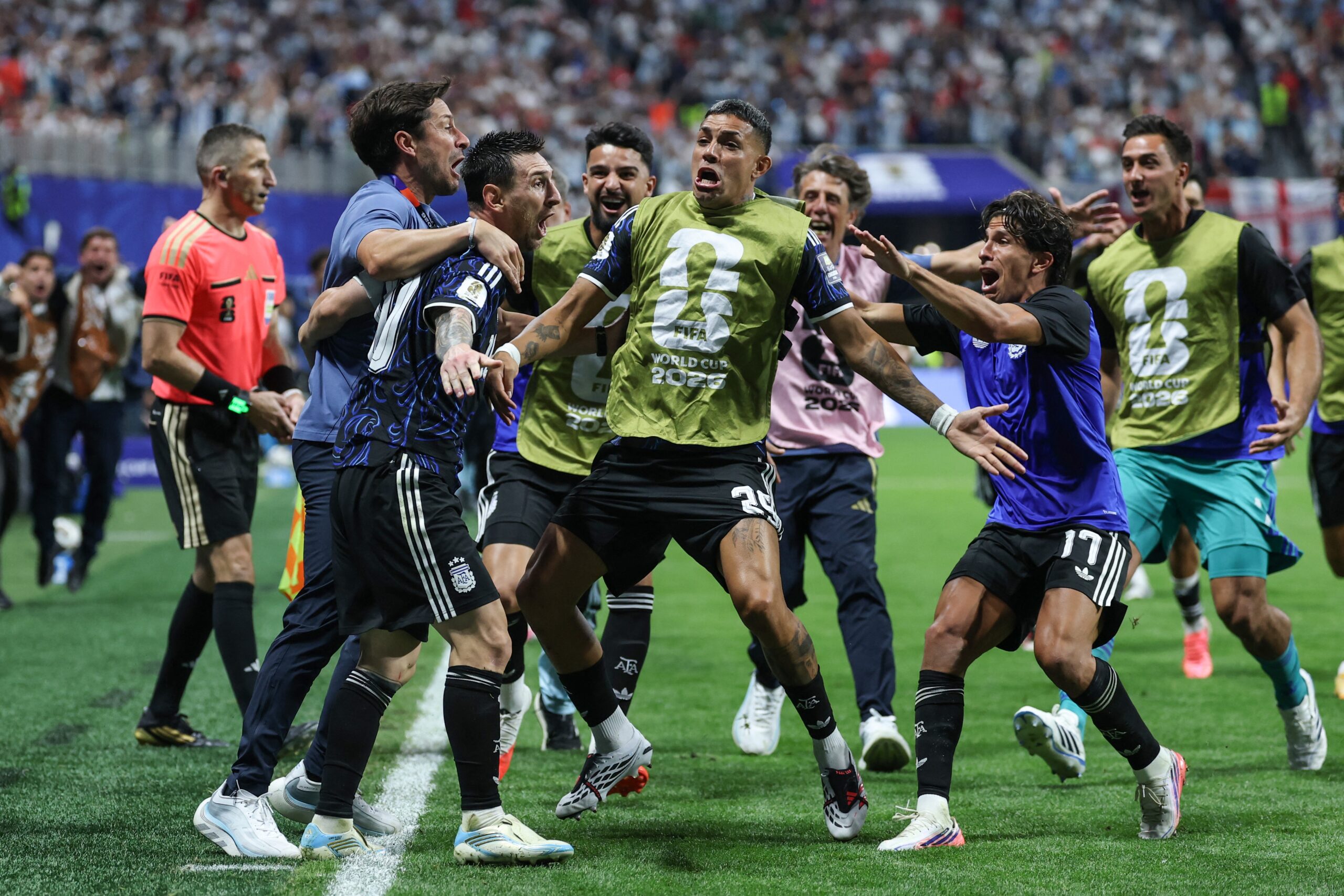
Minutes from elimination, Argentina scored twice after the 85th minute to devastate England and advance to Sunday’s final against Spain.
Read more Lavelle scores, Gotham beats the Spirit 1-0 at Citi Field with record crowd of 42,175
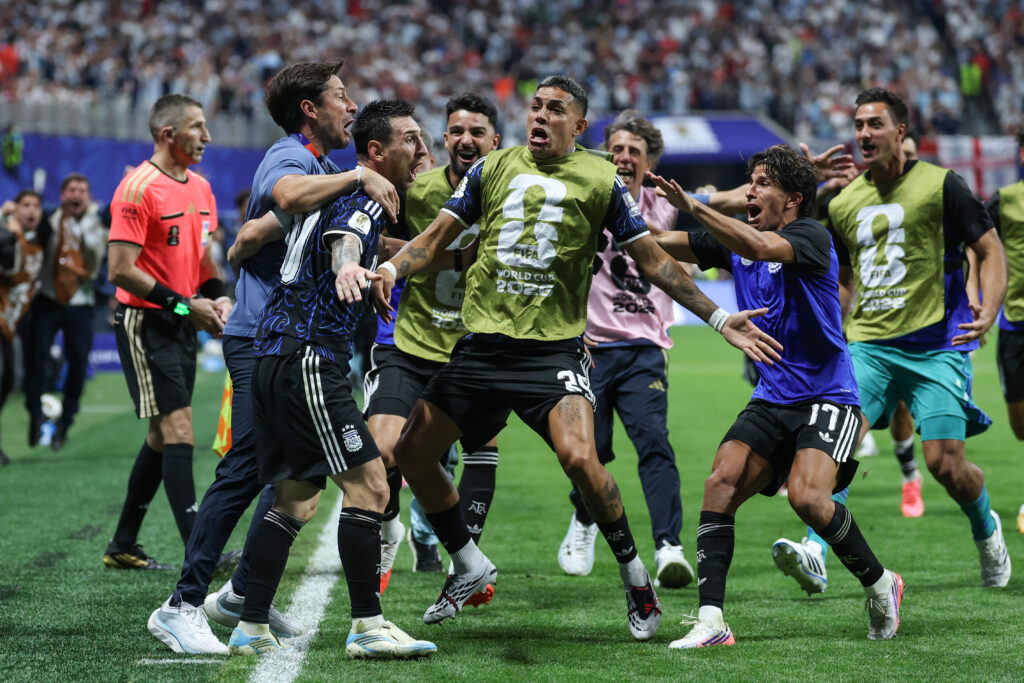
ATLANTA — Lionel Messi wasn’t ready for it to be over.
Argentina trailed England well into the final minutes of Wednesday’s World Cup semifinal, but two assists from Messi — Argentina’s talisman, superstar and heartbeat — lifted his team to yet another comeback and a date with Spain in Sunday’s final.
After setting up Enzo Fernandez for the equalizer in the 85th minute, Messi played a cross to Lautaro Martinez in the 93rd, and Martinez headed it past England goalkeeper Jordan Pickford to keep Argentina’s hopes of winning back-to-back World Cups alive.
Argentina had to survive another nine-plus minutes of second-half stoppage time after Martinez scored, which it did with minimal fuss — or at least minimal fuss by the chippy, edgy standards of the game as a whole — to secure the 2-1 victory.
“They don’t feel the weight on their shoulders,” Argentina Coach Lionel Scaloni said of his team through an interpreter. “Messi today, the last 15, 20, 25 minutes, anytime he could, he just got the ball. … When you see that kind of grit, that kind of show from the players — they’re playing like they’re 7- or 8-year-olds. They’re not thinking about what’s going to happen if we miss. They’re thinking about football, what they’ve done their entire lives.”
Before the ball was even kicked, emotions were running high among the fanbases. Though the crowd appeared to be near a 50-50 split between England and Argentina, the latter’s fans produced enough noise to drown out both Neil Diamond’s “Sweet Caroline,” which the England fans were singing along to, and the English national anthem.
The countries’ rivalry extends beyond the pitch. The Falklands War in 1982, battled over the islands off the southern coast of Argentina that England claims sovereignty over, looms large in the Argentine national consciousness. Argentina’s foreign minister, Pablo Quirno, referred to the British population of the islands as “artificially implanted” in the days before the match, a comment that British Prime Minister Keir Starmer’s office pushed back on by saying, “The Falkland Islanders are British with the right to determine their own future.”
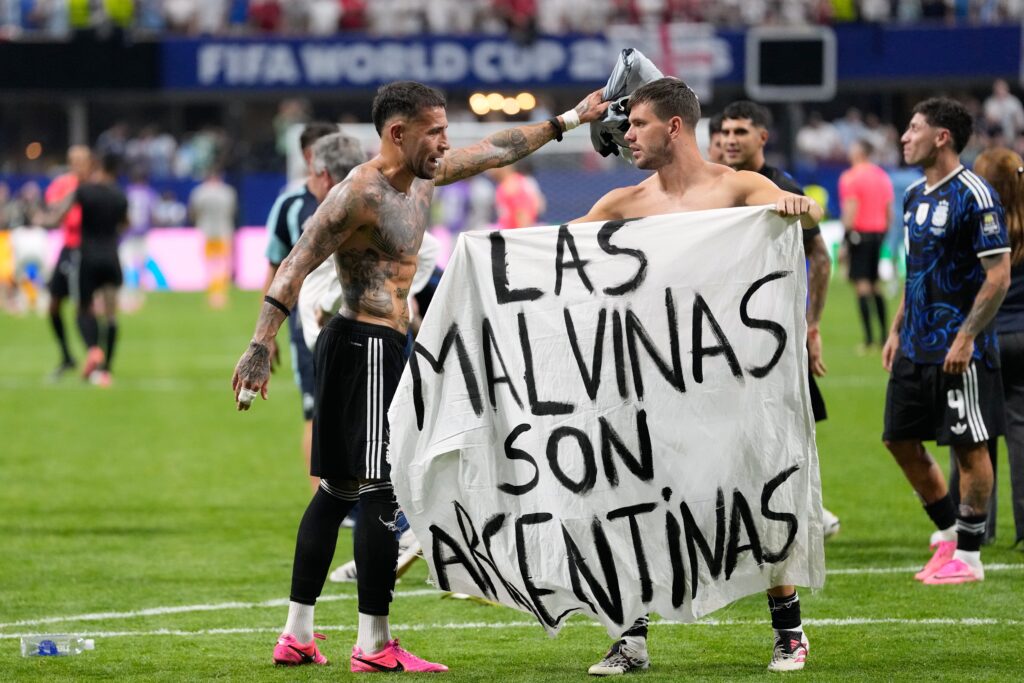
After the final whistle, as they celebrated on the field, Argentina’s Lisandro Martinez and Giovani Lo Celso held up a banner that read “Las Malvinas son Argentinas,” proclaiming that the “Malvinas,” as the Falklands are known in Argentina, are Argentine.
On the field, moments such Diego Maradona’s “Hand of God” goal in the 1986 World Cup, which eliminated England in the quarterfinals, and a 1998 round-of-16 clash that Argentina won on penalty kicks have left an impact on England’s view of clashes with Argentina on the world stage.
Argentina sought permission from FIFA to wear its blue away jersey for Wednesday’s match, in large part because of superstitions from previous meetings with England. In 1986 and in 1998, Argentina was wearing dark blue, rather than its traditional blue-and-white striped jersey, when it eliminated England.
Perhaps befitting of the tensions, the first half was a soccer aesthete’s nightmare, with 19 combined fouls — 12 by Argentina and seven by England — and just three total shots, none of which required a save from either goalkeeper. It was, instead, 45 minutes of fouling and dramatics, as Argentina tried to rattle England with a physical, emotional edge and England responded with plenty of physicality of its own.
The first confrontation between the players came less than four minutes in. Fernandez fouled England’s Elliot Anderson, and their teammates came chest-to-chest in defense of their own. It was Anderson, much later, who received the game’s first yellow card for a hard foul on Messi. Referee Ismail Elfath didn’t issue his first booking until the 37th minute.
Five minutes later, Argentina’s Lisandro Martinez was swiftly issued a yellow card for yanking Rogers’ jersey, but the back-to-back bookings did little to quell the undercurrent of nastiness.
After Elfath blew his whistle for halftime, both Messi and England captain Harry Kane went to speak with him to express their frustrations with the officiating.
Read more Flyers lock up Trevor Zegras with a 4-year deal worth $9.125M per year
In the 55th minute, England’s Anthony Gordon finally opened the scoring. Kane, England’s star striker, dropped deep into midfield to play a long ball up the field that fell to Declan Rice after a failed clearance by Argentina.
Rice quickly found Morgan Rogers, who spotted Gordon on the far side of the field about to make a run toward the net behind his defender. Gordon timed his run perfectly for Rogers’s cross and beat goalkeeper Emiliano Martinez at the back post.
The early physicality served its purpose of keeping Messi quiet, but a player of his abilities needs only a few opportunities to change everything for his team.
“The most dangerous players, when they have the ball in the final third, they can create something, and Lionel did today,” Kane said. “He’s obviously one of the best players ever for a reason. Disappointed to give up the space that we did in those final 20 minutes.”
After the second hydration break, England sat deep to defend its lead and Argentina fired chance after chance at Pickford. England used a deep defensive line to its success against Mexico in the round of 16, but against Argentina’s superior offensive talent, it invited the inevitable.
“We got a bit passive after the goal, defended probably a little bit too deep,” Burn said. “The quality of chances that Argentina were creating, yeah, I felt like it was a matter of time. We conceded too many crosses and too many chances.”
In the 85th minute, Messi rolled the ball to Fernandez at the top of the 18-yard box, and Fernandez’s clean strike sailed past Pickford just inside the post.
“For the majority, I thought we did pretty well [against Messi],” Burn said. “But that really shows you the quality of player he is, where you can keep him quiet for most of the game and he still pops up with two assists.”
Nine minutes were added to the end of the second half, giving Argentina all the time it needed to pull off the comeback once again. Martinez’s winner wasn’t quite Maradona’s “Hand of God,” in controversy or in instant memorialization, but perhaps it will come to be known as the “Head of God” if Argentina pulls off another win Sunday against Spain. Only two teams — Italy in 1938 and 1942 and Brazil in 1958 and 1962 — have won consecutive World Cups.
After coming from behind in the third straight knockout game of this World Cup, Argentina is full of belief that it can be the third.
“It is a show of the collectiveness, the brotherhood that we are in, the fight till the very end that we’ve got,” Scaloni said. “And after this, we’re going to go to the final. We’re going to win the final, we’re going to try to win the final.
“I know you recognize and acknowledge, you’re very well aware of how special this team is. I don’t have much else to say. This is all thanks to them. Without them, all this would be impossible. This group is fantastic.”
Read more Jeffrey Epstein is ubiquitous on a busy day on Capitol Hill