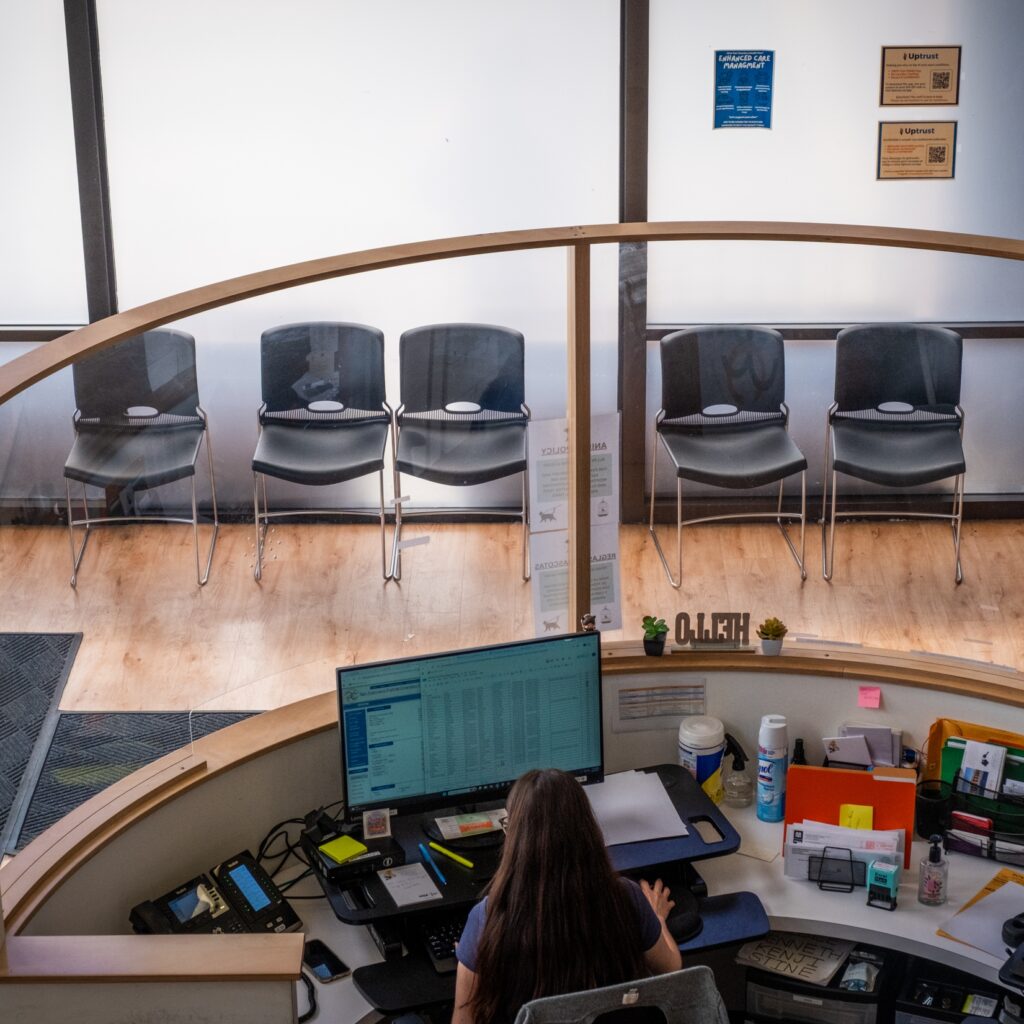
The fate of SF Pretrial, a group that runs diversion programs, reflects the tough-on-crime sentiment emerging even in liberal cities.
Read more Ed Markey’s new ad showcases support from the left – and an age problem

San Francisco is embroiled in a high-stakes debate over how to treat some of the city’s most vulnerable — and villainized — residents.
For 50 years, the city has paid a nonprofit, the San Francisco Pretrial Diversion Project, to supervise thousands of people who have been released from jail and referred for social services while they await trial.
Now, as San Francisco grapples with the backlash to post-2020 criminal justice reform, the city’s moderate mayor and its powerful courts are pushing for a radical overhaul that cuts SF Pretrial out of its legal system and hands its responsibilities to law enforcement.
The fight in the Bay Area is just one particularly contentious front in a national Democratic Party grappling over how harshly the government should treat people accused of crimes. Though crime rates are approaching historic lows, cities are still recovering from the trauma of a sharp spike in violence during the pandemic, putting even the most liberal of communities at the center of a fraught debate over public safety. As potential 2028 presidential candidates weigh their platforms, the outcome of the San Francisco debate could offer hints about where the party is headed, and which approach to crime and punishment will prevail.
This summer, SF Pretrial’s critics won the first round when the city’s Board of Supervisors approved a budget proposal from Mayor Daniel Lurie to terminate SF Pretrial’s funding and hand its duties to the city’s Adult Probation Department. The move, which was initially proposed by the Superior Court of San Francisco, effectively shuttered a vestige of old San Francisco whose approach had been widely endorsed by the city’s legal community and cited as a gold standard for cities coast to coast.

Lurie’s budget proposal didn’t end the fight — it took it national. Over the past few months, SF Pretrial has launched a publicity campaign to save itself. Supporters have demonstrated at city hall. National groups, including the Vera Institute for Justice and the American Civil Liberties Union, have advocated for SF Pretrial’s survival. The sheriff urged the city to reconsider, as did the Bar Association of San Francisco and pretrial policy experts.
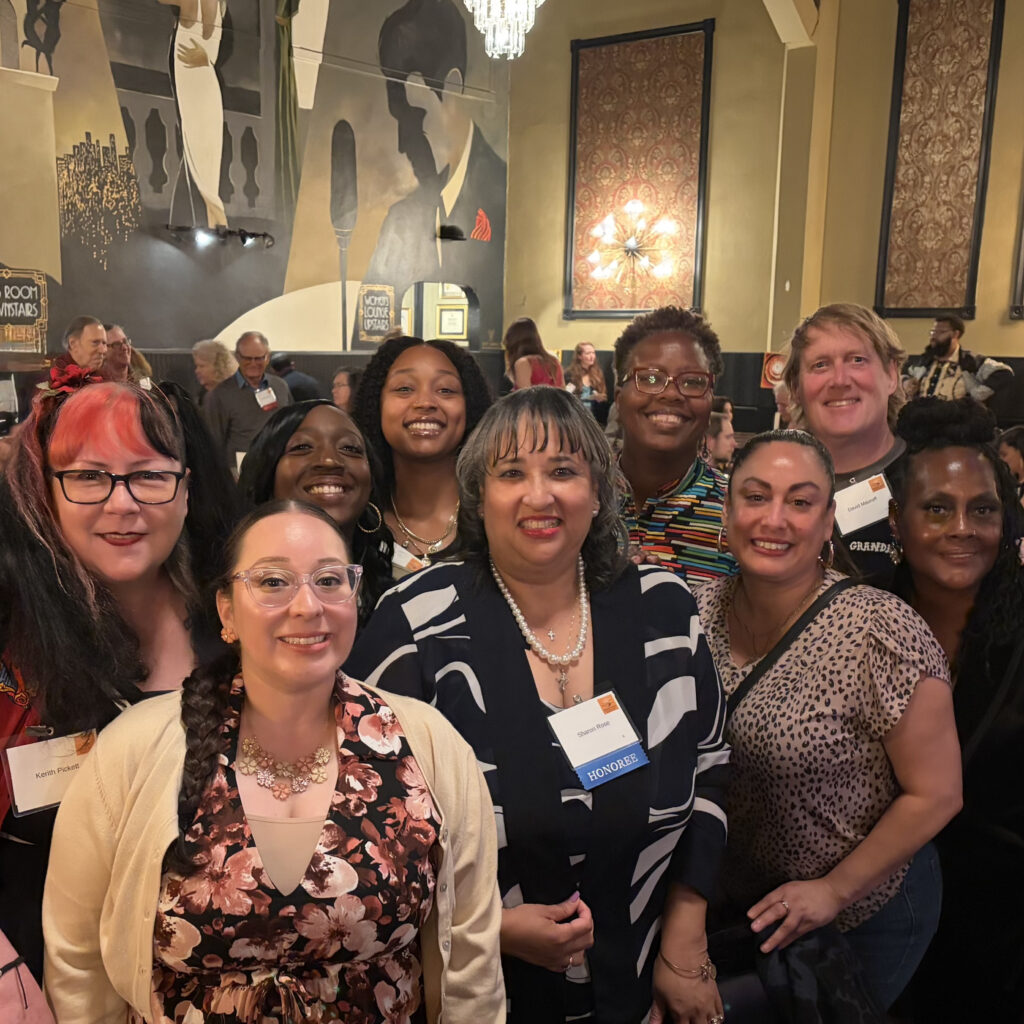
“It’s a shame” that shutting down the organization is “even being considered,” said Sharon Rose, who has been working with struggling San Franciscans for 34 years and is the city’s longest-serving pretrial worker.
“I really, really believe in the work that we do,” said Rose, whose teammates call her “Mama Bear.” “That’s why I’ve stuck around for so long.”
Behind closed doors, the city’s powerful and well-positioned have been lobbying Lurie’s office and the Superior Court, offering a host of compromises to keep SF Pretrial’s doors open, according to three people familiar with the negotiations who spoke on the condition of anonymity to discuss private conversations. SF Pretrial’s executive director, who had become a political lightning rod, resigned as a negotiating tactic.
But none of SF Pretrial’s offers was accepted, those people said.
To date, Lurie has not publicly commented on the plan. The Board of Supervisors discussed the implications of the transition in public meetings, but ultimately approved Lurie’s budget.
A spokesperson for Lurie declined to comment on the decision, referring questions to the Superior Court of San Francisco, which initially proposed the change. A spokesperson for the court did not respond to numerous requests for comment.
Lurie, a centrist Democrat and first-time public official, was elected in November 2024 with strong support from the tech sector and a promise to move the city in a more moderate direction. His agenda included boosting law enforcement and ending contracts with nonprofits he deems ineffective.
Defunding SF Pretrial appears to mesh with those priorities.
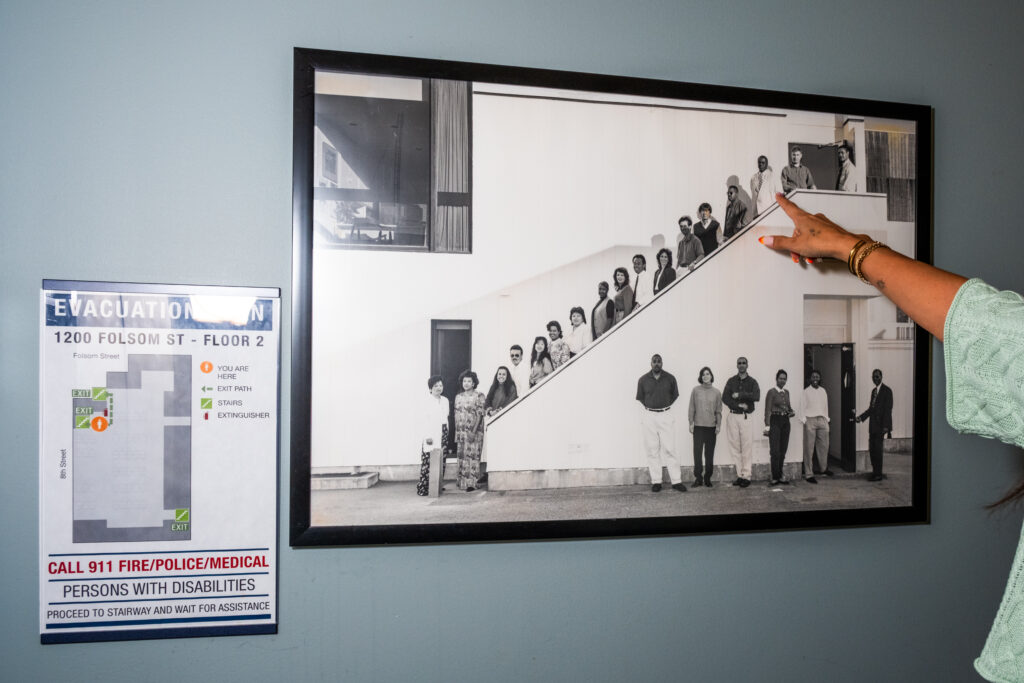
Founded in 1976 as an unconventional collaboration among prosecutors, public defenders, the jail and the courts, SF Pretrial is the second-oldest court diversion program in the country and helped create a model for America’s modern pretrial system by letting judges refer defendants for housing aid, mental health care, anger management, drug treatment and other help as an alternative to cash bail.
The results have been striking, according to the group’s annual impact data. In 2025, about 72 percent of clients under SF Pretrial’s most intensive supervision were never issued a bench warrant for failing to appear in court. From 2022 to 2025, an average of 90 percent were not charged with new crimes. (Critics challenge those figures, arguing that it would be more accurate to measure re-arrests even if they do not ultimately result in criminal charges.)
SF Pretrial’s supporters argue the nonprofit’s staffers — some of whom have experiences with substance abuse or their own brushes with the law — are best positioned to work with people who are presumed innocent. SF Pretrial employees rely on close relationships with the jail, attorneys and judges but function independently of law enforcement, a model they argue is focused on aid and not punishment.
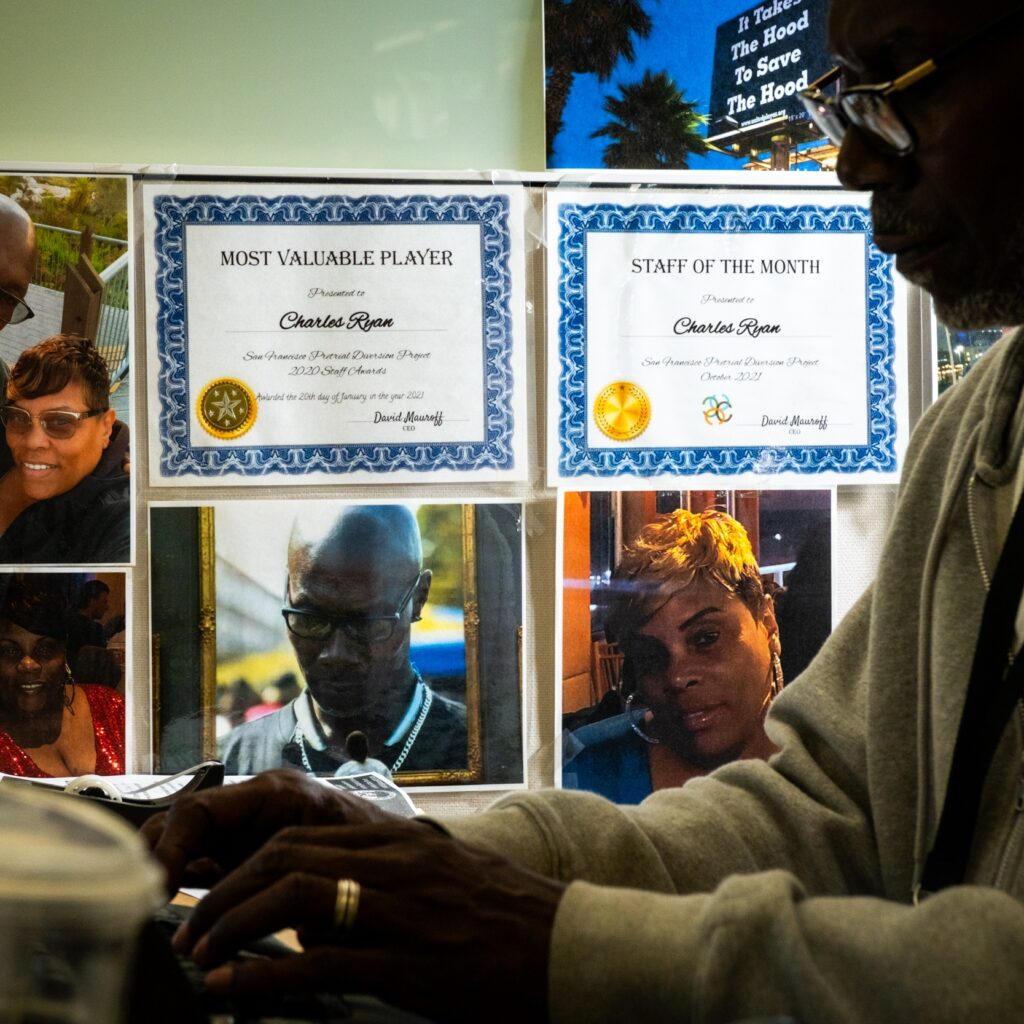
Charles Ryan, known to his clients as “Mr. C.,” leads SF Pretrial’s support groups for anger management, job training and therapy. He said he’s like an “uncle, mentor, big brother and father to quite a few of our young men and women.” On Father’s Day, his phone lights up. He’s the godfather of several of his clients’ children.
“I’ve been through it,” said Ryan, who went to prison as a teenager. He worries that putting responsibility for pretrial services under probation would create a culture of fear: “Do they have people in the organization who will be able to relate to the clients, instead of policing them?”
Teresa Perryman, a housing case manager at SF Pretrial, says she shares her own life experiences with clients — couch-surfing and hotel hopping, getting sober — because she wants them to feel compassion, not judgment.
”I treat my clients like family,” Perryman said. “That’s my extended family that needs help right now.”

Advocates see the threat to SF Pretrial as part of a nationwide surge toward a tough-on-crime mentality, fueled in part by the Trump administration’s rhetoric and in part by a sense from some that progressive policies went too far following George Floyd’s 2020 murder at the hands of police.
San Francisco has been a microcosm of that shift. Chesa Boudin took over as the city’s elected district attorney in 2020, part of a wave of progressive prosecutors across the country who felt the criminal justice system was often inhumane and suffered from racial and economic injustice. In 2022, Boudin was recalled by the same electorate, which turned quickly against this worldview amid the pandemic-related spike in crime nationwide.
In the 18 months since Lurie — who enjoys a 74 percent approval rating — took office, San Francisco has undertaken a noticeable shift in approach to public safety. Shutting down SF Pretrial would be among the most significant changes.
Read more Nationals wrap up a winning road trip with rout of Rockies
In several scathing memos, Brandon Riley, the CEO of the San Francisco Superior Court, has characterized SF Pretrial as a rogue nonprofit that lacks transparency and whose duties could be better controlled in-house.
Riley and the court’s presiding judge have argued that state law gives the court the authority to move pretrial services under the probation department.
As pretrial diversion programs have become more popular nationwide, many jurisdictions — including almost all California counties — have chosen to nestle those services within law enforcement and, often, contract with community nonprofits who have expertise in social services.
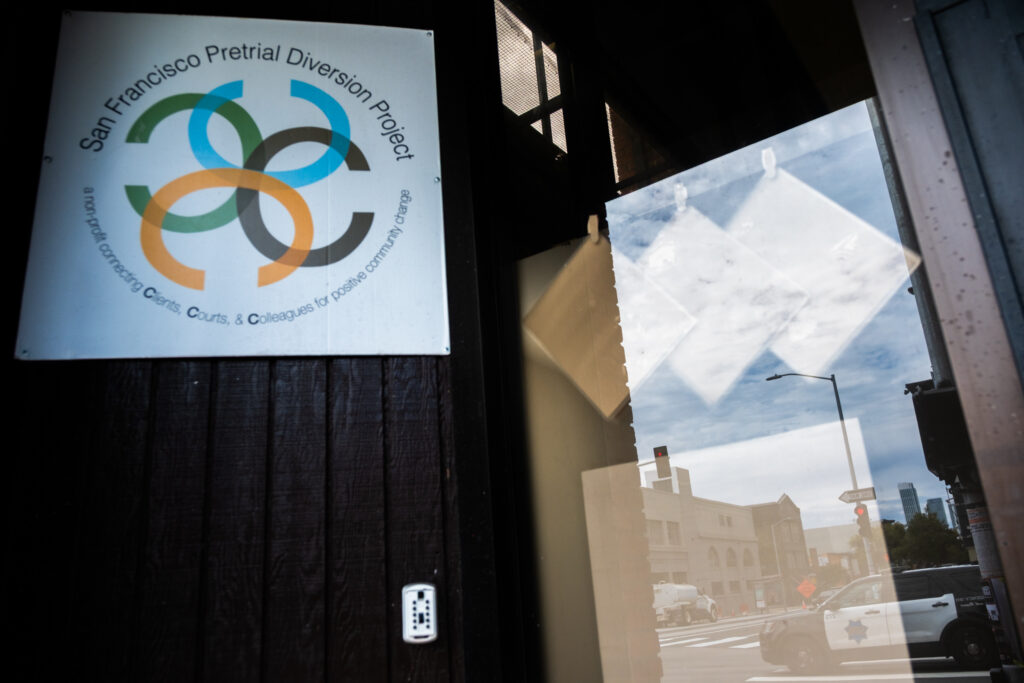
Because SF Pretrial was so old and venerated, California lawmakers created a a carve-out for the nonprofit.
But the Superior Court now says that the relationship with SF Pretrial is no longer working. Riley criticized SF Pretrial for financial troubles and inaccurate case management reports, problems that the nonprofit says weren’t proactively communicated and are the result, at least in part, from understaffing. Separately, the court accused the nonprofit of inflating its success rate on matters like recidivism by using more favorable figures and analyzing small sample sizes.
“Public institutions must avoid not only actual impropriety, but also the appearance of impropriety,” Riley wrote in June. Given the need for “transparency, accountability, and verifiable performance measures,” he added, the court “can no longer maintain confidence” in its relationship with SF Pretrial.
Sheriff Paul Miyamoto, who runs the jail and works closely with SF Pretrial, responded with a letter arguing that the nonprofit was not manipulating statistics, but simply using a different, also nationally recognized, standard for success. Abruptly shutting down SF Pretrial would not only hurt defendants, he said, but could increase jail overcrowding and put the city in legal jeopardy.
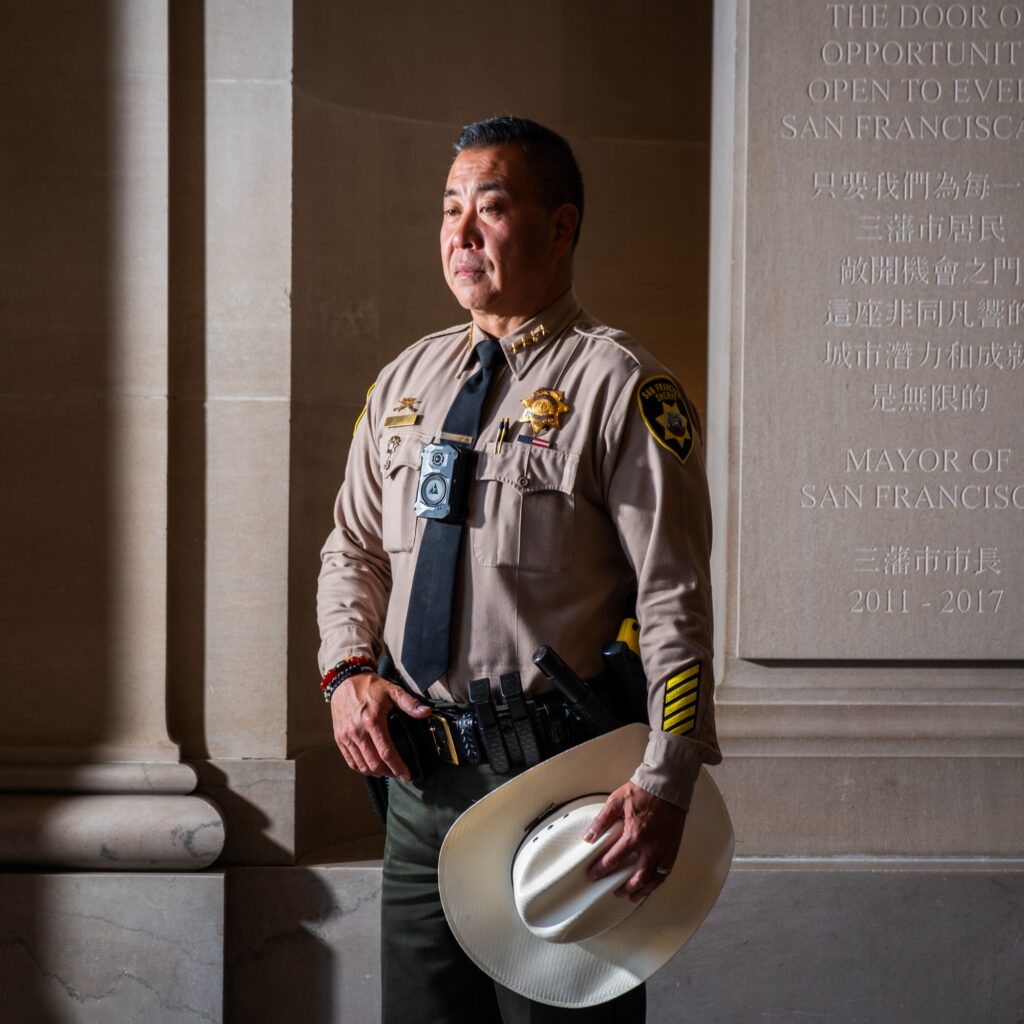
In an interview, Miyamoto suggested the conflict stemmed partly from a misguided desire to show that San Francisco is cleaning up its act.
“One of the reasons that I wrote the letter and sent it out was to make sure we didn’t let emotion or personal feelings, or interest in change, supersede and override the processes that we have in place,” Miyamoto said. “I have been happy with what we have been doing.”
SF Pretrial’s leaders say the campaign against them has been stealthy, and the decision to eliminate the group undertaken largely without their input.
The budget Lurie submitted to the Board of Supervisors in early spring signaled the city’s intent to sever ties with SF Pretrial, but it was not until the end of May that the courts confirmed the decision publicly — and not until June that the city’s Board of Supervisors held a hearing to discuss the decision.
The nonprofit has not been invited to any planning meetings for a handover of responsibilities, SF Pretrial leaders said, and they never received a copy of what Riley has described as a “comprehensive plan” assembled by the probation department for taking over their work.
The court and the probation department did not respond to questions asking for details of that plan. But city officials say they have made little secret of their proposal to phase out SF Pretrial, specifying it in the budget and holding a public meeting about it.
The city’s Adult Probation Department is expected to absorb SF Pretrial’s thousands of clients in the near future, although the exact date remains unclear as the group’s advocates battle with city officials for more time. The department was initially expected to take over on July 1. Then the date was pushed to the end of 2026. Just last week, the deadline was extended again to next July.
“It’s been a roller coaster,” said Rose, who coordinates many of SF Pretrial’s busiest programs. “One day we’re up, one day we’re down. One day we’re hopeful. One day, we’re like, ‘Oh no, this is not looking good.’”
SF Pretrial supporters have always cited the organization’s work as part of what makes their city great — an enlightened, humane view of justice that is often ahead of the rest of the country. Years ago, the Board of Supervisors unanimously passed a resolution enshrining a community-based approach to pretrial diversion as critical to San Francisco’s moral mission.
“We believe in San Francisco that people are innocent until proven guilty,” said Sandra Fewer, who sits on SF Pretrial’s board and signed that resolution while serving as city supervisor. “We show the rest of the United States how you can do it different, how you can do it well. You don’t have to settle for the lock-’em-up model.”
That outlook has increasingly come under fire, even in liberal San Francisco, where tech executives long ago replaced hippies as the city’s stereotypical demographic. Now SF Pretrial staffers fear what that shift means for the people they are trying to help.
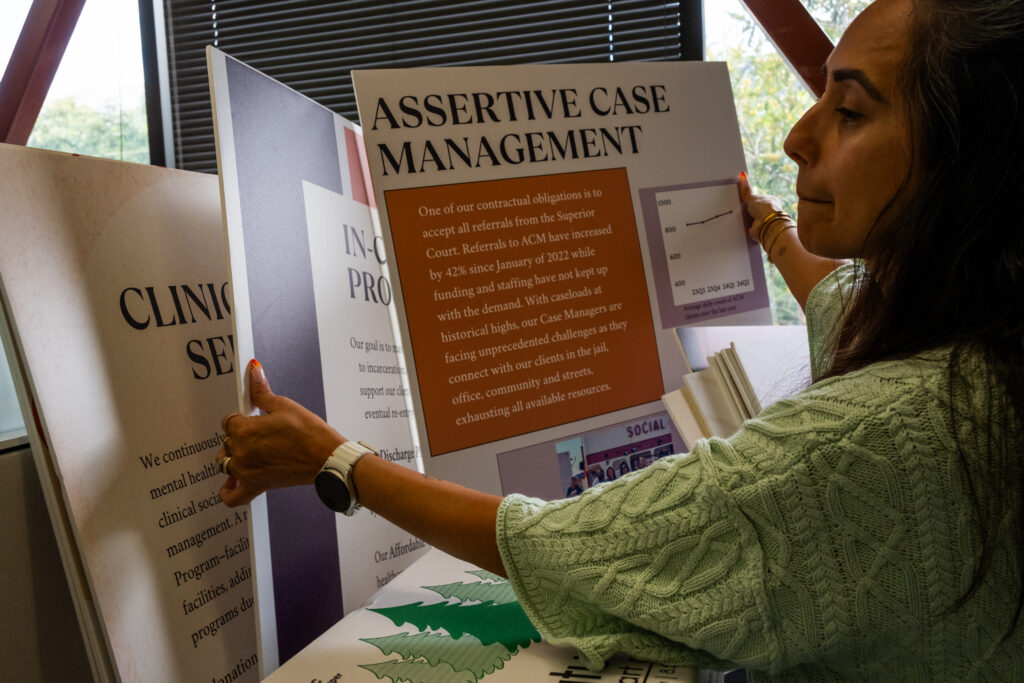
About 20 percent of the group’s jobs are vacant as staffers flee for more stable positions. For those who have stayed, the number of caseloads per manager has soared to about 120, almost three times the nonprofit’s standard of 42.
Perryman, the housing coordinator, said she is trying to place clients as quickly as possible so no one is left without help. Ryan, the support group facilitator, said he is trying to make a difference while he still can, because “we don’t know what tomorrow will be.”
Reyna Serrano, a client support manager at SF Pretrial, sees a painful irony in the timing of the nonprofit’s demise.
“It took us 50 years to build these relationships and community trust, and now it’s going to be taken away,” Serrano said. “For what?”
Read more Democratic think tank suggests accommodating restrictions on this trans issue