PAXTON, Mass. — At the end of his day, the deacon leaves his office and walks through the chapel to the elevator, his path lit by a rainbow of light from the stained glass above. Pinned to the office door that closes behind him is a crucifix. Beside it, a sticky note: “I’m off campus.”
Read more Down to their third quarterback, Commanders collapse in loss to Colts
As he walks, the altar catches his eye.
“I pray for their collective good health,” he says softly, bowing his head to commence this new ritual. “For sustained will, and that your work will continue elsewhere. I pray for those without jobs, the students who have gone home.”
His Toyota is one of four cars in the lot this spring evening. He has a few more weeks to clean out his office, but pretty much everyone else has already loaded their trash bags and said goodbye.
“And I pray,” he sighs, “for the poor few still here.”
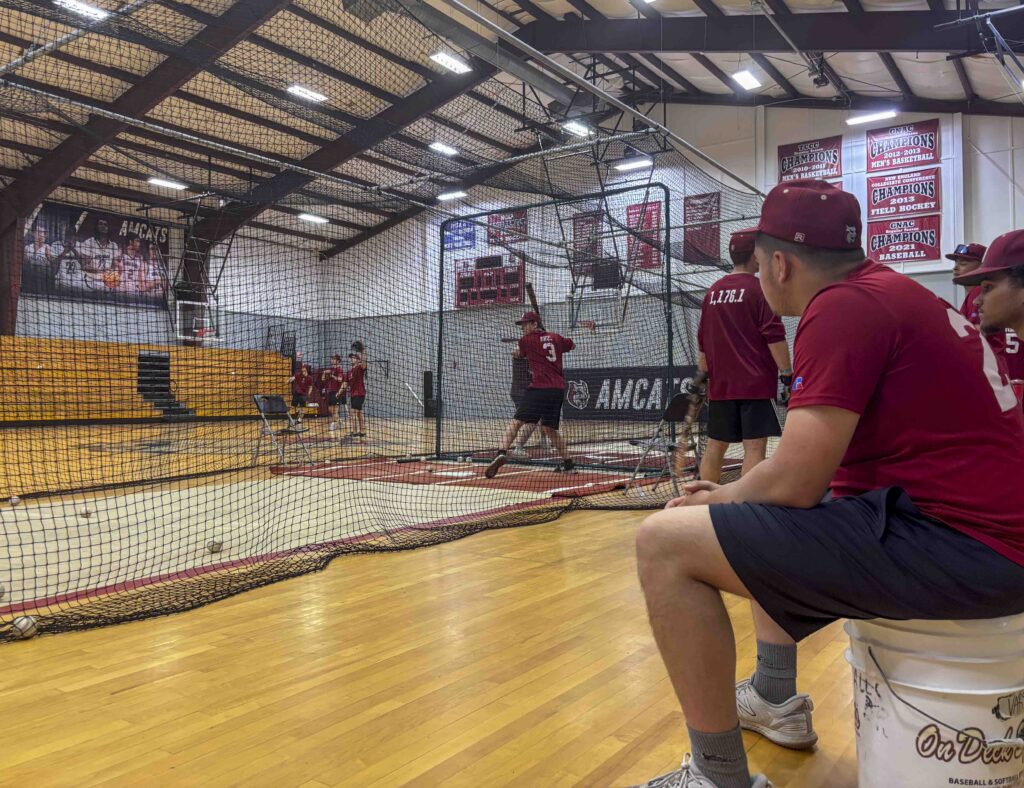
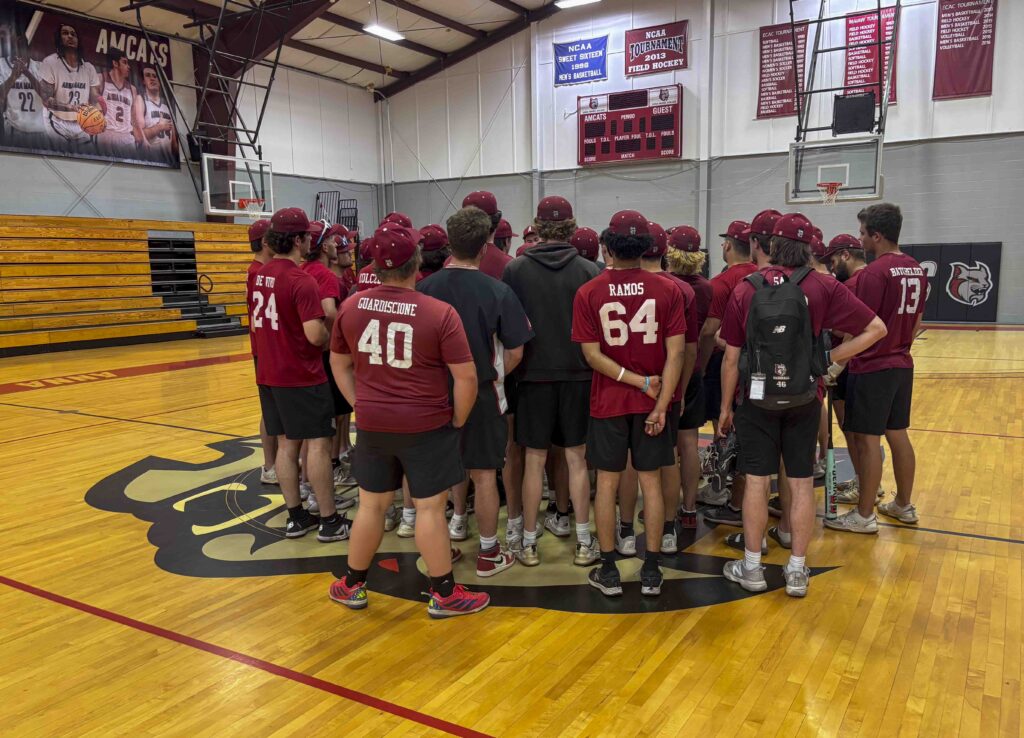
ACROSS CAMPUS THAT MORNING, in the leafy middle-class neighborhood where Anna Maria College has stood since the Sisters of St. Anne founded it in 1946, baseballs snap violently across the hardwood floor of the campus gym, occasionally escaping through a side door propped open to grant entry to the spring breeze.
Some neighbors wander by, peering in at the makeshift practice field. There is a batting cage surrounded by 20 or so young men, their shirts soaked in sweat, each taking turns blasting balls into the net. Across the court, pitchers test their arsenals from behind the hoop as a catcher defends the glass trophy cases. When a lefty loses control of his slider, the ball skips off the wood and over the catcher’s glove and the glass cases, bouncing high up off the wall where the banner is.
Each stitching marks a conference title — a time when this tiny college beat all the other small colleges in the Division III Massachusetts State Collegiate Athletic Conference. A few are from basketball and hockey, New England’s finest athletic pastimes. There’s even an esports one. Missing? Baseball.
“That right there is what we’re playing for,” says Jonathan Guardascione, nodding toward the wall.
Guardascione is 20, a stump-like 5-foot-7, with a New York accent that catches every fifth word. It makes his many proclamations sound more serious than they are, considering the proclaimer plays “Call of Duty” most nights.
“We want this so bad,” he continues. “We have nothing else.”
Anna Maria, a private liberal arts school of about 900 undergrads, has fielded a baseball team since 1986. It has never won a conference title.
On this spring afternoon, however, Guardascione and his teammates are nearing the end of the best season in program history, four wins away from the program’s first MASCAC crown — and the first NCAA tournament berth that would come with it.
There’s just one hitch: Their school no longer exists.
A few weeks before the end of the semester, Anna Maria announced that it was closing — immediately. By this May morning, the dorms and dining halls are all but empty. Someone unplugged the kitchen ovens. The bathrooms ran out of toilet paper four days ago. Aside from the roughly 40 baseball players, their coaches, a few retiring faculty members and the deacon who just can’t bear to say goodbye, the school has essentially been abandoned.
As American birth rates decline, colleges are facing an enrollment cliff expected to upend the higher education market, with much of the pain focused on schools such as Anna Maria. Recent projections suggest that more than 440 of the country’s 1,700 private, nonprofit schools will close or merge in the next 10 years, leaving tens of thousands of aspiring college athletes with nowhere to play. Many will find their way to community college or a larger public school, forgoing their childhood dreams. Many won’t attend at all.
Living among ghosts, Anna Maria’s players desperately want that championship, even if there will be nowhere for the banner to hang. But they also want to play college baseball next year, which will occur only if they find a school willing to take them.
“What a thing to balance,” Guardascione says between turns at the plate. “This is all of our dreams, to win this, you know? But how hard is it to do that when you’re trying to figure out what you’re going to do?”
He trails off, and then says, “We’re playing for another day, boys.”
And then, “We’re doing this for each other.”
And then, “This week could change our lives,” but soon he’s looking at his phone. He has been compulsively sending messages to other schools’ coaches. Worcester State showed interest in April, but it hasn’t hit him back in a while.
He keeps scrolling while the balls skip across the floor.
IN THE BACK HALLWAY of the Anna Maria athletics offices, 14 boxes of baseballs sit against the wall. It has taken the better part of a day to move them there from a stack beside a desk just 15 feet away.
Every time Dan Briand starts packing, his phone rings.
His heart leaps with each call, hoping it’s a college that may need a new baseball coach. It falls when he sees the name of a former player.
He asked for this, he knows. Throughout his nine years as Anna Maria’s head coach, he encouraged every athlete he ever recruited to stay in contact with him. “Give me a call when you get a new job, that kind of thing,” he says. With the news of Anna Maria’s closing, they just keep calling to check in or offer a prayer.
“It means I’ve had an effect,” he says. A college degree, brought forth in part by athletics, “is a life-changing opportunity for these guys.
“And that’s exactly what I try to do, because it did that for me.”
Two decades ago, Briand was the stocky cleanup hitter at Becker College, a now-defunct Division III school 15 minutes down the road. He wound up there because, like Anna Maria, the school was in need of students, so checkered transcripts slipped through. He molded Anna Maria’s baseball program in his own image, amassing players he felt needed a guiding light. These phone calls, he knew, were his reward.
Rural liberal arts colleges have long attracted students like this, often through sports, and relied on them for enrollment. More than 40 percent of Anna Maria’s students played on one of its athletic teams.
“You’re selling a childhood dream — playing college sports — and lacing it with actual, real-life educational benefits,” says Cecilia Orphan, a professor of higher education at the University of Denver. “Small schools do that among the best, where the academics truly mean as much as the athletics.”
“Without schools like these,” she adds, “there are people who may never find another place, who may just end their schooling. Sports draw them in.”
Anna Maria’s finances had been in decline for years, fueled by a 14 percent decline in enrollment from 2020 to 2024. The practice in the gym? That was because the school didn’t make good on its deal with the local batting cage. Briand learned of the unpaid lease only when his team showed up to the facility and its ball bins lined the curb.
Which is why this week means so much — him holding together his group to earn that elusive conference title. “It’d be everything I’ve dreamt of for the last decade,” he says.
It could also help him land his next job. Surely a school somewhere would notice what he built here. So far, though, not one has called. Just “his guys.”
He turns with a sigh back to the boxes of baseballs. After a couple of steps, the phone rings again.
THE TELEVISION SCREEN KEEPS FLICKERING, but at this point, they’re barely paying attention.
“Did you hear about the $5 million?” Guardascione asks. “It was an anonymous donation, right? Where’d that go?”
The clip ends, and the four TVs lighting the room darken in unison. Before Guardascione gets an answer, he spins his chair around and clicks on the open Google Doc to make an addition: “Throws slider on third pitch.”
“I’m not sure it would’ve been enough to do anything,” outfielder Josh Batchelder says.
“Enough for that new field!” says Guardascione, a designated hitter.
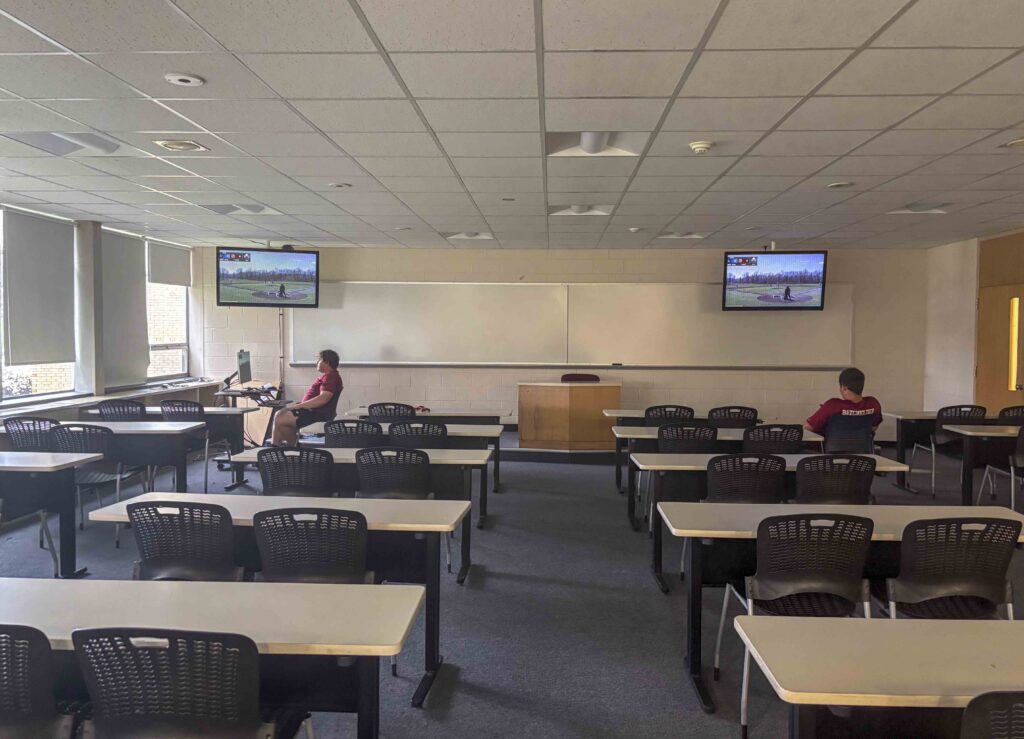
It’s late evening now. Still slick with sweat from their indoor practice, the final tuneup before the MASCAC tournament, and with no classes to attend, the players decide to burn some time watching film of their opponent, Westfield State.
This is a newish ritual. Sometime during this spring, they started piling into each other’s apartments to study tape of their next opponent. But every door on campus is unlocked, so this time they wandered through Anna Maria’s abandoned lecture halls to see what was left. It wasn’t hard to log in to the classroom computers, and minutes later the projector was humming, clips from Hudl, the scouting and recruiting website, ablaze in a dark theater.
Read more Jayden Daniels will rejoin a Commanders team that’s hurting. Can he succeed?
“I just can’t think about the game for too long,” Batchelder says. “How are we supposed to do this?”
NCAA rules don’t require athletes transferring between Division III schools to enter the portal. D-III athletes can explore a transfer at essentially any time, so long as they’re staying at the same level. By this point in the season, many of the D-III athletes who will transfer have already firmed up plans.
But trying to focus on that is naive and unfair, Batchelder says. He thought he would bring his children here one day. When they’re old enough to understand what college is and they ask their dad where he went to college, what will he say? Actually, he thinks aloud, what will he feel? How does —
“Let’s just take a look at this guy’s control,” Guardascione interrupts, unwilling to let his heart or mind wander with his friend.
Guardascione is the son of two Yankees-loving Brooklynites, Irin and Eric, who ran a family radiology business in New York before moving to Boynton Beach, Florida. Eric put a bat in Jonathan’s hands before he was 4.
“If he saw a baseball, he had to grab it,” the father recalls. He was playing T-ball before he knew who the Yankees were, and soon enough he was playing because he knew who the Yankees were.
“His grades just weren’t perfect,” Irin says. Nor were his stats or his bowling-ball frame, so recruiters never came calling. To keep their dream alive, Eric toured Jonathan around colleges smaller than his high school. Anna Maria stuck when Briand threw him one of the team’s caps at the end of the trip, then kept texting him afterward.
“They just wouldn’t let him go home,” Irin says, and once he was on campus, they put him to work. “It forced him to become an adult, to find something he wanted to do.”
The film sessions were helping. He was batting over .300 for his career and leading the Amcats in RBI, all while developing into a team leader. In the evenings, after practice and winter workouts, he would text younger teammates to make sure they weren’t going out, sometimes encouraging them to join him for makeshift study halls.
Lately, though, he was struggling to keep his mind on Anna Maria. His life became a flurry of “let’s do another day” texts from polite recruiters, of disengaged note-taking in classes before finals, of uncharacteristic snappiness in practices after finals. His mind became a merry-go-round, he says, with his sport, his lifeline, gradually slipping away.
Most closing colleges have “teach-out” deals with comparable local schools. Athletes typically drop their sports and lose most of their financial aid, which is awarded as academic grants instead of athletic scholarships, which the NCAA prohibits at the Division III level. But the bulk of their credits apply. Anna Maria has agreements with a handful.
“But I won’t go somewhere I won’t play,” Guardascione says, which leaves him in a common bind. Fewer than half of the students at colleges that close continue their education, and only half of those go on to earn degrees.
“That’s where athletes are going to hit their wall,” says Orphan, the researcher. “Soon, more will have to choose between a degree and their sport. That’s impossible.”
Guardascione is aware. He just chooses to disregard the statistics. His social media profiles now feature his personal cell and email address. “Dm’s OPEN,” they scream.
“This is my final year of college,” Guardascione says. “I’m going to play.”
Later that evening, after the film session, he makes his nightly 11-minute drive home through the New England woods. In his studio apartment, he grills a steak and eats alone at a nightstand doubling as a dining table, scrolling through YouTube and eventually drifting hopefully into his DMs.
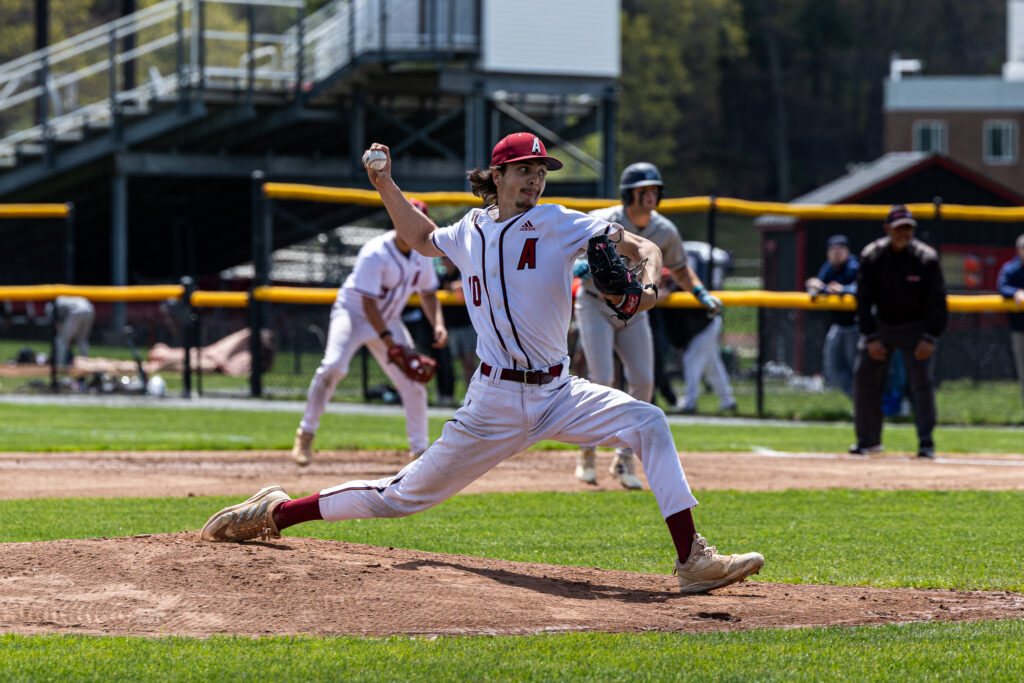
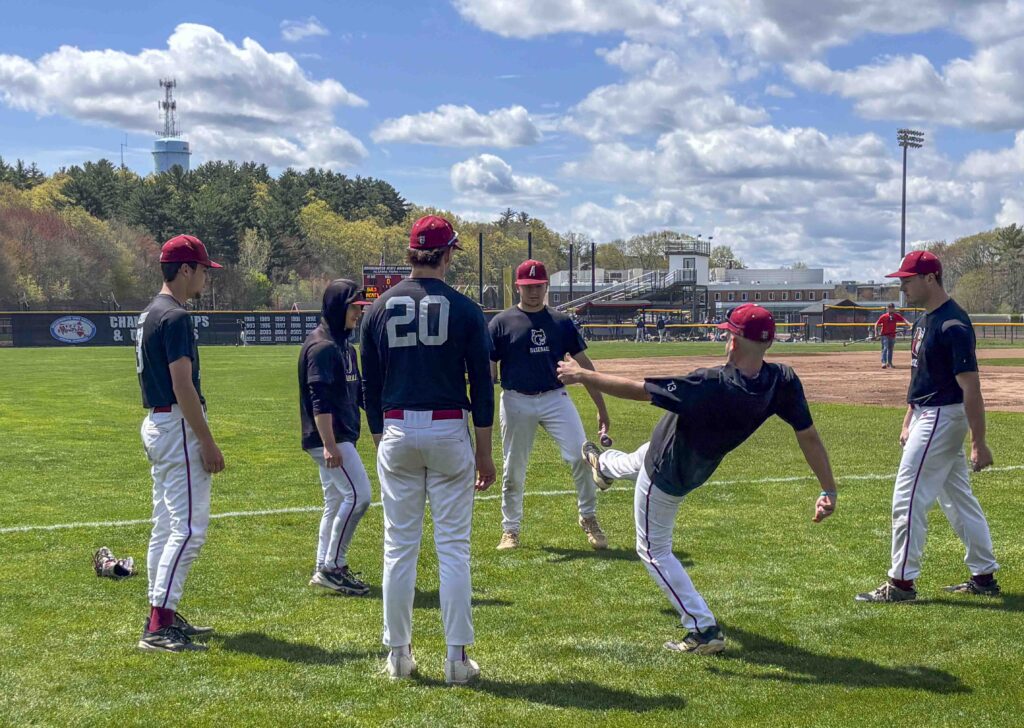
THEY LOADED THE BUS AROUND 7 a.m., and despite the early wake-up, the guys feel loose during warm-ups. The game was postponed a half hour with an umpire running late — this isn’t the College World Series, after all — so they have time for a quick game of hacky sack.
“What kind of job you want to get next week?” one jokes to another in the circle. “Thinking I’ll be an electrician.”
“No, no. You’d make a nice mall Santa,” another responds. They discuss the looming Greyhound trips home and that one professor who failed “80 percent of his students this semester” — a gutsy move given, well, all of this. They don’t talk about this afternoon because it shouldn’t be a worry.
Yes, a loss would end their team’s season and its existence. But Anna Maria won its only series against Westfield in early April, so most believe that the higher-seeded Amcats will sneak through to face the conference’s top team, Bridgewater State, this evening in the conference tournament semifinals. Irin even packed her and Eric a lunch for the intermission — ham sandwiches and barbecue potato chips. It sits in a Walmart bag on the first row of the bleachers.
“They should win this,” Eric says, staring ahead from the fence behind the batter. But Westfield takes an early lead, chasing Anna Maria’s ace, Owen Sullivan, before the fourth. By the bottom of the ninth, with Anna Maria trailing 12-7, Eric is gripping the chain-link fence behind the plate.
Irin, in a “Guardascione #40” shirt, joins her husband at the front. Jonathan doesn’t have a hit in three at-bats. The Walmart bag sits untouched.
“They just need a spark,” she says. No response. A batter settles into the box, and she tries again.
“We just need contact.”
The pitcher winds. A sinker.
Eric’s lips finally part.
“God help us.”
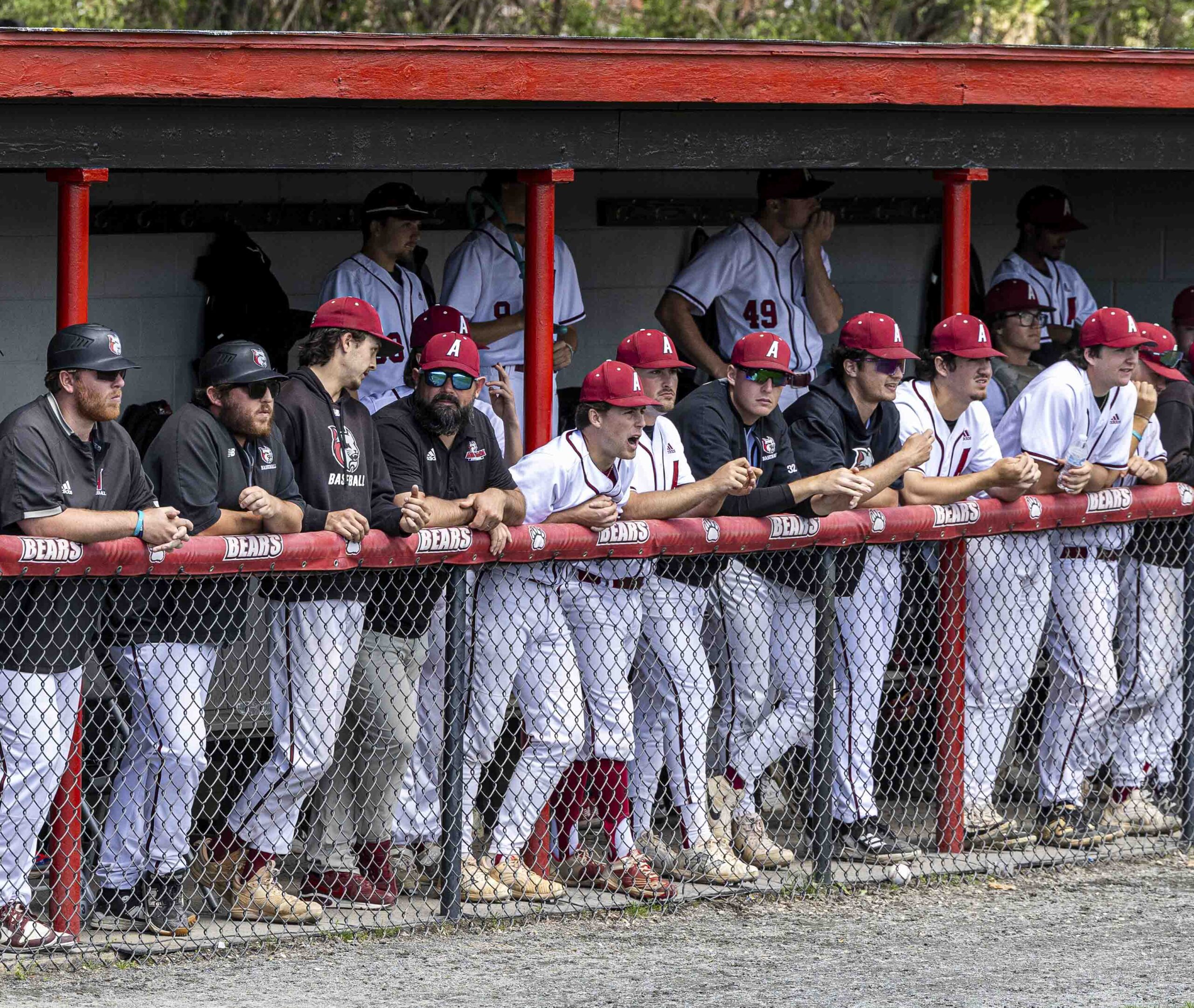
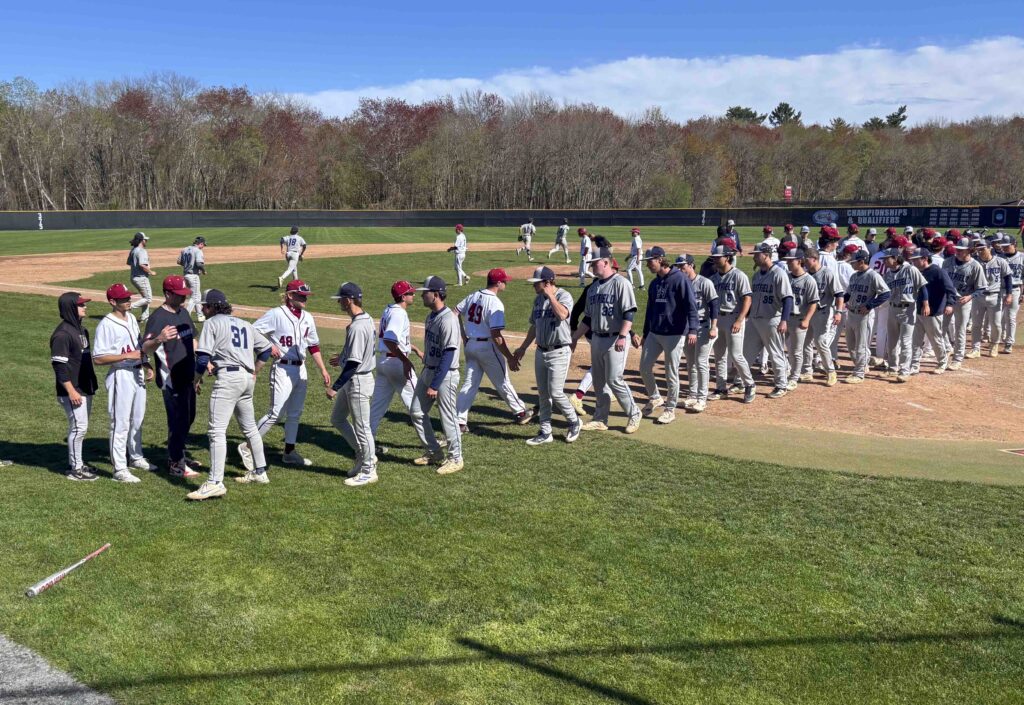
A few minutes later, after the final out lands in the glove of Westfield’s first baseman, Guardascione and his teammates stumble from the bench onto the field, a procession underway. Some wrap arms around one another, tears pouring into dirty jerseys. Briand and his staff lift their boys’ chins as a line gathers, Noah Kahan’s “Deny Deny Deny” playing on the loudspeaker. Parents call for their sons to be proud, keep a straight face. “It isn’t your fault,” Irin says to Jonathan. “You did everything you could.”
By the time they line up to shake hands, they can hear the bus pulling around.
THE NEXT MORNING, players filter in and out of Briand’s half-empty office for exit meetings, lining his wool couch. He has had it since the day he arrived in Paxton. It’s worn, stained in a few spots, but he considers it a token.
In the good years, this was where players gathered after wins, reliving smooth double plays, a 130-pound freshman’s first home run, or the time that Canadian first baseman — what was his name? — forgot to touch third. They could sit there forever, staring out of Briand’s office window at the fields stretching in every direction. Sometimes, after the laughs subsided, they would wander out into the dark to throw the ball around, sure this was where they were meant to be.
Briand figures an open door is still the best course of action on a campus devoid of grief counselors. A line develops down the hall. Conversations run long and emotional, snaking through talk about credits, life after baseball and, more than anything else, life with baseball.
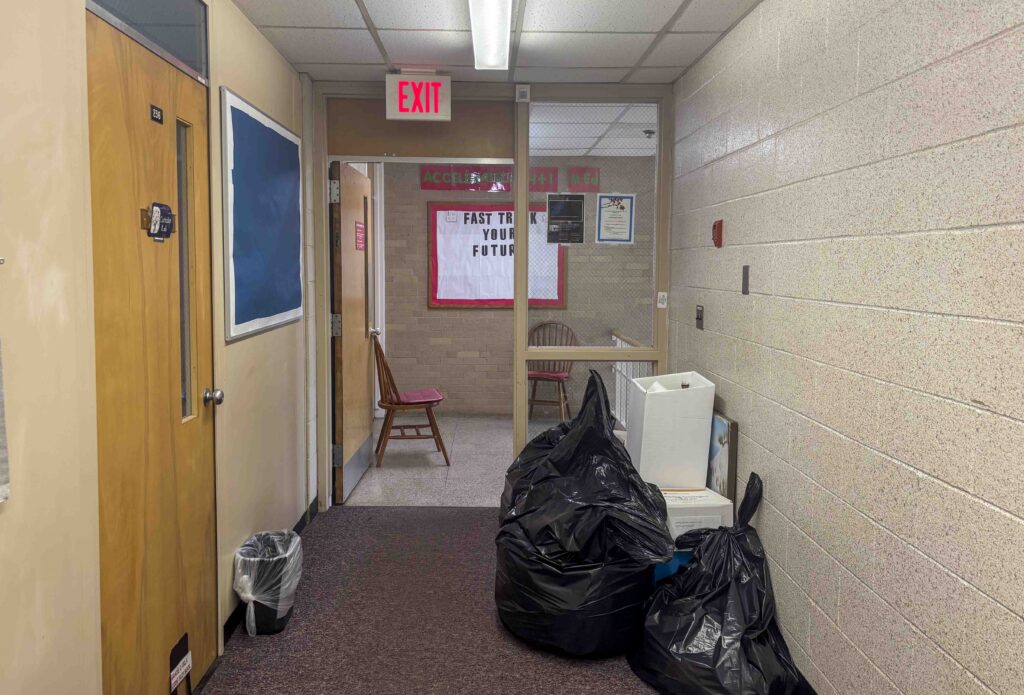
The gym’s banner already disappeared, probably into one of the campus’s 13 teeming dumpsters. Their batting cage equipment is in the parking lot. Before each player leaves the room, opening the door for the next who’s already teary-eyed, Briand says that if they need any baseballs, “feel free to take ‘em.”
“It’s hard watching your guys knowing this might be the end of all of their playing days,” the coach says, staring toward a wall of balls signed after career milestones, all at the Division III level. “They did nothing to deserve this, but in five, 10 years, there won’t even be guys like them.”
He says a prayer and reminds each player that, no matter what happens next, this isn’t the end. He’ll always be a call away. There’s an air of you-never-know, like they may all reunite on some D-III campus to be named later. But on that battered couch, they have a sense.
By fall, a few Anna Maria players will have found new teams to play on. Most will quit the sport but keep going to classes. Ten or so will watch the fall semester start without them, signaling that their college educations may end without a degree. Briand will settle into a role as an assistant athletic director at a community college.
Guardascione? He got lucky, he knows. The coach at Worcester State finally returned his DMs. Its tuition is slightly lower than what he paid at Anna Maria, and most of his credits will transfer. Its enrollment is falling, but he needs only a year.
He lets out a breath and stands up from the couch, hugs coach and heads for the door. Briand motions for him to grab one of the baseballs — a parting gift, he says. Guardascione smiles and nods, glancing at the boxes of gleaming cowhide, and walks out.
Read more Talarico, Paxton launch dueling ads amid heated Senate race in Texas