NEW YORK — The Justice Department agreed to withdraw subpoenas it issued to New York Times reporters after a federal judge sharply questioned the government’s demand that they testify before a grand jury about their reporting on security concerns with President Donald Trump’s new Air Force One jet.
Read more Trump officials tout Sophie Cunningham as role model on trans issues
U.S. District Judge Arun Subramanian, who held a hearing Thursday on the Times’s motion to quash the subpoenas, said the news organization had raised “profound First Amendment and free press issues.”
“Seems like you’ve got two options — either we can quash the subpoenas or you can withdraw the subpoenas,” Subramanian told a prosecutor during the hearing.
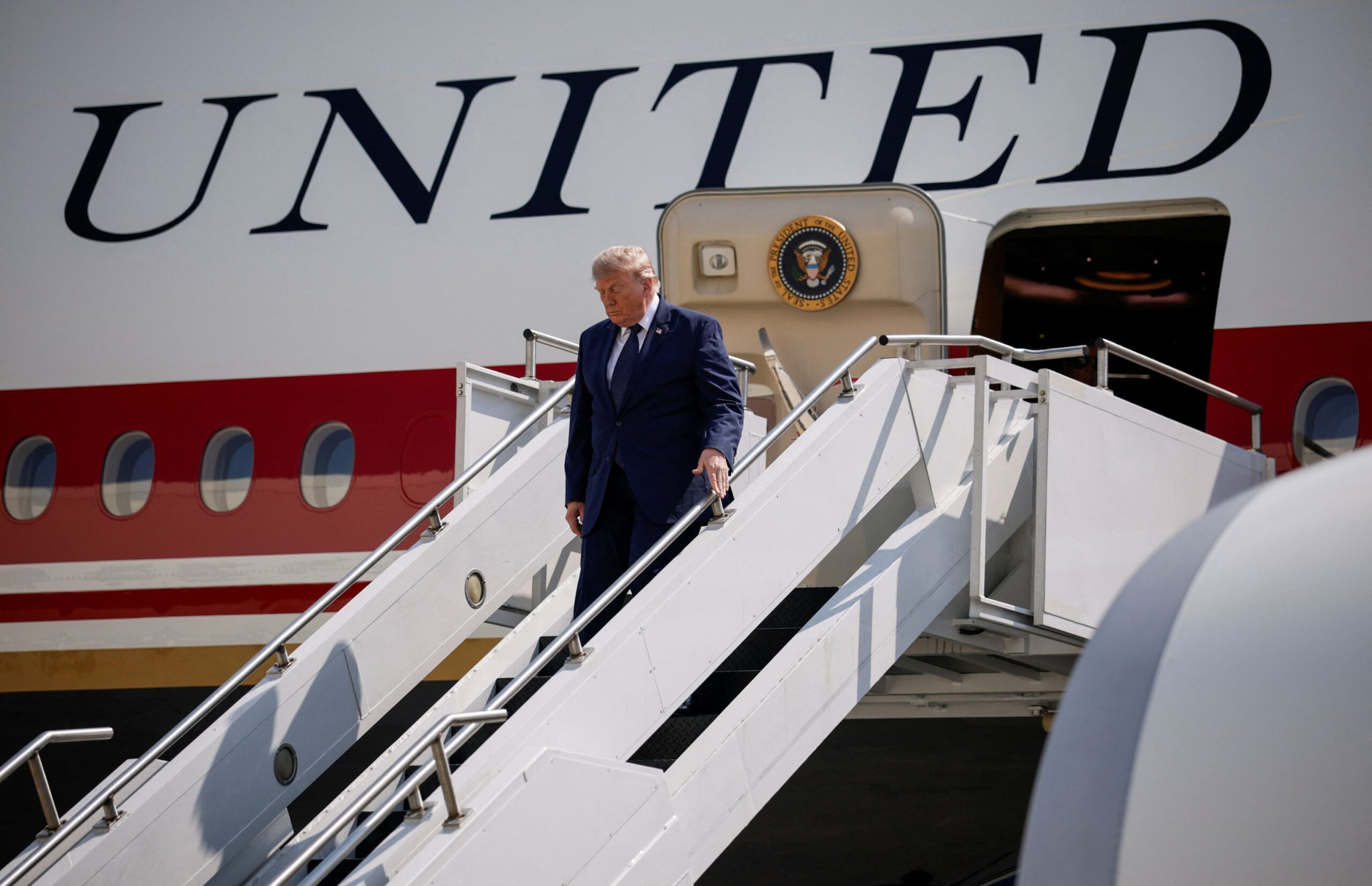
The Times reported this month on U.S. officials’ concerns with the 747-8 aircraft given to the United States by Qatar, a luxury jet that Trump has retrofitted into Air Force One at taxpayers’ expense. Trump has said he expects the plane will be donated to his presidential library at the conclusion of his term.
The Times reported that, for one leg of a recent overseas trip, Trump opted to fly on an older Air Force One jet after the Secret Service expressed concern that the Qatari plane lacked some security features, such as sophisticated antimissile capabilities, typically available on aircraft used by a president.
Shortly thereafter, several of the Times reporters who worked on those articles were served subpoenas at their homes by federal agents. The subpoenas compelled the reporters to testify before a federal grand jury in Manhattan about an “alleged violation of federal law.”
The Justice Department also sought phone and text-messaging records for several of the reporters and in some cases their family members, according to the Times’s court filings in its challenge to the government’s demands. A prosecutor said in response that all the phone numbers in question were believed to be in use by the journalists and not their family members. The government also agreed to withdraw those subpoenas.
Attorneys for the Times asked Subramanian to quash the subpoenas, saying they failed to comply with strict legal precedents delineating the narrow circumstances in which prosecutors may compel testimony from journalists.
The subpoenas were being used as a tool of harassment, retaliation and intimidation by a president who has made no secret of detesting the free press, the Times argued.
“The Subpoenas are an end in themselves—an instrument to chill criticism of the Administration—and they conflict both with the law and fundamental First Amendment principles,” the news organization’s attorneys wrote in a court filing.
The subpoenas were sought by Jay Clayton, the U.S. attorney in Manhattan, and were authorized by acting attorney general Todd Blanche, according to congressional testimony from both officials.
The Times’s “articles presented a substantial national security concern,” Clayton’s deputy, Sean Buckley, wrote in a court filing. He wrote that the reporting “indicated potential leaks of classified or national defense information that appeared to have been provided to the Times when the President of the United States, senior officials, and reporters were flying in foreign airspace during a time of hostilities with a foreign adversary.”
Trump has nominated Clayton to be the director of national intelligence and Blanche to serve a full term as attorney general.
Although it is not unprecedented for federal prosecutors to seek journalists’ testimony before a grand jury, including about confidential sources, the Justice Department historically has used subpoenas to the news media as a measure of last resort when no other investigative methods are available to identify government officials leaking information.
But in this case, the Times’s attorneys argued, the Justice Department appeared to subpoena the reporters as one of the first investigative steps it took.
Read more U.S. intelligence agency quietly cut about 200 jobs since June 1
Legal experts and First Amendment advocates say efforts to compel journalists to disclose their confidential sources could chill reporting on crucial issues in the public interest. In a sworn court declaration, one of the Times reporters who was subpoenaed said his sources were aware of the legal battle and becoming more reticent to share information.
In a landmark case from the 1970s, Branzburg v. Hayes, the Supreme Court ruled: “Official harassment of the press undertaken not for purposes of law enforcement but to disrupt a reporter’s relationship with his news sources … ha[s] no justification.”
The federal appeals court that sets legal precedents in New York has ruled that the disclosure of a journalist’s confidential sources “may be ordered only upon a clear and specific showing” that the information is highly relevant, critical to the investigation and not obtainable from other available sources.
Subramanian seized on prosecutors’ concessions at the hearing that the Justice Department did not take all available steps to get the information it was seeking before issuing subpoenas to the reporters.
“Subpoenas are the last step — not the first step, but the last step,” the judge said.
In court Thursday, Buckley said the Justice Department may seek to issue subpoenas again, with the court’s authorization.
“We are pleased that the government finally conceded that the subpoenas violated the law, but they should never have been issued in the first place,” David McCraw, senior vice president and deputy general counsel for the Times, said in a statement after the hearing. “The Times and our journalists will continue to report and seek the truth without fear or favor. We will not be deterred in the face of tactics like these.”
According to the Times’s court filings, Trump was angry at the reporting about the Qatari jet’s security vulnerabilities, and FBI Director Kash Patel personally ran the investigation from the White House on July 10, the same day the initial subpoenas were issued.
When the Times reported Patel’s unusual involvement, he commented in a post on social media. “I was at the White House, true, and the fake news will find out why soon,” Patel posted on X.
Since Trump took office last year, the Justice Department has set aside its traditional independence from the White House, pursuing several of the president’s perceived political enemies with accusations of criminal conduct and taking unusually aggressive steps toward the news media in response to government leaks.
In recent weeks, the Justice Department sought to force journalists from The Washington Post and the Wall Street Journal to testify before a federal grand jury, although it withdrew those subpoenas after they were challenged by the news organizations.
Federal agents also this year raided the home of Post reporter Hannah Natanson and seized her electronic devices as part of an investigation of a government contractor who has been indicted on allegations of leaking classified information. Natanson regularly communicated with confidential sources about the Trump administration’s moves to slash the size of the federal government, coverage that was awarded the Pulitzer Prize for Public Service this year.
In March, the chief judge of the federal district court in D.C. ruled to quash a pair of subpoenas sent to the Federal Reserve and its chairman at the time, Jerome H. Powell.
Judge James E. Boasberg found that the U.S. attorney who obtained the subpoenas, Trump ally Jeanine Pirro, was using them only to harass Powell or get the Fed to lower interest rates, as the president had long demanded.
Read more Anthony Fauci, Rand Paul to face off again in Senate hearing next week