The U.S. delegation had planned to visit the Brazilian capital and cast doubt on the integrity of the voting system before a presidential election this fall, officials said.
Read more McConnell faces growing questions about absence nearly six weeks after fall
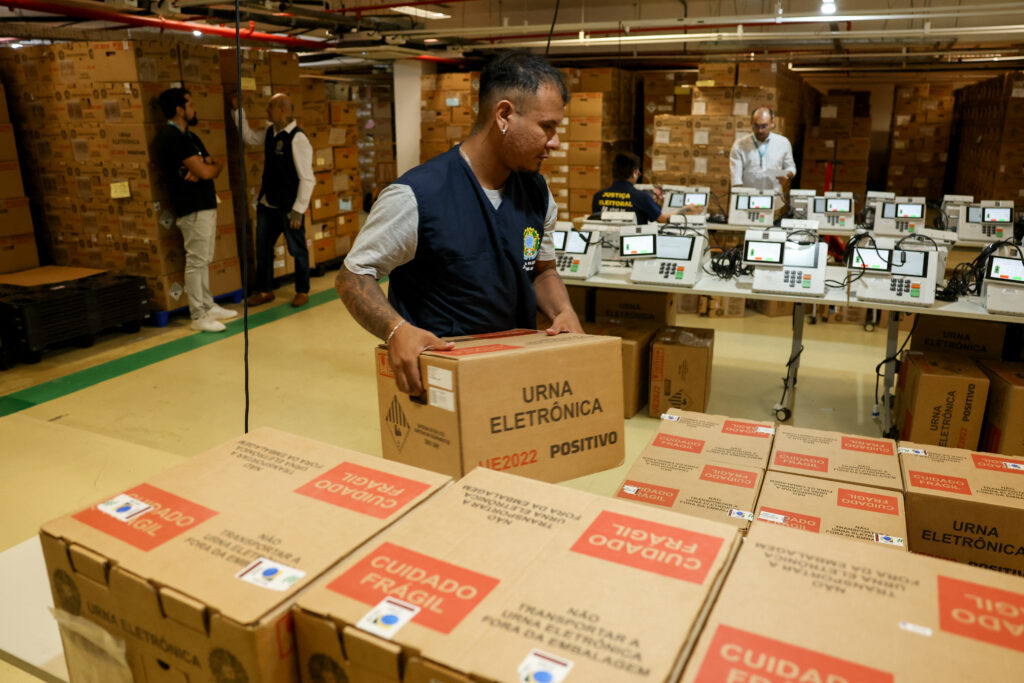
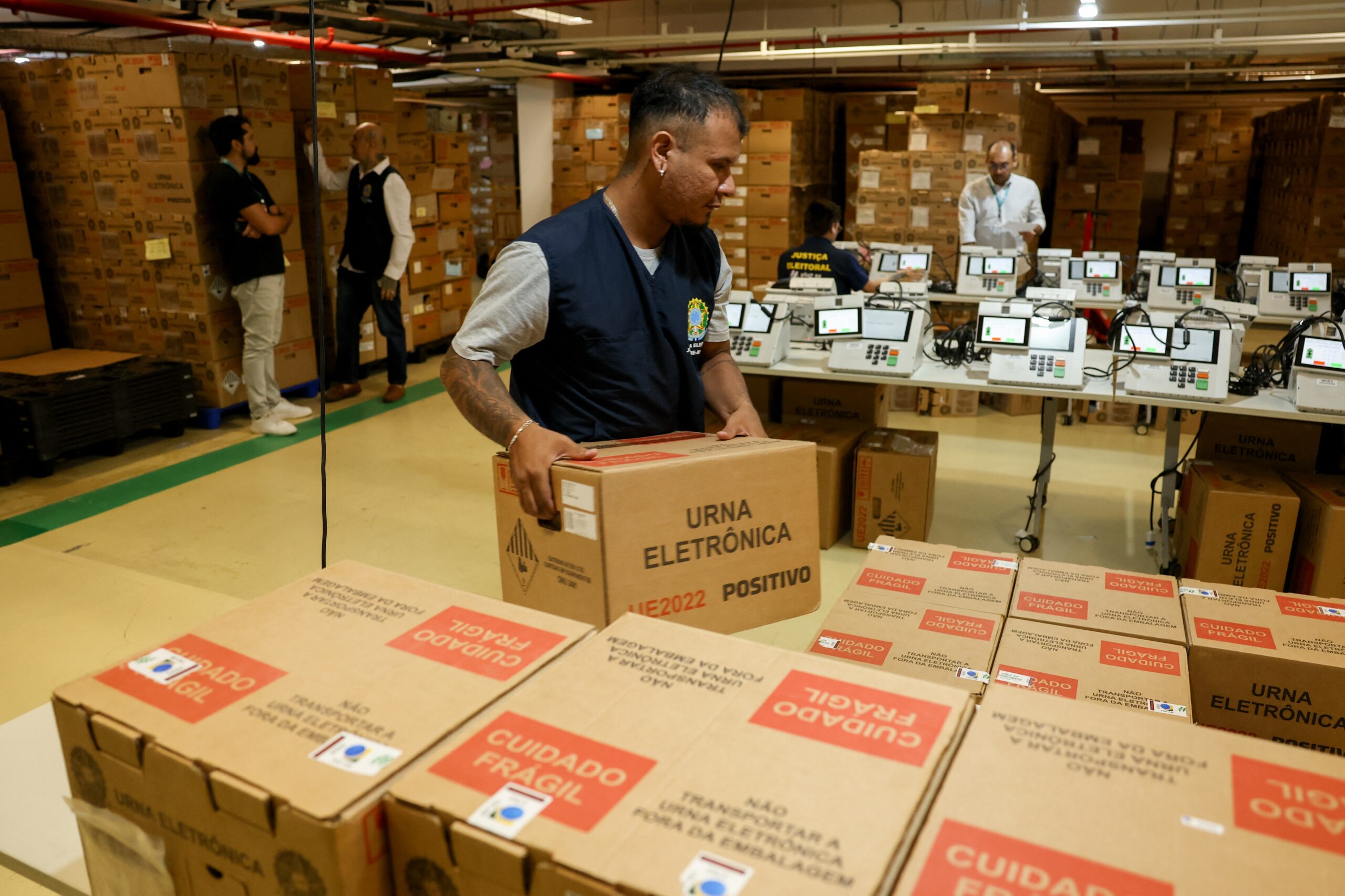
BRASÍLIA — Brazil has denied visas to two senior State Department officials that the Trump administration planned to dispatch on a mission to cast doubt on the fairness and integrity of the country’s electoral system before millions of Brazilians vote in a presidential election on Oct. 4, the Foreign Ministry said Saturday.
A U.S. State Department delegation, including Trump political appointees Riley M. Barnes, an assistant secretary, and Samuel Samson, a deputy assistant secretary, had planned to depart for Brasília, the capital, in coming days, according to four U.S. and Brazilian officials, who spoke on the condition of anonymity to discuss sensitive diplomacy.
But Brazilian officials, apprised of the plans, denied the Americans permission to travel, the Foreign Ministry said. The U.S. officials applied for visas through the Brazilian consulate in Washington, saying they planned to hold “meetings with authorities involved in the electoral process,” Brazilian officials said.
Samson has traveled from Africa to Europe, promoting President Donald Trump’s brand of conservative politics and cultivating ties to right-wing groups, at times alienating establishment politicians.
It was unclear whom the U.S. diplomats had planned to meet or how they would impugn a system long seen as an electoral standard-bearer in South America, returning results within hours of Brazilians casting their ballots.
Two senior Brazilian diplomats told The Washington Post on Thursday that they had recently learned of what they described as the American “ploy” and had vowed to block the U.S. officials from entering the country.
“It is a ploy that is completely incompatible with Brazilian democracy,” said one official, who spoke on the condition of anonymity because he was not authorized to speak to the media. This official said the Brazilian government would move to “protect our voting system.”
In a statement to The Post, the State Department confirmed that Barnes and Samson were planning to travel to Brasília next week, but did not respond to questions about the purpose of the trip or whether the Trump administration was concerned about electoral integrity in Brazil.
Neither Barnes nor Samson returned messages requesting comment.
The attempted mission by the Trump officials marked an escalation in a lengthy feud between the United States and Brazil over the limits of freedom of expression and the criminal case against former president Jair Bolsonaro, who is under house arrest after being convicted of attempting to lead an armed coup and other charges.
The U.S. effort also underscores the broader cultural makeover of America’s diplomatic corps, which in the Trump administration has increasingly been deployed to further political goals rather than advance long-standing principles that once superseded partisanship.
“For those of us who lost friends bringing democracy to other countries, it’s incredibly noxious seeing this secretary using American power to undermine credible elections in other countries for ideological purposes,” a senior U.S. State Department official with knowledge of the endeavor said, speaking on the condition of anonymity because he wasn’t authorized to speak publicly.
“We used to deploy power in dangerous situations for democracy,” the senior State Department official said. “Now we send political appointees to discredit another country’s electoral system.”
The senior official drew a distinction between this diplomatic mission and efforts by the U.S. government in 2022 to fortify Brazilian democracy and avert a military takeover. In the lead-up to that election, Jair Bolsonaro repeatedly sought to sow doubt over Brazil’s electoral system, which he alleged was rife with fraud.
Bolsonaro, a former military officer, simultaneously worked to politicize the Brazilian military and warned of a democratic “rupture” if his power was threatened.
Two days after Bolsonaro proclaimed that “the army is on our side,” Defense Secretary Lloyd Austin spoke out in support of democracy in Brasília and about the need for civilian control of the military.
The senior official said he saw U.S. intelligence assessments at the time that found “there is no credibility to these accusations against the credibility of Brazil’s electoral system.”
“We brought down a steady stream of military folks to make clear to their counterparts that they were going to put themselves in jeopardy for sanctions and other things like that if they broke with constitutional norms,” the official said.
Read more With the postseason far off but not out of mind, Nats fall to Diamondbacks
Following the election, Bolsonaro sought to overturn the results showing he had lost to Lula and initiate a military takeover, but most of the country’s generals balked at the plan. Last year, he was convicted of attempting to overthrow the Brazilian state and sentenced to 27 years in prison, a term he is serving under house arrest.
One Trump appointee to the State Department, Darren Beattie, tried to visit Bolsonaro following his conviction, but his visa was revoked by the Brazilian Foreign Ministry.
Flávio Bolsonaro, who is trailing in the polls, appeared to echo his father’s allegations this week in a meeting with diplomats. He said Brazil’s voting machines were made by the Venezuelan company Smartmatic and vulnerable to fraud — claims rebutted by the Brazil’s Superior Electoral Court.
International observers have asserted repeatedly that Brazil’s electoral system is sound.
Every “observation mission to Brazil since 2018, when they started, including the 2022 presidential election, has found the country’s electoral system to be secure, reliable and fully capable of producing legitimate election results,” said Benoni Belli, the Brazilian ambassador to the Organization of American States.
Salvador Romero, a leading Latin America elections expert who has observed elections in more than 20 countries, concurred. “The Brazilian electoral system is undoubtedly considered one of the most robust in Latin America,” he said.
But the power of doubt continues to be a potent force among conservative critics of Brazil’s left-wing government. They have found a sympathetic ear in the White House, said Paulo Figueiredo, a right-wing Brazilian influencer who is wanted by Brazilian authorities for his alleged role in Bolsonaro’s coup attempt.
Figueiredo has met repeatedly with senior officials in the White House in recent months. In May, he was photographed meeting with Secretary of State Marco Rubio, alongside Flávio Bolsonaro and his younger brother Eduardo Bolsonaro, who is also wanted by Brazilian police.
“I know the U.S. will observe the election, and they have expressed concerns about electoral integrity in Brazil directly to me before,” Figueiredo said. “This is a very, very important subject for this administration. I know they have been deeply studying the electoral system in Brazil for a while now.”
Across the region, the Trump administration has pursued an aggressive effort to propel Trump-aligned candidates to power — a sharp break from diplomatic norms that generally call for not intervening in the domestic politics of other nations.
The Trump administration bolstered Argentine President Javier Milei last year, including by offering financial assistance to the country.
In Honduras, Trump endorsed a conservative mayor who was elected president. And in Colombia last month, a far-right firebrand, Abelardo de la Espriella, was elected president after receiving Trump’s endorsement. Trump pledged that if Abelardo won, he would have the “total support and strength of the United States behind him.”
Following Abelardo’s victory, outgoing leftist President Gustavo Petro made claims of electoral fraud, concerns that the Trump administration did not share.
Instead, in a joint statement with regional powers allied with the U.S., the State Department condemned efforts to “cast doubt on the integrity of the electoral process” in Colombia.
“We reject any action, statement, or decision that seeks to delegitimize the mandate conferred by the citizens, to discredit without basis the competent electoral authorities, or to obstruct the institutional transition,” the statement said.
McCoy and Schmidt reported from Mexico City. Karen DeYoung and Aaron Schaffer in Washington contributed to this report.
Read more Trump swings back toward diplomacy in escalating war with Iran