The new bill is part of Democrats’ effort to articulate a legislative agenda ahead of the midterm elections.
Read more Bullpen struggles again, and Nationals drop series to Blue Jays
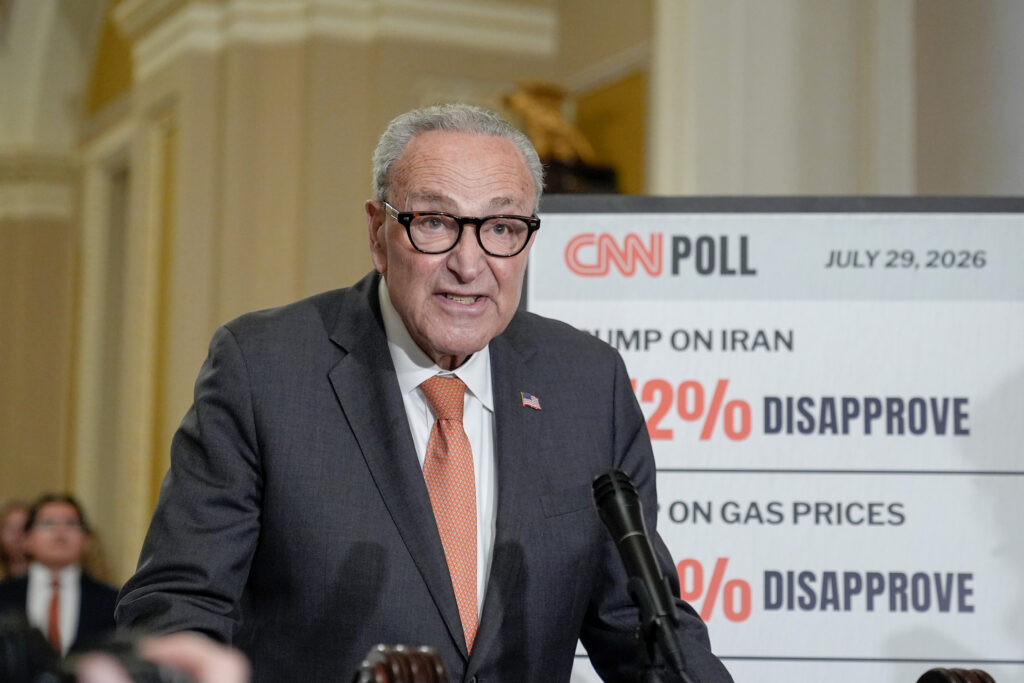
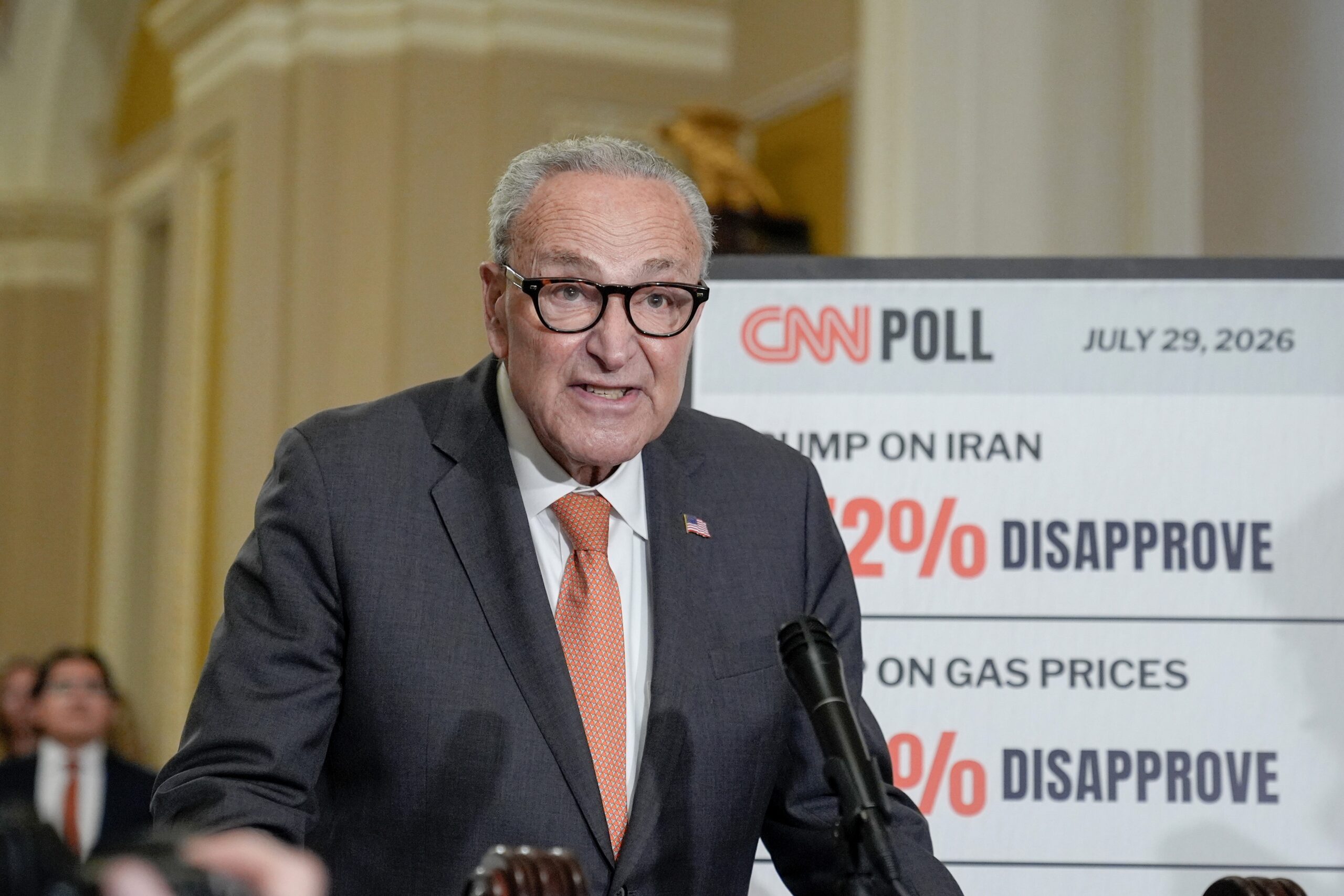
Senate Minority Leader Chuck Schumer (D-New York) is set to introduce legislation Thursday to create a new federal agency to investigate corruption in response to President Donald Trump’s administration.
The bill is part of Democrats’ effort to articulate a legislative agenda ahead of the midterm elections, in which the party is fighting to retake the House and the Senate.
Much of the party’s agenda is built around plans to lower the cost of housing, energy, health care, food and child care. But Schumer is betting that voters are also fed up with what he described as Trump’s efforts to profit from the presidency and want to clean up Washington a decade after Trump promised to “drain the swamp.”
“They used to shrug their shoulders and say, ‘Ah, that’s Washington,’” Schumer said Wednesday in an interview in his office. “But it is so base and so deep and so pervasive that people don’t just say it’s Washington. They say, ‘This is a new level and we’ve got to stop it.’”
House Minority Leader Hakeem Jeffries (D-New York) has delivered a similar message, calling for “accountability in the face of rampant corruption in Washington, D.C., the likes of which we have never seen in our nation’s 250-year history.”
Schumer’s bill would create a new agency, the Anti-Corruption Bureau, with broad investigative authority, including subpoena power. It would absorb three existing agencies — the Office of Government Ethics, the Federal Election Commission and the Office of Special Counsel — and place them under a new agency led by seven board members who would be confirmed by the Senate. No more than three board members could come from each party.
The bill would bar presidents and vice presidents — along with their spouses and adult children — and many senior administration officials from “corruptly” seeking or accepting anything worth more than $50,000. It would allow state attorneys general and private plaintiffs to sue over violations.
Schumer’s aides designed the agency in a way that would attempt to insulate it from interference, with a funding mechanism similar to the Federal Reserve, the independent central bank.
The bill faces little chance of passage in the Republican-controlled Senate — and it could face a hard road even if Democrats retake Congress and voters elect a Democratic president in 2028. Unlike some Democratic priorities, the bill could be filibustered and would need the support of 60 senators to advance.
Schumer predicted the backlash to the Trump administration’s corruption would be so fierce that some Republicans might support the bill.
Read more 5 takeaways from the Senate hearing where Fauci refused to answer questions
Democrats have repeatedly portrayed the Trump administration as corrupt, pointing in particular to Trump’s disclosure last month that he earned $2.2 billion last year from crypt and other ventures, as well as Trump’s sons’ investments in defense technology start-ups that have benefited from new Pentagon spending.
The White House has defended Trump against accusations of corruption, accusing Democrats of trying to sell a “tired narrative” about the president and his family.
“Neither the President nor his family has ever engaged — or will ever engage — in conflicts of interest,” Anna Kelly, a White House spokeswoman, said last month.
This bill is not solely aimed at Trump. Schumer said he would keep pushing to pass it even if a Democrat wins the White House in 2028.
“We need to clean up this government, period, no matter who’s in charge,” Schumer said. “And you need to guard against corrupt people getting involved. Doesn’t have to be a president. You might have a corrupt Cabinet secretary even in a good administration.”
The law would allow the Anti-Corruption Bureau to investigate the Trump administration even after Trump is out of office. It gives the agency the power to investigate violations committed on or after Jan. 20, 2025 — the first day of Trump’s second term — with a 10-year statute of limitations.
Not all of Washington’s previous efforts to set up independent bodies to investigate misconduct have been unqualified successes.
The Ethics of Government Act of 1978, passed in response to Watergate, created independent counsels with broad powers. But they were criticized by Democrats and Republicans alike, and the provision was allowed to lapse in 1999. Special counsels such as Robert S. Mueller III, who investigated Russia’s interference in the 2016 election, and Robert K. Hur, who investigated President Joe Biden’s handling of classified documents, also faced criticism.
Schumer said the new agency would be different from independent counsels or other previous efforts.
“Those were aimed at a specific malfeasance, like Watergate,” Schumer said. “This is aimed broadly at the most corrupt — at a presidency that has invoked all kinds of corruption everywhere you look.”
Read more Establishment fails to stop rise of democratic socialist in Wisconsin