Shasta County, California, where election doubts run so deep that some don’t trust results even when their choice prevails, offers a glimpse of what happens when distrust in voting systems takes root.
Read more Should Big Oil pay for climate change? A Supreme Court case will help decide.

REDDING, Calif. — Clint Curtis thinks something doesn’t smell right in Shasta County. Literally.
As the registrar of voters for this Northern California community, Curtis was both election administrator and candidate this summer. After he lost, he certified the results as “full, true and correct.”
He nonetheless harbored doubts. Some ballots smelled too inky, he said. Some seemed too heavy. Some felt too rough.
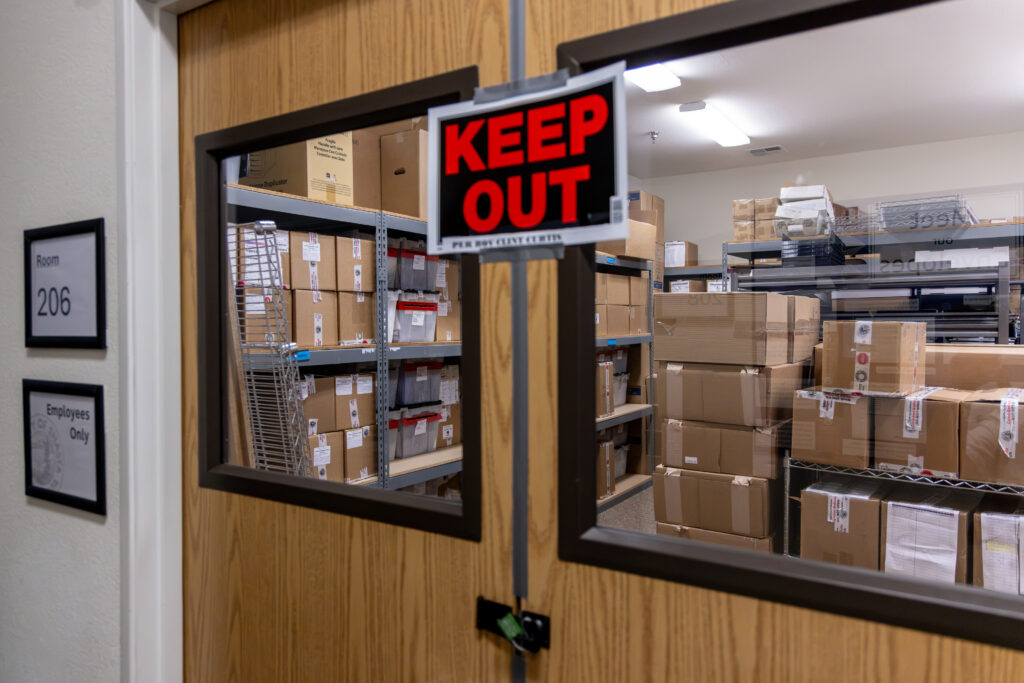
He stashed the ballots in a storage room, slapped a padlock on the door, ordered subordinates to destroy the keys and reported his suspicions to President Donald Trump’s administration.
In another place or era, Curtis’s concerns would be dismissed as kooky. But in Shasta County in 2026, they have been taken seriously enough to spur FBI agents to show up with bolt cutters so they could take a look.
For years, Shasta County has been a center of election denialism. Citing debunked conspiracy theories about voting machines, its conservative county supervisors dumped their contract with Dominion Voting Systems and toyed with counting ballots by hand. Activists sued over election practices. And during this summer’s election, voters approved a measure that would require photo ID to vote, restrict mail ballots and mandate hand counts — policies that courts have blocked.
Shasta County offers a glimpse of what happens when distrust in elections takes root in a community. Across the United States, both Democrats and Republicans have seen their confidence in elections wane, especially when their side loses. In Shasta County, the doubts run so deep that some residents don’t trust the results even when the candidates they back prevail.
Curtis has spent a quarter century warning about rigged elections. Last year, a majority on Shasta County’s board that shared his suspicions appointed him to finish out the term of a retiring registrar of voters.
Curtis sought a full term this summer, but voters in this forested county south of Mount Shasta rejected him.
Since then, he has called the election into doubt in any way he can. He has questioned whether some ballots contained bamboo fibers, echoing a baseless claim from the 2020 election that counterfeit ballots in Arizona were shipped in from Asia.
“I have ballots that are rougher,” Curtis said. “And I’ve been told that the bamboo fiber stuff would make it rougher. Do I know that’s true? I don’t know that’s true.”
In January, Curtis will step down so his successor can take over.
In the meantime, he has one more election to run as registrar, in November. And the doubts about voting in this county are unlikely to end even when Curtis leaves.
Curtis’s backers are committed to scrutinizing past elections and remaking how future ones are conducted.
Among them is Patrick Jones, the former county supervisor most responsible for bringing Curtis to California. Jones, 58, lost his reelection bid two years ago, and he has refused to accept his defeat.
“I don’t feel like — 2024 — that I lost that race,” Jones said. “But then, how do you prove it, right? That’s a whole other thing. How do you prove what you feel?”
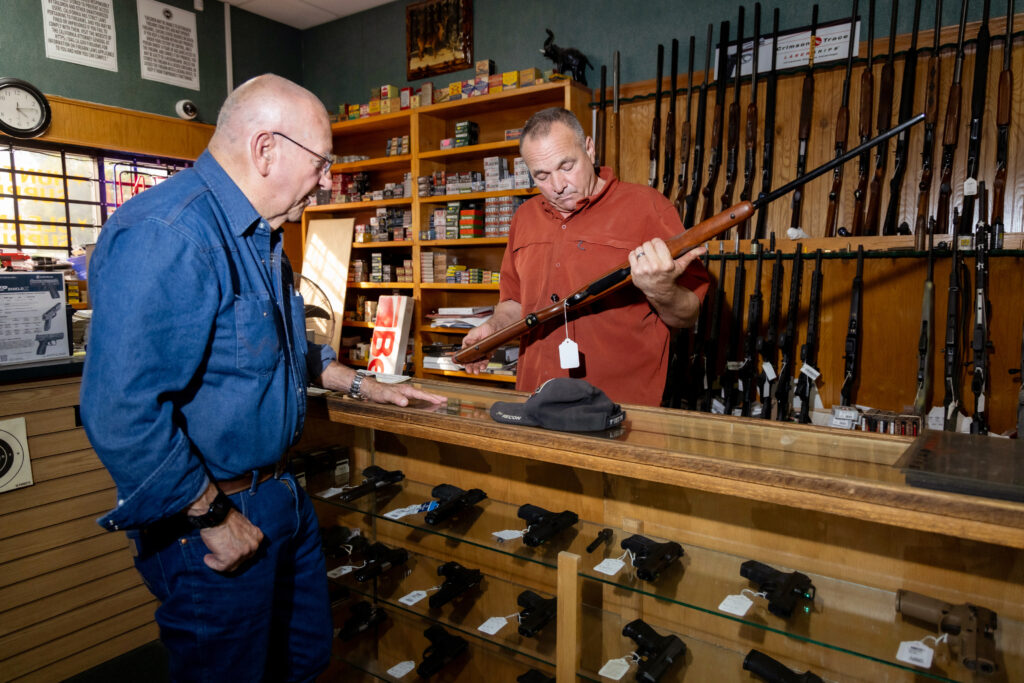
Jones, a conservative activist who helps run his family’s gun shop, won his 2020 race by capitalizing on anger over covid restrictions. His attention soon after shifted to how elections are run in the reliably Republican county.
He believes even his own winning race was manipulated to lower his victory margin by unknown forces. He hasn’t turned up evidence, but his suspects include foreign actors, state figures, local workers or a combination of all of them.
For six years, he and his allies have looked for ways to overhaul Shasta County’s elections and replace the people who run them.
They found an opening when Cathy Darling Allen retired in 2024 after nearly two decades as registrar. She had been diagnosed with heart failure, and the stress of nonstop criticism was contributing to the decline of her health, she said.
“Some local rabble-rousers decided that Trump was right and that if they don’t like the result, that means the election is rigged,” said Darling Allen, 57. “That is profoundly un-American and unpatriotic.”
Jones wanted to give the job to Curtis, but a fellow conservative supervisor insisted on Tom Toller, a former prosecutor with his own doubts about elections. Jones agreed to hire him but soon felt betrayed because Toller said he found no signs of fraud and kept many of the county’s longtime election policies.
Ten months after taking the job, Toller stepped down in April 2025 because of health problems. Jones was off the county board by then, but he and his allies saw a fresh shot to put a sufficiently skeptical official in charge of elections.
On a 3-2 vote, the supervisors hired Curtis.
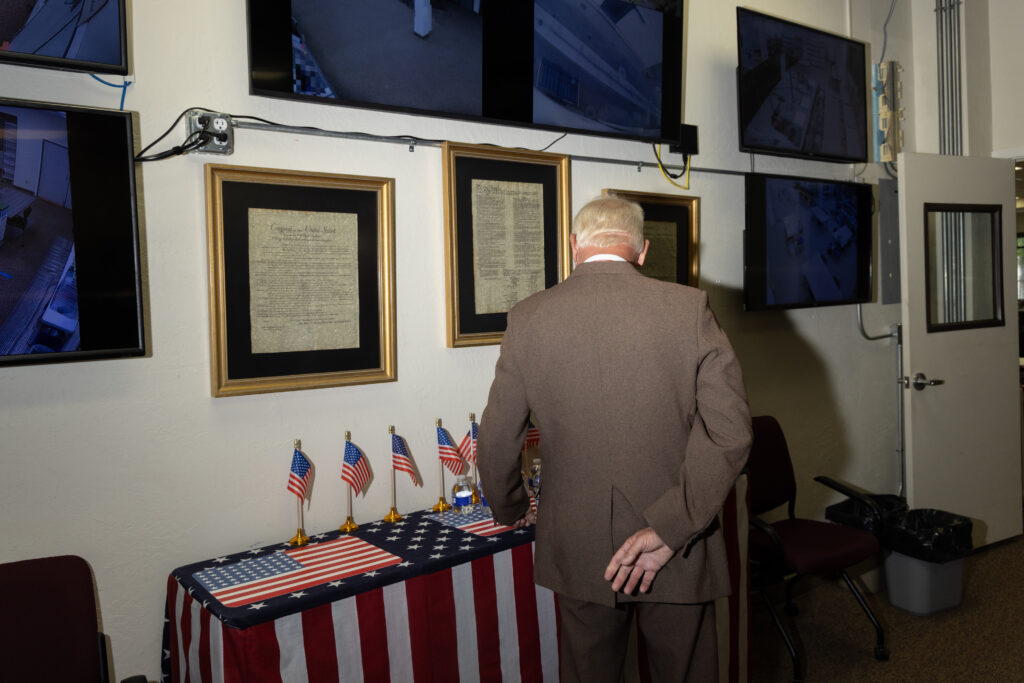
Curtis came to Shasta County from Florida, and he said he moved across the country for the job because he wanted to revamp elections in a way that other communities might replicate. He had never run an election before, but he had spent more than two decades scrutinizing them after concluding that voting machines could throw off results.
He wrote computer code in 2000 to show voting machines could alter results, he said, and he took his concerns to a congressional committee led by Democrats four years later. He became an immigration attorney but also continued to focus on voting machines, both as a lawyer and as a Democratic congressional candidate.
Curtis, 68, usually wears a suit and tie, even on stiflingly hot days. A holster on his hip holds three cellphones. Because of his Baptist upbringing, he doesn’t drink, smoke or curse. He avoids reading media accounts of his activity, he said, even in friendly publications.
Read more With threats to midterms, states say Trump administration isn’t helping
Curtis started out as a Republican but said he became a Democrat when he grew disillusioned with the Bush family’s version of the GOP. He returned to the Republican Party when Trump began transforming it.
Throughout his political conversions, one belief never changed: Cheating is rampant.
Independent reviews have found no widespread fraud in voting, by machine or otherwise. But those studies didn’t satisfy Curtis, who suspects the 2016 election was rigged in Trump’s favor and that the 2020 election was stolen from Trump.

As registrar of voters, Curtis sought to alleviate fears of ballot stuffing by shutting down nine of the 13 drop boxes where county residents deposit their ballots. He hired fellow election skeptics. He removed a barrier separating election observers from county workers. He decked out the observation area in U.S. flags, making it look more like a Fourth of July celebration than a government office.
His signature achievement, he said, was mounting cellphones over employee workstations to film ballots before and after they are fed into tabulators. Online viewers can conduct their own tallies and compare them with the official count, he said.
“I neutered the machines,” he said.
His supporters say the setup gives them more confidence in the count. His critics call it political theater, noting that some ballots aren’t filmed and that the live stream has at times crashed.
Inside the office, Curtis has repeatedly clashed with longtime employees, prompting two personnel investigations. One found he probably threatened employees by saying he would throat-punch them, slap them or have them pulled out of the office by the hair. Curtis denied making such statements and has pledged to sue the county and his accusers for millions of dollars.
“These are some of the worst people on the planet, in my opinion,” he said of a contingent of county employees. “And so, I will have no qualms at all about bankrupting them.”
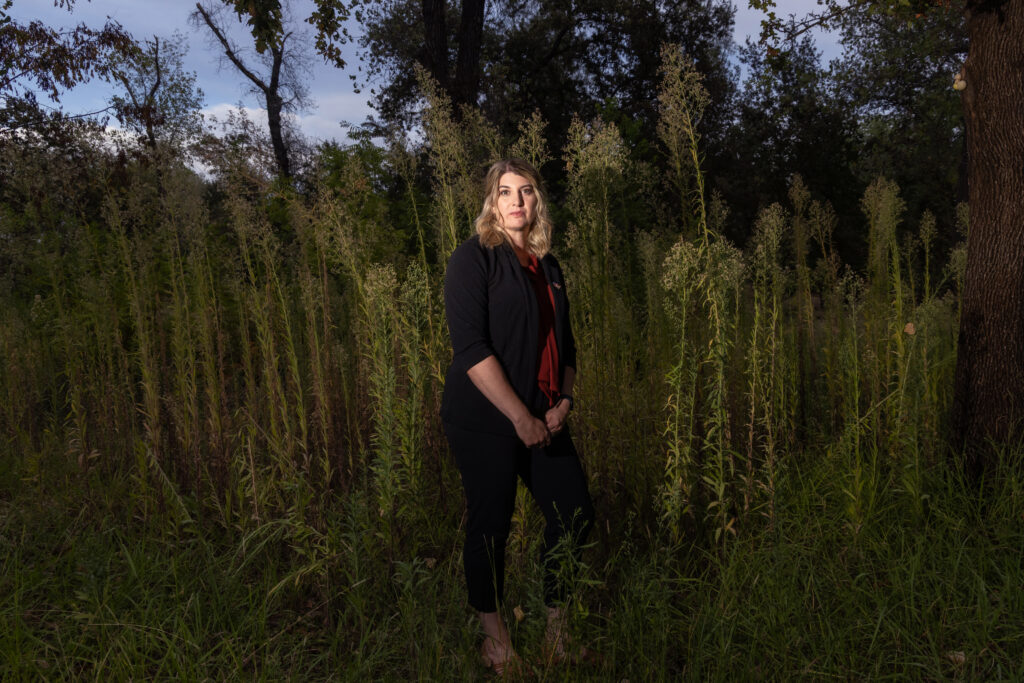
His most consequential disputes were with Joanna Francescut, the assistant registrar of voters.
Francescut cares so much about her line of work that she planned a pregnancy to ensure she could perform her duties on Election Day in 2012. (A couple of months later, a surprise special election meant she wound up working on Election Day near her due date, and she had to leave that morning to give birth to a son.)
For years, she enjoyed giving voters tours of her office and showing them how elections work, she said. Then came 2020.
After Trump lost, visitors who once thanked her came with hostile questions. She set up training sessions for election observers only to find attendees exploiting them to criticize how she did her job.
The county supervisors didn’t trust her either. When they got rid of voting machines and moved toward hand counts, she told them she would need more staff and more money. They didn’t believe her figures but had to abandon their plans when the state legislature passed a law requiring machine tallies.
The supervisors twice declined to appoint Francescut as the registrar of voters, passing her over for candidates who had not run elections before. When they named Curtis to the job, she announced she was running for the job in the next election.
Within weeks, Curtis fired her as his top assistant, saying he could dismiss her because she was an at-will employee. Francescut, 44, responded with a wrongful termination lawsuit that remains ongoing.
Getting passed over for the job frustrated her, but she refused to give up, she said, because she didn’t want to send the wrong message to her teen daughter.
“I can’t allow her to watch me get stomped on by men that are lying about me and not stand up for what’s right,” she said.
This June, she beat Curtis in the race for registrar of voters with 58 percent of the vote. She will take office in January.

That left Curtis with an unusually long seven-month period as a lame duck.
Curtis did not just lose the election; he lost allies. Kevin Crye, a supervisor who voted to hire Curtis, lost his own race in June. Chris Kelstrom, another supervisor who voted to hire Curtis, now says he trusts Curtis “less than gas station sushi” and accused him of creating an “HR nightmare.” In August, Kelstrom joined a board majority in censuring Curtis over the personnel investigations.
Curtis said he needs help running November’s election, so he offered a job to Tina Peters, a former county clerk from Colorado convicted of four felonies for allowing an outsider to copy voting machine software in an attempt to prove the 2020 election was stolen from Trump. Peters is a hero and martyr to election skeptics, and she has been touring the country to warn of rigged elections since Colorado Gov. Jared Polis (D) commuted her sentence this summer.
The job offer made national headlines and angered election officials from both parties across the country. Peters turned Curtis down, saying she wanted to keep a national focus.
Last month, after Curtis questioned the ballots, he received a grand jury subpoena telling him to bring them to Sacramento, he said. The subpoena was canceled, he said, after FBI agents and officials with the California secretary of state’s office visited Shasta County to interview him and inspect the boxes of ballots.
County supervisors have called Curtis’s claims about the June election frivolous and said they welcome any state or federal review of the election. The FBI declined to comment. The secretary of state’s office said representatives recently went to Shasta County but declined to provide other details.
Now, Curtis is preparing to run his last election for Shasta County. His detractors are worried about how he will do his job. His backers fear Francescut will reverse the changes Curtis has made.
“We want truth, we want honesty, we want a fair and transparent election,” said Rich Gallardo, a Curtis ally who has spent years deriding the county’s election practices. “And we’re willing to keep fighting. I don’t know how much longer we can keep it up, but we’re willing to fight for it.”
Read more Trump launches ‘Super Intelligence Force’ after calls for AI slowdown